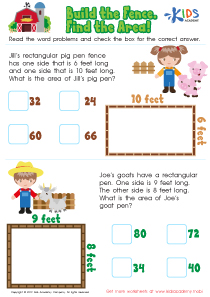
Cognitive Development Extra Challenge Subtraction Worksheets for Ages 6-7
3 filtered results
-
From - To
Boost your child's mathematical prowess with our "Cognitive Development Extra Challenge Subtraction Worksheets for Ages 6-7." These expertly designed worksheets provide an engaging way to enhance your child’s subtraction skills while promoting essential cognitive development. Aimed at young learners, these exercises challenge kids to think critically and solve problems efficiently. Perfect for both classroom and home use, the worksheets are tailored to make learning subtraction an enjoyable and rewarding experience. Stimulate your child’s mind and lay a strong foundation for future math success with our unique subtraction challenges that seamlessly blend fun with education.
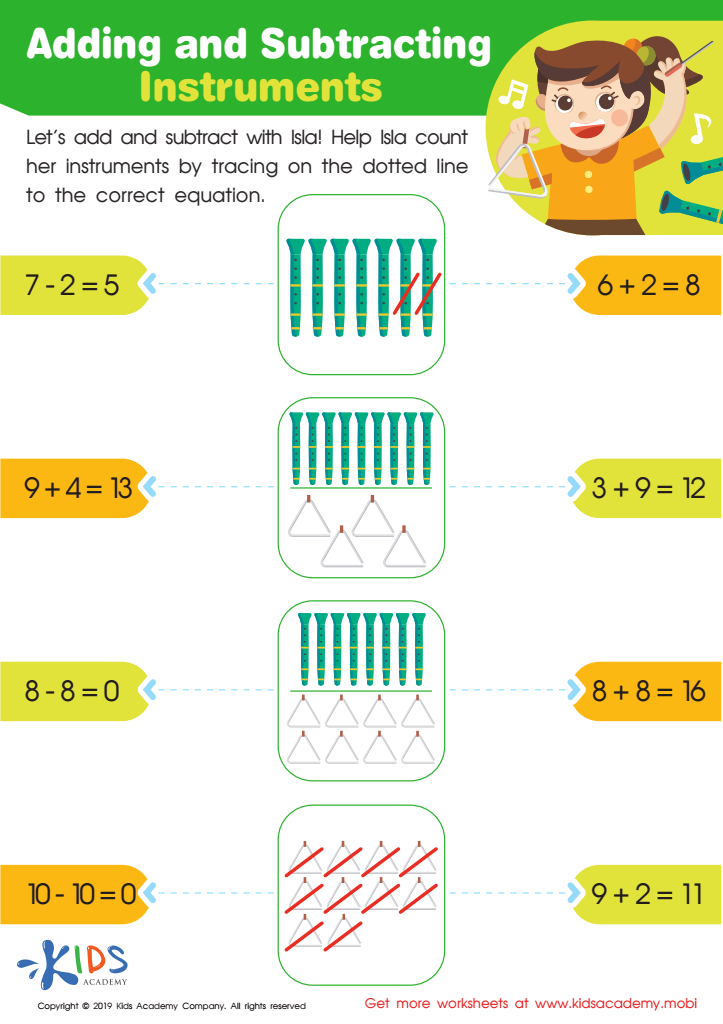
Adding and Subtracting: Instruments Worksheet
 Assign to My Students
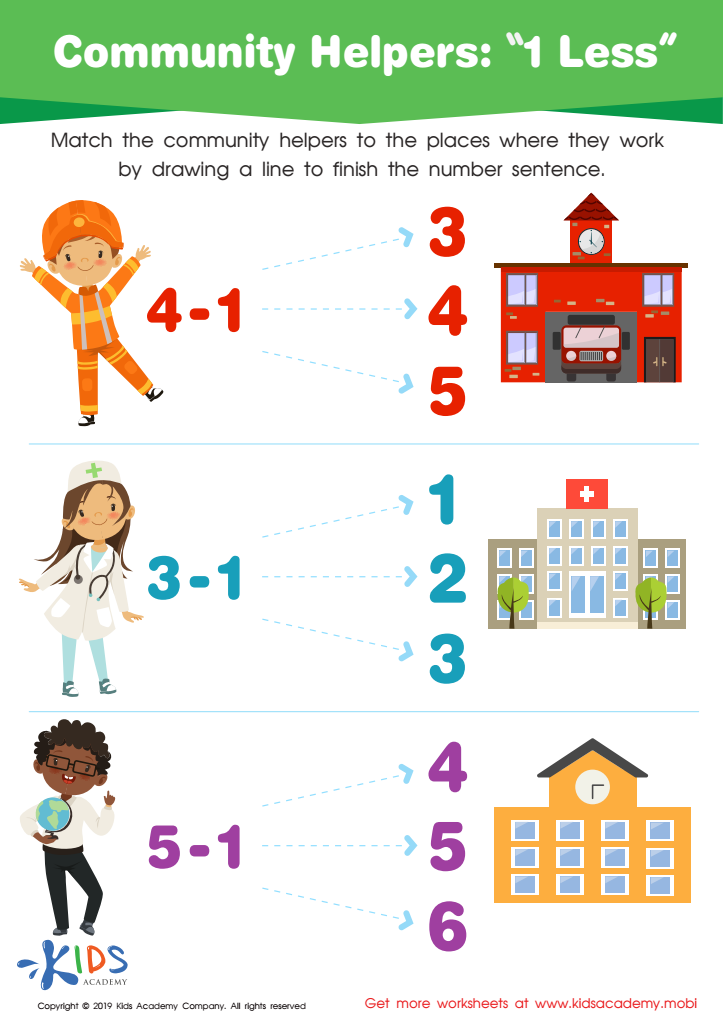
Community Helpers: 1 less Worksheet
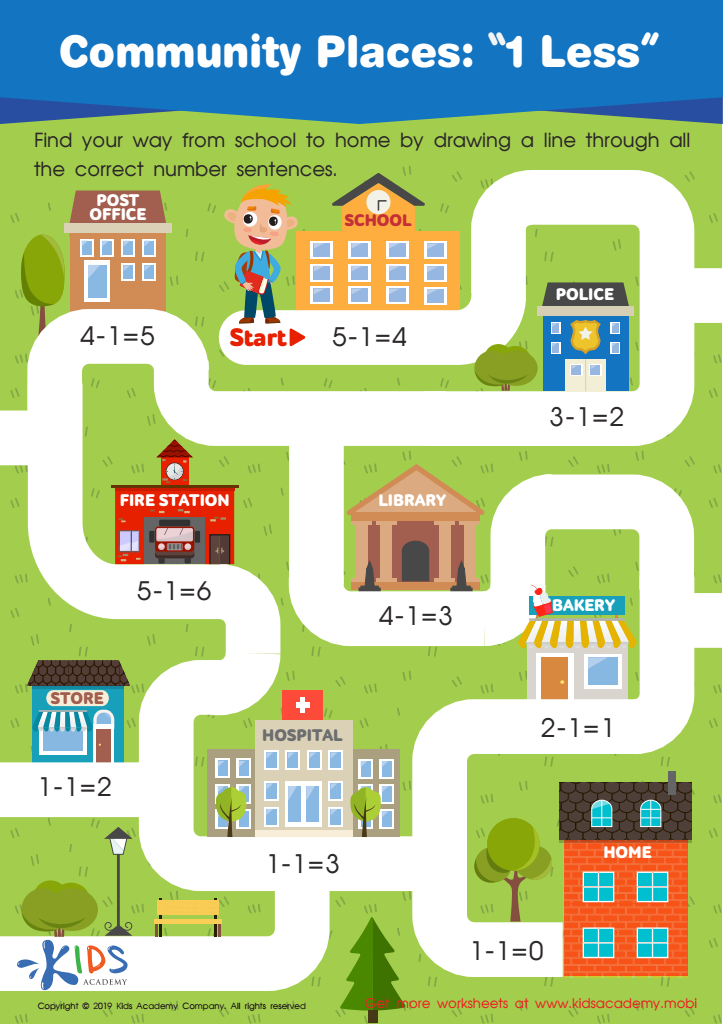
Community Places: 1 Less Worksheet








Parents and teachers should place importance on Cognitive Development Extra Challenge Subtraction for ages 6-7 because these formative years are crucial for establishing a strong mathematical foundation. At this age, children are transitioning from concrete to more abstract thinking, and mastering subtraction is central to this cognitive progression. Engaging in subtraction challenges stimulates the brain, enhancing problem-solving skills, logical reasoning, and mental arithmetic, which are fundamental to overall cognitive development.
Additionally, early math skills are strong predictors of later academic success. Children who excel in early math, including subtraction, tend to perform better in overall academics. Extra challenge subtraction activities encourage persistence and flexible thinking, as children explore various methods to achieve the correct answer. This approach not only builds numeracy but also instills a growth mindset, helping kids to approach problems with confidence.
Moreover, involving parents and teachers in these cognitive development challenges fosters a supportive learning environment. When children receive encouragement and guidance from adults, they build positive attitudes towards learning and develop resilience. These skill-building exercises close gaps in understanding, preventing future learning difficulties and ensuring that each child reaches their full academic potential.