Shape identification Extra Challenge Worksheets for Ages 6-8
5 filtered results
-
From - To
Unlock your child's creativity and critical thinking with our "Shape Identification Extra Challenge Worksheets" designed for children aged 6-8. These engaging and innovative worksheets help students reinforce their knowledge of shapes while encouraging independent problem-solving. Each worksheet features a variety of exciting activities, including identifying shapes, matching shapes to objects, and challenging puzzles that enhance visual recognition and spatial awareness. Ideal for classrooms or home-learning environments, these extra challenge worksheets offer the perfect balance of fun and education. Watch your young learner thrive as they explore the world of shapes in new and exciting ways! Download and enhance their learning journey today!
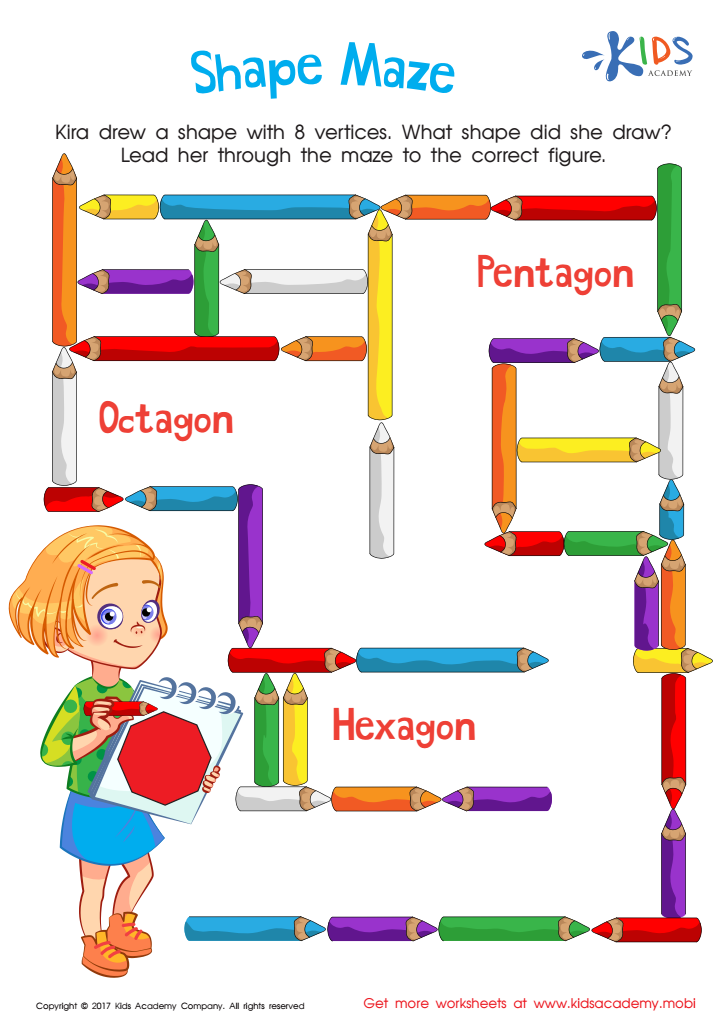
Shape Maze Worksheet
 Assign to My Students
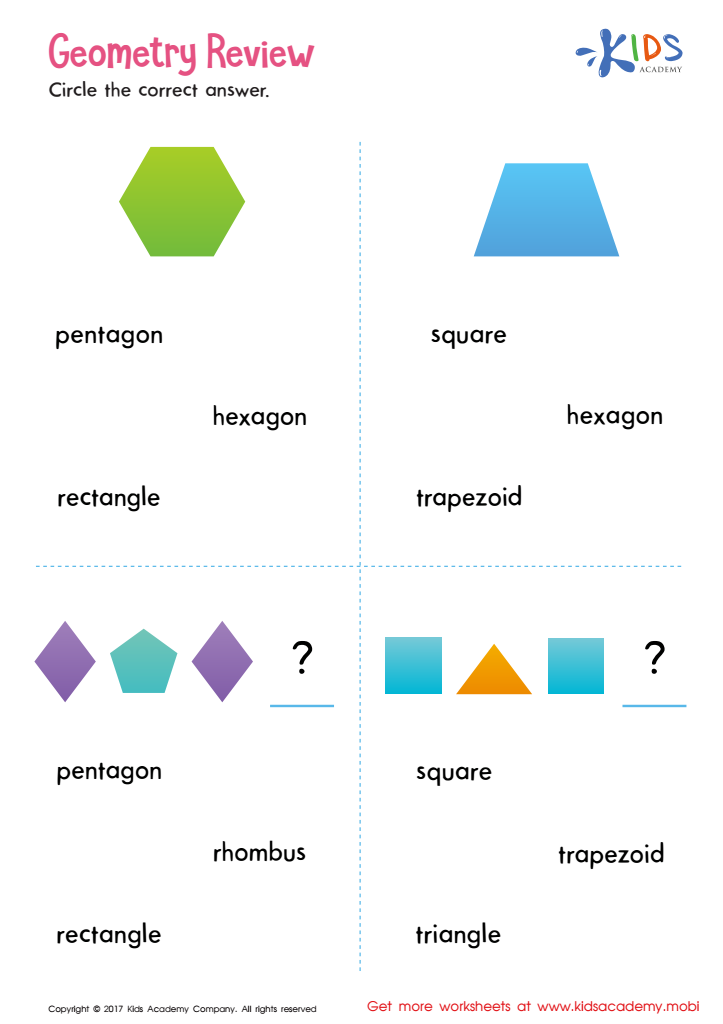
Geometry Review Printable
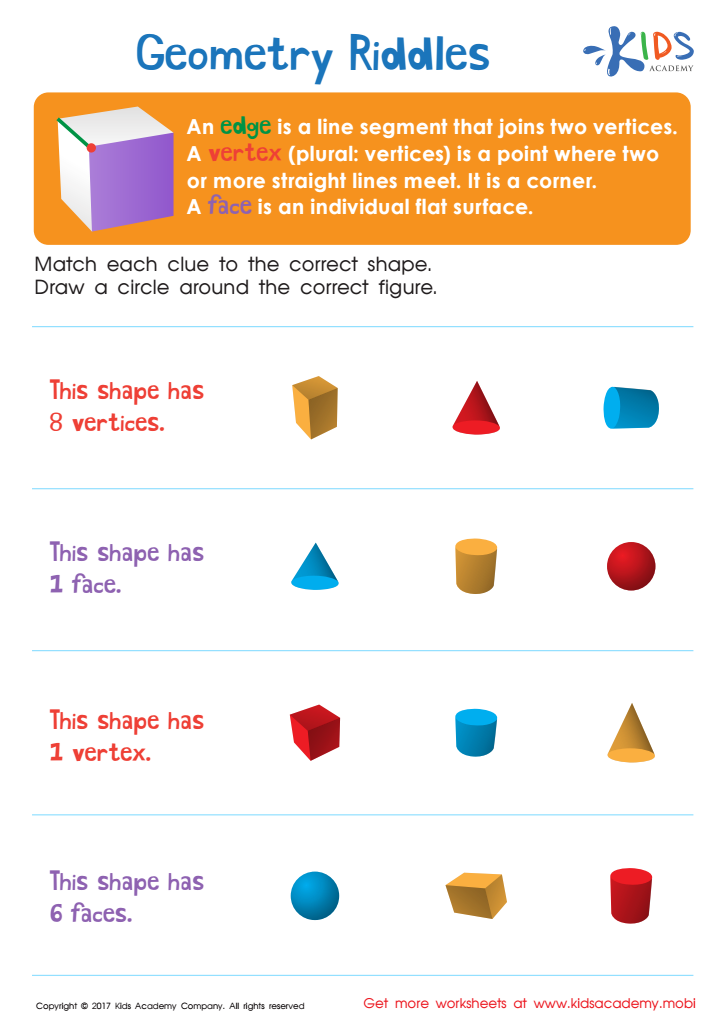
Geometry Riddles Printable
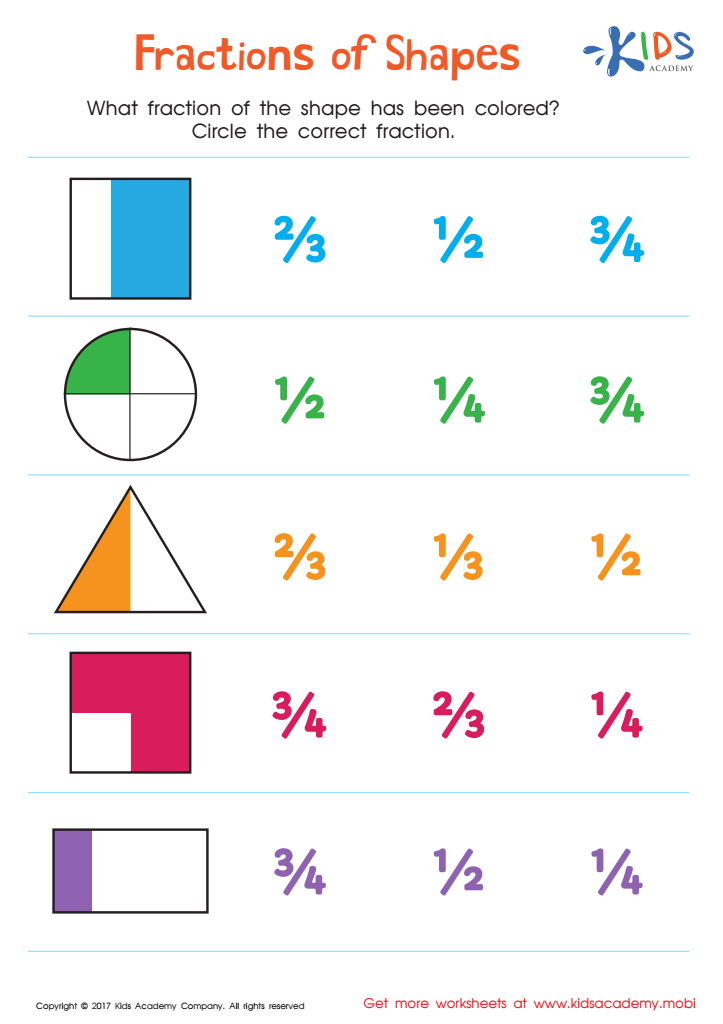
Fractions of Shapes: Math Concept Worksheet
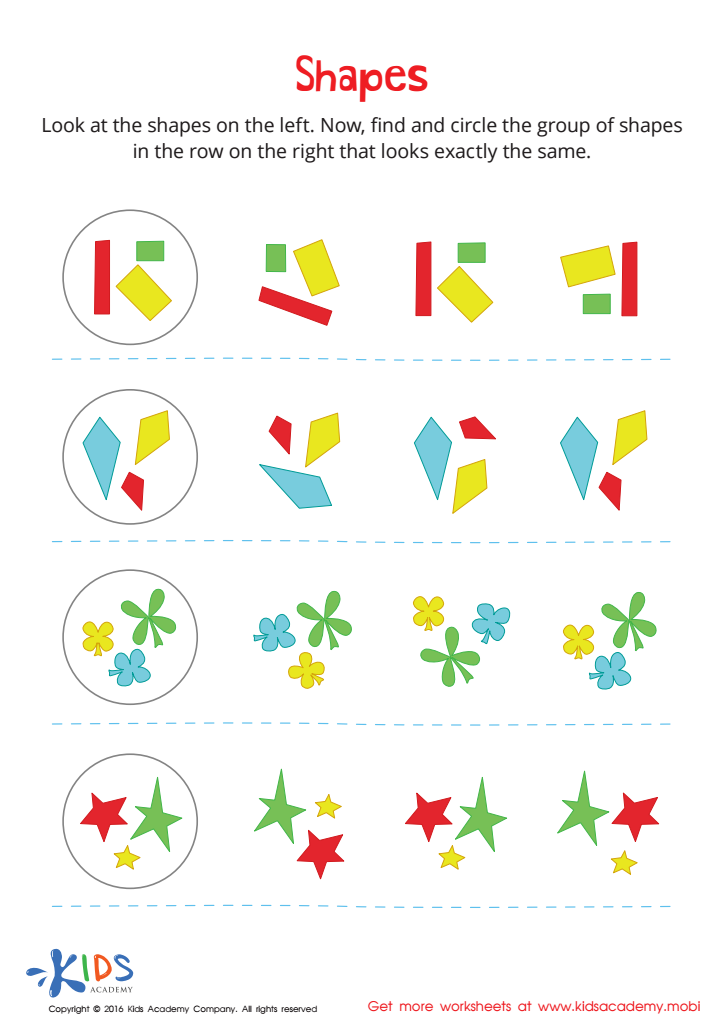
Shapes Worksheet








Shape identification is a fundamental skill that extends far beyond recognizing geometric figures. For ages 6-8, mastering this concept opens the door to critical thinking, spatial awareness, and problem-solving abilities. Engaging in shape identification activities encourages children to explore their environment, leading to the development of observational skills as they learn to distinguish shapes in everyday objects.
Parents and teachers should care about incorporating extra challenges in shape identification because such activities stimulate cognitive development. These challenges encourage children to think critically; for example, they may compare, sort, or manipulate shapes, enhancing their ability to engage with mathematical concepts later on. Additionally, integrating shape identification into learning fosters creativity as children experiment with different formations and applications of shapes in art and design projects.
Moreover, shape recognition lays the groundwork for understanding more complex topics in physics, engineering, and technology. Ensuring that young learners are proficient in shape identification not only influences their current academic performance but also supports lifelong skills that will be invaluable in a rapidly evolving world. Investing time in these challenges cultivates both intellectual curiosity and confidence in young learners, equipping them for future challenges across various subjects. Ultimately, it enriches their educational experience and fosters a love of learning.








