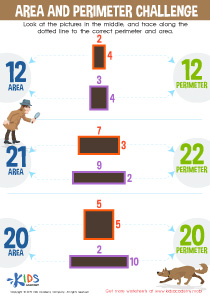
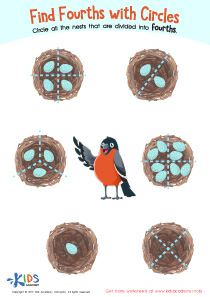
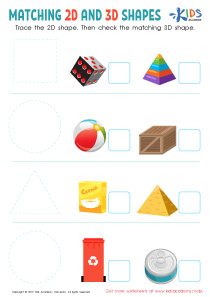
Shape identification Extra Challenge 2D Shapes Worksheets for Ages 6-8
3 filtered results
-
From - To
Unlock your child's potential with our "Shape Identification Extra Challenge 2D Shapes Worksheets" designed for ages 6-8! These engaging worksheets help young learners master the art of identifying various 2D shapes, from circles to hexagons. With fun illustrations and stimulating exercises, your child will sharpen their visualization skills while enhancing their understanding of geometry. Our curriculum-aligned resources provide an exciting way to develop critical thinking and problem-solving abilities. Perfect for classrooms or at-home practice, these worksheets encourage independent learning and creativity. Dive into a world of shapes and watch your child's confidence soar as they tackle these exciting challenges!
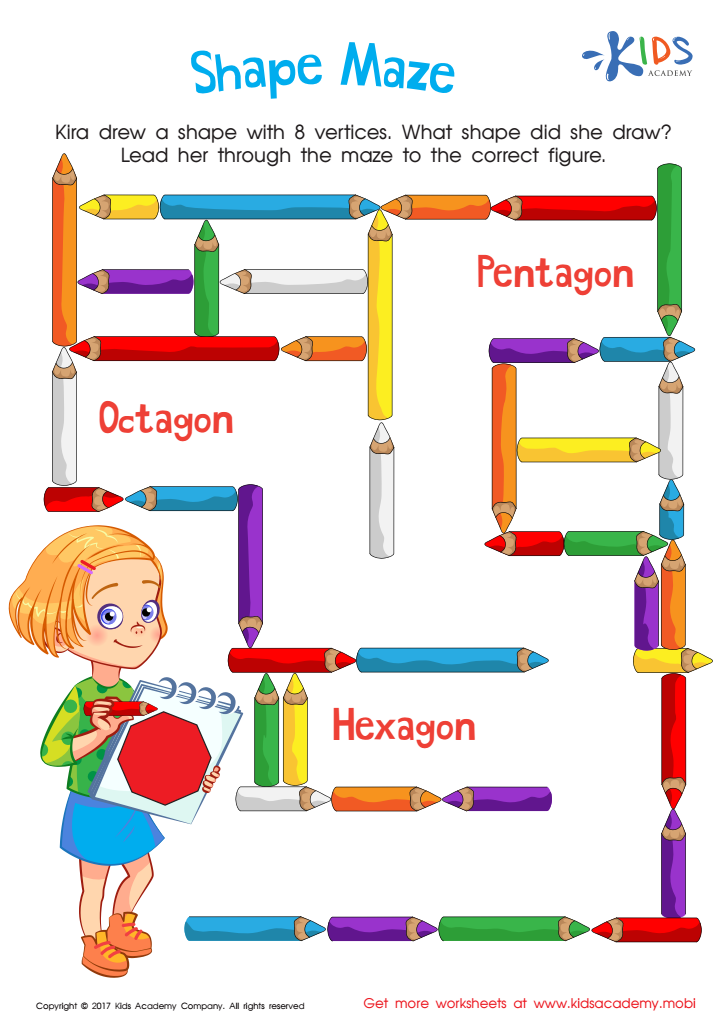
Shape Maze Worksheet
 Assign to My Students








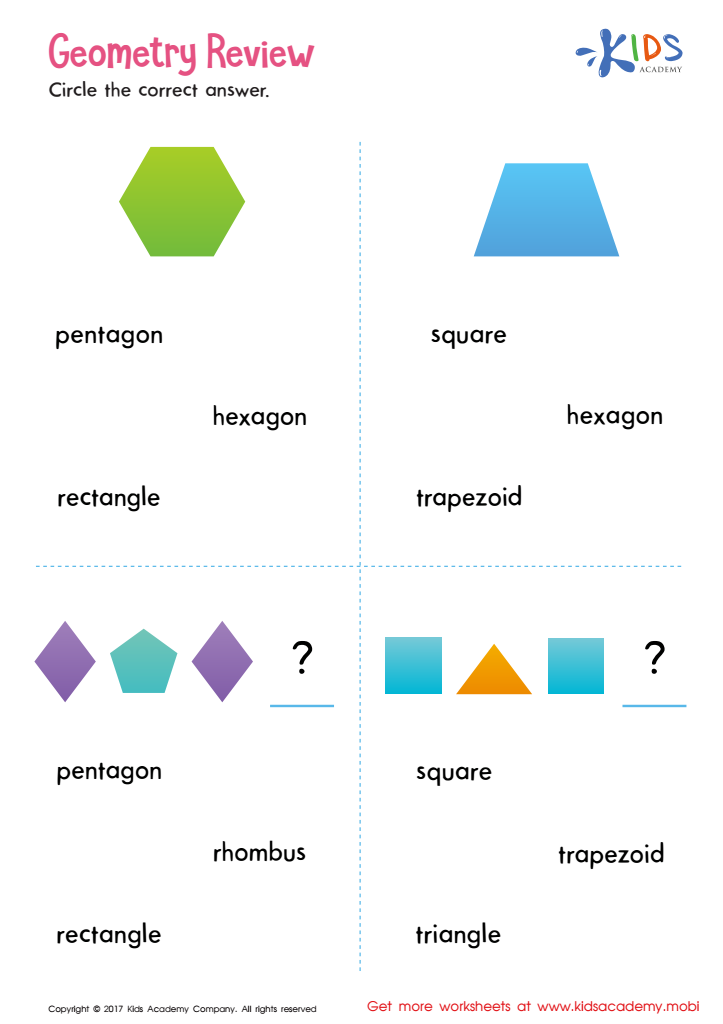
Geometry Review Printable
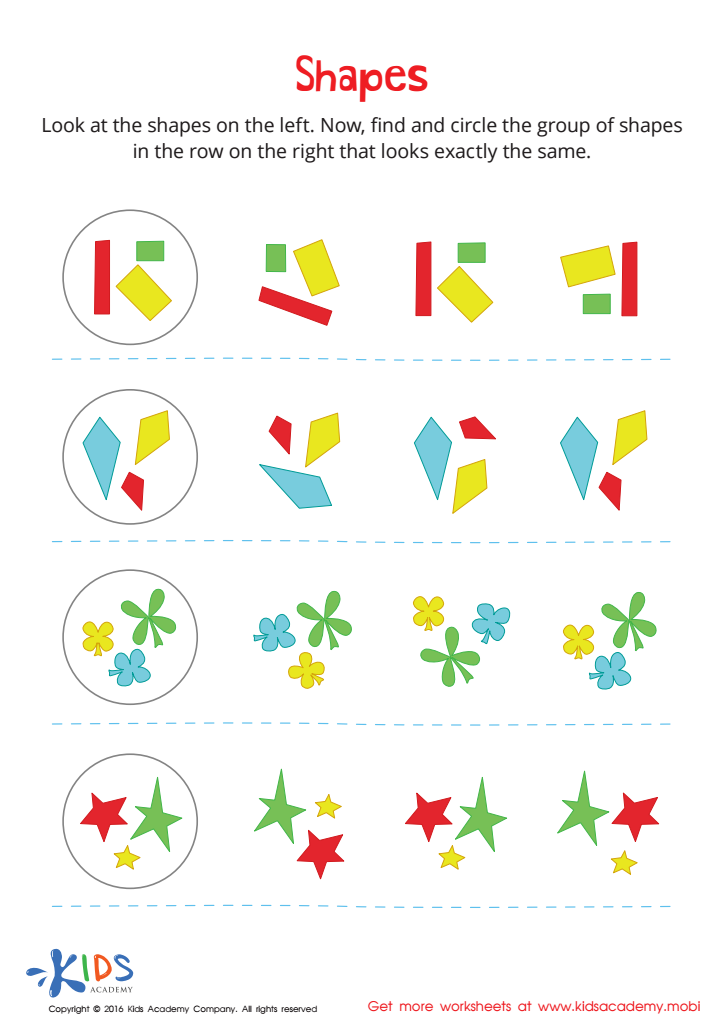
Shapes Worksheet








Shape identification is a fundamental skill crucial for young children's cognitive and spatial development. For children aged 6-8, understanding 2D shapes goes beyond merely recognizing circles, squares, and triangles; it sets the groundwork for more complex mathematical concepts. Shape identification enhances children's ability to classify, compare, and analyze objects in their environment, which is imperative for constructing logical reasoning skills.
For parents and teachers, emphasizing shape identification can significantly impact academic success and a child's love for learning. Mastery of shapes can lead to improved problem-solving abilities and serve as a stepping stone for subjects like geometry, art, and design. Engaging children in activities that challenge them to identify, create, or manipulate shapes fosters critical thinking, creativity, and persistence.
Additionally, shape identification promotes social interaction and communication skills, as children often work collaboratively in group settings to discuss and explore shapes. By investing time in shape identification exercises, parents and teachers not only equip children with essential academic skills but also nurture their confidence, curiosity, and social abilities. Ultimately, these foundational skills will support their overall development and inspire a lifelong interest in learning and exploration.