Comparing objects Extra Challenge Worksheets for Ages 6-9
3 filtered results
-
From - To
Explore our "Comparing Objects Extra Challenge Worksheets" designed for children ages 6-9! These engaging worksheets are perfect for young learners to enhance their critical thinking and observational skills. With a variety of fun, interactive activities, kids will practice comparing size, shape, and quantity of various objects. Each worksheet encourages creativity while solidifying fundamental math concepts. Ideal for classroom use or at-home learning, our extra challenges cater to different learning styles, ensuring that every child is both stimulated and engaged. Help your child develop important analytical skills while having fun with our thoughtfully designed comparison exercises!
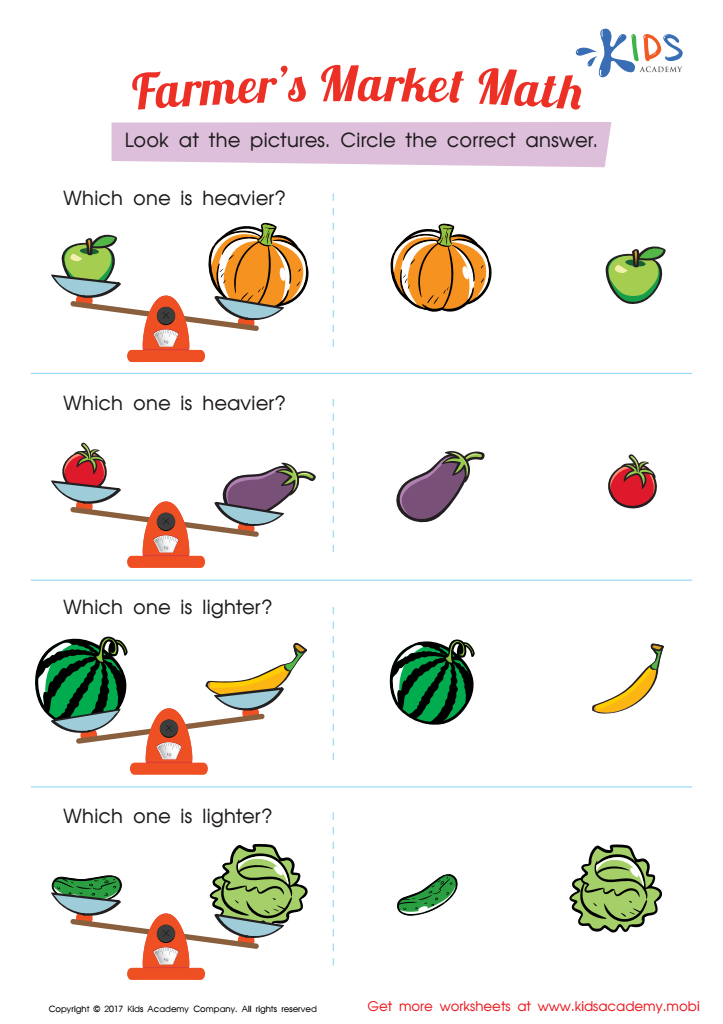
Which One Is Heavier Worksheet
 Assign to My Students
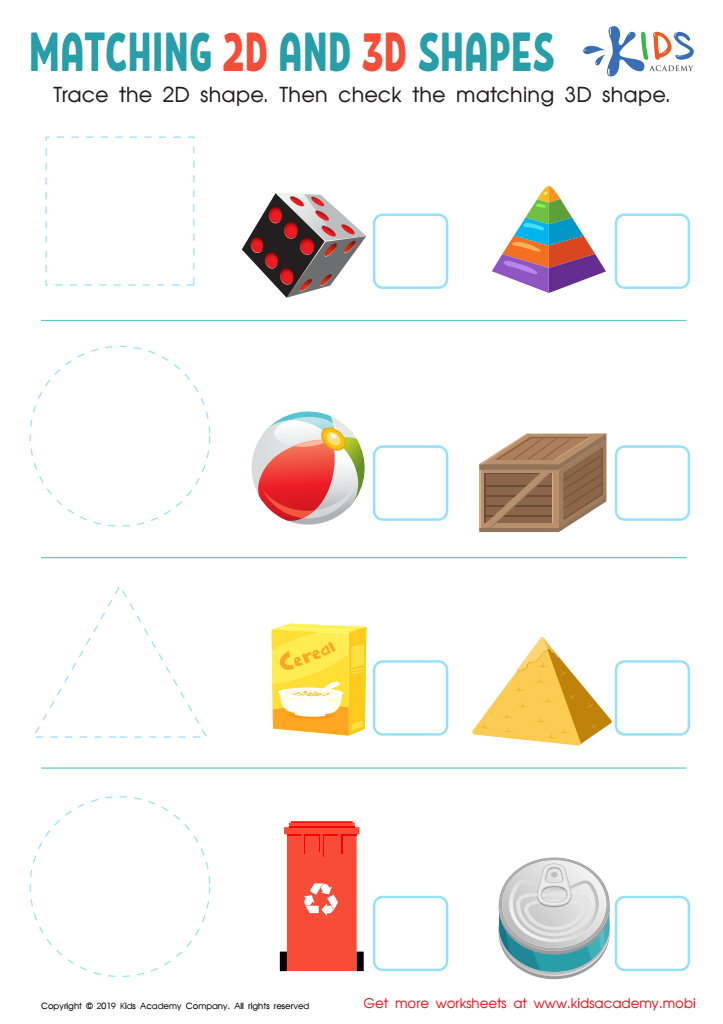
Matching 2D and 3D Shapes Worksheet
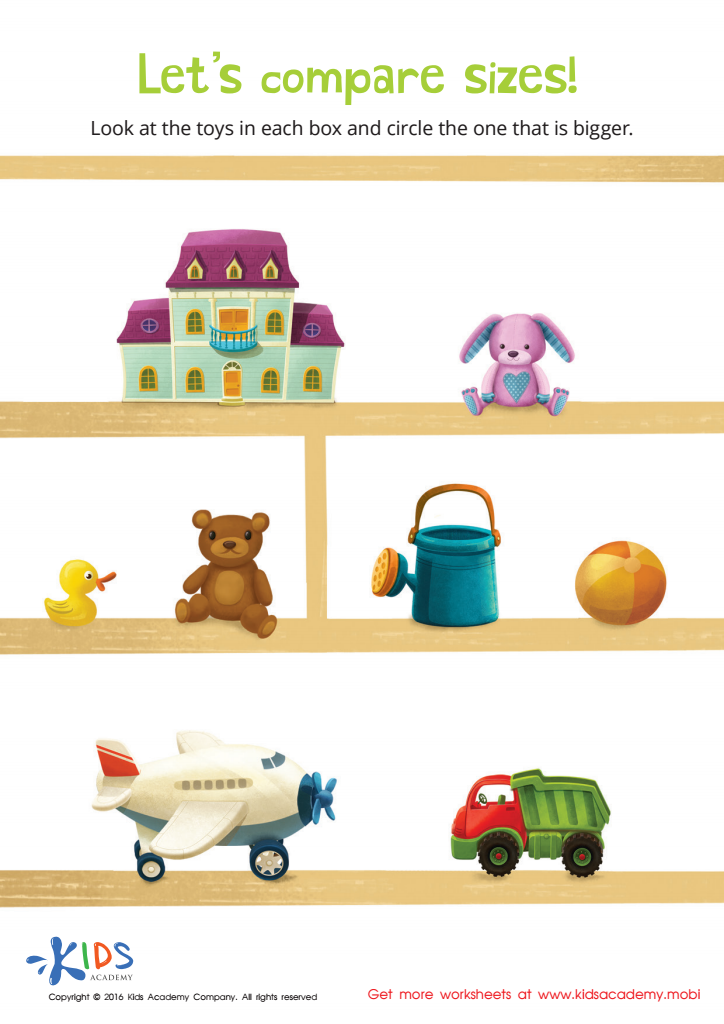
Classifying by Size Sorting Worksheet





Parents and teachers should care about the activity of comparing objects for children aged 6-9 because it plays a crucial role in their cognitive and mathematical development. At this age, children are naturally curious and eager to make sense of the world around them, and comparison is a fundamental skill that underpins critical thinking and reasoning.
By engaging in tasks that involve comparing size, weight, shape, or other attributes, children refine their observational skills and learn to gather meaningful information about their environment. This understanding lays the foundation for future math concepts, such as measurement, geometry, and data analysis.
Moreover, comparing objects nurtures language development through discussions about similarities and differences, enhancing vocabulary and articulation skills. When children engage in comparative language, they learn to express their thoughts coherently, boosting communication capabilities.
Additionally, these activities encourage collaboration among peers and family members, fostering social skills and teamwork. In summary, comparison activities not only support academic growth but also enhance practical life skills, communication, and the ability to analyze information critically—essential tools as children progress in their education and everyday interactions. Providing rich opportunities for comparison will ultimately instill confidence and curiosity in young learners.








