Counting skills Extra Challenge Worksheets for Ages 6-9 - Page 3
54 filtered results
-
From - To
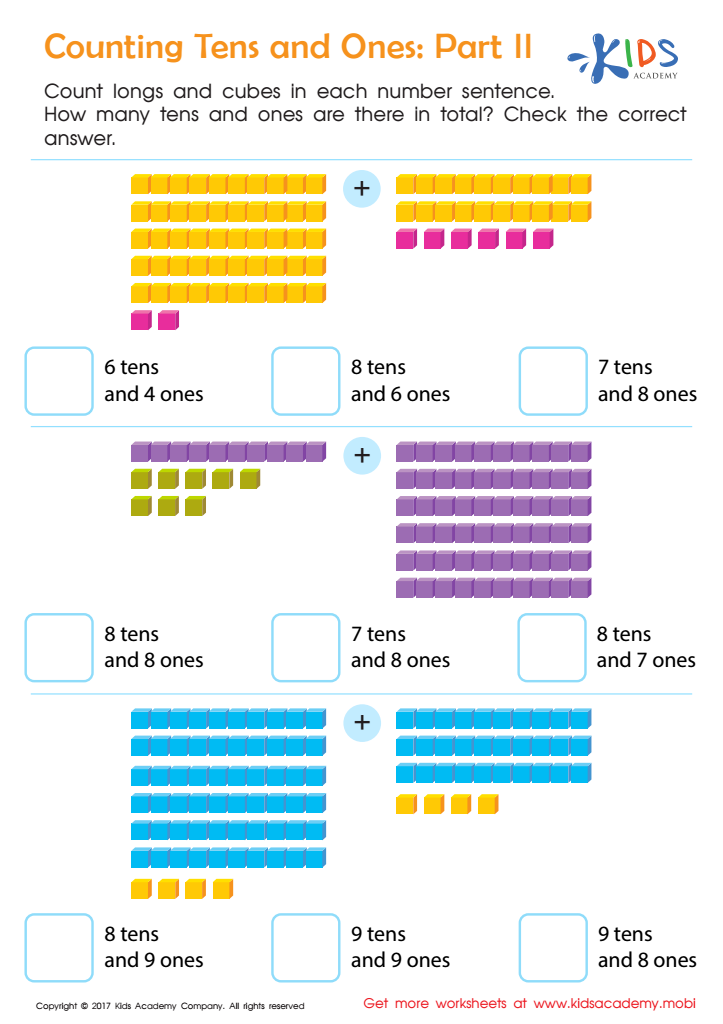
Counting Tens and Ones: Part 2 Worksheet

Counting Worksheet: Let's Practice Counting
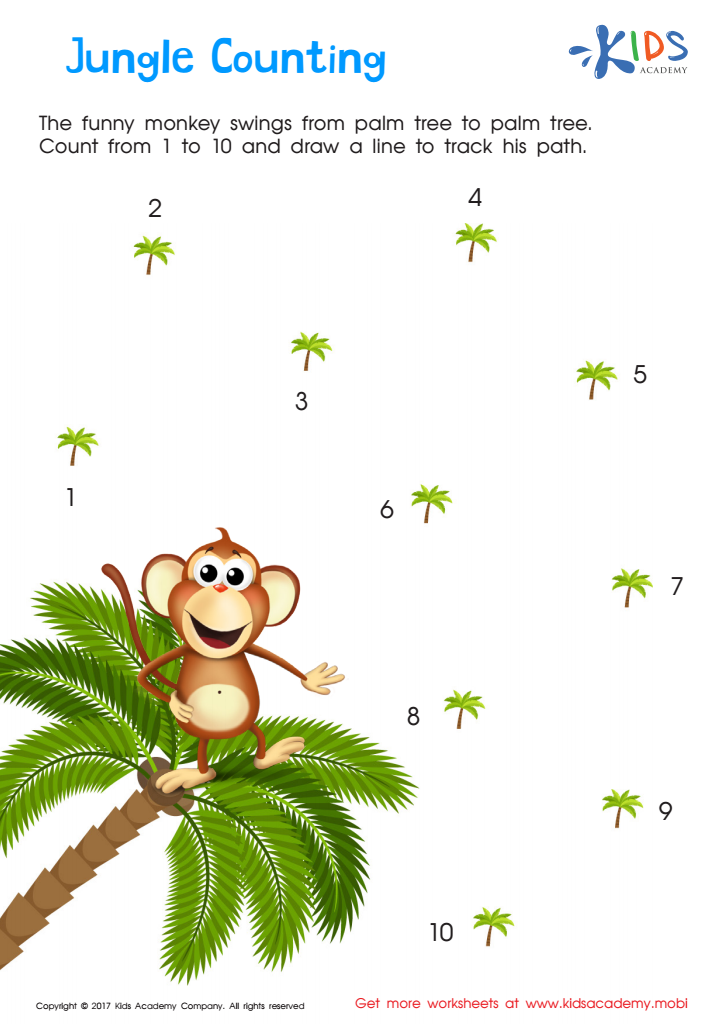
Jungle Counting Connect Dots Worksheet
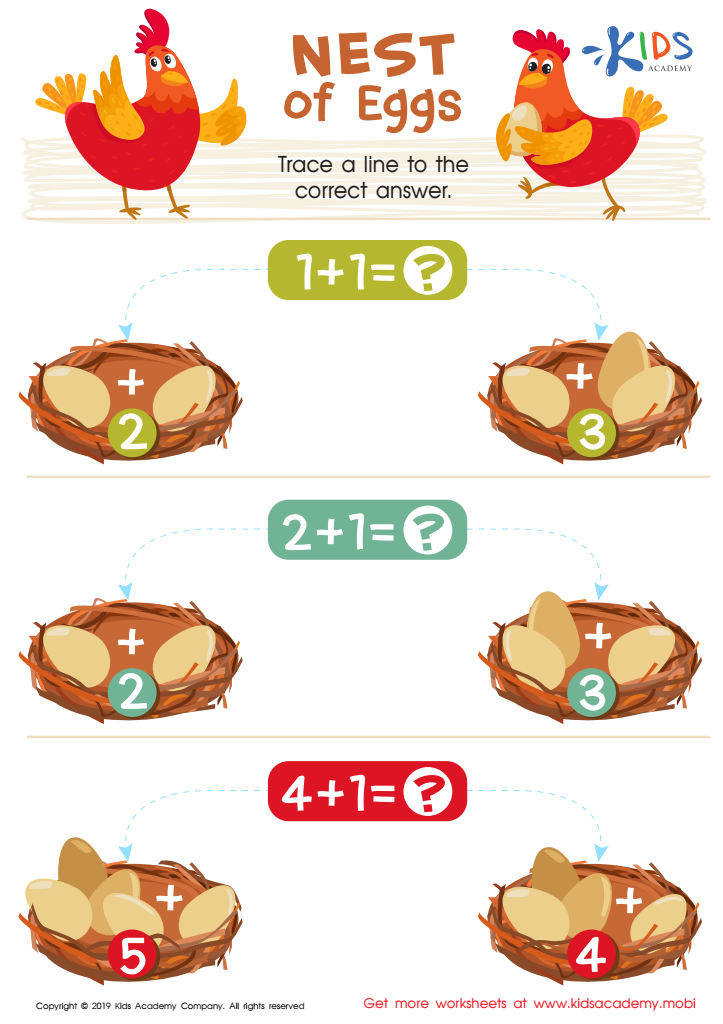
Nest of Eggs Worksheet
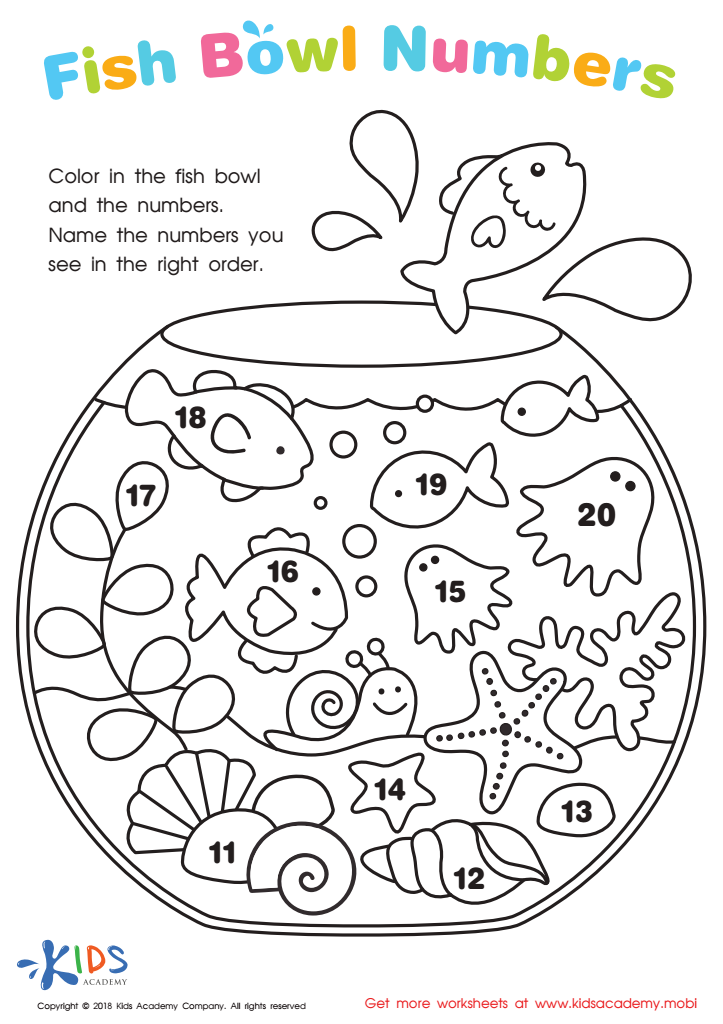
Fish Bowl Numbers Worksheet
 Assign to My Students








Parents and teachers should prioritize Counting Skills Extra Challenge for children ages 6-9 because these foundational skills play a crucial role in a child's mathematical development, cognitive growth, and overall academic success. At this age, children are not just learning to count but are developing a deeper understanding of numbers, which is essential for future math concepts, problem-solving, and critical thinking.
These extra challenges promote engagement and excitement in learning, helping to sustain children's interest in mathematics. By providing varied and increasingly difficult counting activities, children learn to apply counting skills in different contexts, enhancing their flexibility and adaptability during problem-solving.
Moreover, counting skills develop children’s ability to recognize patterns, sequences, and relationships, building a strong basis for topics like addition and subtraction later on. Furthermore, these activities not only augment numerical proficiency but also encourage teamwork and cooperative learning when done in a group setting, fostering essential social skills.
Supporting children in becoming confident counters equips them with the competence and self-assurance needed to tackle more complex concepts in math, thus paving the way for academic success in the future. Investing time and resources into developing counting skills today translates to significant long-term benefits for children’s education and personal growth.








