Shape identification Extra Challenge 2D Shapes Worksheets for Ages 6-9
3 filtered results
Difficulty Level
Grade
Age
-
From - To
Subject
Activity
Standards
Explore our "Shape Identification Extra Challenge 2D Shapes Worksheets" designed for ages 6-9! These engaging worksheets enhance shape recognition skills while providing a fun and challenging experience for young learners. Featuring a variety of activities, children will identify, compare, and sort 2D shapes, including circles, squares, triangles, and more. Perfect for classroom use or home learning, these worksheets nurture critical thinking and problem-solving abilities. Ideal for reinforcing math concepts, our carefully crafted materials cater to diverse learning styles, ensuring each child thrives. Administer the ultimate learning challenge with these dynamic worksheets and watch your students excel in shape identification!
Favorites
With answer key
Interactive
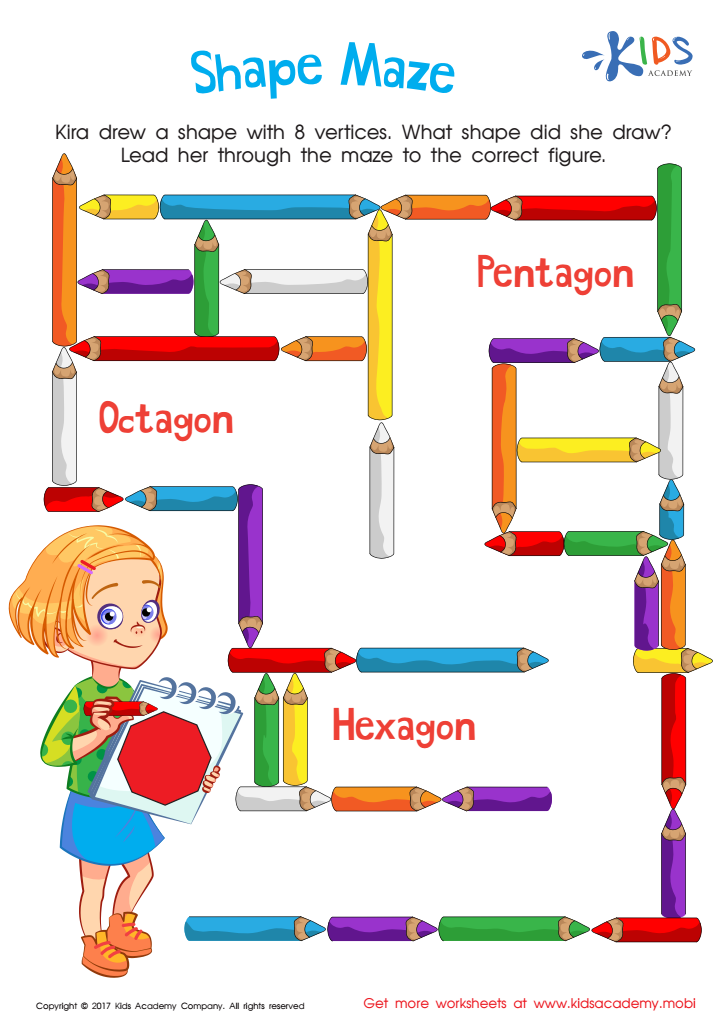
Shape Maze Worksheet
Test your child's geometry knowledge with this fun printable maze! They'll need to identify shapes with 8 vertices to find their way through the maze and get the correct answer.
 Assign to My Students
Shape Maze Worksheet
Worksheet


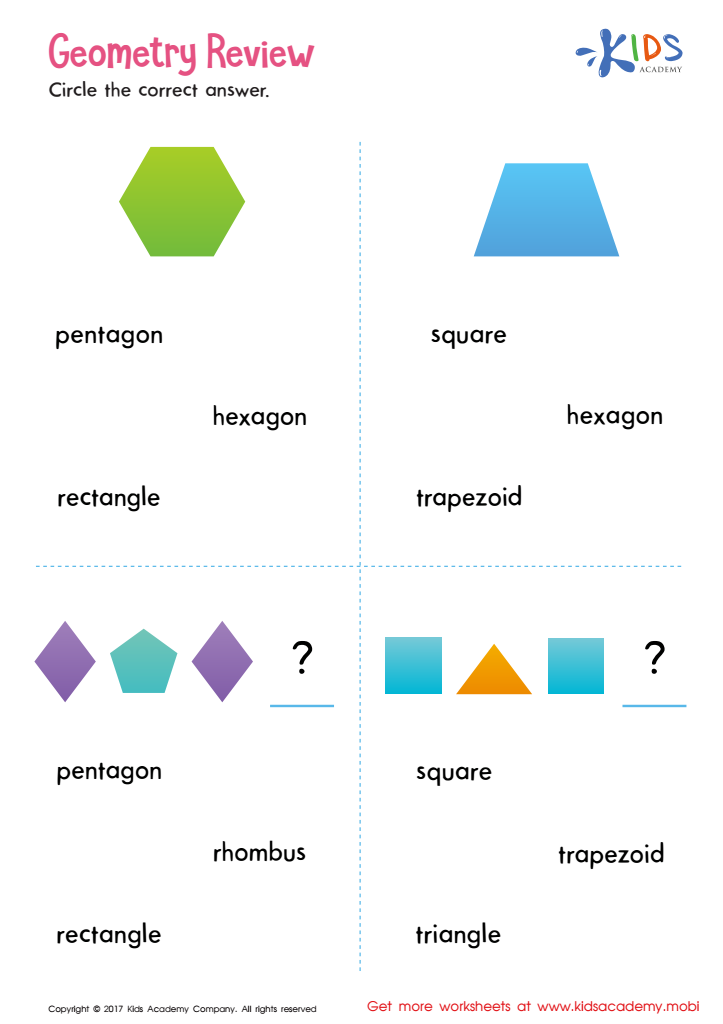
Geometry Review Printable
Repetition is key to success; give your child the practice they need with this geometry worksheet.
Geometry Review Printable
Worksheet
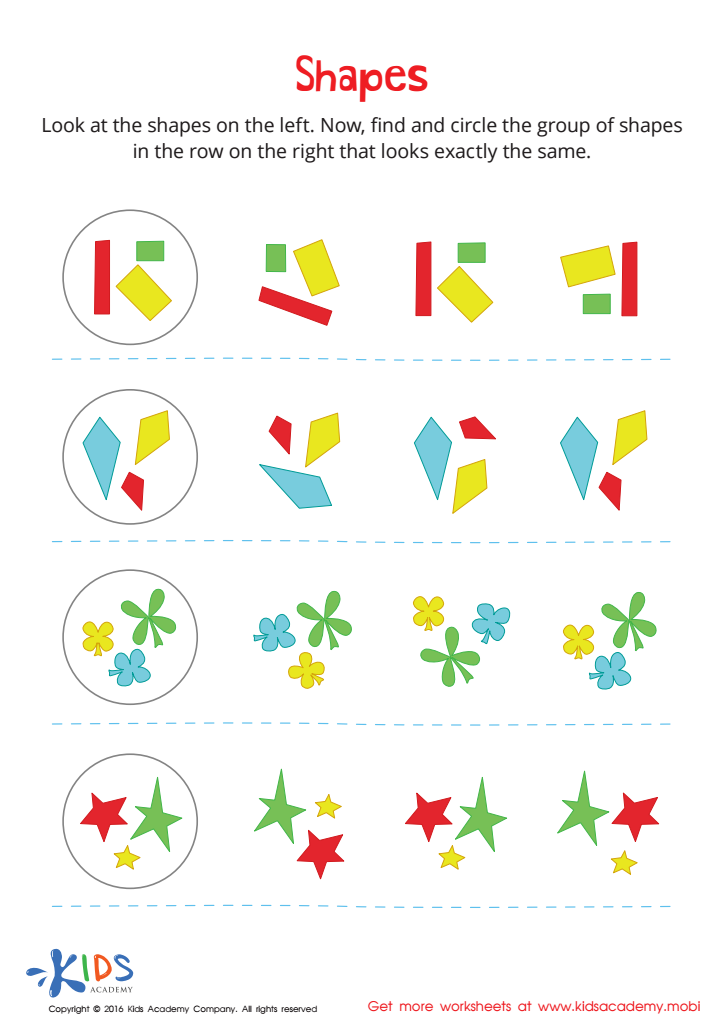
Shapes Worksheet
This fun worksheet will challenge your child to recognize tricky patterns, sort through similar ones, and create strategies to get the right answer. It'll also help them to strengthen problem-solving skills and build confidence. With more challenging tasks, your child will be ready to tackle higher level math and sequencing skills.
Shapes Worksheet
Worksheet
Join Kids Academy for Free
Who is primarily going to use this learning content?








Shape identification is a crucial skill for children ages 6-9, laying the foundation for their understanding of mathematics, geometry, and spatial reasoning. Engaging in activities such as the "Extra Challenge 2D Shapes" helps reinforce this skill while promoting critical thinking and problem-solving abilities. When parents and teachers encourage shape identification, they cultivate a child's ability to categorize and manipulate objects, which is essential not only in math but also in everyday life.
Additionally, mastering 2D shapes enhances a child's creativity and imagination. Recognizing shapes fosters artistic skills, as children begin to understand how different forms come together to create various designs. It also supports language development; children learn terminology related to shapes and their properties, boosting their vocabulary.
Investing time in such challenges can boost self-confidence in young learners. As they successfully recognize and differentiate shapes, they experience a sense of accomplishment, motivating them to tackle more complex concepts. Moreover, incorporating these activities in learning environments aligns with current educational standards, ensuring that children are well-prepared for future academic endeavors. Thus, prioritizing shape identification nurtures essential cognitive skills, ensuring holistic development during these formative years.