Extra Challenge Skip Counting Worksheets for Ages 6-9
4 filtered results
-
From - To
Explore our "Extra Challenge Skip Counting Worksheets for Ages 6-9," designed to enhance your child's math skills while keeping learning fun! These engaging worksheets encourage children to practice skip counting by 2s, 5s, and 10s, essential for building a solid foundation in mathematics. Tailored for ages 6 to 9, each worksheet progressively increases in difficulty to keep young learners motivated and challenged. Perfect for educators and parents looking to reinforce math concepts at home or in the classroom, our worksheets are easy to print and incorporate into your teaching routine. Help your child master skip counting and boost their confidence in math today!
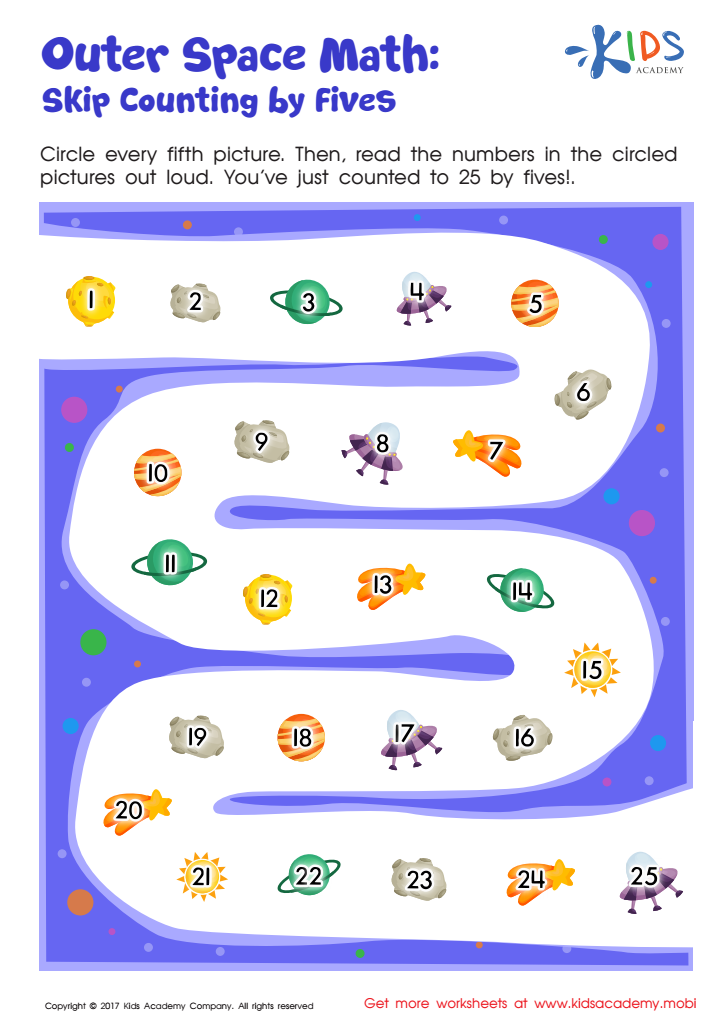
Skip Counting by 5s: Outer Space Math Printable
 Assign to My Students
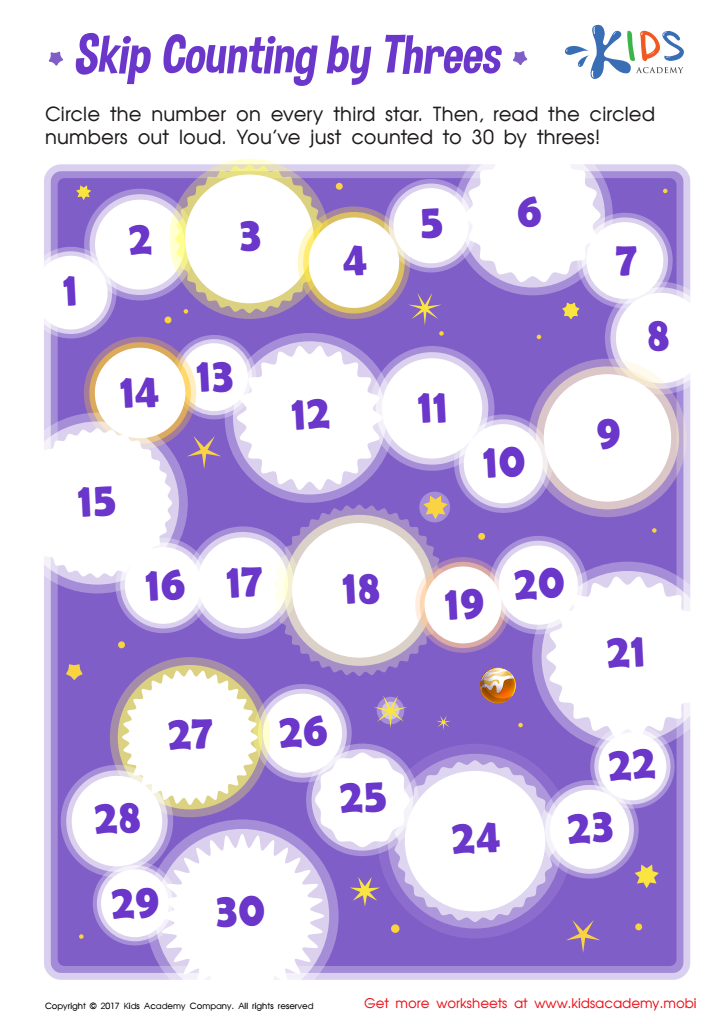
Skip Counting By Three Printable
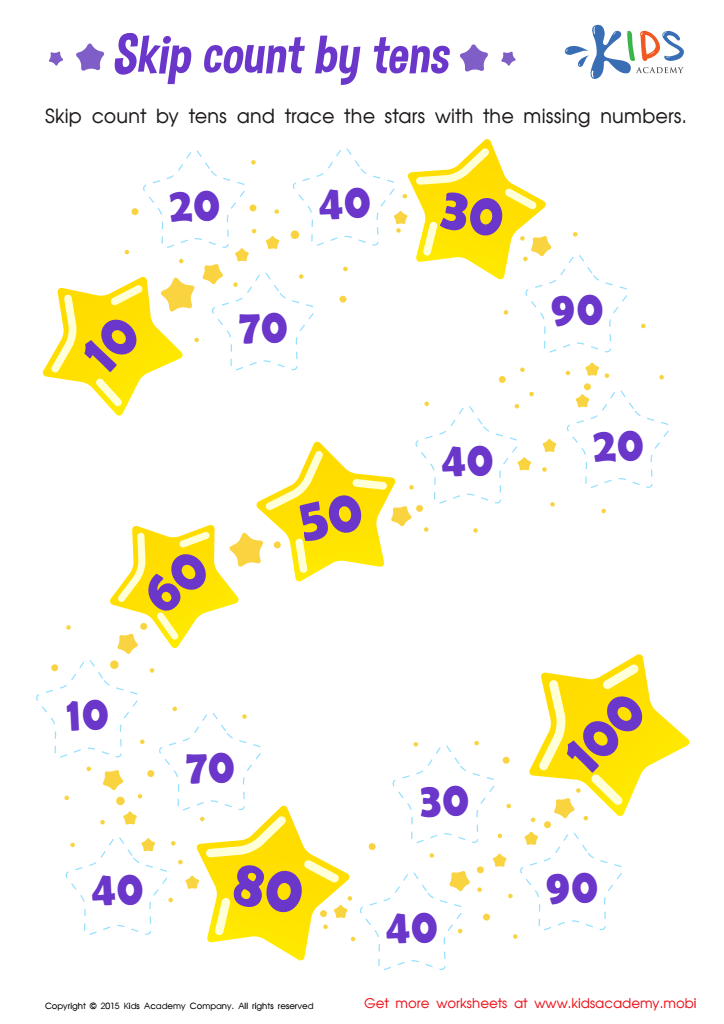
Learn dozens: Skip Count by Tens Printable
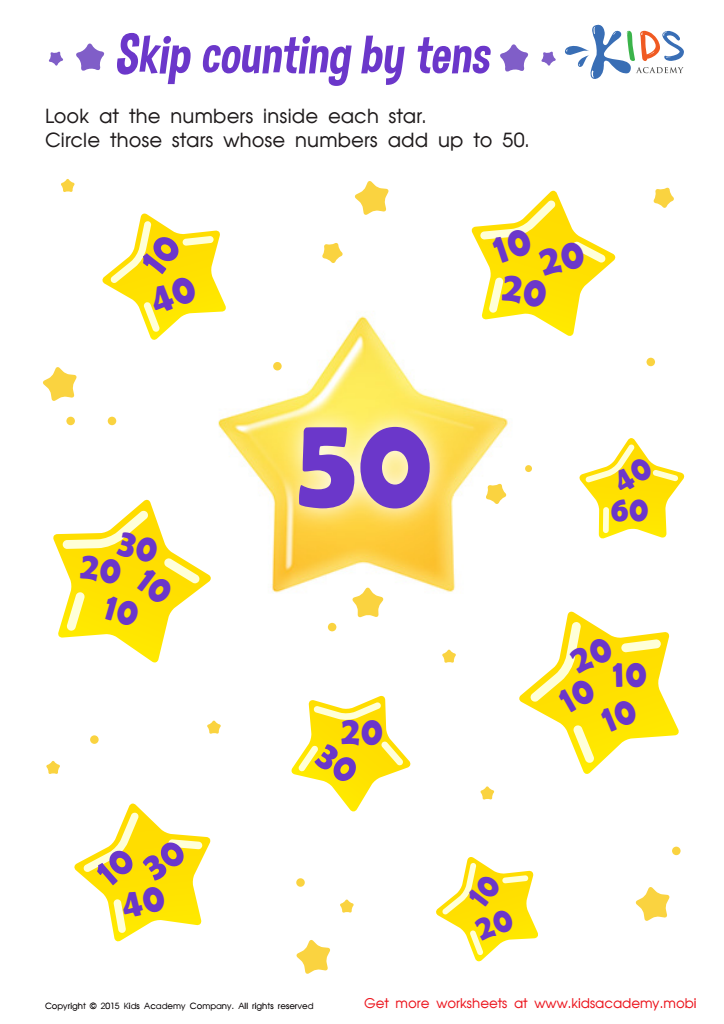
Learn Dozens: Skip Counting by Tens Printable




.jpg)



Parents and teachers should care about Extra Challenge Skip Counting for Ages 6-9 because it plays a pivotal role in developing essential mathematical skills and promoting cognitive growth in young learners. Skip counting—counting by twos, fives, tens, and beyond—enhances number sense, muscle memory, and foundational math fluency. Mastering this skill provides children with a solid groundwork for addition, multiplication, and division concepts, which are essential for academic success in later grades.
Moreover, skip counting fosters critical thinking and problem-solving abilities. As children engage in this practice, they learn to recognize patterns and relationships among numbers, encouraging them to think logically and strategically. This method also promotes confidence in math, as students experience success and accomplishment as they advance.
Besides academic benefits, skip counting activities can also facilitate meaningful bonding between parents and children or among classmates. Whether through games or engaging exercises, these moments cultivates a supportive learning environment. For teachers, incorporating Extra Challenge Skip Counting into lesson plans can stimulate student interest and creativity, helping to create a dynamic and engaging classroom. In essence, focusing on skip counting is an investment in children's future mathematical proficiency and lifelong learning.








