Basic geometry understanding Extra Challenge Worksheets for 6-Year-Olds
4 filtered results
-
From - To
Unlock your child’s potential with our "Basic Geometry Understanding Extra Challenge Worksheets" designed specifically for 6-year-olds! These engaging worksheets provide a fun and interactive way for young learners to explore foundational geometric concepts, such as shapes, symmetry, and spatial awareness. Our extra challenge activities encourage critical thinking and problem-solving skills, allowing kids to advance their understanding beyond the basics. Perfect for parents and educators, these printable resources can be used at home or in the classroom to reinforce learning. Watch your child's confidence and curiosity grow as they master geometry with these exciting challenges! Elevate your child's education today!
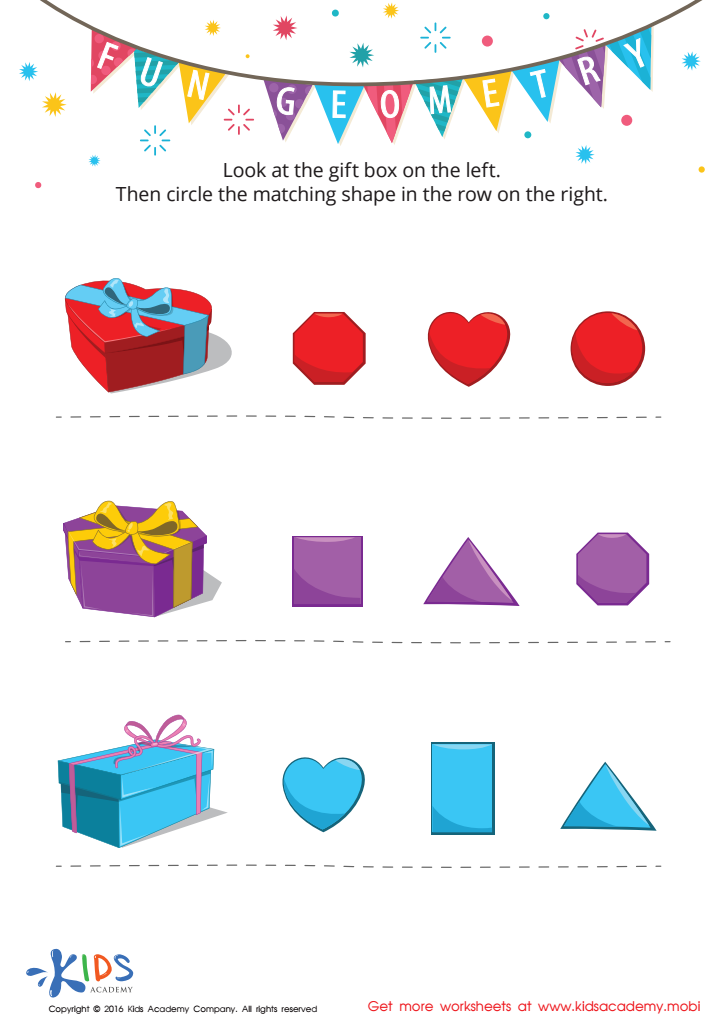
Fun Geometry Worksheet
 Assign to My Students
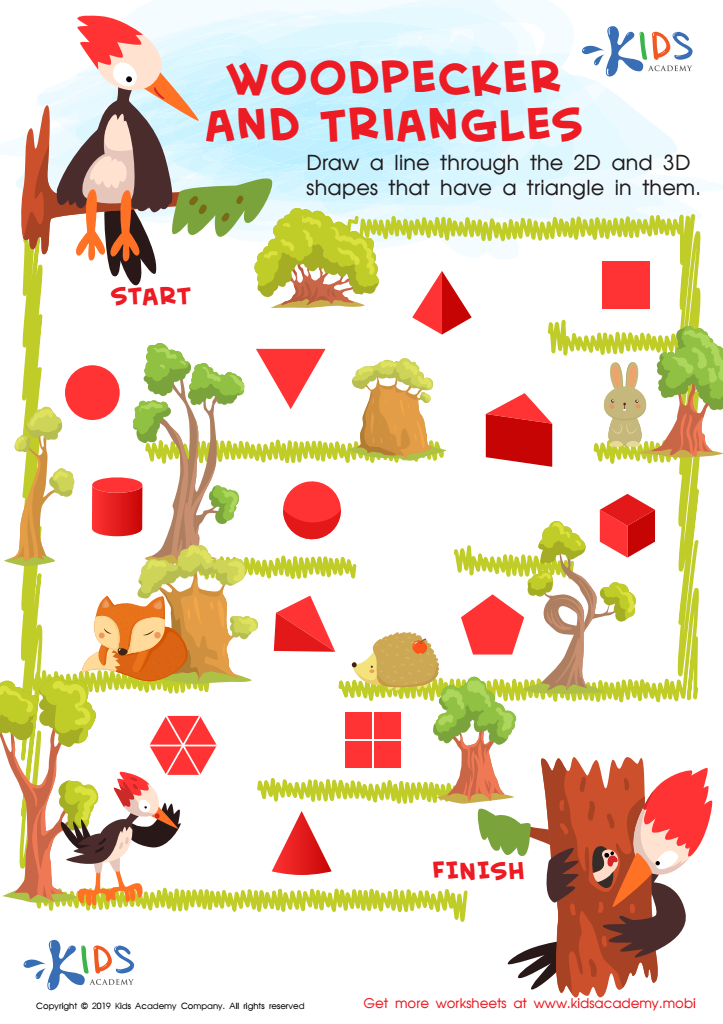
Woodpecker and Triangles Worksheet
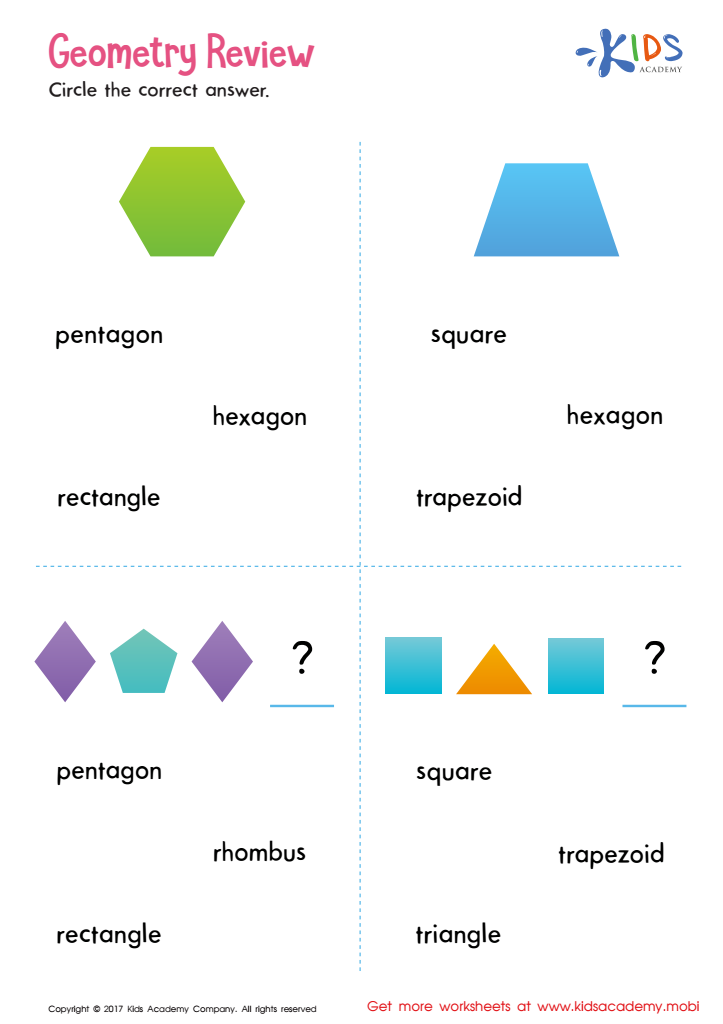
Geometry Review Printable
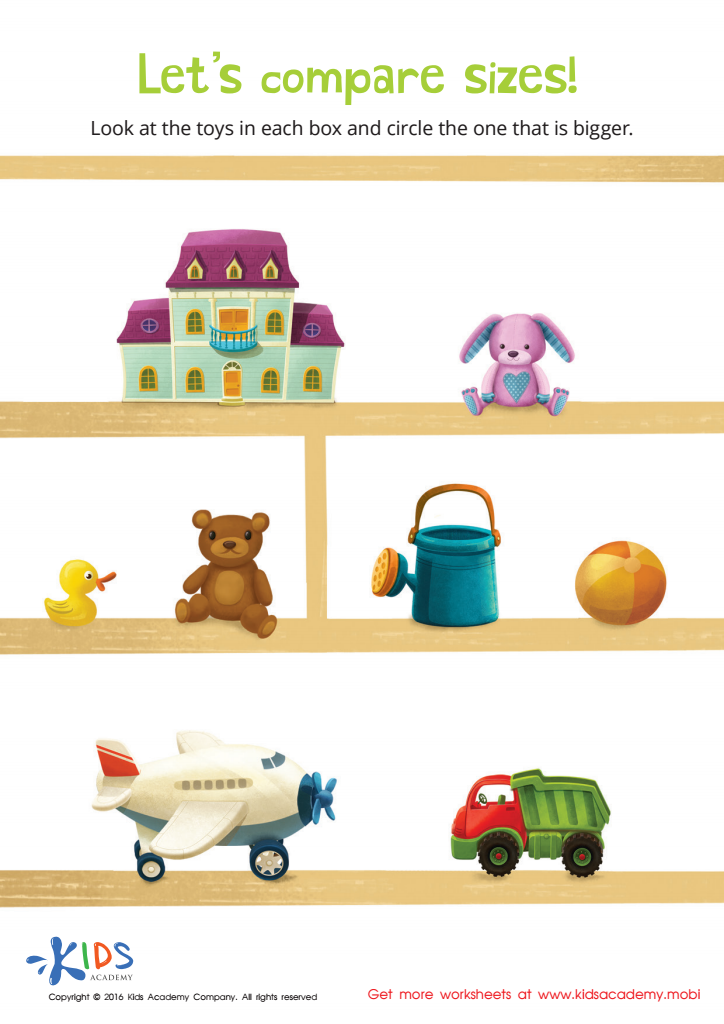
Classifying by Size Sorting Worksheet







Basic geometry understanding is crucial for 6-year-olds as it lays the foundation for future mathematical learning and critical thinking skills. At this stage, children naturally explore their environment and engage with shapes, sizes, and spatial relationships, making it the perfect time to introduce geometric concepts.
By prioritizing geometry education, parents and teachers can help children develop spatial awareness—the ability to visualize and manipulate objects in space. This skill is essential not only in mathematics but also in everyday life, impacting activities like navigation, building, and even art.
Engaging young learners with interactive and playful geometry activities, such as shape sorting, building structures, or recognizing patterns, encourages their creativity and problem-solving abilities. These hands-on experiences promote deeper understanding and retention of geometric principles.
Moreover, mastering basic geometry fosters confidence in children as they tackle more complex concepts later on. When parents and teachers invest in early geometry education, they empower children with the tools necessary for academic success across multiple disciplines, including science and engineering. Thus, cultivating a robust foundation in basic geometry is not just educational; it is an essential component of childhood development that sparks curiosity and encourages lifelong learning.








