Comparing objects Extra Challenge Worksheets for 6-Year-Olds
3 filtered results
-
From - To
Our "Comparing Objects Extra Challenge Worksheets for 6-Year-Olds" offer a fun and engaging way for young learners to boost their critical thinking skills. Designed to complement standard curriculums, these worksheets encourage kids to delve deeper into concepts of size, shape, and quantity. With a variety of thought-provoking activities, children will practice comparative analysis while honing their observational prowess. Perfect for classroom use or extra home practice, this collection ensures that your child can confidently navigate comparisons, setting a solid foundation for future success in math and science. Unlock new levels of learning with our expertly crafted challenges.
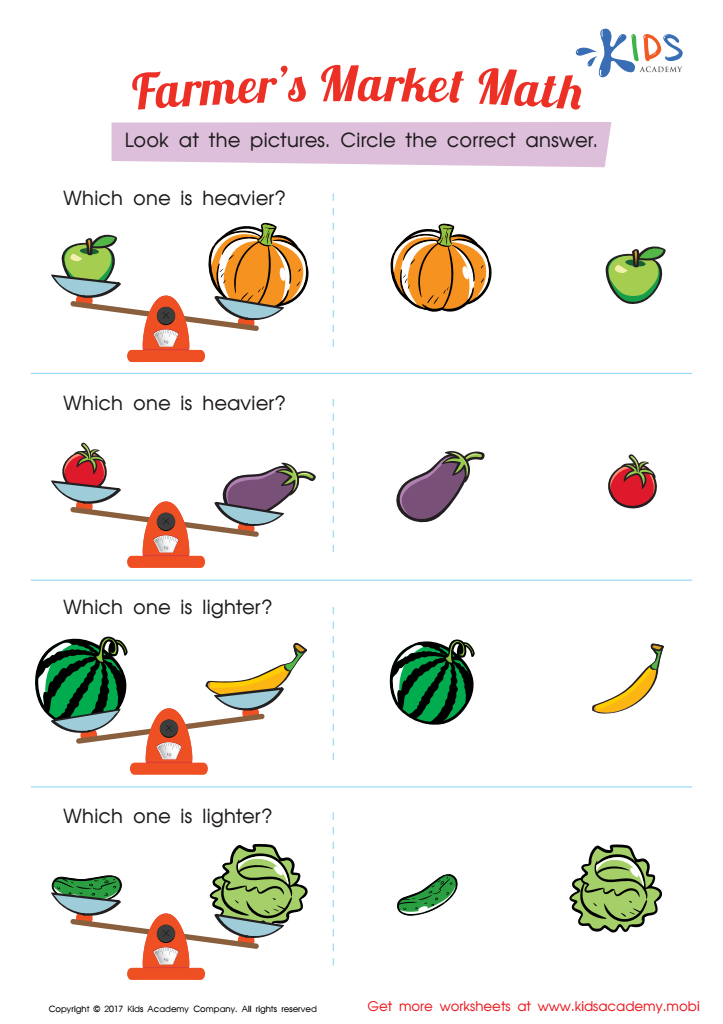
Which One Is Heavier Worksheet
 Assign to My Students
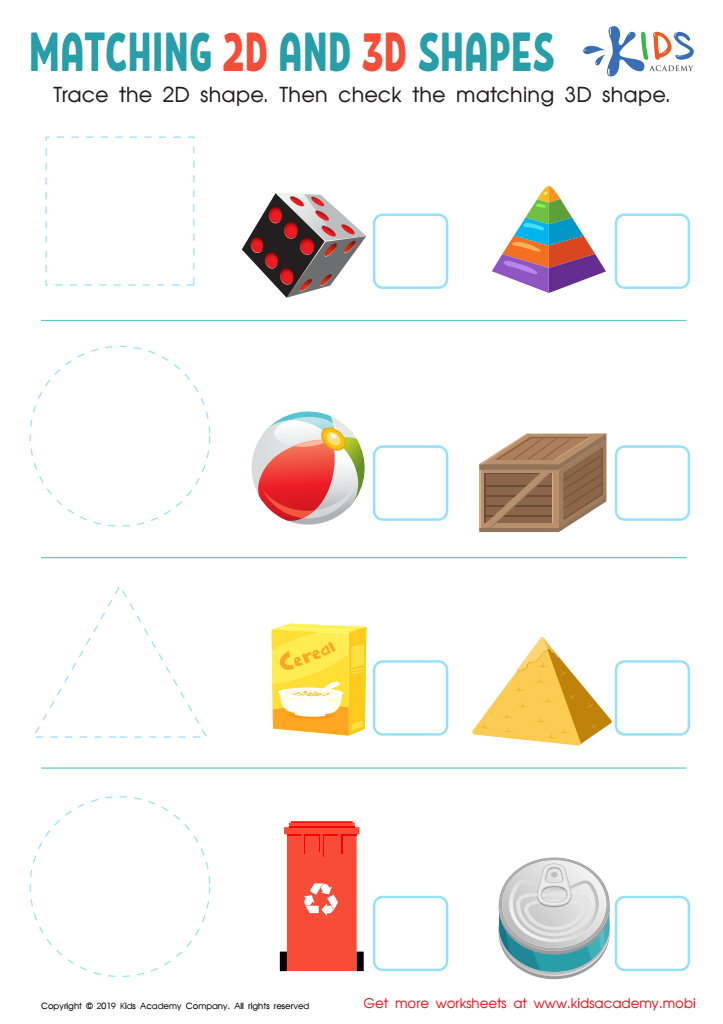
Matching 2D and 3D Shapes Worksheet
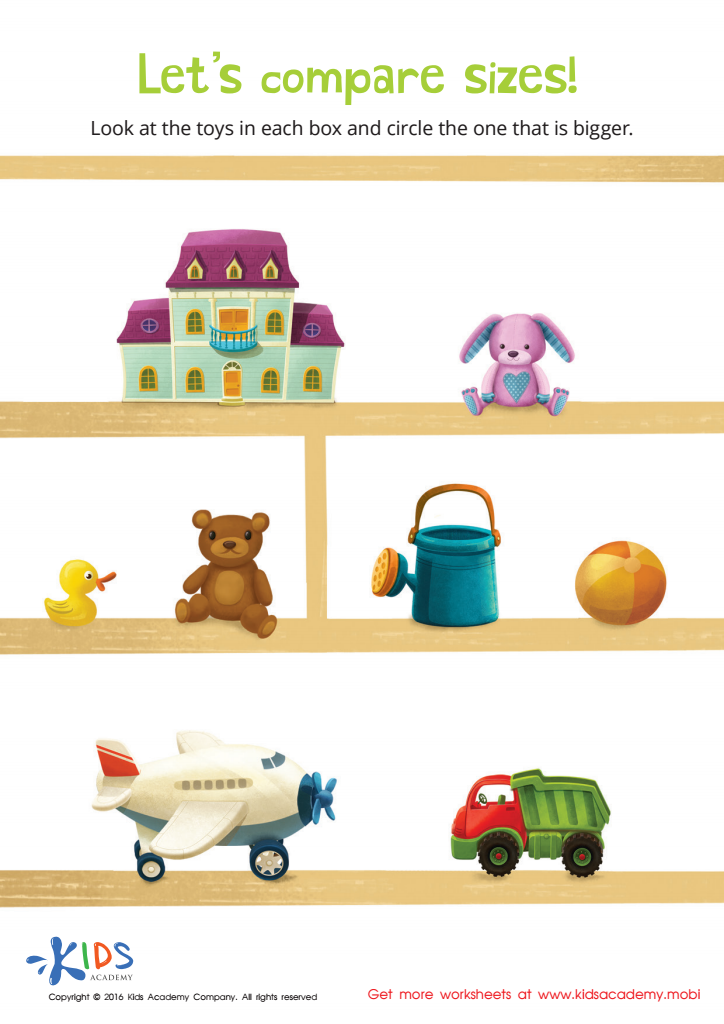
Classifying by Size Sorting Worksheet


.jpg)


Comparing objects through extra challenges holds significant value for 6-year-olds' cognitive and social development. Firstly, these activities enhance critical thinking and analytical skills. By examining attributes like size, shape, and weight, children learn to observe details, categorize, and make decisions—skills essential for academic success and daily problem-solving.
Moreover, comparing objects nurtures mathematical understanding. It lays a foundational comprehension of measurement, basic arithmetic, and the concept of more/less. These early math skills are crucial as they predict future success in more advanced mathematical concepts encountered later in school.
To add, such activities promote language development. Describing objects and their differences or similarities encourages the use of descriptive vocabulary and strengthens communication skills. In group settings, this nurtures social skills such as cooperation, listening, turn-taking, and explaining one's thought process.
Further, engaging in these challenges can boost self-confidence and perseverance. Solving comparison problems instills a sense of accomplishment, encouraging children to tackle increasingly complex tasks. It also teaches patience and the value of persistence.
Overall, incorporating comparison challenges into a child's routine provides a fun and educational way to bolster essential skills, fostering well-rounded development that serves as a foundation for lifelong learning. Parents and teachers should see these exercises as opportunities to support and extend their children's growth in multiple dimensions.








