Understanding fractions Extra Challenge Addition & Subtraction Worksheets for 6-Year-Olds
4 filtered results
-
From - To
Boost your child's math skills with our "Understanding Fractions Extra Challenge Addition & Subtraction Worksheets" designed especially for 6-year-olds. These engaging worksheets offer a fun and effective way to introduce young learners to the concept of fractions through the basic operations of addition and subtraction. By mixing visual aids with hands-on practice, kids can better grasp and enjoy learning fractions. Perfect for early grade students, these extra challenges reinforce foundational math skills, ensuring your child develops confidence in problem-solving and arithmetic. Let your child explore fractions with these interactive and educational resources.
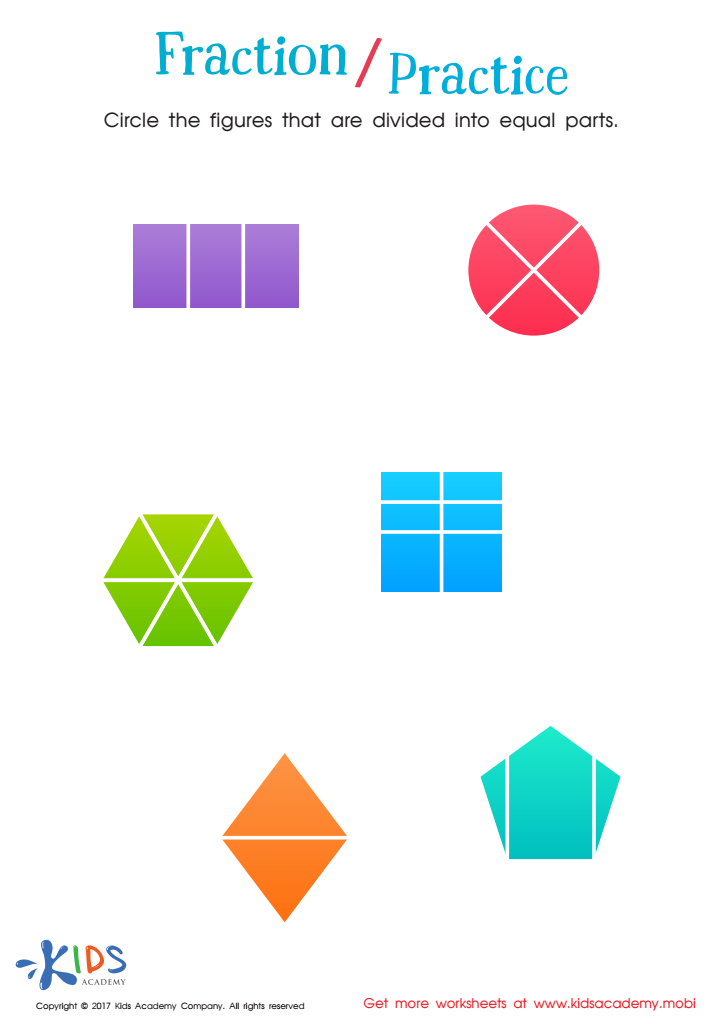
Fractions: Shapes Worksheet
 Assign to My Students
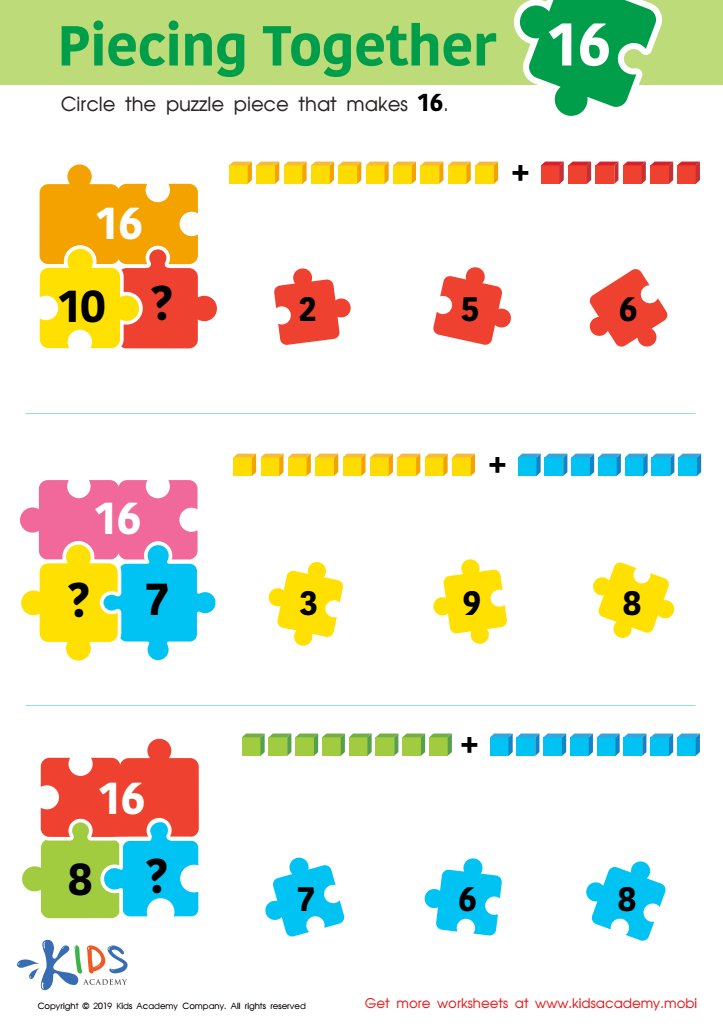
Piecing Together 16 Worksheet
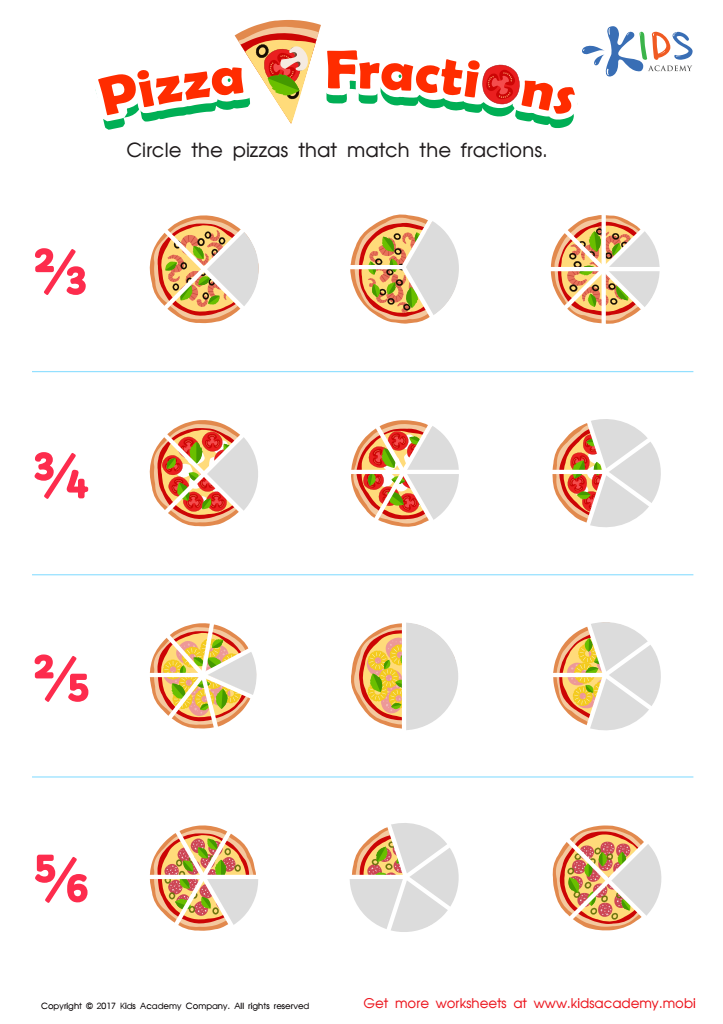
Fractions: Pizza Printable
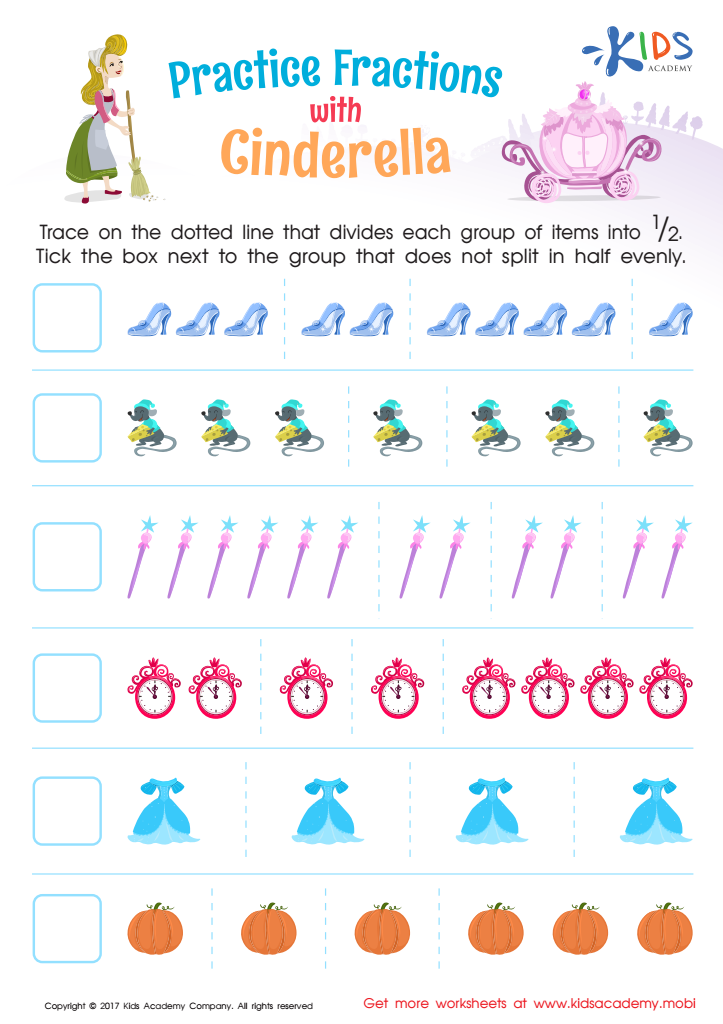
Fractions: Cinderella Printable








Understanding fractions is a foundational skill in mathematics that sets the stage for more complex concepts later in academic life. Introducing 6-year-olds to fractions through extra challenges in addition and subtraction helps solidify their comprehension in several key ways.
First, early exposure to fractions enhances number sense, allowing children to grasp that numbers can represent parts of a whole. This concept is crucial as they progress in mathematics, dealing with percentages, decimals, and ratios. Challenging their addition and subtraction skills within the context of fractions enables them to apply these foundational operations to more complex scenarios, improving their overall arithmetic abilities.
Second, engaging with fractions at a young age nurtures critical thinking and problem-solving skills. When children work through extra challenges, they learn to understand and solve problems from multiple angles. This helps build resilience and adaptability, crucial traits for academic and personal success.
Finally, mastering fractions early instills confidence. When children realize they can tackle seemingly difficult problems, their self-esteem grows, fostering a positive attitude towards mathematics and learning as a whole.
By emphasizing fractions through additional challenges in addition and subtraction, parents and teachers help young learners build a robust mathematical foundation, self-confidence, and crucial cognitive skills that benefit them long-term.








