Shape Recognition Extra Challenge Math Worksheets for 6-Year-Olds
11 filtered results
-
From - To
Discover our engaging "Shape Recognition Extra Challenge Math Worksheets" designed specifically for 6-year-olds! Our meticulously crafted worksheets provide a fun and interactive way for young learners to enhance their shape recognition skills. These extra challenges encourage critical thinking as children identify, compare, and manipulate various shapes through exciting activities. Perfect for at-home learning or classroom use, these worksheets promote cognitive development while making math enjoyable. Ideal for parents and teachers seeking to enrich their students' understanding of geometry, each worksheet is vibrant and age-appropriate, fostering creativity and problem-solving abilities. Empower your child’s learning journey with our expertly designed resources!
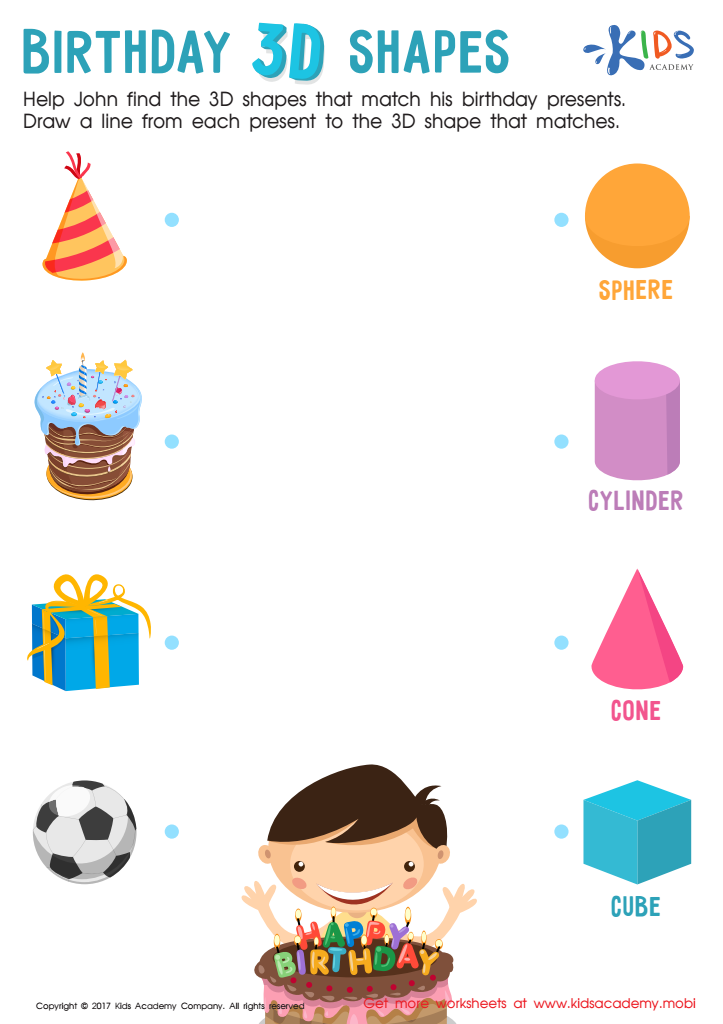
Birthday 3D Shapes Worksheet
 Assign to My Students
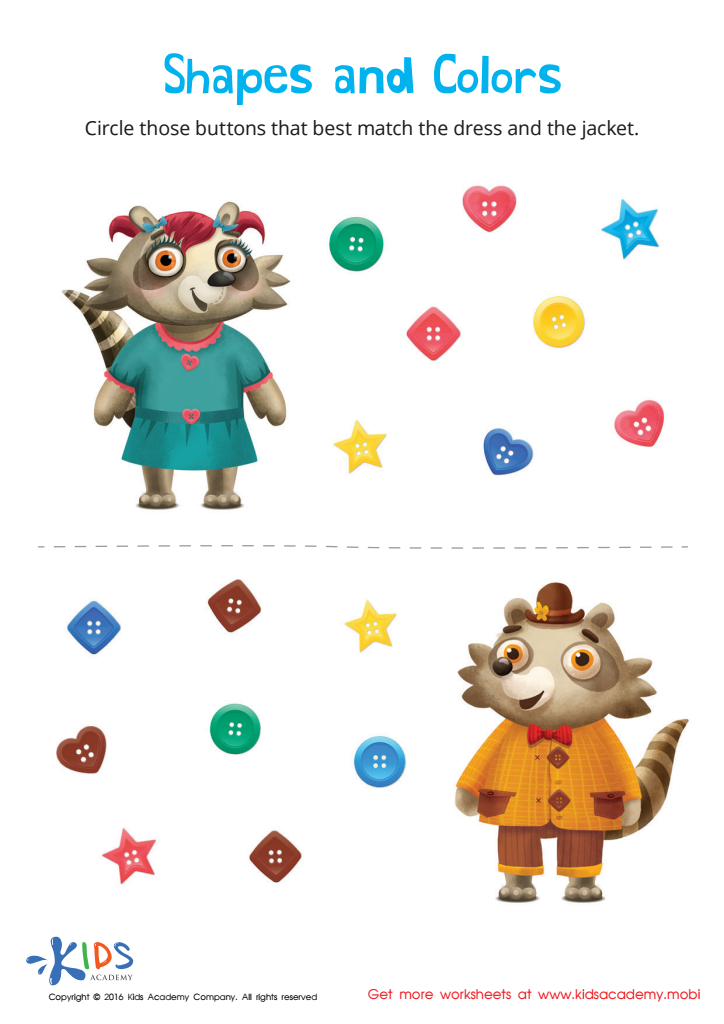
Matching: Shapes and Colors Worksheet
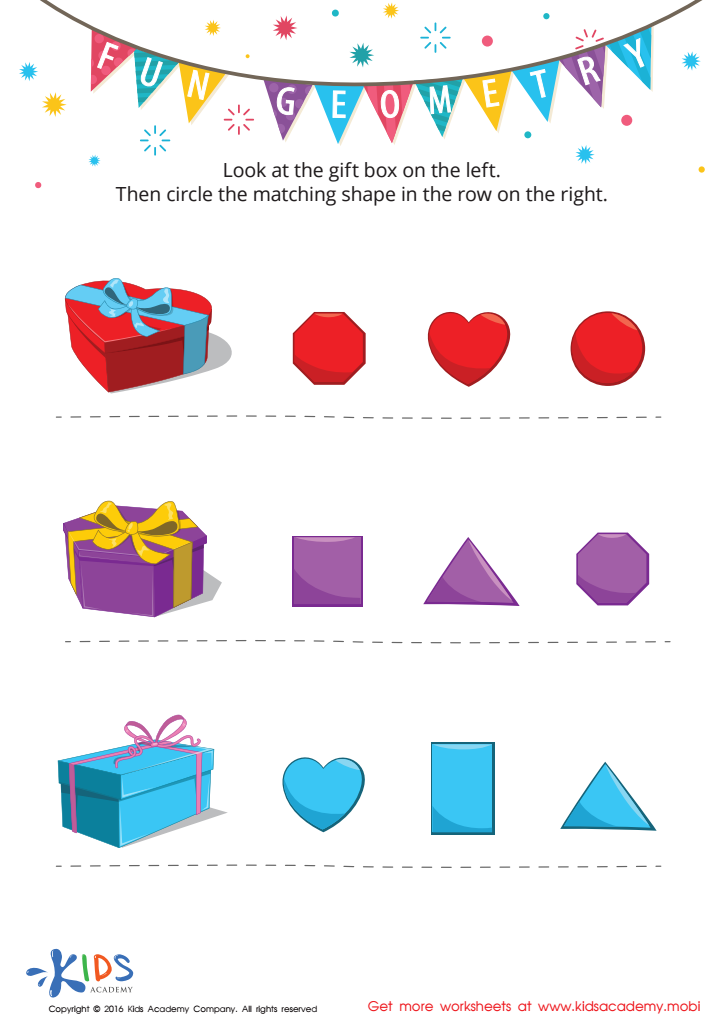
Fun Geometry Worksheet
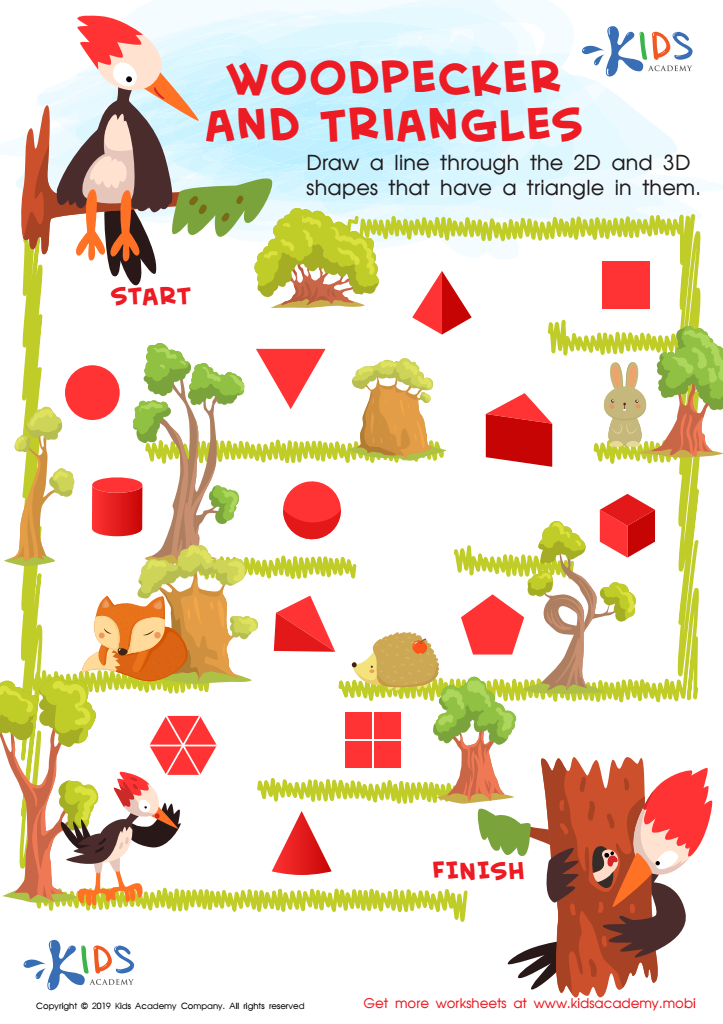
Woodpecker and Triangles Worksheet
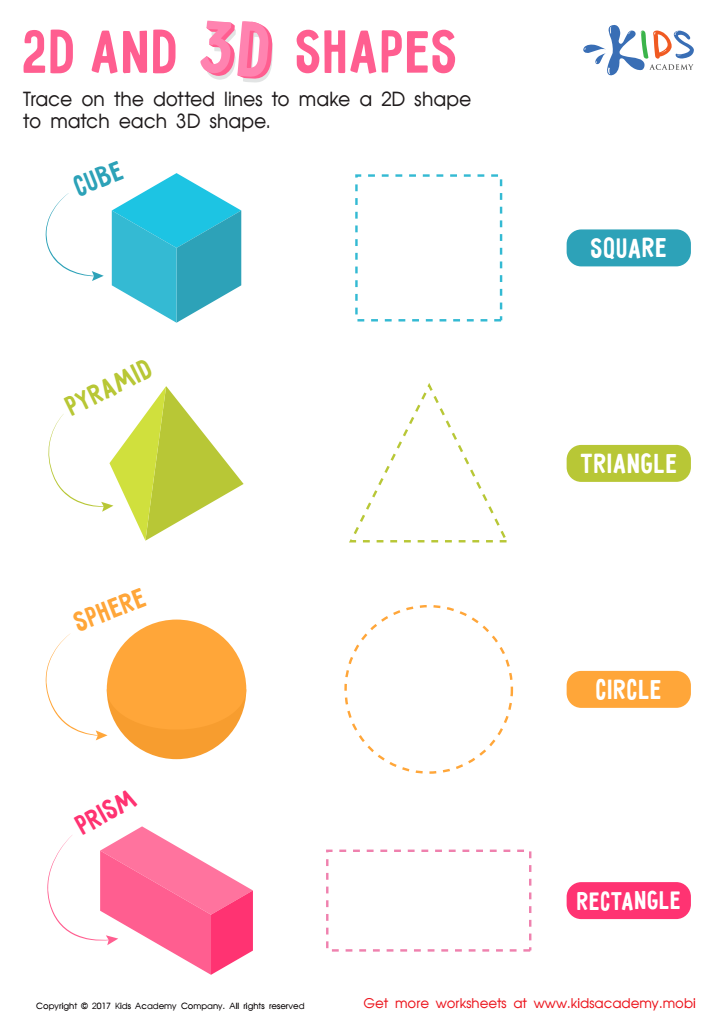
2D and 3D Shapes Worksheet
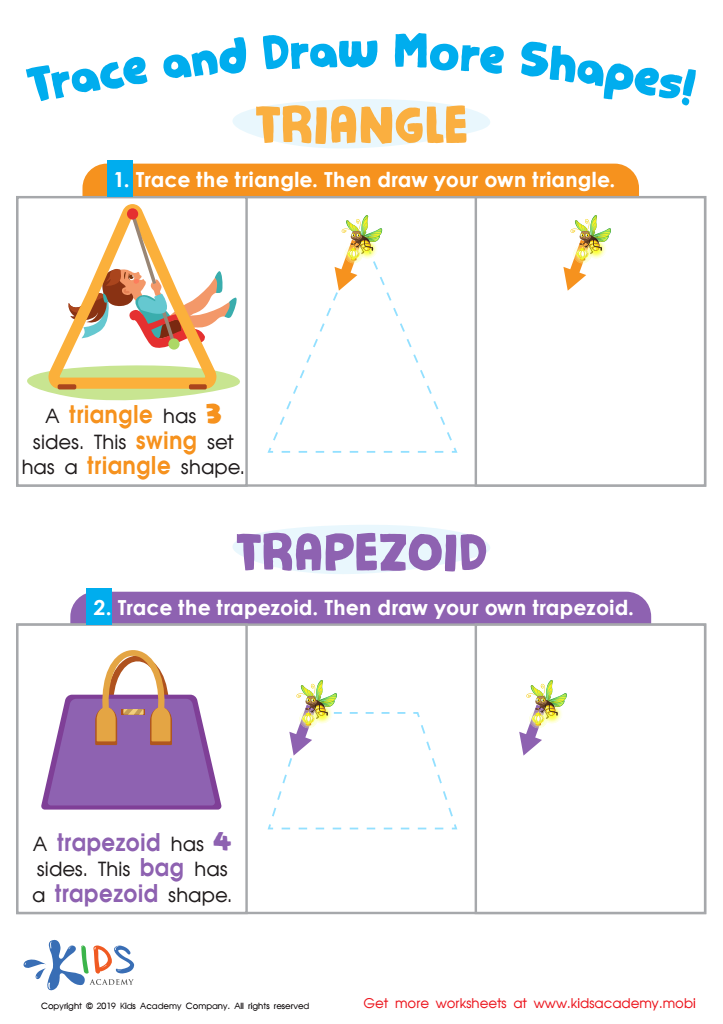
Trace and Draw More Shapes Worksheet
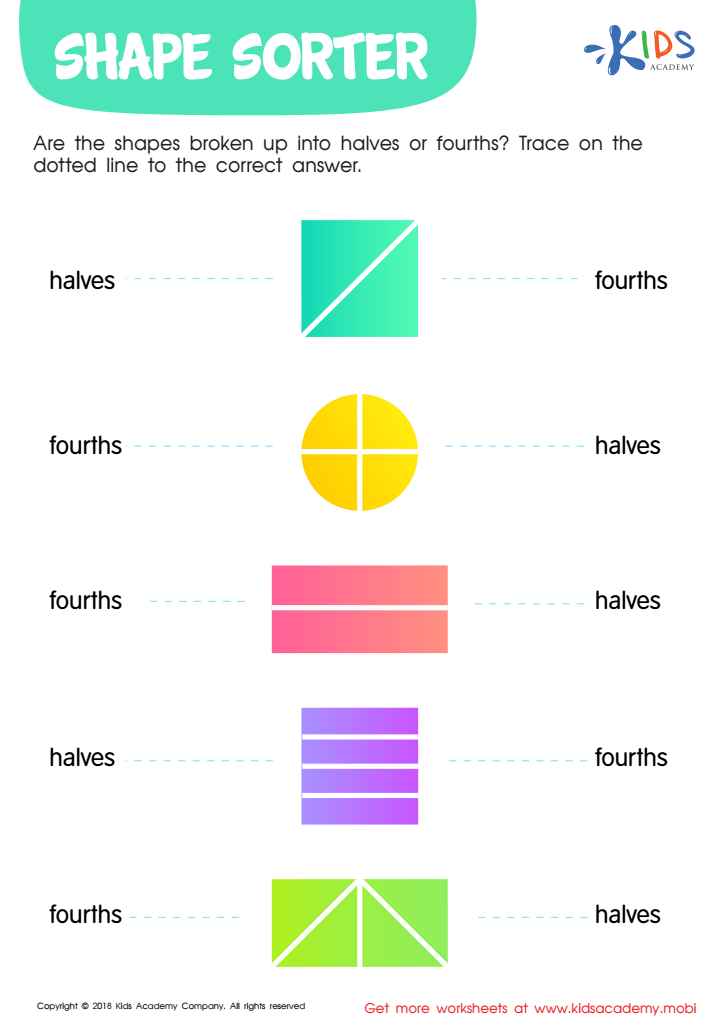
Shape Sorter Worksheet
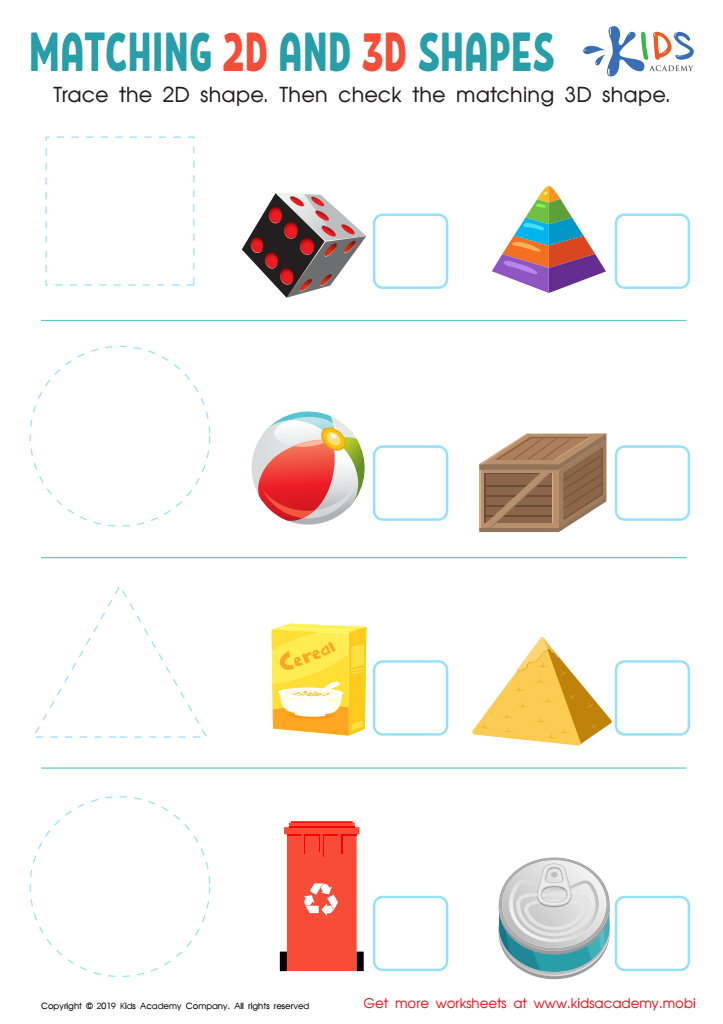
Matching 2D and 3D Shapes Worksheet
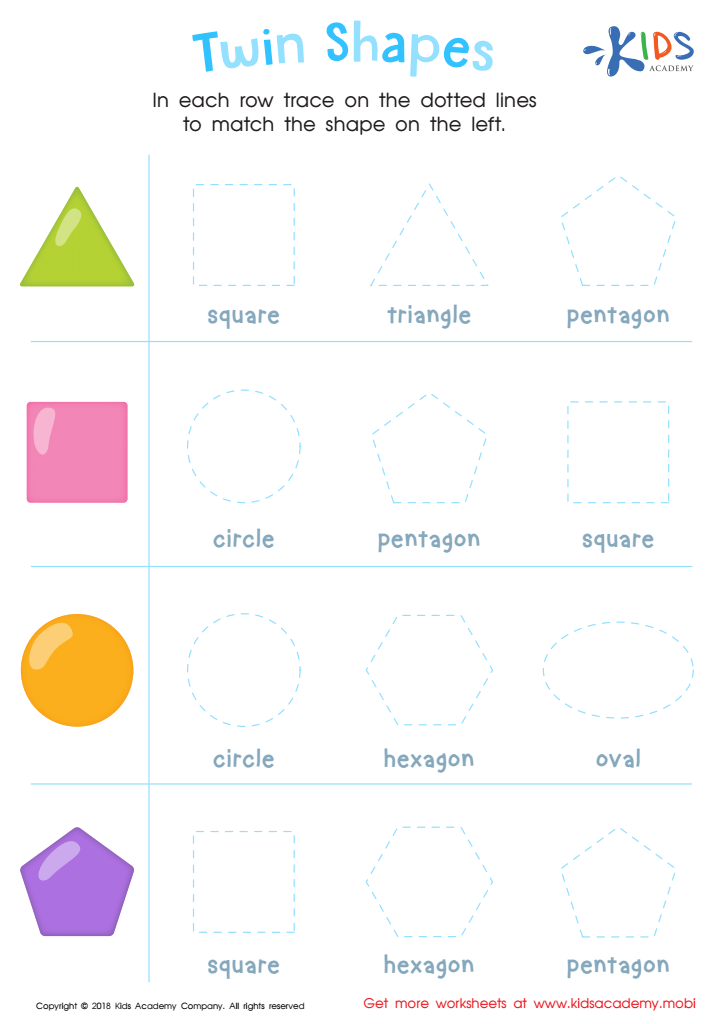
Twin Shapes Dot-to-Dot Worksheet
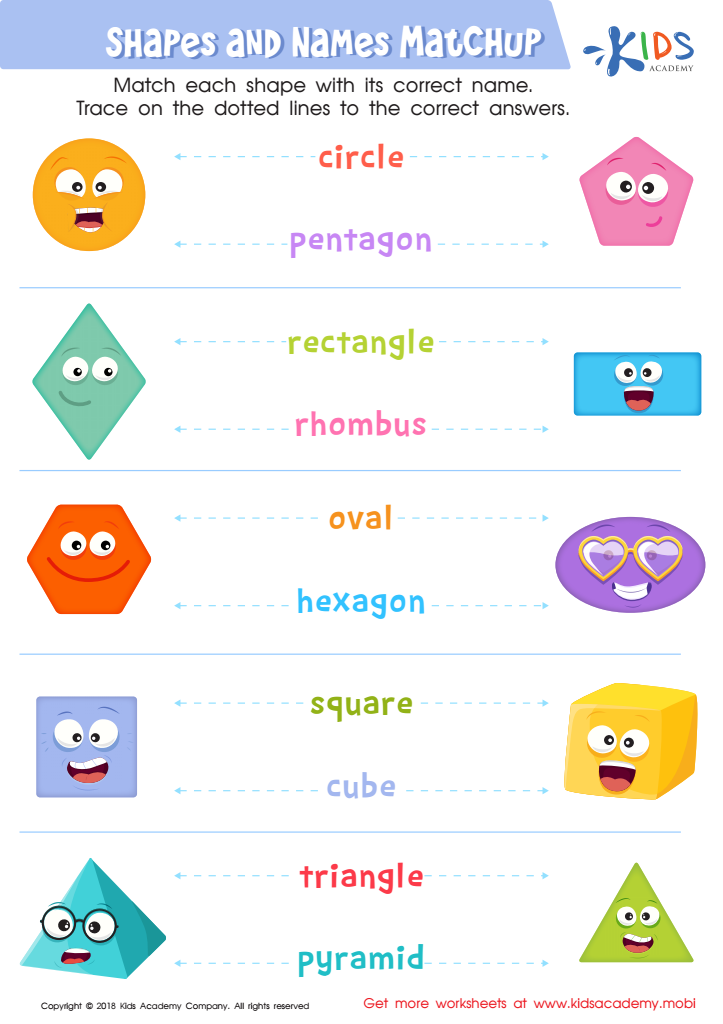
Shapes and Names Matchup Worksheet
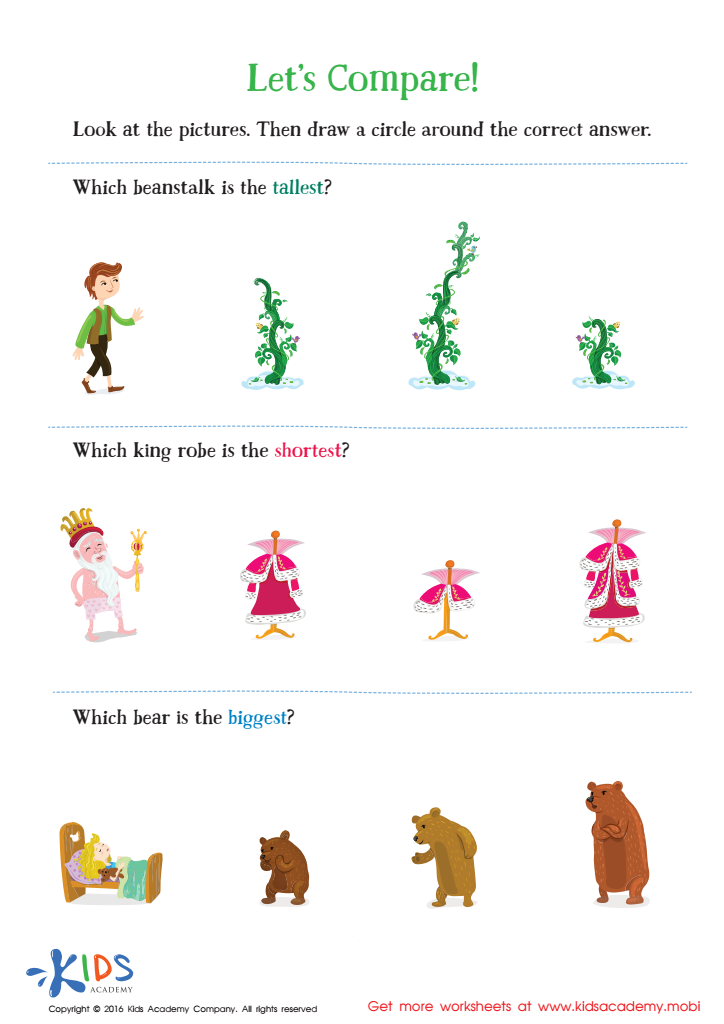
Fairy Tale Worksheet: Let's Compare








Shape recognition is a fundamental skill that significantly influences a child's overall cognitive development. For six-year-olds, the ability to identify and understand shapes sets the stage for more complex mathematical concepts. Engaging in shape recognition through extra challenge math exercises promotes critical thinking, spatial awareness, and problem-solving skills.
By investing time in shape recognition activities, parents and teachers help children develop a solid foundation in geometry, which is vital for future academic success. It not only enhances their understanding of two-dimensional and three-dimensional forms but also builds connections between math and the real world—think of how shapes are integral in art, nature, and architecture.
Moreover, addressing shape recognition in a fun and engaging way encourages a positive attitude towards math and learning in general. It can inspire curiosity and creativity, elements crucial for lifelong learning. These activities also foster fine motor skills as children manipulate various shapes, an essential aspect of their development.
Ultimately, incorporating challenging math exercises focused on shape recognition empowers children, boosts their confidence, and equips them with the competencies needed for later academic pursuits. For parents and educators, investing in this skill is crucial for nurturing well-rounded, mathematically inclined individuals.