
Animal recognition Extra Challenge Worksheets for Ages 7-9
3 filtered results
Difficulty Level
Grade
Age
-
From - To
Subject
Activity
Standards
Discover our engaging "Animal Recognition Extra Challenge Worksheets" designed specifically for kids aged 7-9! These fun and interactive worksheets encourage young learners to dive deeper into the world of animals, honing their observation and identification skills. Perfect for enhancing vocabulary and critical thinking, each worksheet presents unique challenges that blend education with entertainment. Your child will explore a variety of animals through matching games, descriptive activities, and fun facts. Ideal for classroom use or at-home learning, these worksheets not only bolster knowledge but also foster a love for wildlife. Download now and let the adventure begin!
Favorites
With answer key
Interactive
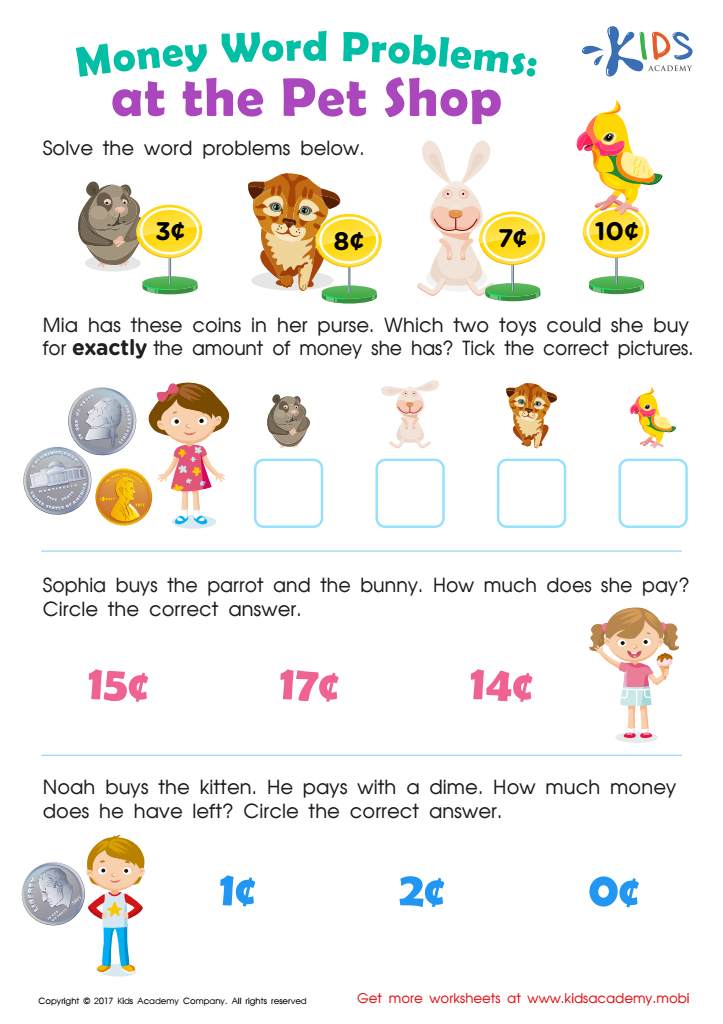
Pet Shop Worksheet
Teach your child a key life skill: counting and managing money. With this worksheet, they'll learn to count coins and calculate purchases at the pet shop. Give them colorful, fun math practice!
 Assign to My Students
Pet Shop Worksheet
Worksheet
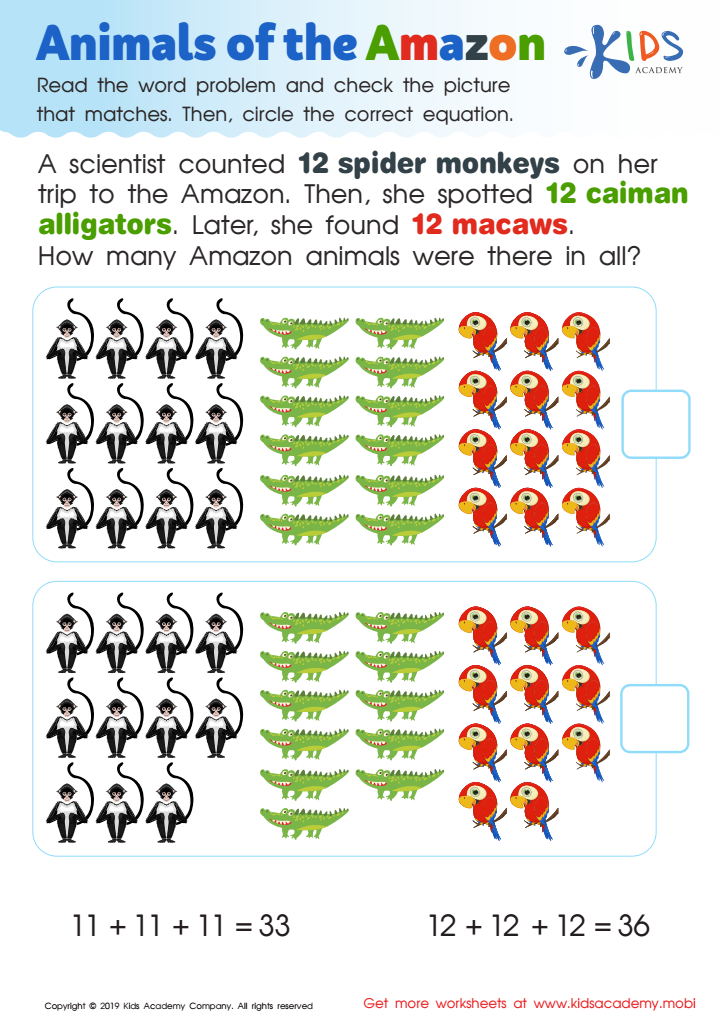
Animals of Amazon Worksheet
Kids will love exploring the Amazon while solving addition problems on this colorful PDF worksheet. They need to pay attention to the bolded info in each word problem to figure out the equation picture that matches. It's an exciting way to learn about the Amazon and practice adding multiple numbers!
Animals of Amazon Worksheet
Worksheet
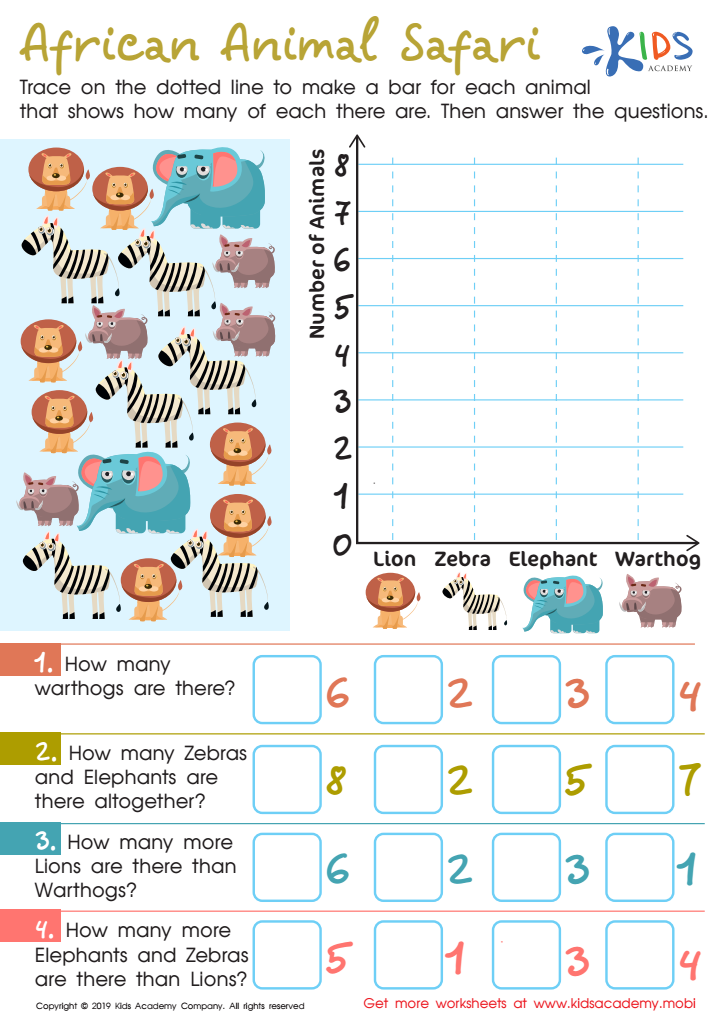
African Animal Safari Worksheet
Help students learn geography and math, with this worksheet. Examine the graph and ask your students questions. Have them answer using the graph and addition/subtraction exercises. This can help them name continents, countries, and animals unique to each.
African Animal Safari Worksheet
Worksheet
Join Kids Academy for Free
Who is primarily going to use this learning content?








Animal recognition is an important skill for children aged 7-9, as it fosters a connection with nature and promotes critical thinking. For parents and teachers, encouraging this skill can enhance a child's understanding of science, ecology, and the environment. When children learn to recognize various animals, they begin to understand biodiversity and the roles different species play in our ecosystems. This knowledge helps cultivate a sense of empathy and responsibility towards wildlife and conservation efforts.
Moreover, engaging with animal recognition encourages curiosity and observational skills. Children learn to classify animals based on characteristics like habitat, diet, and behavior, which sharpens their analytical thinking. Activities that inspire this recognition, such as outdoor explorations or interactive classroom projects, can significantly boost collaboration among peers, enhancing social skills and teamwork.
Additionally, fostering a love for animals can yield lifelong benefits. It promotes mindfulness, reduces stress, and opens avenues for future interests in biology, environmental science, and wildlife conservation. By supporting animal recognition activities, parents and teachers not only enrich children's learning experience but also instill values that nurture a sense of wonder about the natural world and their role within it.








