Fraction visualization Extra Challenge Worksheets for Ages 7-9
3 filtered results
-
From - To
Enhance your child's understanding of fractions with our engaging Fraction Visualization Extra Challenge Worksheets for Ages 7-9! Designed to strengthen math skills, these worksheets provide a variety of fun and interactive exercises that encourage children to visualize fractions in dynamic ways. With appealing graphics and scenarios, your child will tackle challenges that improve their ability to compare, add, and subtract fractions. Perfect for reinforcing concepts learned in class, these worksheets support diverse learning styles and help build confidence in math. Download now to transform fraction learning into an enjoyable adventure and inspire a lifelong love for mathematics!
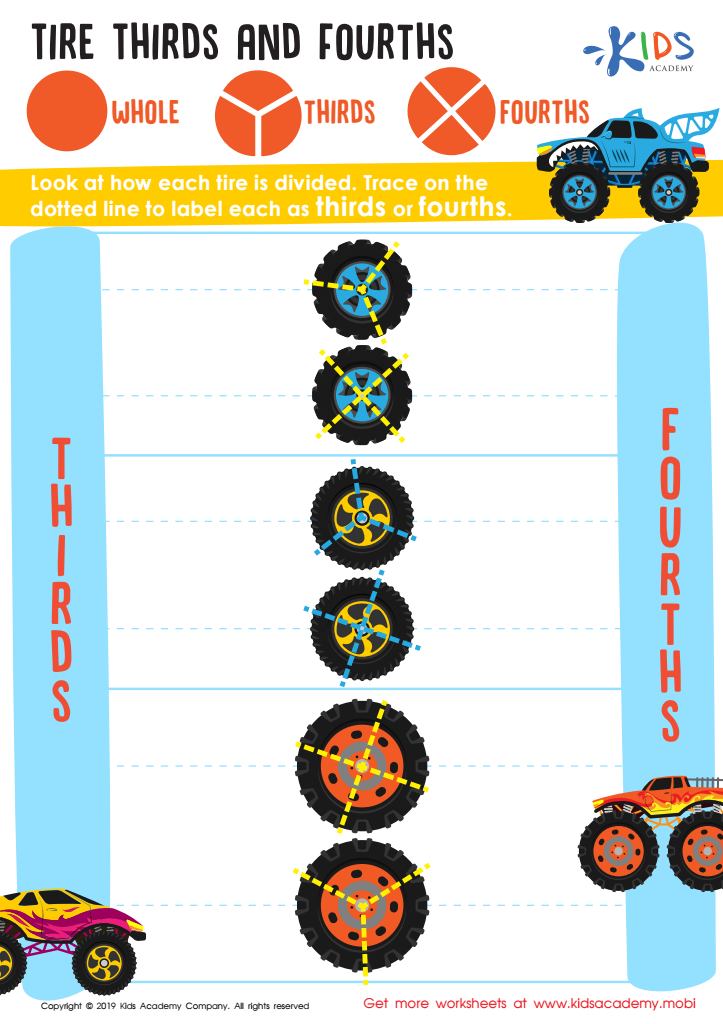
Tire Thirds and Fourths Worksheet
 Assign to My Students
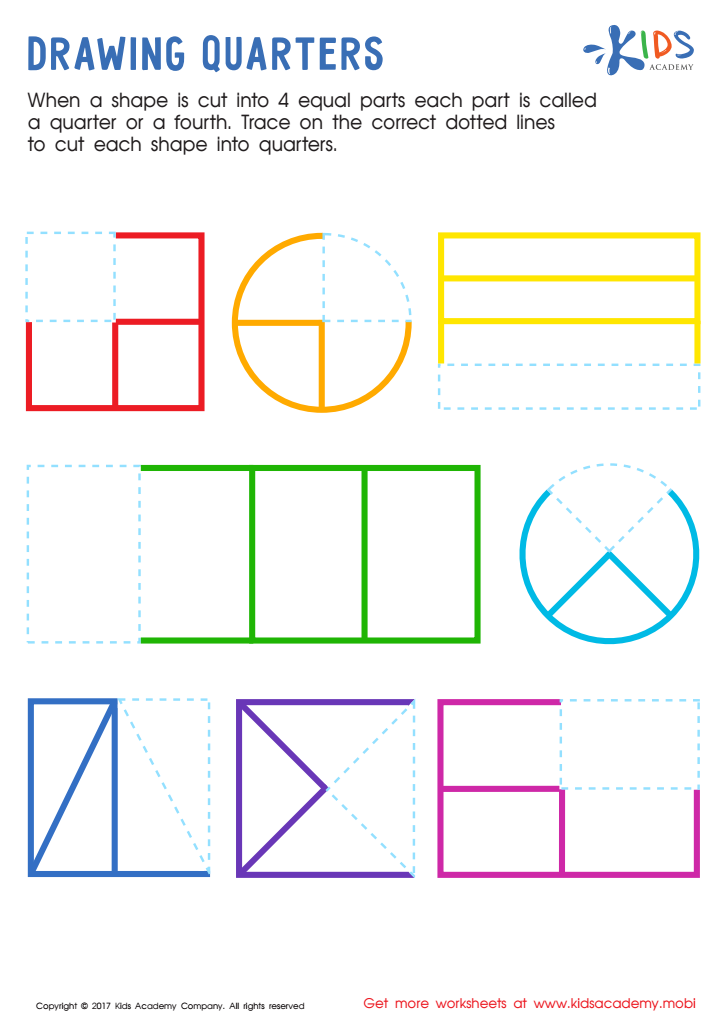
Drawing Quarters Worksheet
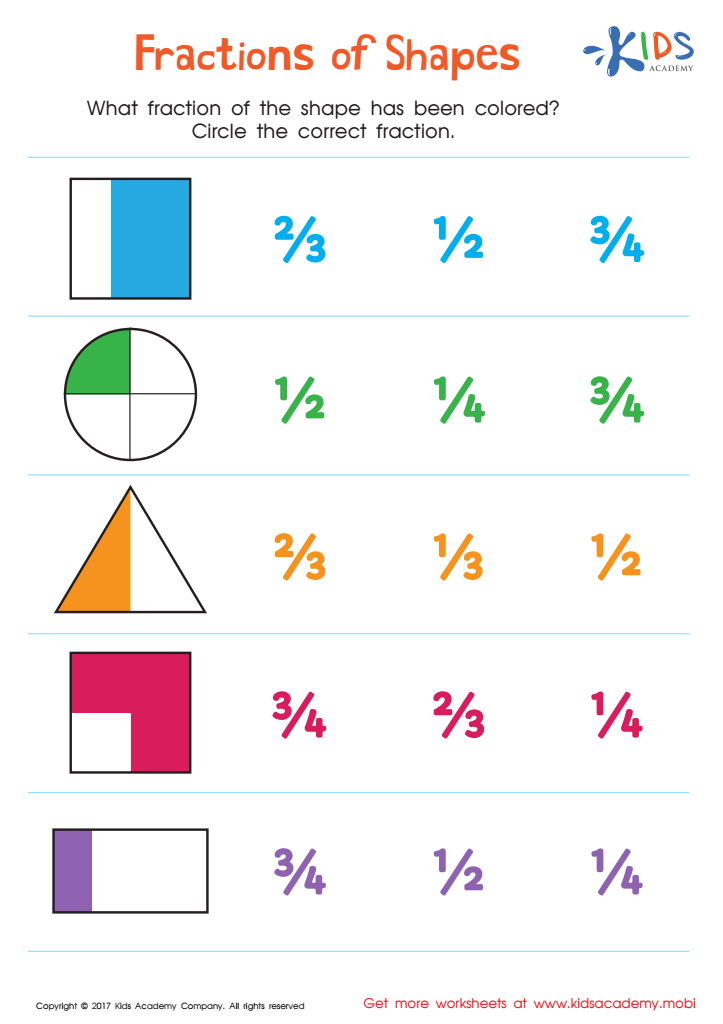
Fractions of Shapes: Math Concept Worksheet








Understanding fraction visualization is crucial for children aged 7-9, as it lays the groundwork for more complex mathematical concepts encountered later. This age group is particularly adept at visual learning, making engaging and interactive challenges essential for their grasp of fractions. By emphasizing visual representations—such as pie charts, number lines, and bar models—parents and teachers can help children intuitively understand how fractions work, enhancing their comprehension of parts of a whole.
Additionally, mastering fraction visualization encourages problem-solving skills and critical thinking. Children learn to compare and manipulate fractions more effectively when they can visualize them, leading to greater confidence in mathematics. This confidence can carry over into other subjects, fostering a love for learning overall.
Furthermore, fraction visualization helps demystify numerical operations. Through practical application like cooking, measuring, or dividing objects into parts, fractions become tangible and relatable. Parents and teachers can collaborate to create interactive activities or challenges that stimulate interest and engagement. Ultimately, integrating fraction visualization into learning fosters a solid mathematical foundation that empowers children to navigate more complex concepts in the future. By caring about this aspect of education, adults can inspire a generation of confident, capable mathematicians.








