Recognizing shapes Extra Challenge Geometry Worksheets for Ages 7-9
3 filtered results
-
From - To
Explore our "Recognizing Shapes Extra Challenge Geometry Worksheets" designed for ages 7-9! These engaging worksheets challenge young learners to identify, classify, and analyze various shapes in a fun and interactive way. With an array of exercises, including shape puzzles and real-world applications, students will enhance their geometric understanding while developing critical thinking skills. Perfect for both classroom use and at-home practice, our worksheets encourage creativity and problem-solving. Give your child the tools they need to succeed in geometry, and watch their confidence grow as they master shape recognition! Discover the joy of learning math through hands-on challenges and interactive experiences.
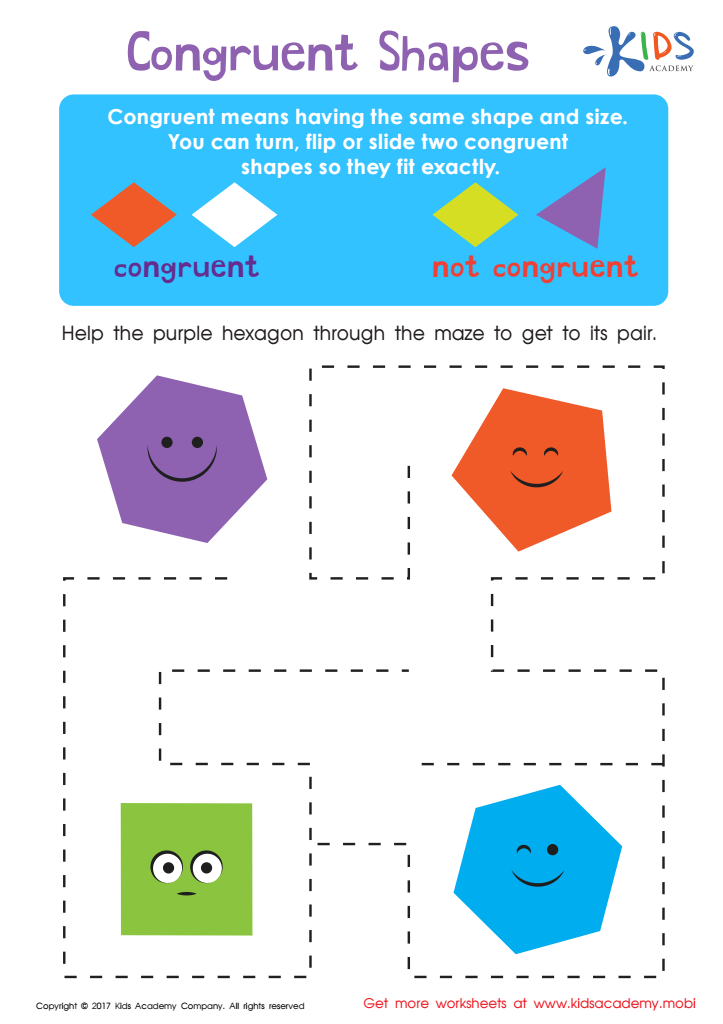
Congruent Shapes Worksheet
 Assign to My Students











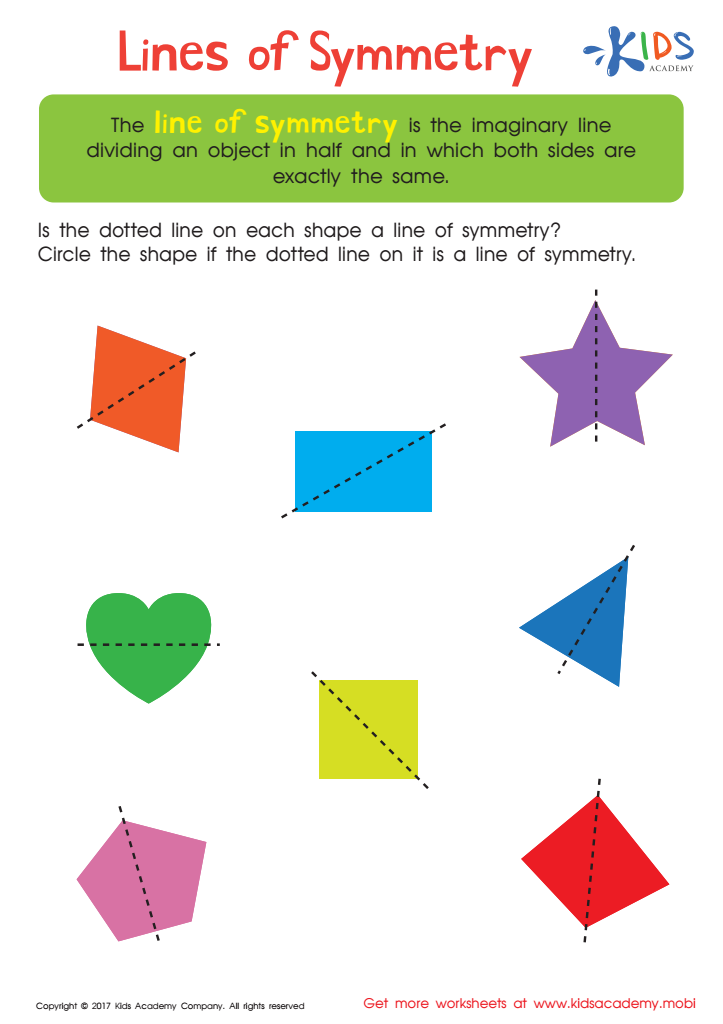
Lines of Symmetry Printable
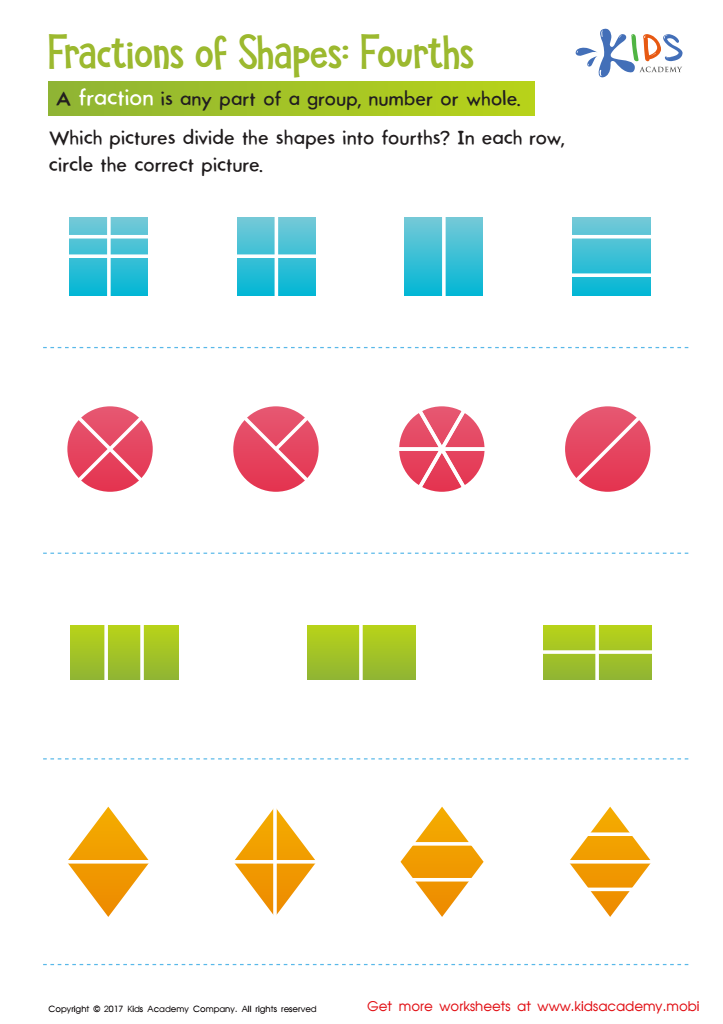
Fractions of Shapes Worksheet








Recognizing shapes is a fundamental aspect of early geometry education, particularly for children aged 7-9. It serves as the building block for more complex mathematical concepts that students will encounter in later grades. When parents and teachers actively participate in encouraging shape recognition, they contribute to a child’s spatial reasoning, problem-solving skills, and overall mathematical confidence.
Caring about geometry education equips children with the ability to identify and understand the properties of various shapes, leading to better performance in both mathematics and science. It fosters critical thinking as students learn to categorize and analyze their environment based on geometric principles. Shape recognition is also crucial in everyday life, from architecture to art, helping children appreciate the world around them.
Moreover, engaging in geometry during this formative stage stimulates cognitive development. Activities that involve shapes enhance fine motor skills and promote creativity, as children can combine different shapes to create new designs. For parents and teachers, recognizing the significance of geometry in education means they can provide supportive experiences that align with children’s natural curiosity. By embracing shape recognition, adults play a vital role in nurturing well-rounded young learners prepared for future academic challenges.