Comparing lengths Extra Challenge Worksheets for 7-Year-Olds
4 filtered results
-
From - To
Our "Comparing Lengths Extra Challenge Worksheets for 7-Year-Olds" are designed to engage and challenge your young learners! These worksheets boost critical thinking and analytical skills as children compare the lengths of various objects, measurements, and figures. Each activity is carefully crafted to align with educational standards, ensuring your child gains confidence and proficiency in measurement concepts. With fun visuals and intriguing scenarios, your child will master comparing lengths and distances, enhancing their mathematical journey. Perfect for in-class exercises or at-home practice, these worksheets transform learning into an exciting adventure. Empower your 7-year-old's math skills today!
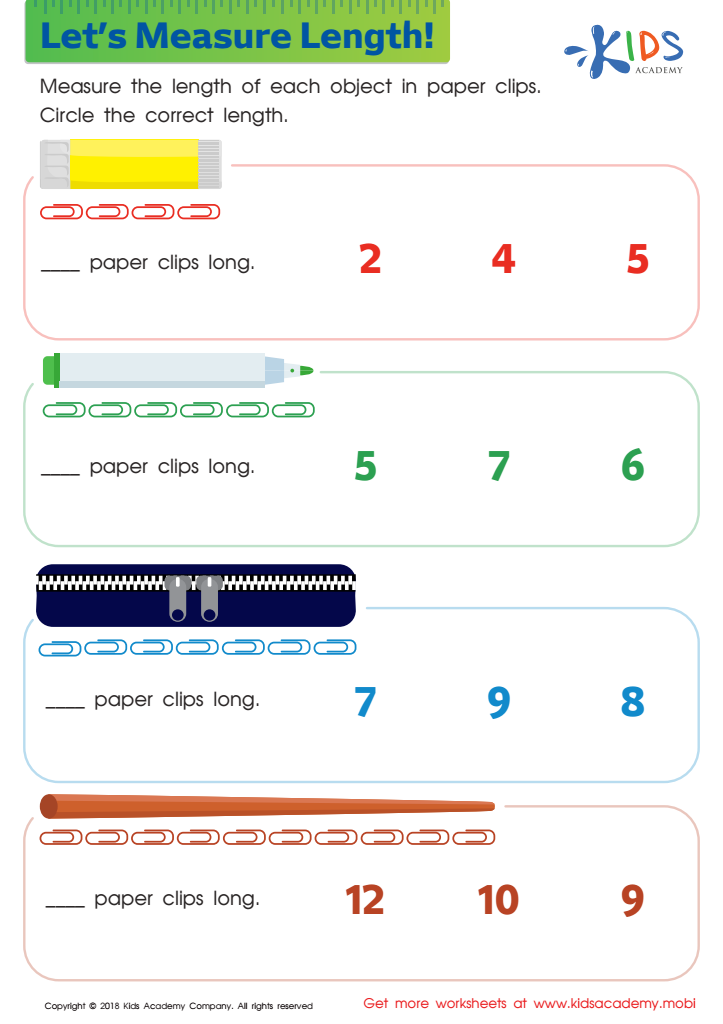
Lets Measure Length Worksheet
 Assign to My Students
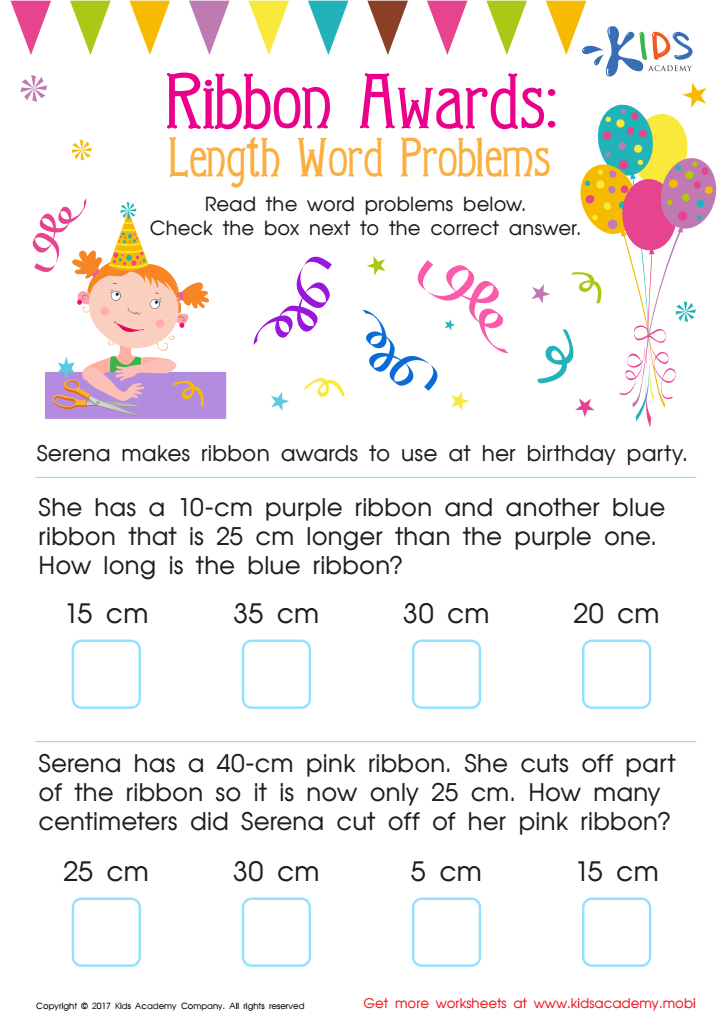
Length Word Problems Worksheet
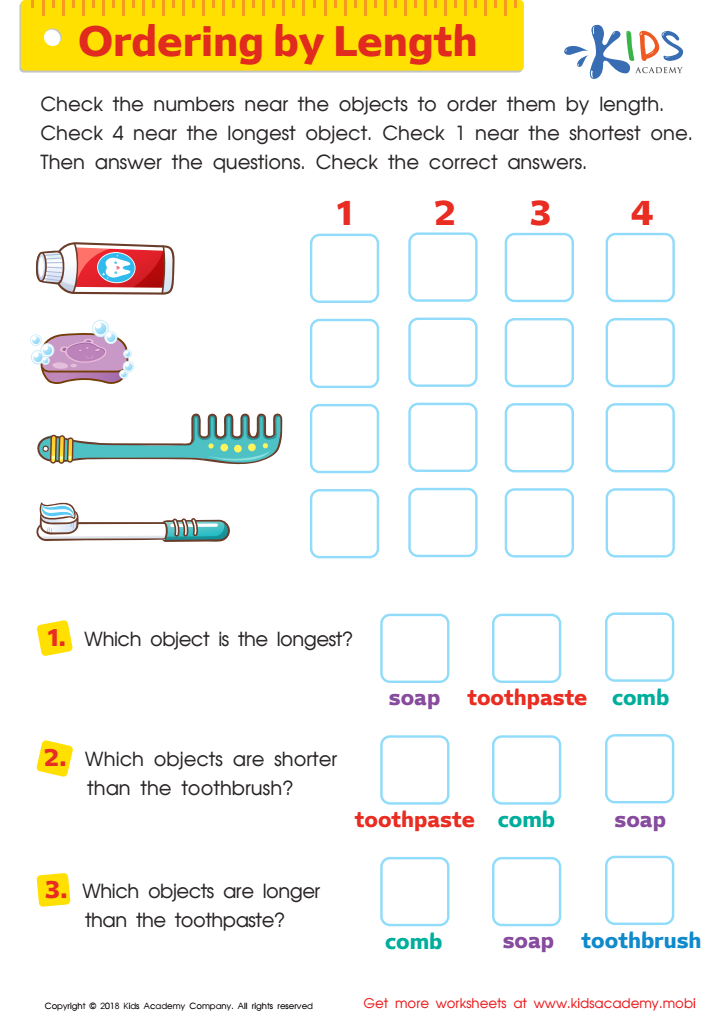
Ordering by Length Worksheet
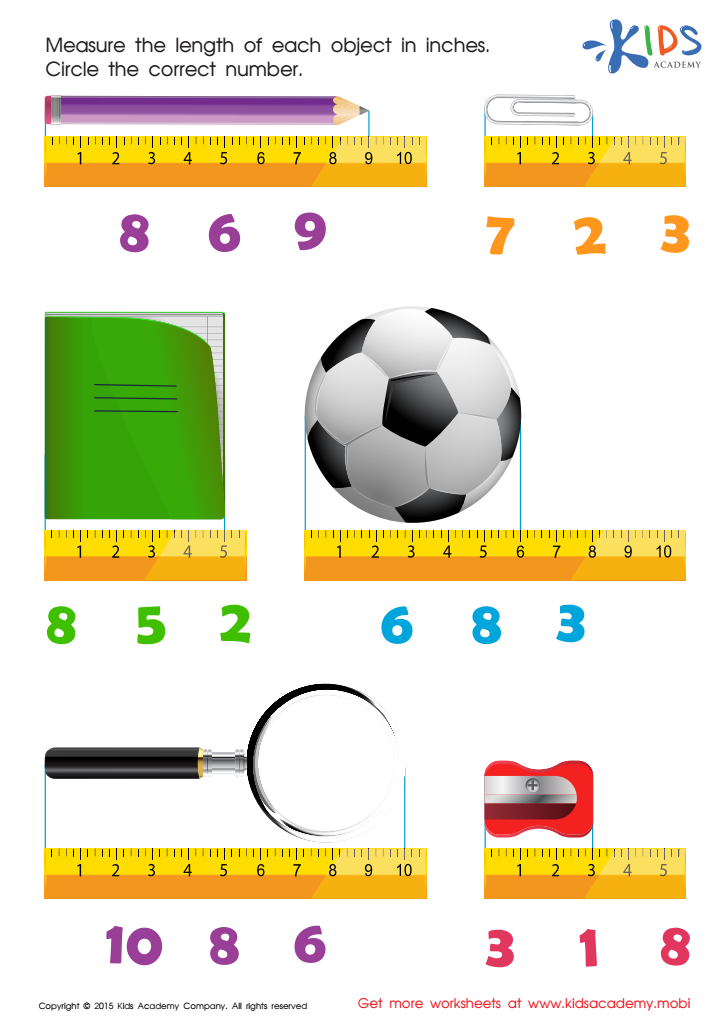
Learning measuring objects in inches Worksheet






Parents and teachers should care about comparing lengths extra challenge for 7-year-olds because it is crucial for fostering foundational mathematical and cognitive skills at an early age. Understanding and comparing lengths help children grasp key concepts in measurement, an essential component of mathematics. Engaging in these activities promotes spatial reasoning, as kids learn to judge distances and dimensions, enhancing their ability to comprehend and navigate the physical world.
Additionally, comparing lengths encourages critical thinking and problem-solving. As children determine which objects are longer or shorter, they develop their ability to analyze information, make decisions, and justify their results. This process involves logical thinking and can improve their confidence in tackling mathematical challenges.
Moreover, these exercises support the development of fine motor skills through hands-on activities such as measuring with rulers or non-standard units like paperclips or blocks. This tactile experience helps in honing their small muscle movements, vital for writing and other intricate tasks.
Finally, these activities can be fun and interactive, fostering a positive attitude toward learning. By integrating playful comparisons, parents and teachers can create an engaging environment where children are excited to explore and learn. The skills gained from these comparisons extend beyond mathematics to enhance overall cognitive development, laying a strong foundation for future academic success.








