Comparing Fractions Extra Challenge Math Worksheets for 7-Year-Olds
4 filtered results
-
From - To
Unlock your child's mathematical potential with our "Comparing Fractions Extra Challenge Math Worksheets" designed specifically for 7-year-olds! These engaging worksheets encourage young learners to sharpen their skills in comparing fractions using fun activities and thought-provoking problems. Each worksheet offers a variety of challenges, allowing children to practice identifying greater or lesser fractions, understanding equivalent fractions, and grasping essential concepts related to fractions in real-world contexts. With colorful graphics and age-appropriate questions, these worksheets promote both critical thinking and persistence. Help your child excel in math with our interactive resources that make learning enjoyable and effective! Perfect for home or classroom use!
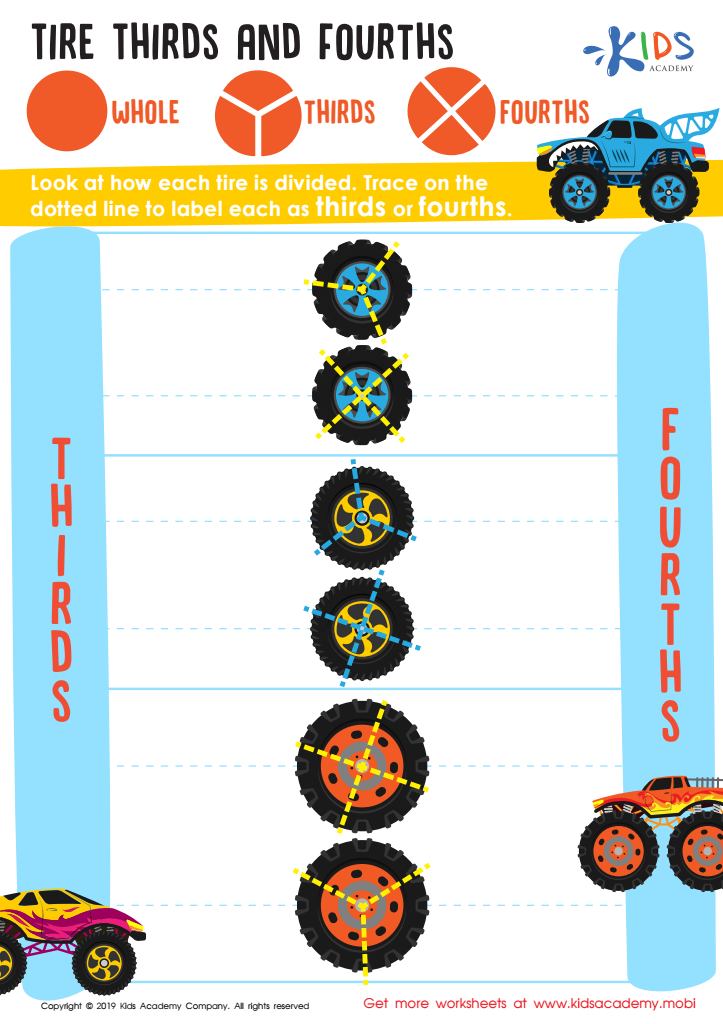
Tire Thirds and Fourths Worksheet
 Assign to My Students
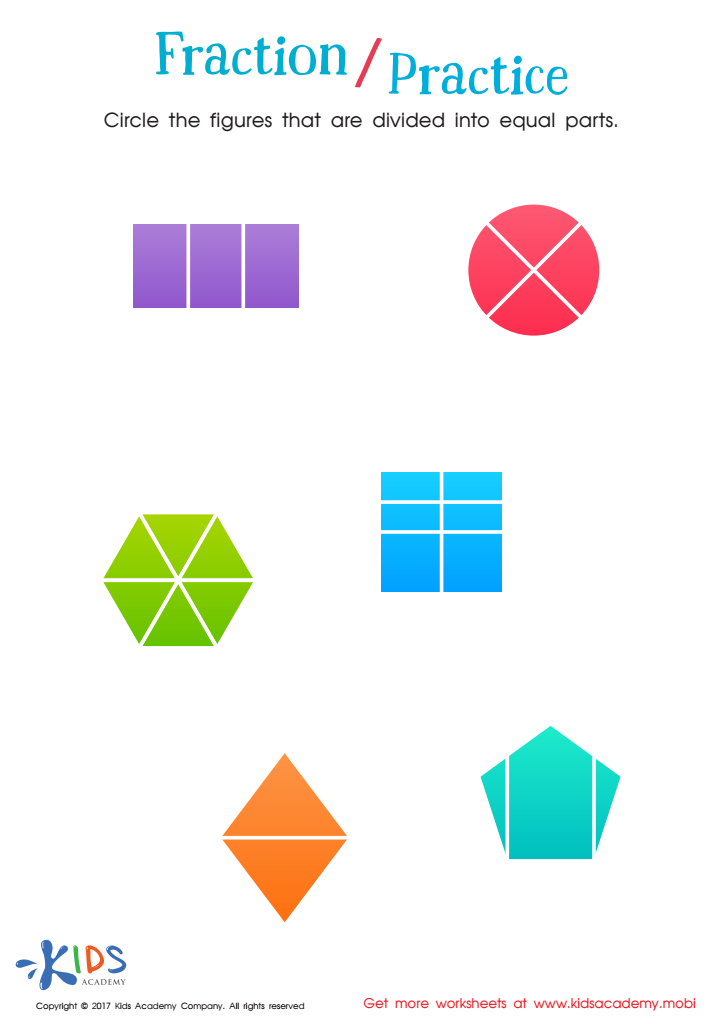
Fractions: Shapes Worksheet
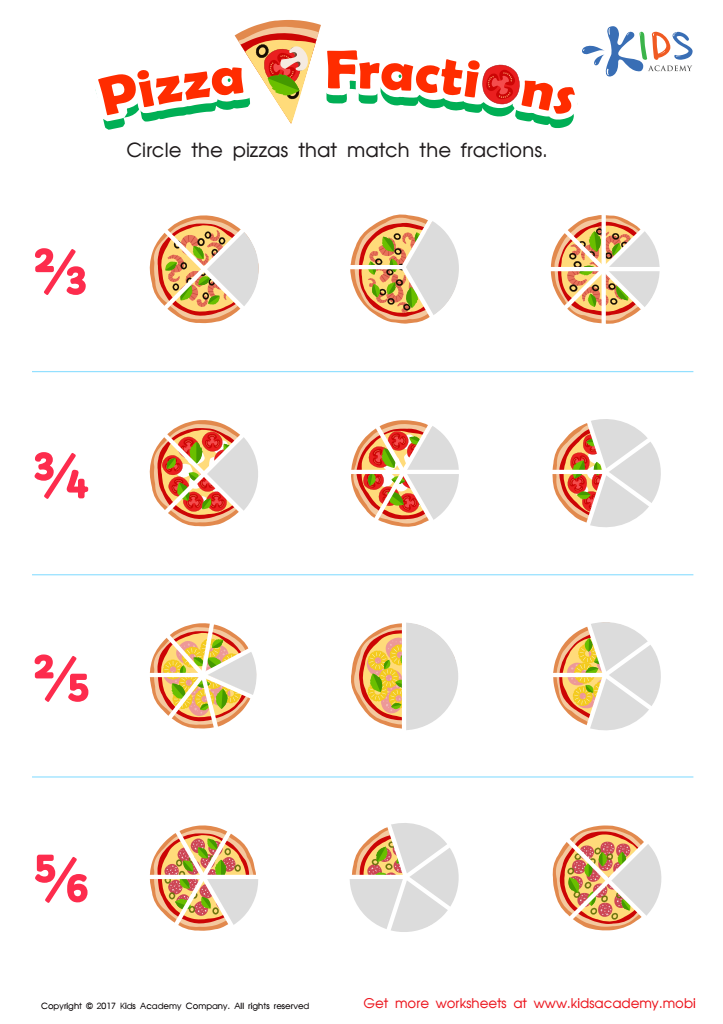
Fractions: Pizza Printable
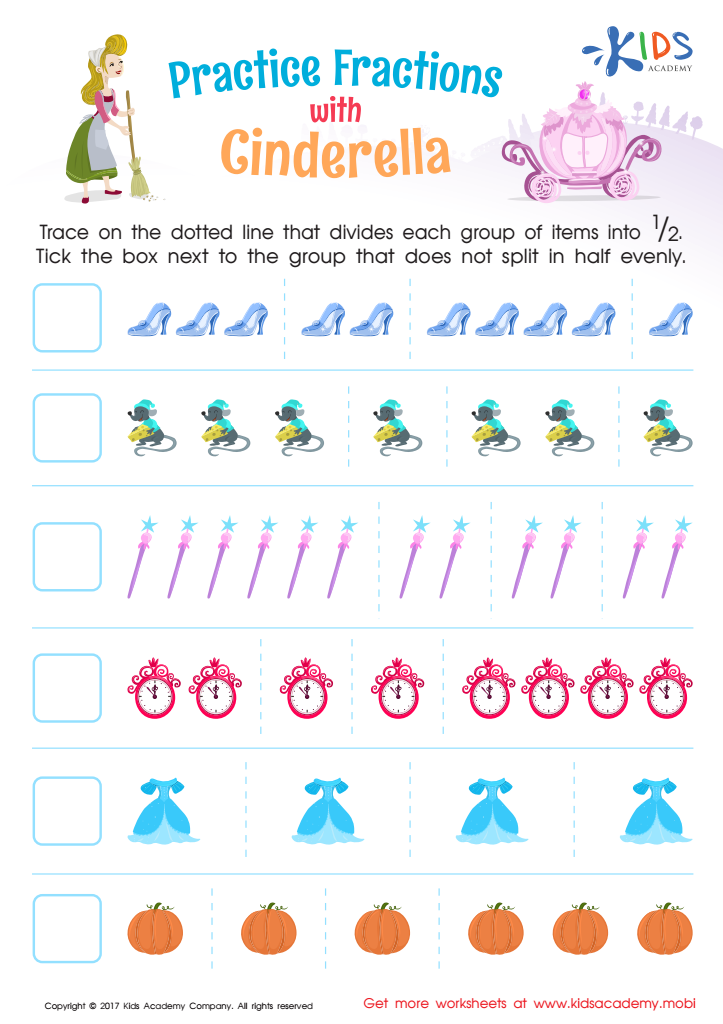
Fractions: Cinderella Printable








Comparing fractions is a foundational math skill that plays a crucial role in building numerical fluency in young learners. Parents and teachers should care about providing extra challenge math exercises for 7-year-olds focused on comparing fractions for several reasons. Firstly, these activities deepen children's understanding of basic concepts such as numerator and denominator, fostering a stronger grasp of the relationship between parts and wholes. This comprehensive understanding is necessary for future math skills, as fractions appear in more complex topics, including decimals and percentages.
Additionally, engaging with challenging fraction comparisons enhances critical thinking and problem-solving abilities. Children learn to analyze and evaluate options, develop reasoning skills, and build confidence in their mathematical capabilities. These skills are invaluable beyond academics; they cultivate an inquisitive mindset beneficial for lifelong learning.
Moreover, providing adequate challenge shows children that making mistakes is part of the learning process, encouraging resilience and a growth mindset. Overall, emphasizing the importance of comparing fractions equips young students with essential skills that will have long-lasting effects on their overall math competency and academic success. For parents and teachers, fostering these abilities ensures children are better prepared not only for future mathematical concepts but for everyday decision-making involving quantities and measurements.