Understanding fractions Extra Challenge Geometry Worksheets for Ages 8-9
6 filtered results
-
From - To
Explore our "Understanding Fractions Extra Challenge Geometry Worksheets" designed specifically for children aged 8-9! These engaging worksheets offer an exciting way for young learners to deepen their comprehension of fractions within various geometric contexts. Students will tackle a series of stimulating problems that intertwine fraction concepts with shapes, area, and perimeter, enhancing both their math skills and critical thinking abilities. Perfect for classroom use or at-home practice, these worksheets support curriculum standards while making learning fun and interactive. Give your child the confidence to master fractions and geometry with our thoughtfully crafted challenges that inspire creativity and problem-solving.
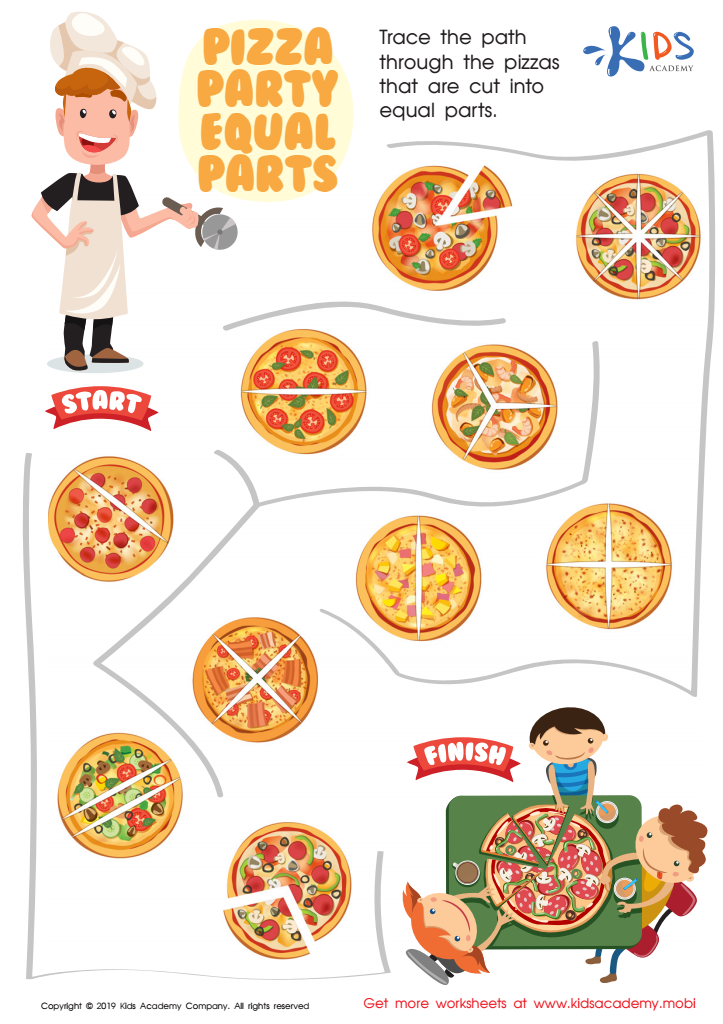
Pizza Party Equal Parts Worksheet
 Assign to My Students











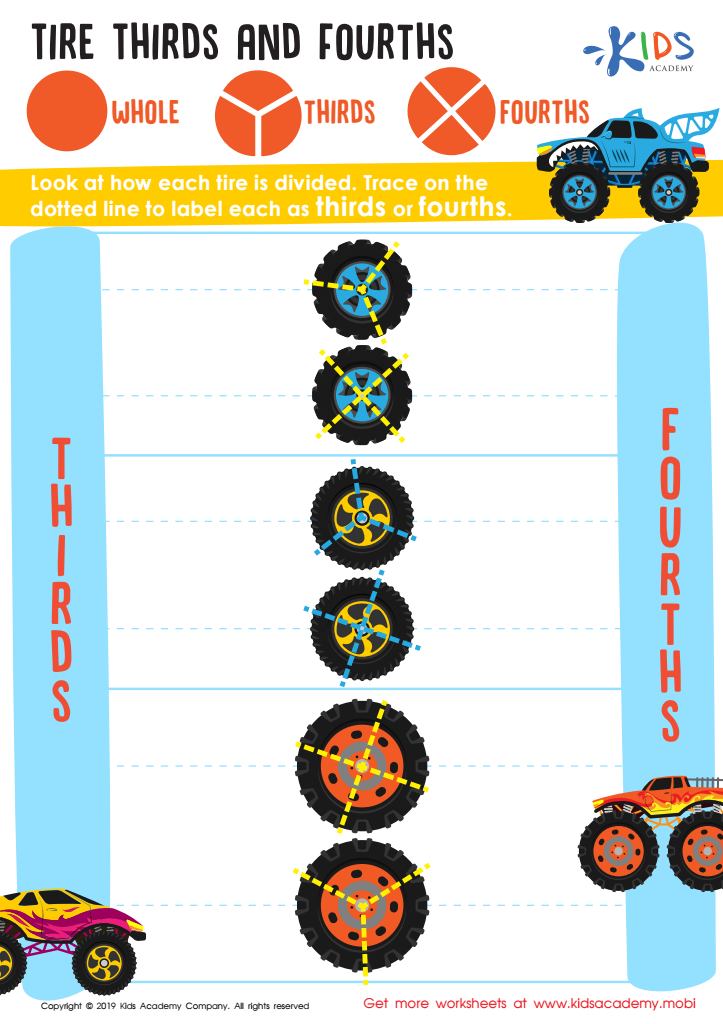
Tire Thirds and Fourths Worksheet
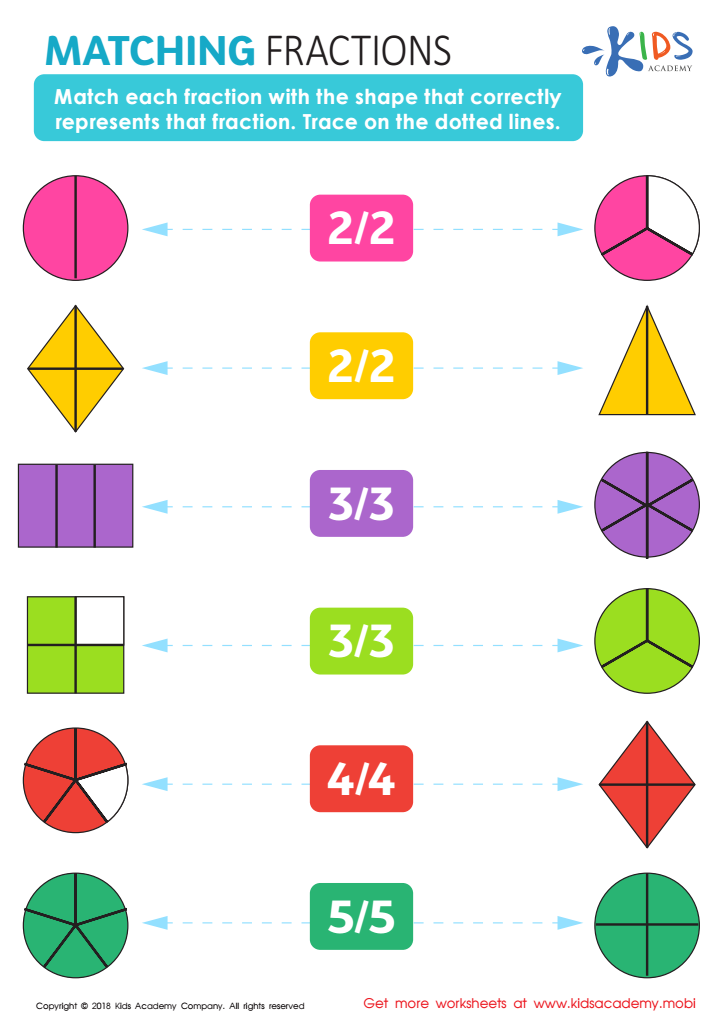
Matching Fractions Worksheet
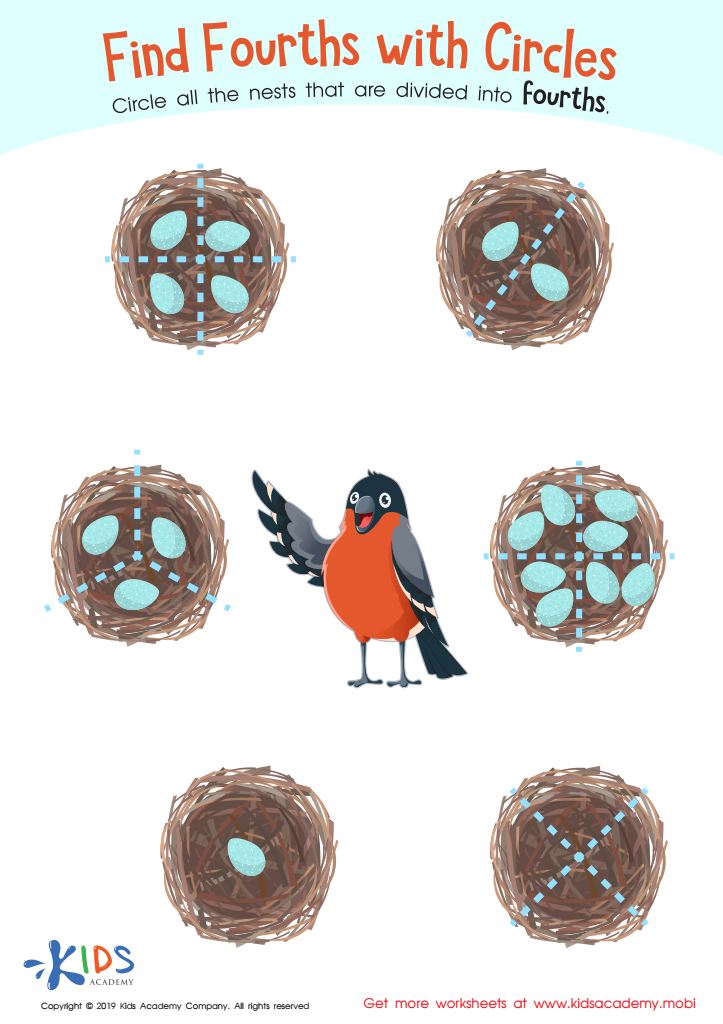
Find Fourths Circles Worksheet
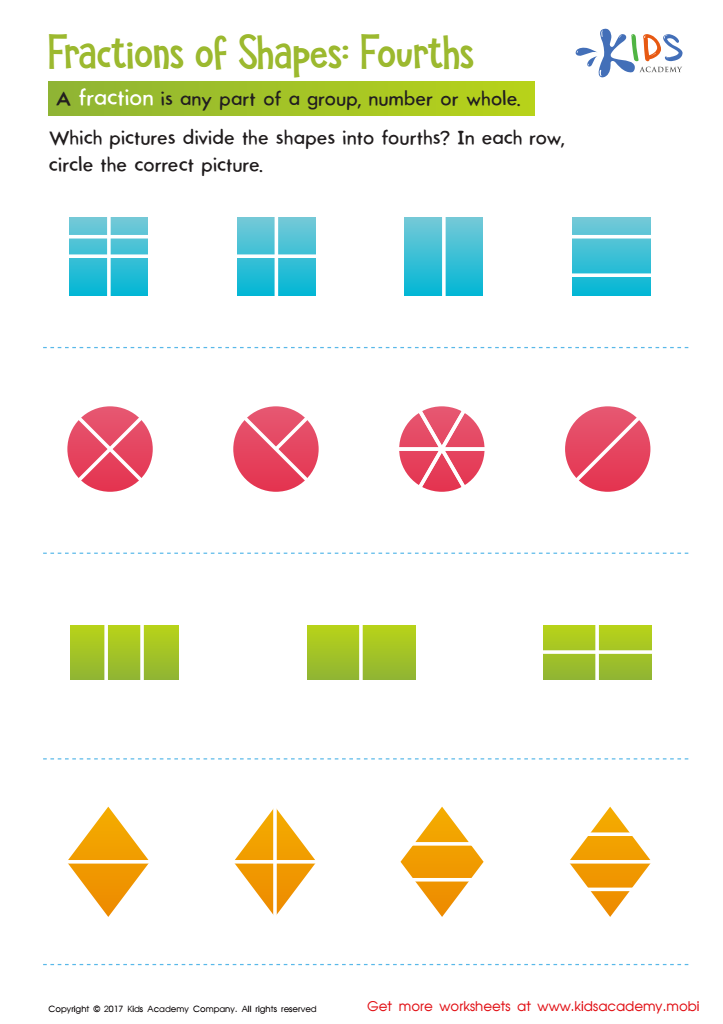
Fractions of Shapes Worksheet
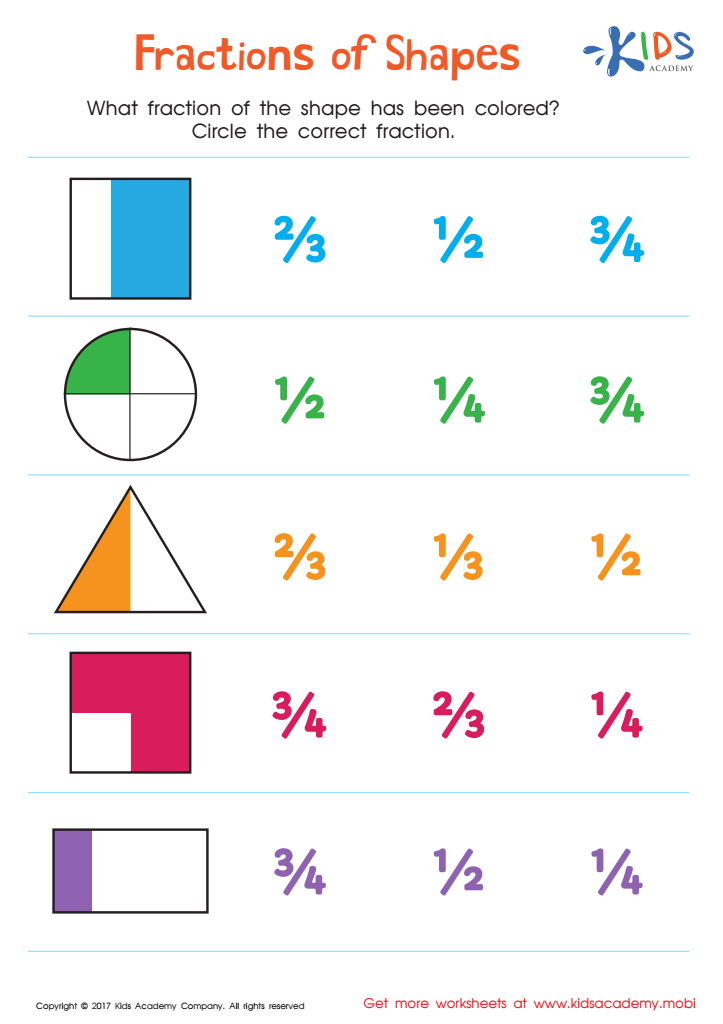
Fractions of Shapes: Math Concept Worksheet








Understanding fractions and geometry is essential for children aged 8-9, as these concepts underpin many everyday activities and advanced mathematical skills. For parents and teachers, a solid grasp of fractions allows children to comprehend portions in cooking, sharing, or digital media usage, fostering practical life skills. Fractions serve as a foundation for future math topics, including ratios, percentages, and algebra, making it crucial for educators to emphasize their understanding early on.
Similarly, geometry nurtures children's spatial awareness and shape recognition, enhancing their ability to visualize and interact with the world around them. Proficiency in geometry influences various domains such as art, architecture, and science, making it a valuable skill set for children's future academic journeys.
The "Extra Challenge Geometry" aspect introduces fun and engaging exercises which promote critical thinking and problem-solving, necessary skills that go beyond conventional math lessons. By collaborating during these learning activities, parents and teachers can foster a positive attitude towards math, reducing anxiety and building confidence. Nurturing these areas allows children to develop a comprehensive skill set, preparing them for both academic success and everyday challenges, ultimately benefiting their overall cognitive development and life competencies.








