
Understanding place values Extra Challenge Worksheets for 8-Year-Olds
4 filtered results
Difficulty Level
Grade
Age
-
From - To
Subject
Activity
Standards
Dive deeper into place value understanding with our Extra Challenge Worksheets for 8-year-olds! Specifically designed for young learners ready for more advanced practice, these worksheets engage students with fun, curated activities that solidify their knowledge of hundreds, tens, and ones. Ideal for aspiring math whizzes, each sheet encourages critical thinking and challenges kids to apply their skills in new scenarios. Perfect for classroom use or additional practice at home, these worksheets offer a thorough understanding of place values tailored to the educational needs of 8-year-olds. Equip your child with confidence in math – download now and watch their skills grow!
Favorites
With answer key
Interactive
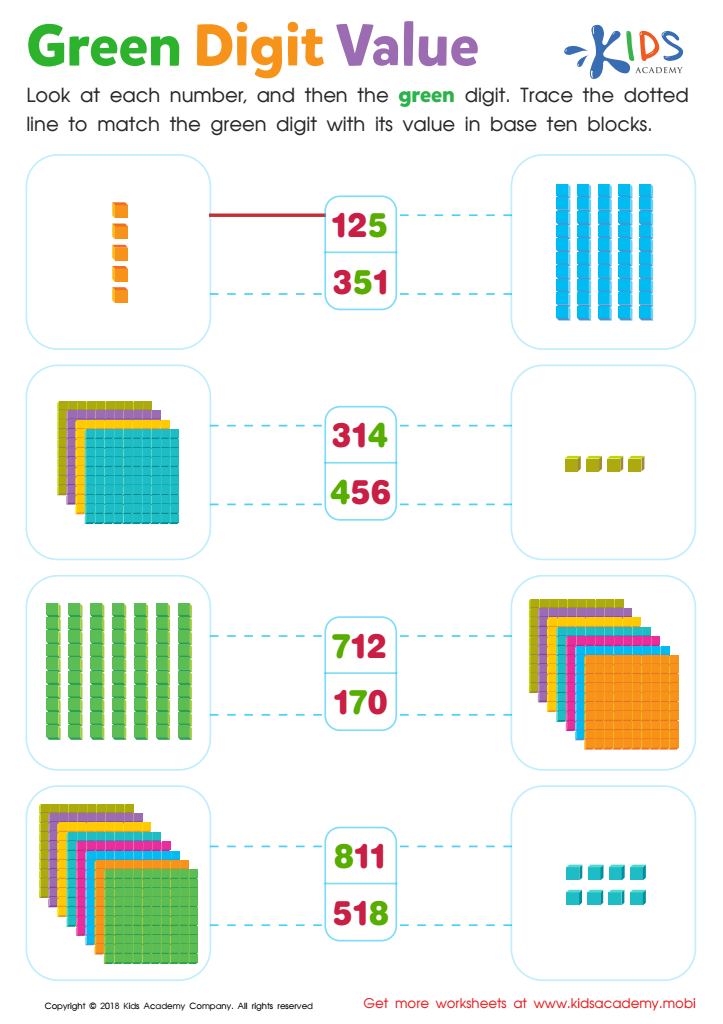
Green Digit Value Worksheet
Math can be stressful for kids. But you can help relieve their anxiety with this simple worksheet. It gives them practice to help them prepare for tougher tasks. Have your child look at the numbers and green digit, then trace the dotted lines to match the green digit with its value in base ten blocks. This will help make math more manageable.
 Assign to My Students
Green Digit Value Worksheet
Worksheet
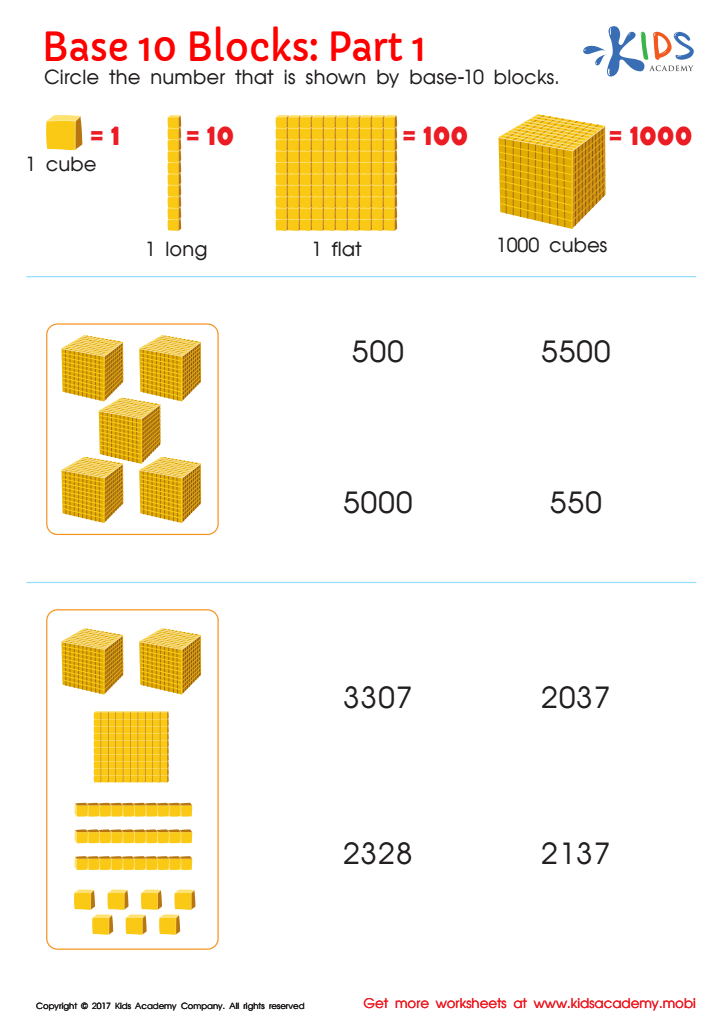
Place Value Thousands Worksheet
Kids aged 8+ can tackle the challenge of understanding place value with this thousands worksheet! It'll help develop their number sense and equip them with the skills to work with numbers up to the thousands.
Place Value Thousands Worksheet
Worksheet
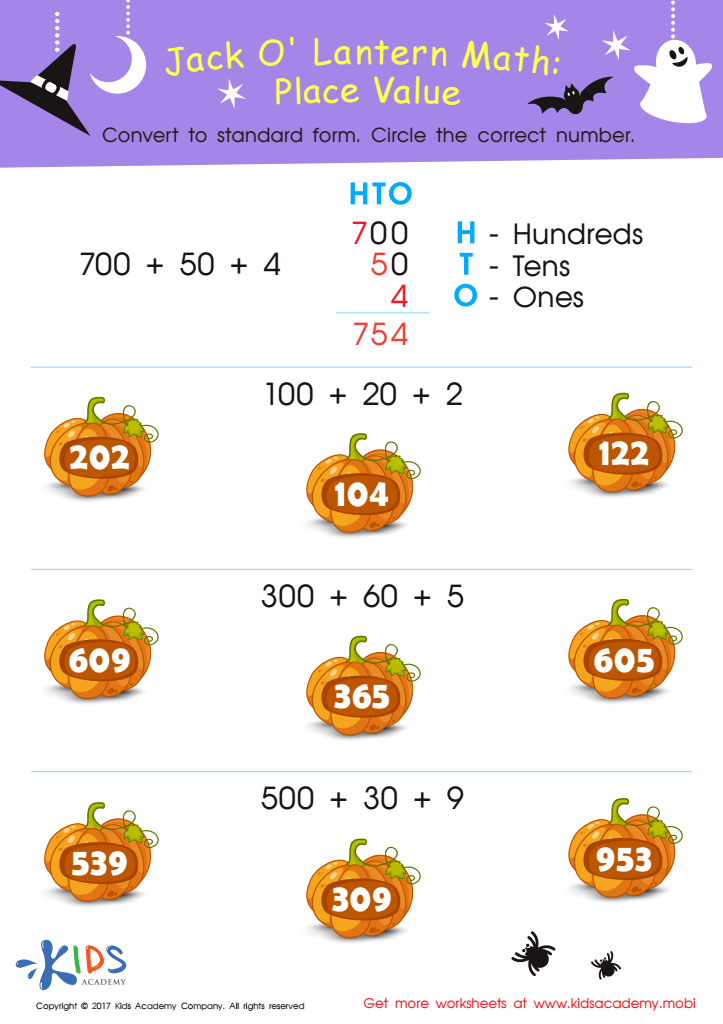
Free Place Value Worksheet
This Halloween-themed worksheet helps children practice converting equations to standard form and understand place value for better problem-solving. Download this free PDF for a fun way to do it!
Free Place Value Worksheet
Worksheet
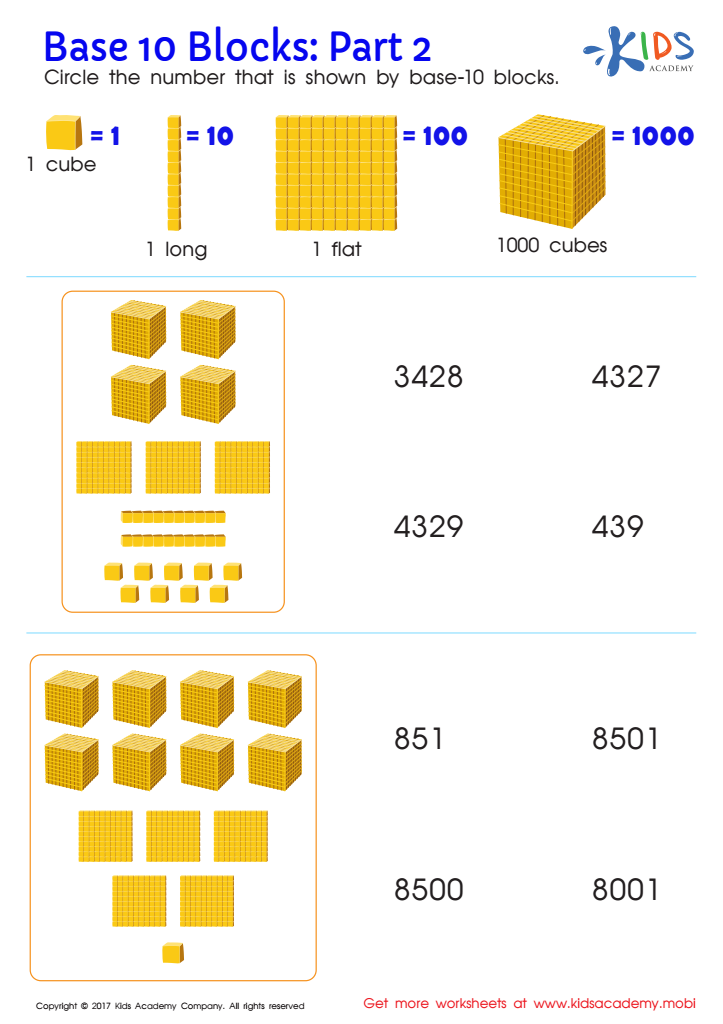
Place Value Worksheet: Thousands
Help your third grader master place value with this free thousands worksheet! Numbers up to ten thousand become easier to understand with Base Blocks. Increase your child's number sense while having fun!
Place Value Worksheet: Thousands
Worksheet
Join Kids Academy for Free
Who is primarily going to use this learning content?







Understanding place value is fundamental to a child's numerical development and overall mathematical competence. For 8-year-olds, mastering place values unlocks the ability to comprehend larger numbers and complex mathematical operations like addition, subtraction, multiplication, and division with greater ease. When parents or teachers prioritize understanding place value, they help ensure that children have a solid mathematical foundation.
Place value knowledge aids in enhancing problem-solving skills, as it allows children to break down large numbers into manageable parts, fostering better mental arithmetic abilities. Furthermore, grasping this concept early sets a foundation for learning more advanced topics in mathematics such as decimals, fractions, and algebra.
In a broader context, having strong numerical skills directly contributes to academic success across various subjects. Early challenges that focus on deepening understanding of place values can help identify and address any learning gaps, ensuring children do not struggle with more complex math later in their schooling years. Additionally, this immediate competence influences cognitive development, promoting logical thinking and an inherent love for learning.
Parents and teachers should, therefore, value place value education not just as a mathematical necessity but as a crucial element in a child’s overall educational development, setting them up for long-term success both academically and in everyday life skills.








