Understanding place values Extra Challenge Math Worksheets for 8-Year-Olds
4 filtered results
-
From - To
Elevate your 8-year-old's math skills with our "Understanding Place Values Extra Challenge" worksheets. Designed for young learners, these engaging printables help solidify their grasp on place value concepts, from units to thousands. Each worksheet presents a series of challenging exercises that encourage critical thinking and problem-solving. Perfect for both classroom use and at-home practice, our worksheets are crafted to enhance numerical confidence and precision. Whether your child is advancing their math prowess or simply seeking extra practice, these activities ensure a robust understanding of place values in a fun and interactive way. Give your child a head start today!
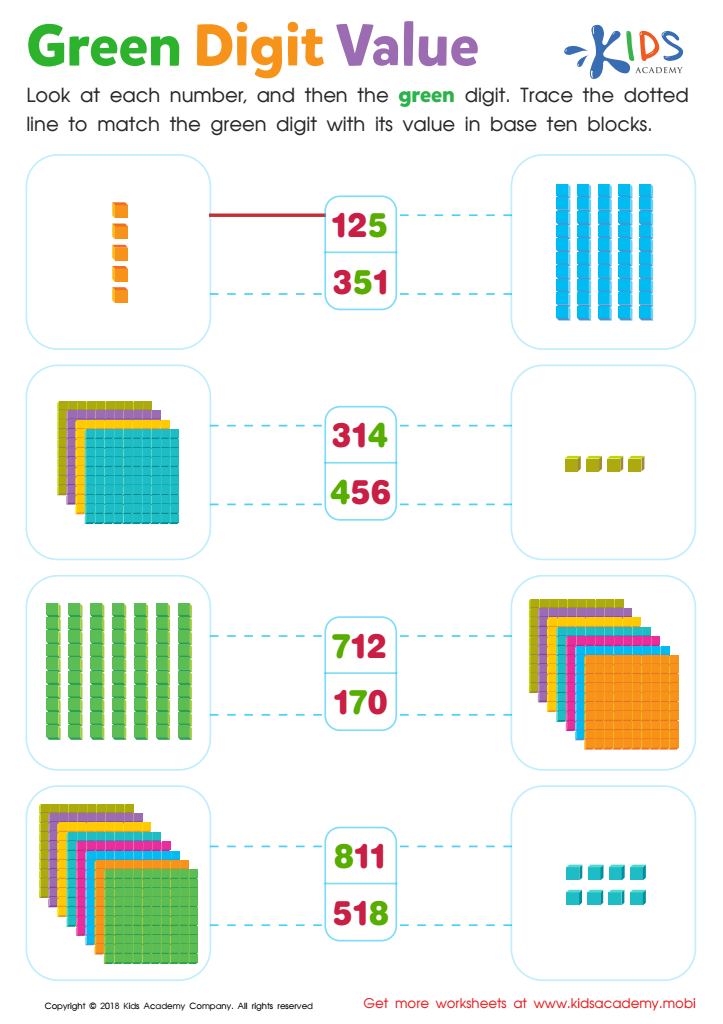
Green Digit Value Worksheet
 Assign to My Students
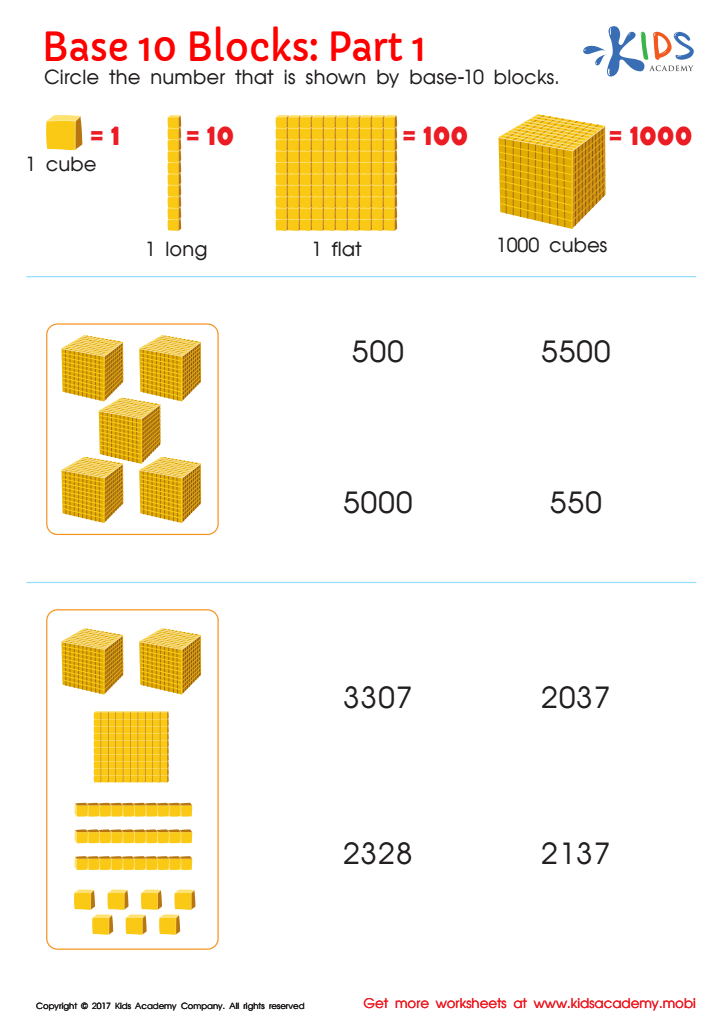
Place Value Thousands Worksheet
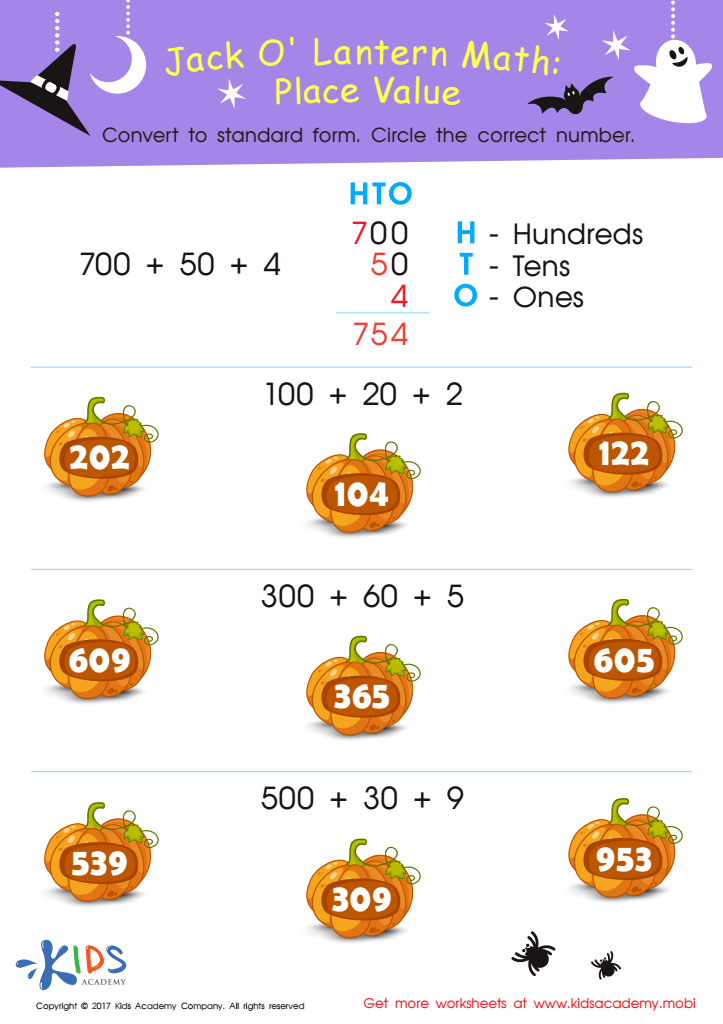
Free Place Value Worksheet
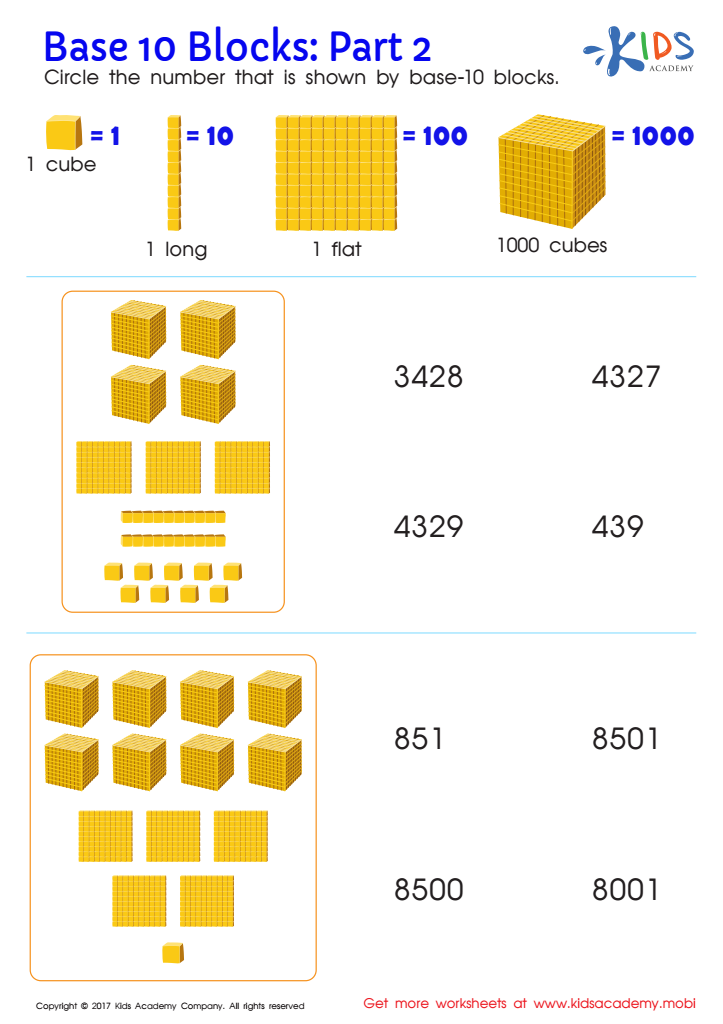
Place Value Worksheet: Thousands








Understanding place values is fundamental in mathematics, and it forms the foundation for more complex concepts children will encounter throughout their education. For 8-year-olds, grasping place values goes beyond simply recognizing numbers; it helps them develop strong number sense and enhances their mental arithmetic skills. This understanding aids in performing operations efficiently, such as addition, subtraction, multiplication, and division.
When teachers and parents emphasize understanding place values, children learn to discern the significance of each digit in a number. This deep comprehension supports problem-solving abilities and critical thinking. For example, knowing the value of digits allows students to decompose and recompose numbers, which is crucial in understanding borrowing in subtraction and carrying over in addition.
Engaging with Extra Challenge Math targeting place values stimulates advanced reasoning and fosters a growth mindset towards mathematics. Academically, it prepares children for topics they will encounter in advanced grades, such as decimals, fractions, and percentage.
Moreover, nurturing a child’s confidence in dealing with place values at an early age can diminish math anxiety, promote a positive attitude towards learning, and build resilience in tackling challenging problems. Through practice and guided support, students develop a robust foundation that promotes lifelong mathematical competence and enthusiasm.








