Alphabet Recognition Extra Challenge Grade 1 Alphabet Worksheets
3 filtered results
Difficulty Level
Grade
Age
-
From - To
Subject
Activity
Standards
Boost your first grader's alphabet skills with our "Alphabet Recognition Extra Challenge" worksheets! Perfect for young learners ready to advance, these worksheets make letter recognition fun and engaging. Each carefully designed activity tests and expands your child’s ability to identify, differentiate, and write letters, fostering strong literacy foundations. The whimsical illustrations and creative exercises capture kids' interest, making learning both effective and enjoyable. Help your child master the alphabet with confidence and ease by incorporating these challenging tasks into their routine. Transform alphabet practice from a chore into an exciting adventure with our expert-crafted resources!
Favorites
With answer key
Interactive
Letter A Tracing Page
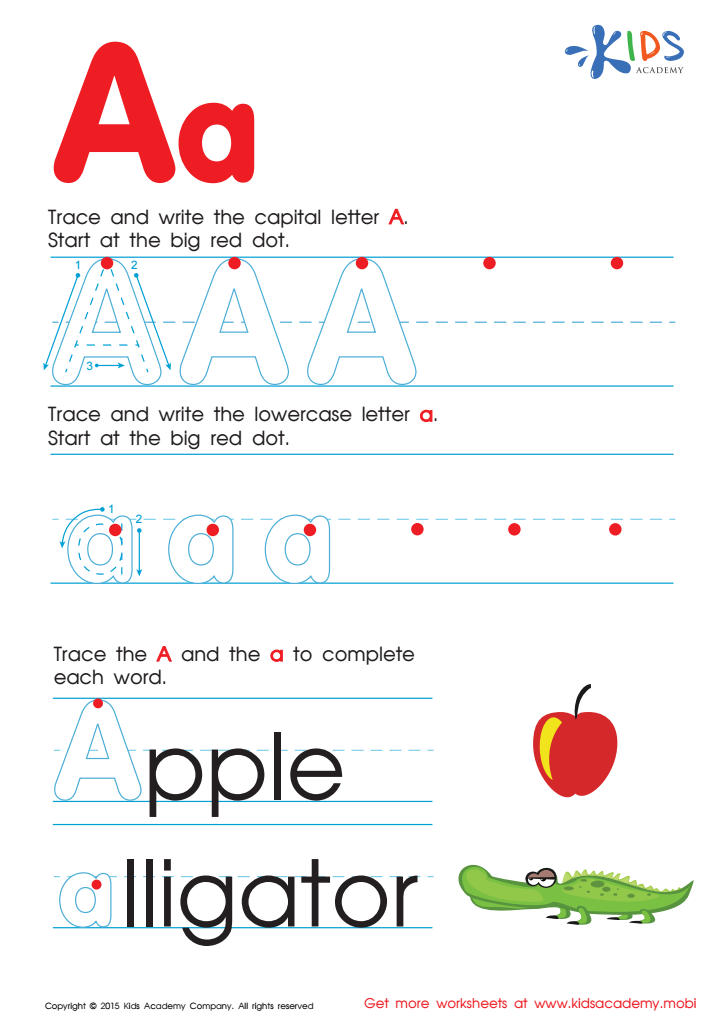
Trace and write the letter "A"! Start with the big red dot, then do the capital and lowercase versions. Then write it again with two words - apple and alligator. Download more tracing worksheets at Kids Academy.
 Assign to My Students
Letter A Tracing Page
Worksheet
Letter Z Tracing Page
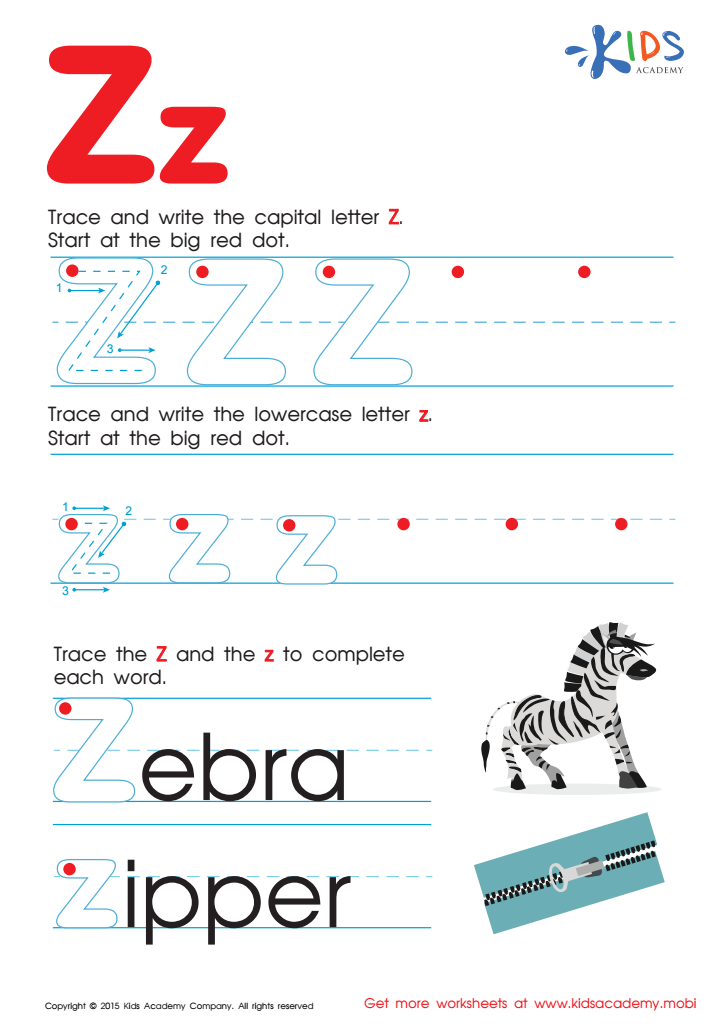
Trace and write capital "Z" and lowercase "z". Complete words "zebra" and "zipper". Be attentive and have fun! (80 words)
Letter Z Tracing Page
Worksheet
Letter Y Tracing Page
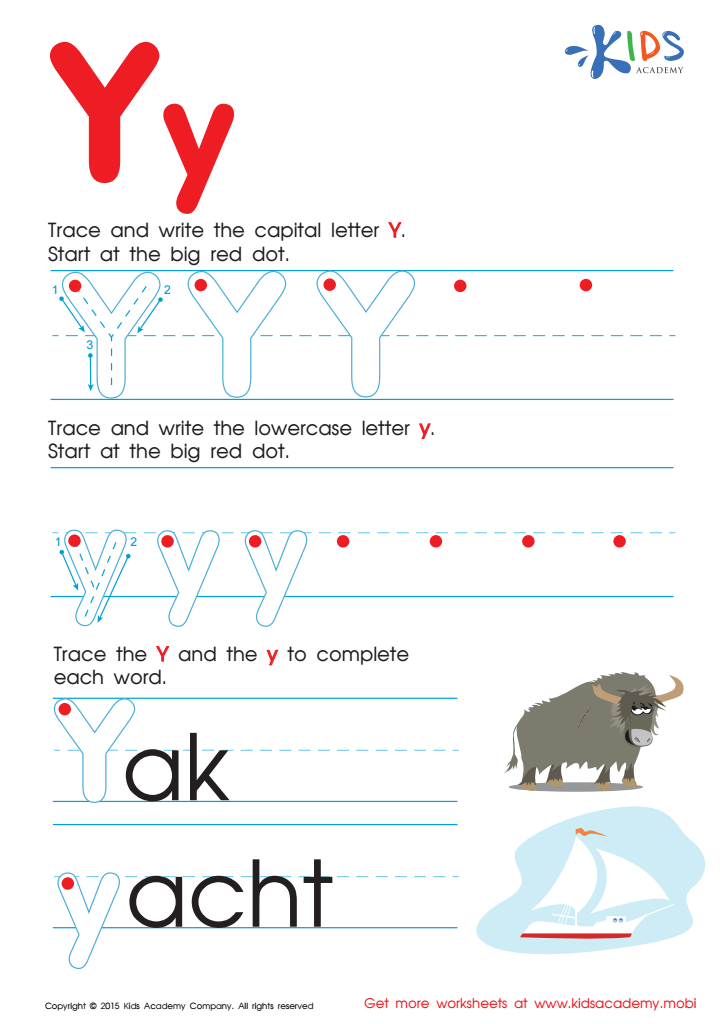
Trace the capital letter "Y" on the red dot, then trace and write the lowercase letter. Complete the words to help the Yak walk and the yacht swim. More worksheets at Kids Academy.
Letter Y Tracing Page
Worksheet
Join Kids Academy for Free
Who is primarily going to use this learning content?








Alphabet recognition is a foundational element in early childhood education, crucial for successful literacy development. Parents and teachers should care about Alphabet Recognition Extra Challenge activities for Grade 1 because they play an instrumental role in solidifying letter identification skills, which are essential for reading and writing proficiency.
At this crucial stage, children transition from mere familiarity with letters to fluency in recognizing and manipulating them. Advanced challenges further enhance cognitive skills such as memory, attention to detail, and problem-solving, laying down a strong groundwork for more complex literacy tasks. These activities can measure and boost a child's ability to identify letters quickly and accurately, an important skill that correlates with reading fluency and comprehension.
Moreover, engaging with alphabet-related challenges can help teachers and parents identify individual learning gaps and strengths, enabling customized support for each student. For children, such activities make the learning process interactive and enjoyable, fostering a positive attitude toward learning. They also promote perseverance and self-confidence as children overcome more difficult tasks over time.
Ultimately, dedicating time to these challenges ensures a smoother educational journey by establishing strong literacy foundations, crucial for all future academic endeavors and everyday life skills.