Alphabet Recognition Extra Challenge Grade 1 Letter Recognition Worksheets
3 filtered results
Difficulty Level
Grade
Age
-
From - To
Subject
Activity
Standards
Enhance your Grade 1 students' alphabet recognition skills with our engaging "Alphabet Recognition Extra Challenge" worksheets. Designed to reinforce letter identification, these printable activities provide a fun and interactive way for young learners to master uppercase and lowercase letters. Each worksheet features stimulating exercises that promote cognitive development and fine motor skills, making learning enjoyable. Perfect for in-class assignments or at-home practice, these worksheets are suitable for advanced students seeking a challenge. Boost confidence and literacy skills while ensuring kids have fun exploring the world of letters! Download today and watch your first graders thrive in their reading journey!
Favorites
With answer key
Interactive
Letter A Tracing Page
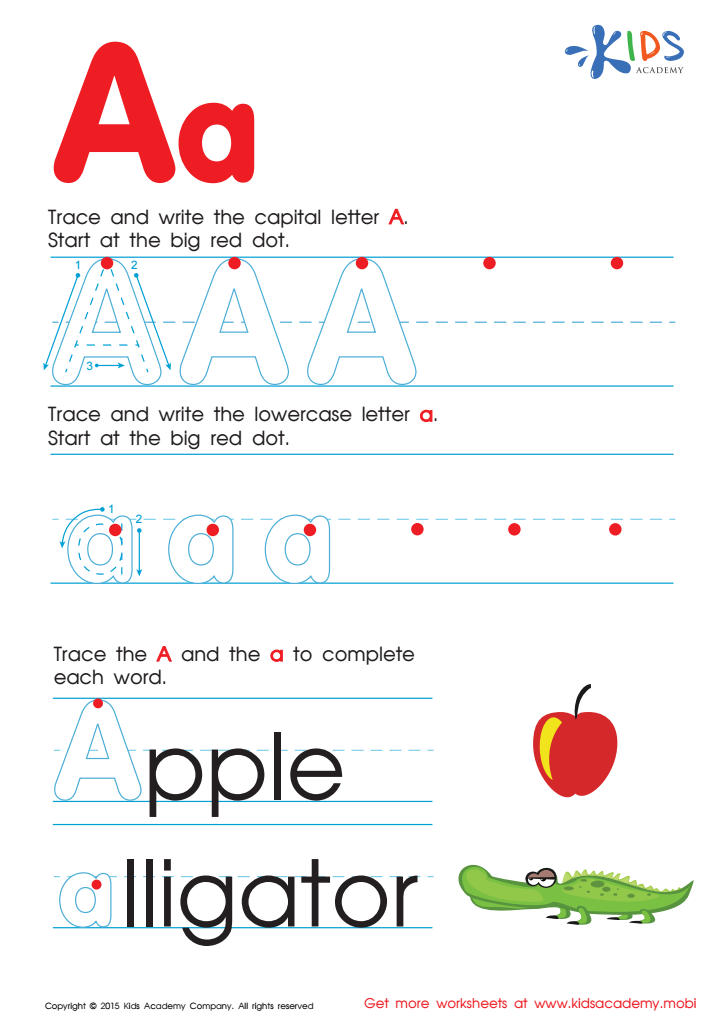
Trace and write the letter "A"! Start with the big red dot, then do the capital and lowercase versions. Then write it again with two words - apple and alligator. Download more tracing worksheets at Kids Academy.
 Assign to My Students
Letter A Tracing Page
Worksheet
Letter Z Tracing Page
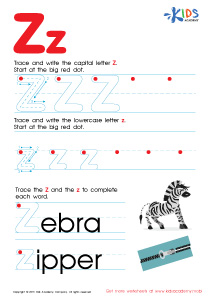
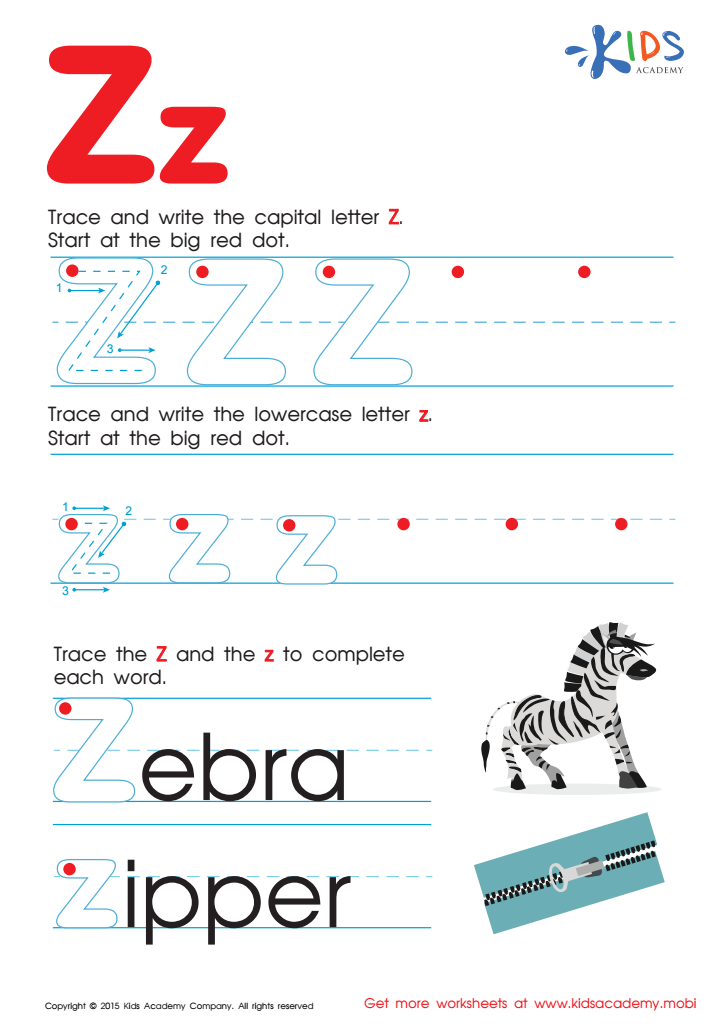
Trace and write capital "Z" and lowercase "z". Complete words "zebra" and "zipper". Be attentive and have fun! (80 words)
Letter Z Tracing Page
Worksheet
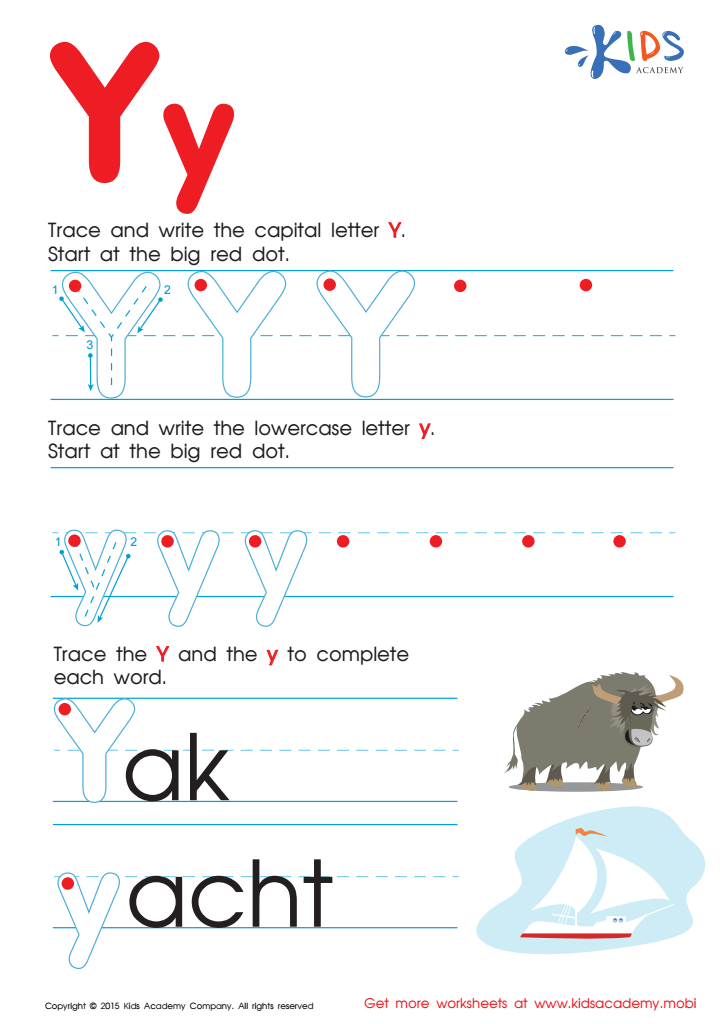
Letter Y Tracing Page
Trace the capital letter "Y" on the red dot, then trace and write the lowercase letter. Complete the words to help the Yak walk and the yacht swim. More worksheets at Kids Academy.
Letter Y Tracing Page
Worksheet
Join Kids Academy for Free
Who is primarily going to use this learning content?



Alphabet Recognition is a fundamental skill for young learners, especially in Grade 1, where students are transitioning from letter identification to reading and writing proficiency. This Extra Challenge in letter recognition not only helps cement their understanding of the alphabet but also lays the groundwork for their literacy skills.
Parents and teachers should care about this endeavor as it directly impacts children's cognitive development and academic success. Mastery of alphabet recognition enables children to decode words, which is essential for developing reading fluency and comprehension. Moreover, a solid grasp of letters enhances their writing abilities, letting them express their thoughts more clearly and confidently.
Engaging in letter recognition challenges stimulates children’s critical thinking and problem-solving skills. It also fosters a sense of accomplishment and boosts self-esteem when they master new letters or sounds. Furthermore, a focus on alphabet activities invites peer collaboration and interaction, reinforcing social skills.
Ultimately, reinforcing alphabet recognition provides students with the tools they need to succeed in their educational journey, ensuring they are well-prepared for more advanced literacy skills in subsequent grades. Parents and teachers play a vital role in nurturing these skills, making it essential for them to prioritize this foundational aspect of learning.