Comparing lengths Extra Challenge Grade 1 Worksheets
4 filtered results
-
From - To
Introduce your first graders to the fascinating world of measurements with our "Comparing Lengths Extra Challenge Grade 1 Worksheets." Designed to sharpen critical thinking and observation skills, these engaging worksheets provide young learners with exciting, hands-on activities. Students will compare the lengths of various objects, using simple visuals to solidify their understanding of measurement concepts. Perfect for both classroom and at-home practice, our worksheets ensure every child gets a thorough grasp of length comparison. Foster a love for learning and build a strong mathematical foundation today with our expertly crafted materials!
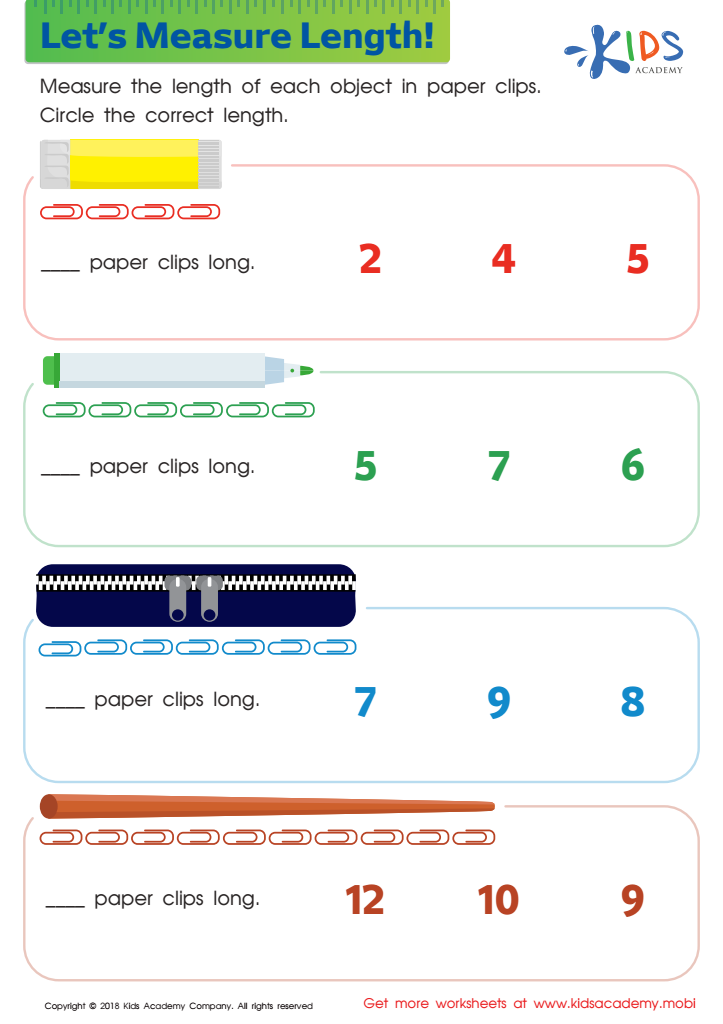
Lets Measure Length Worksheet
 Assign to My Students
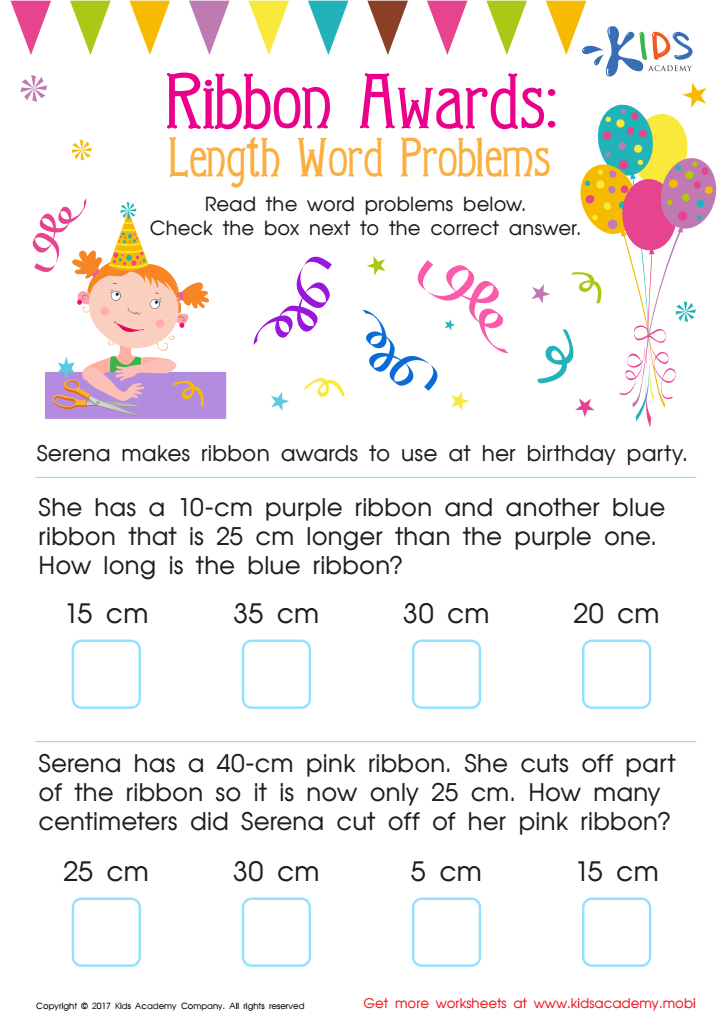
Length Word Problems Worksheet
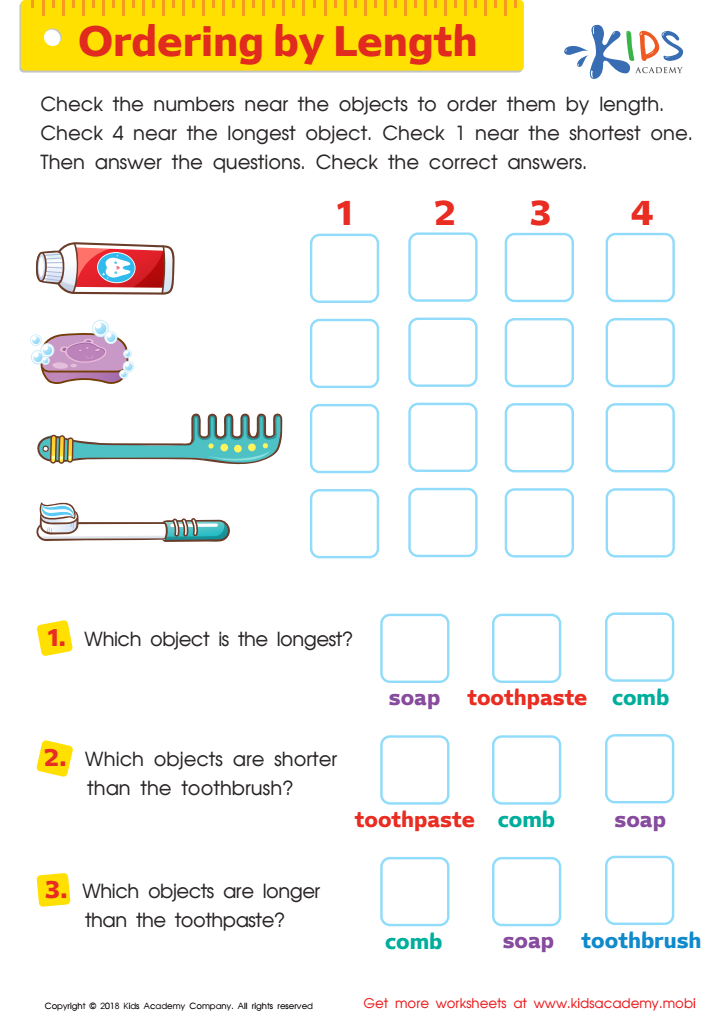
Ordering by Length Worksheet
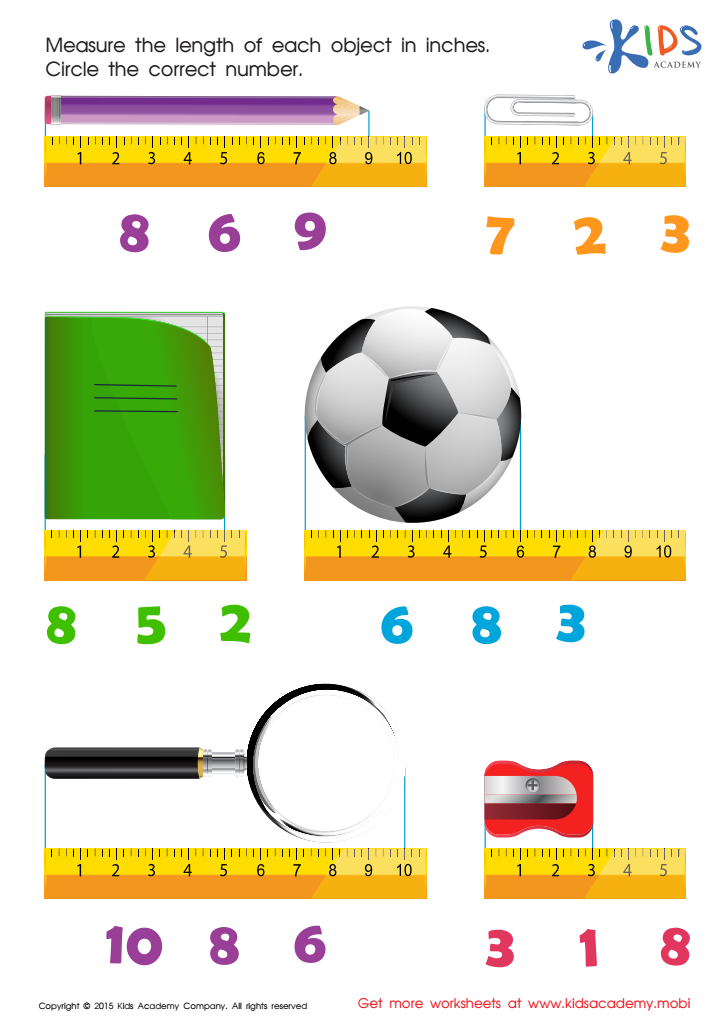
Learning measuring objects in inches Worksheet







Comparing lengths is an essential skill for first graders, forming a foundational element of their mathematical understanding and cognitive development. Parents and teachers should prioritize this topic to support various aspects of learning. Firstly, comparing lengths helps children develop their spatial reasoning skills, crucial for grasping more complex mathematical concepts later on, such as geometry and measurement. When children compare lengths, they learn to observe, describe, and reason about the physical world around them, which enhances their critical thinking and problem-solving abilities.
Furthermore, engaging in activities that involve comparing lengths supports the development of fine motor skills and hand-eye coordination, as it often includes using tools such as rulers or blocks. These practical, hands-on experiences make abstract mathematical ideas more concrete and relatable for young learners.
Additionally, learning to compare lengths lays the groundwork for essential life skills. Students begin to comprehend measurement-related vocabulary and concepts, such as "longer," "shorter," and "equal," which are integral in daily life tasks and future educational experiences. By fostering these skills early, parents and teachers prepare children for success in higher grade levels and help cultivate a positive attitude towards math and learning in general. This comfort and proficiency with early math concepts can lead to greater confidence and curiosity in a student's lifelong educational journey.