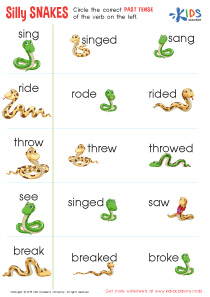
Critical thinking development Extra Challenge Grade 1 Worksheets
4 filtered results
-
From - To
Enhance your first grader's cognitive skills with our Critical Thinking Development Extra Challenge worksheets! Designed to stimulate young minds, these engaging worksheets encourage problem-solving, reasoning, and analytical thinking. Each activity features vibrant illustrations and age-appropriate challenges that captivate children's attention and make learning fun. As they navigate through puzzles, patterns, and logic games, students will develop essential skills for academic success. Perfect for supplemental learning or extra practice at home, our worksheets foster independent thinking and creativity. Explore our collection now to provide your child with the critical thinking tools they need to thrive in the classroom and beyond!
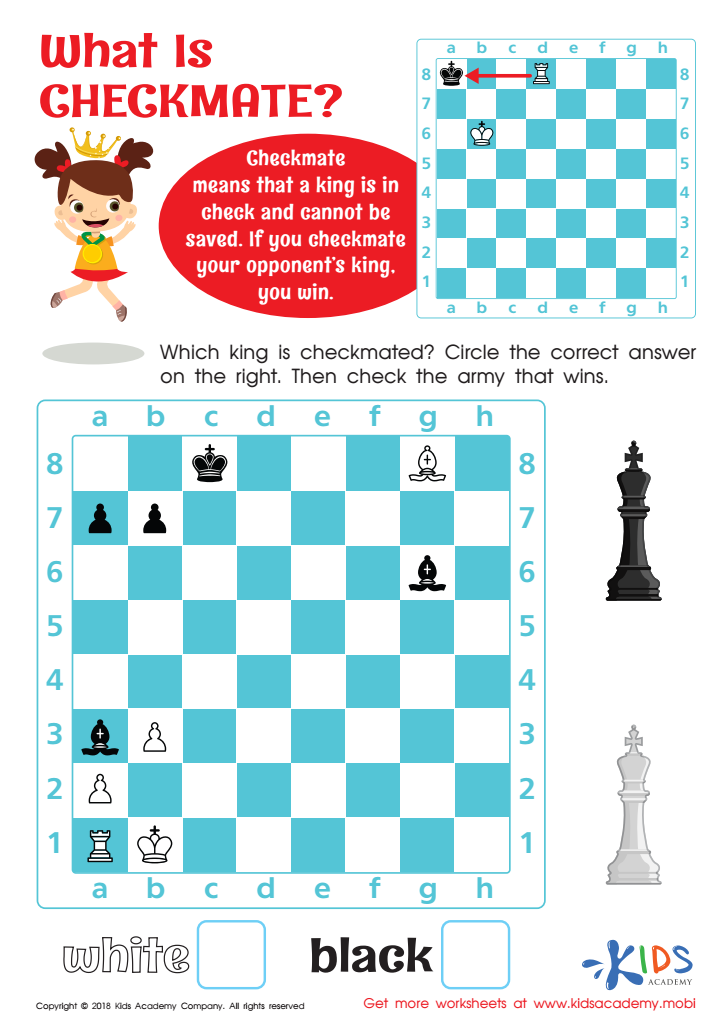
What is Checkmate? Worksheet
 Assign to My Students
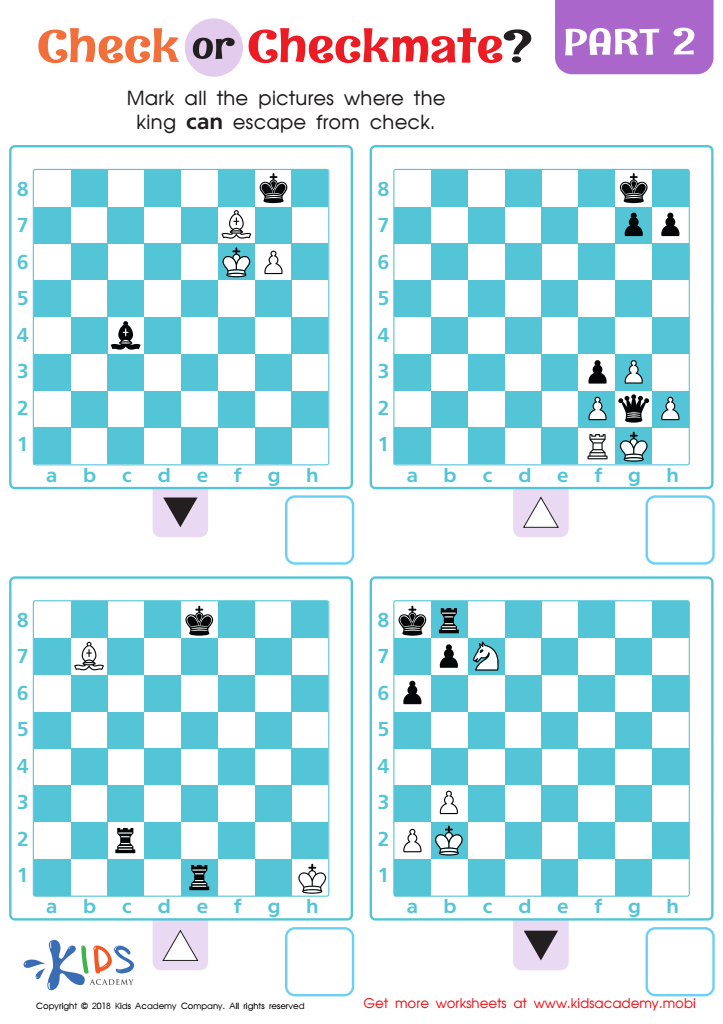
Check or Checkmate: Part 2 Worksheet
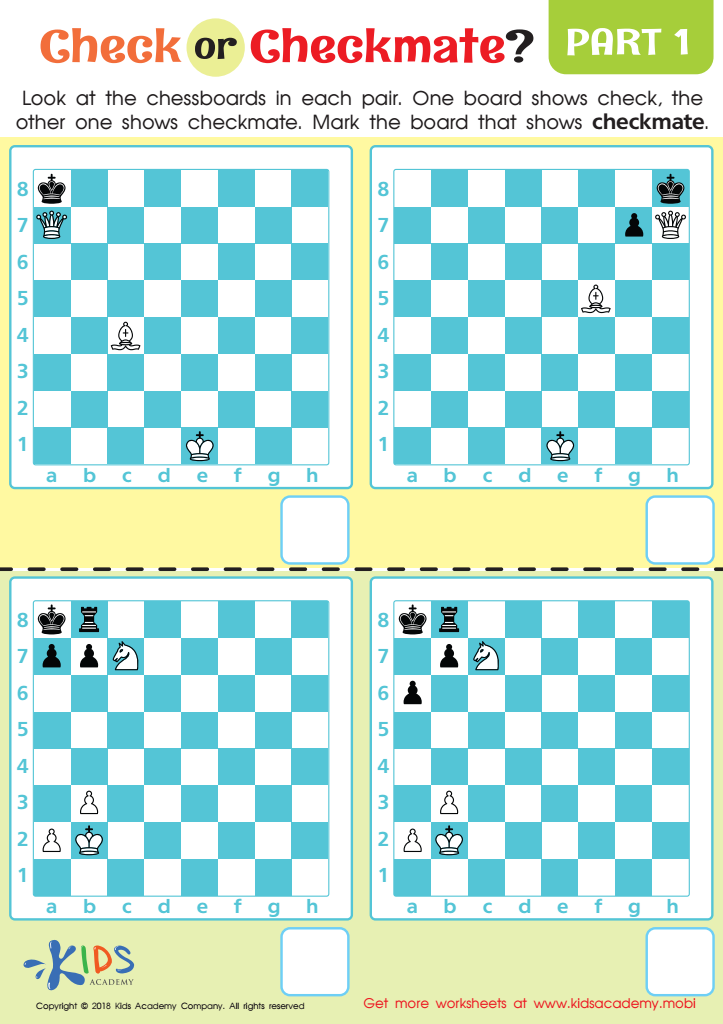
Check or Checkmate: Part 1 Worksheet
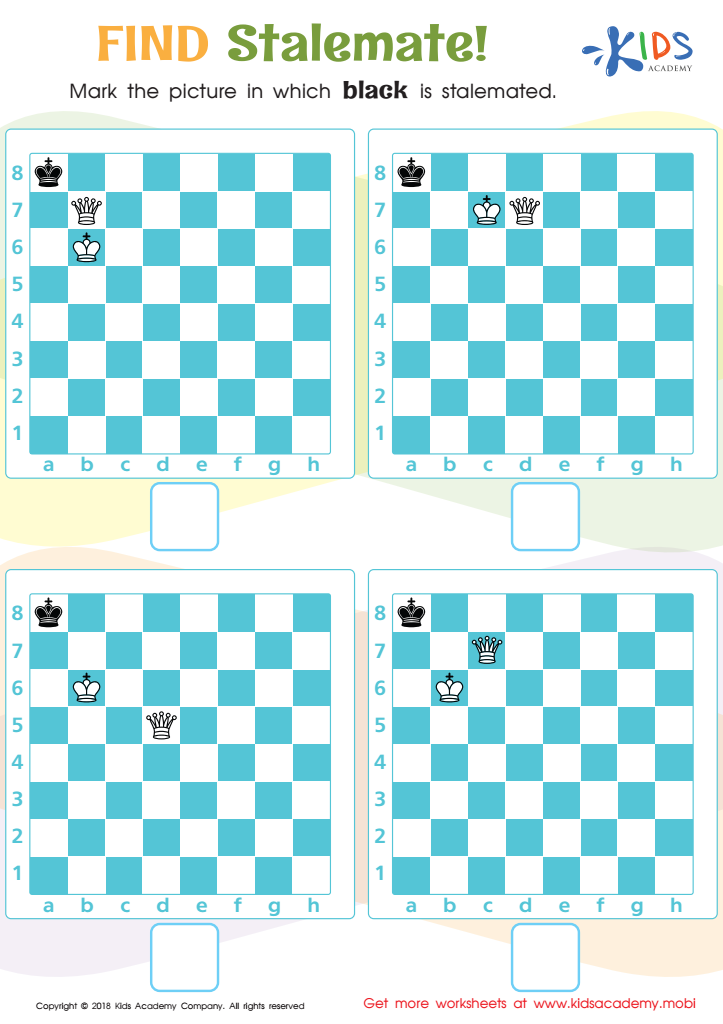
Find Stalemate! Worksheet






Critical thinking development in first graders is crucial for several reasons. At this age, children are beginning to form their own opinions and navigate complex ideas. Encouraging critical thinking fosters creativity, enhances problem-solving skills, and enriches decision-making abilities. When parents and teachers prioritize this development, they equip children with tools necessary for academic success and real-world challenges.
Moreover, teaching critical thinking helps children learn how to ask questions and seek out answers instead of simply accepting information as is. It builds their capacity to evaluate multiple perspectives and encourages open-mindedness. This skill is especially vital in a rapidly changing world where information constantly evolves.
Additionally, critical thinking impacts social interactions. As children learn to analyze situations, they become better equipped to resolve conflicts and communicate effectively with peers. It cultivates independence and resilience, as they learn that mistakes can serve as valuable learning opportunities.
Involving both parents and teachers in this developmental phase creates a consistent, supportive environment for nurturing these skills. Together, they can model critical thinking behaviors, engage children in thought-provoking discussions, and empower them to become thoughtful, responsible citizens. Ultimately, promoting critical thinking prepares young learners for a successful future.