Shape Recognition Extra Challenge Grade 1 2D Shapes Worksheets
5 filtered results
-
From - To
Enhance your first graders' understanding of 2D shapes with our Shape Recognition Extra Challenge worksheets! Designed for Grade 1 students, these engaging worksheets provide a variety of activities that reinforce the identification and classification of basic shapes. Packed with fun exercises, students will explore shapes such as circles, squares, triangles, and more through drawing, matching, and problem-solving tasks. Perfect for enhancing visual recognition and spatial awareness, these worksheets are ideal for both classroom learning and at-home practice. Encourage creativity and critical thinking while supporting math skill development. Download the Shape Recognition worksheets today and make learning shapes enjoyable and interactive!
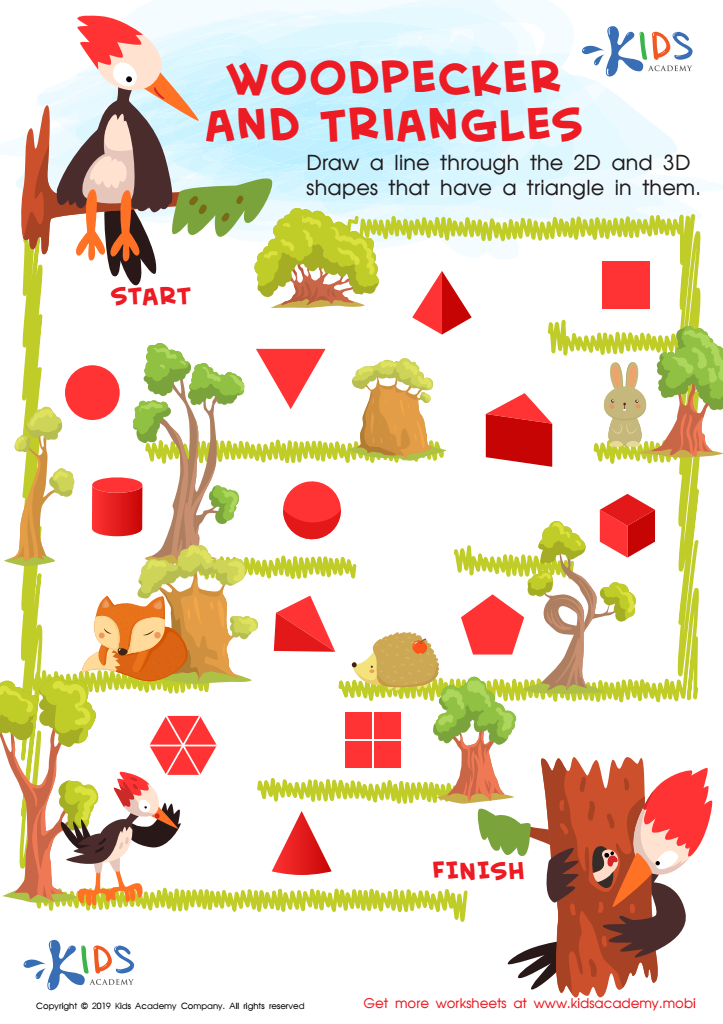
Woodpecker and Triangles Worksheet
 Assign to My Students
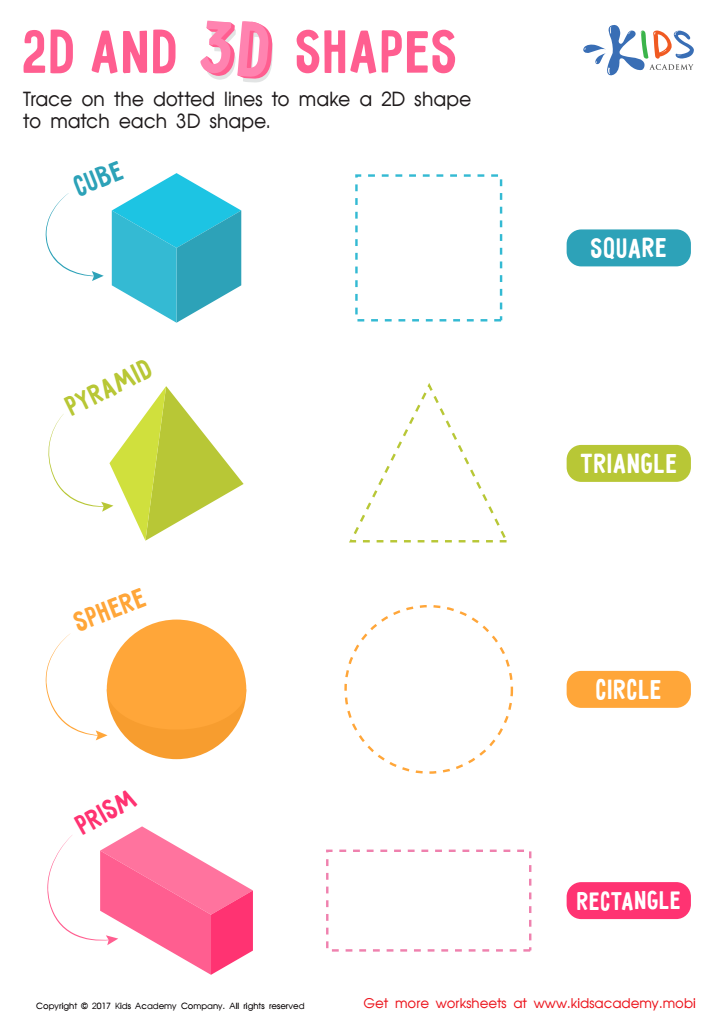
2D and 3D Shapes Worksheet
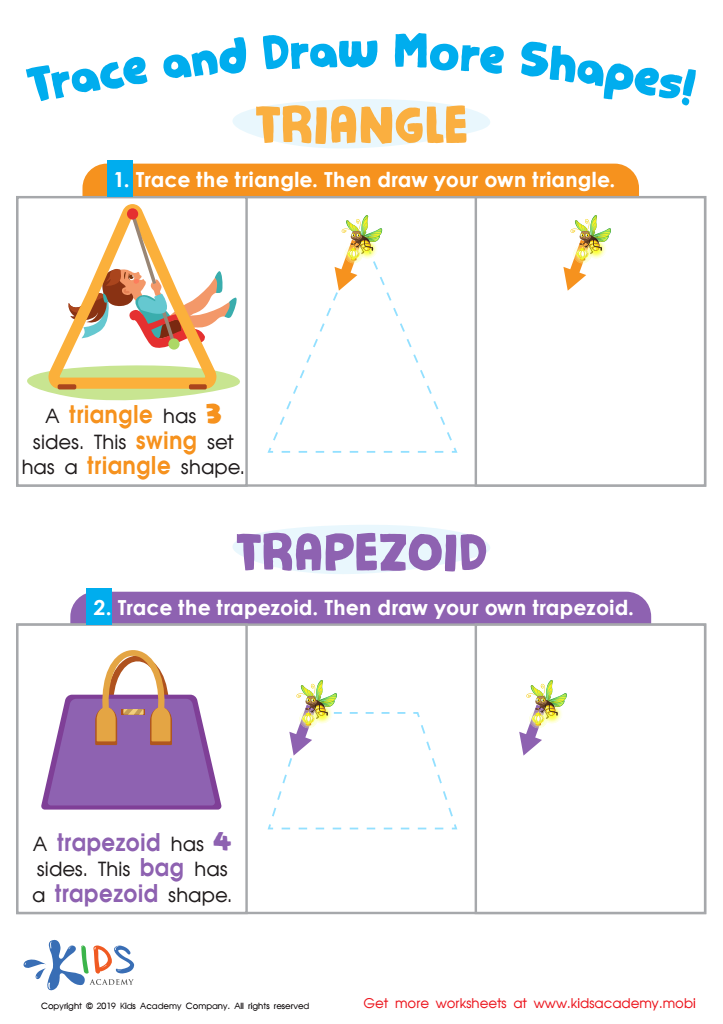
Trace and Draw More Shapes Worksheet
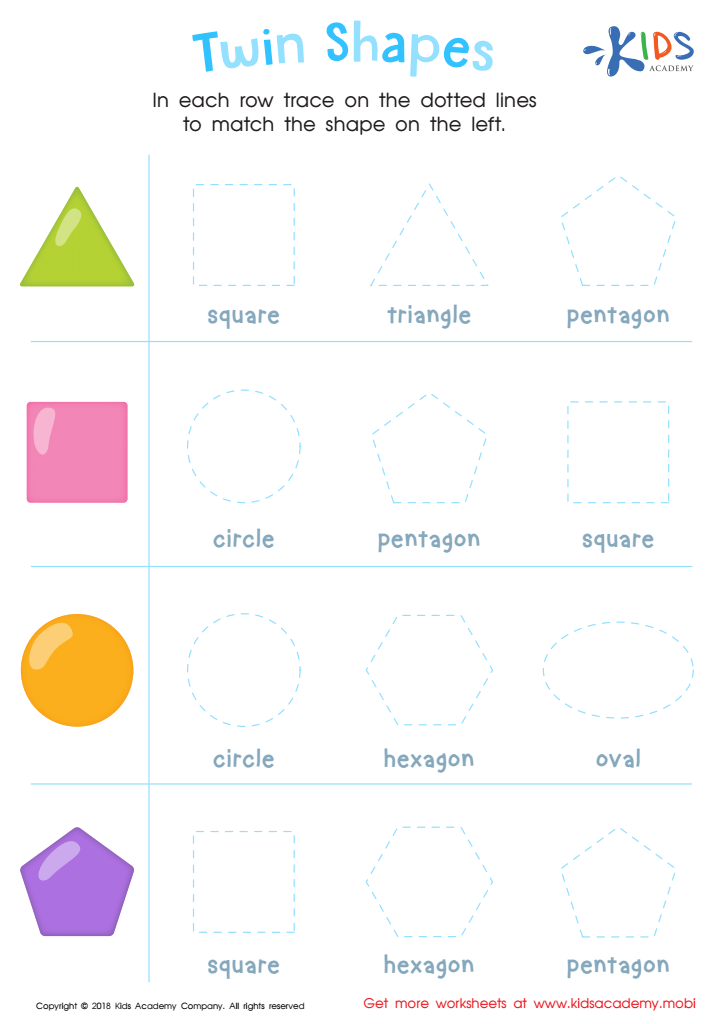
Twin Shapes Dot-to-Dot Worksheet
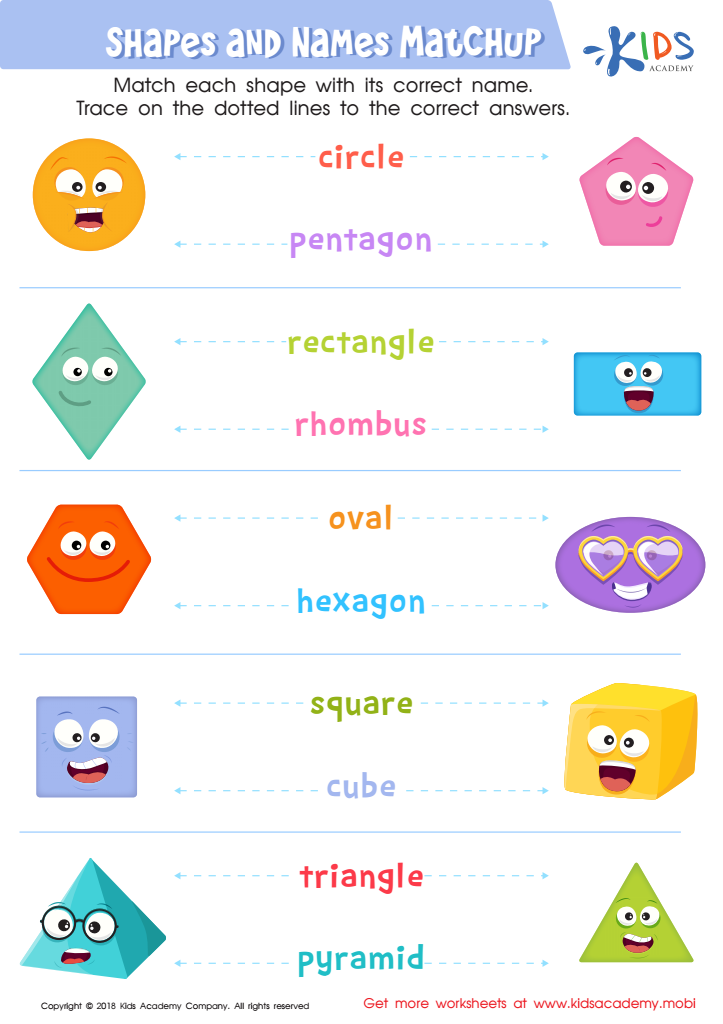
Shapes and Names Matchup Worksheet





Shape recognition is a fundamental skill that forms the foundation for geometric understanding in young learners. For Grade 1 students, mastering 2D shapes such as circles, squares, triangles, and rectangles is not merely about identifying shapes; it's crucial for their cognitive and spatial development. Engaging children in extra challenges around shape recognition fosters critical thinking and problem-solving skills. It promotes curiosity and creativity as children explore different properties of shapes, categorize them, and understand their real-world applications.
Moreover, early shape recognition connects directly to future math skills, including geometry and spatial reasoning, which are vital for success in higher-level math and even subjects like science and technology. Integrating shape challenges in a fun, hands-on way can motivate students and enhance their learning experience.
Parents and teachers play a vital role in this developmental journey. By supporting extra challenges, they demonstrate the importance of persistence and effort. This support not only reinforces academic skills but also builds a positive attitude towards learning. Ultimately, investing time in shape recognition early on encourages a love for learning and equips students with essential skills that are applicable across various disciplines, setting them up for success in future academic pursuits.