Vocabulary expansion Extra Challenge Grade 1 Science Worksheets
3 filtered results
Difficulty Level
Grade
Age
-
From - To
Subject
Activity
Standards
Are you looking to boost your first grader's scientific vocabulary and critical thinking skills? Our "Vocabulary Expansion Extra Challenge Grade 1 Science Worksheets" are specifically designed for young learners ready to take on new challenges. These engaging and educational worksheets cover a variety of science topics, enhancing your child's understanding while expanding their vocabulary. Whether it's exploring natural habitats, understanding weather patterns, or learning about different animals, these worksheets make learning fun and effective. Give your child the extra edge they need to excel in science with our expertly crafted materials. Perfect for in-class activities or additional at-home practice!
Favorites
With answer key
Interactive
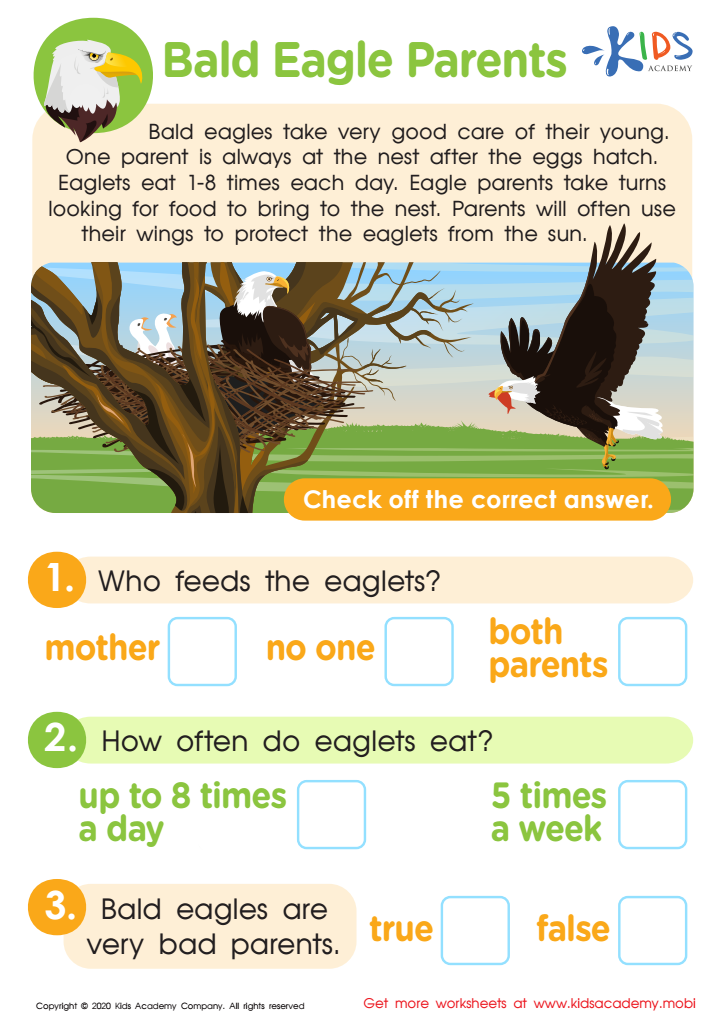
Bald Eagle Parents Worksheet
Teach your child about bald eagle parenting with this science worksheet! Read the passage and answer the questions to learn how these majestic birds protect their young from predators. Eaglets need protection, and the bald eagle parents are masters of providing it!
 Assign to My Students
Bald Eagle Parents Worksheet
Worksheet
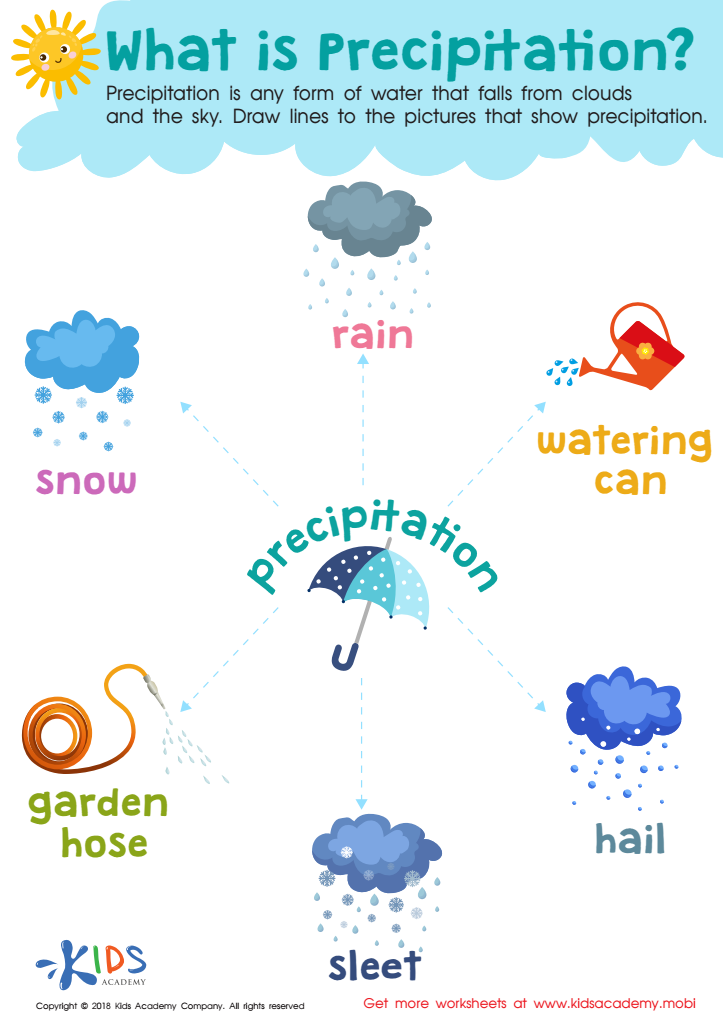
What Is Precipitation? Worksheet
Explain to your child that precipitation is any form of water that falls from clouds and the sky. Ask them if it's a word they're familiar with? Show them this worksheet, with pictures of different weather conditions, and ask them to draw lines to the ones that show precipitation.
What Is Precipitation? Worksheet
Worksheet
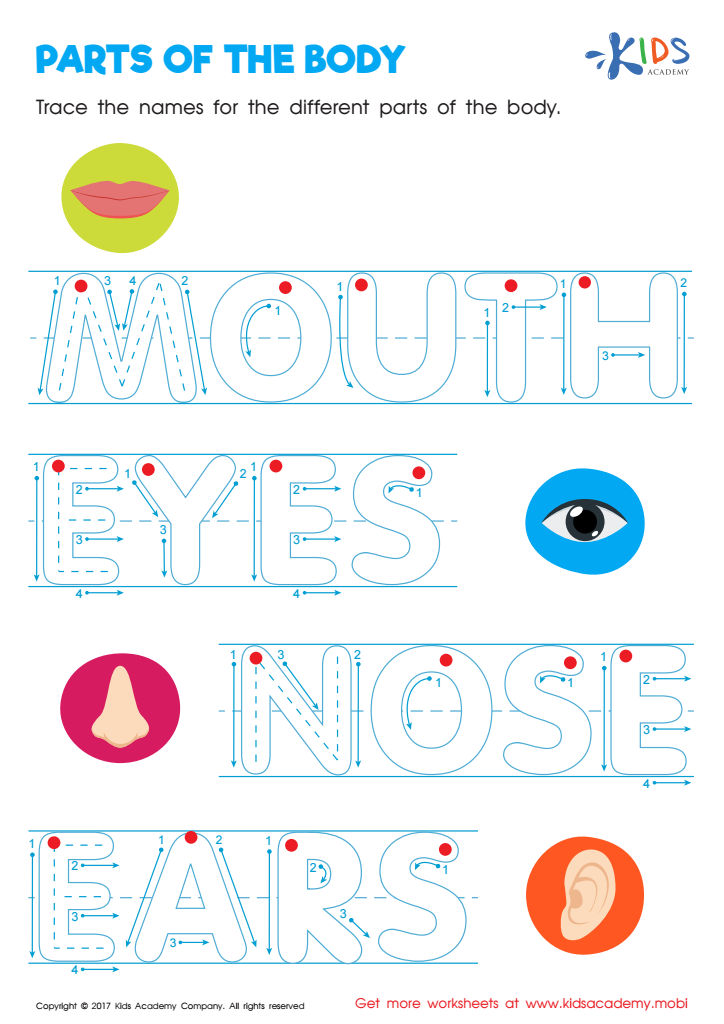
Parts of the Body Worksheet
Worksheet
Join Kids Academy for Free
Who is primarily going to use this learning content?





Vocabulary expansion in early education, especially in subjects like Grade 1 Science, is vital for several reasons. At this stage, children are curious and eager to learn, making it the perfect time to build a strong foundation of words and concepts. Having a rich science vocabulary enhances their ability to understand the world around them, enables clearer communication of ideas, and fosters critical thinking skills.
Science introduces children to fundamental concepts about nature, weather, animals, and the human body. While teaching these subjects, a focus on vocabulary helps students grasp complex ideas more easily. For instance, understanding the word "photosynthesis" can help a child better understand plant biology and the environment.
Moreover, early vocabulary expansion sets children up for future academic success. Studies have shown that a broad vocabulary is a strong predictor of reading comprehension skills and overall academic achievement. When students can understand and use scientific terms correctly, they are more likely to engage with the material, ask insightful questions, and develop a lifelong love for learning.
For parents and teachers, prioritizing vocabulary challenges in science fosters an enriching learning environment. It not only builds linguistic skills but also encourages curiosity and discovery, setting the stage for holistic development. Educators and parents play crucial roles in nurturing these skills, thereby preparing children for future educational endeavors and daily life critical thinking.