Shape Recognition Extra Challenge Kindergarten Math Worksheets
7 filtered results
-
From - To
Enhance your kindergarten students' learning experience with our "Shape Recognition Extra Challenge Math Worksheets." Designed for little learners, these engaging worksheets offer an exciting way to strengthen their understanding of geometric shapes. Each worksheet features captivating visuals and creative activities that inspire shape recognition, ensuring kids develop essential math skills while having fun. Ideal for challenging advanced students or providing additional practice, these worksheets cater to diverse skill levels. Dive into a colorful world of shapes with puzzles, sorting activities, and hands-on learning opportunities. Perfect for reinforcing classroom lessons or enhancing at-home learning, our worksheets make math an enjoyable adventure!
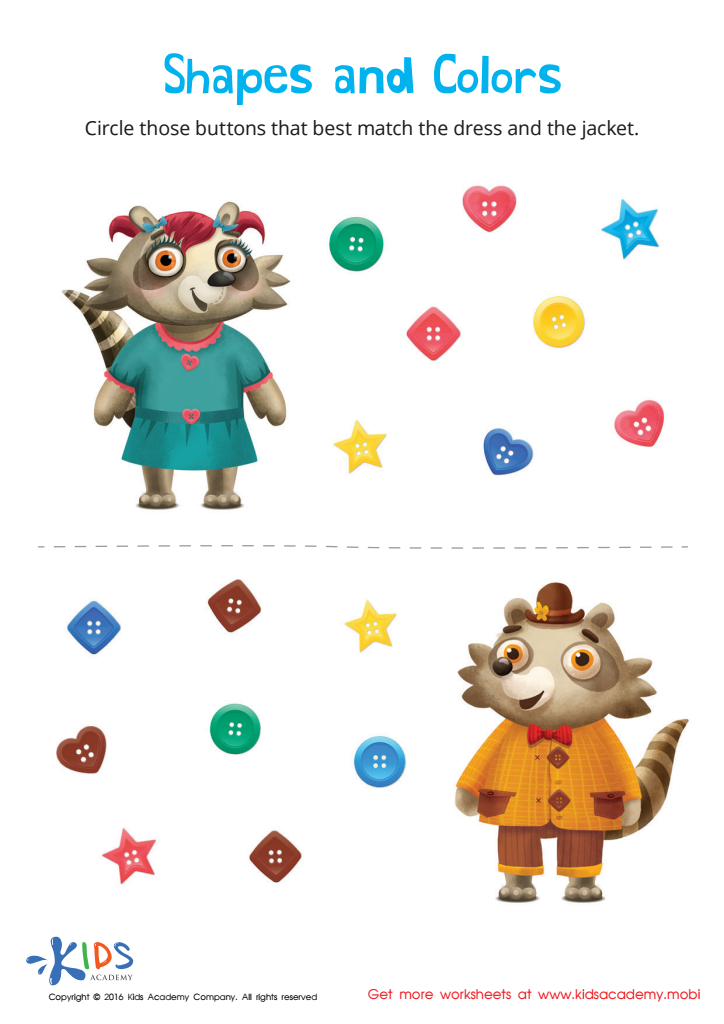
Matching: Shapes and Colors Worksheet
 Assign to My Students
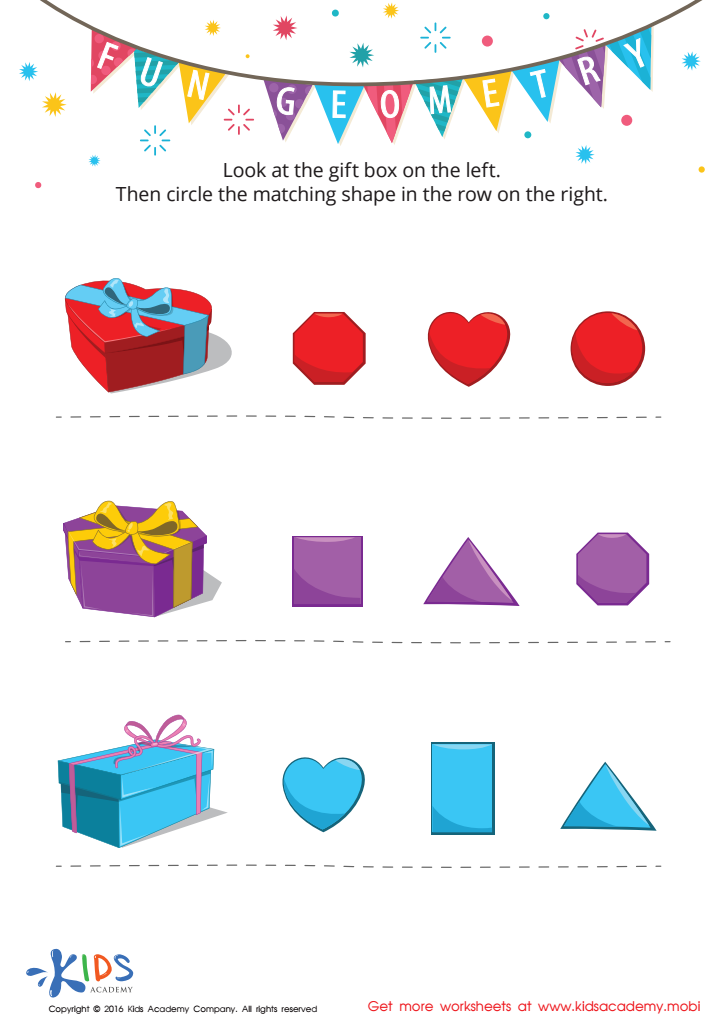
Fun Geometry Worksheet
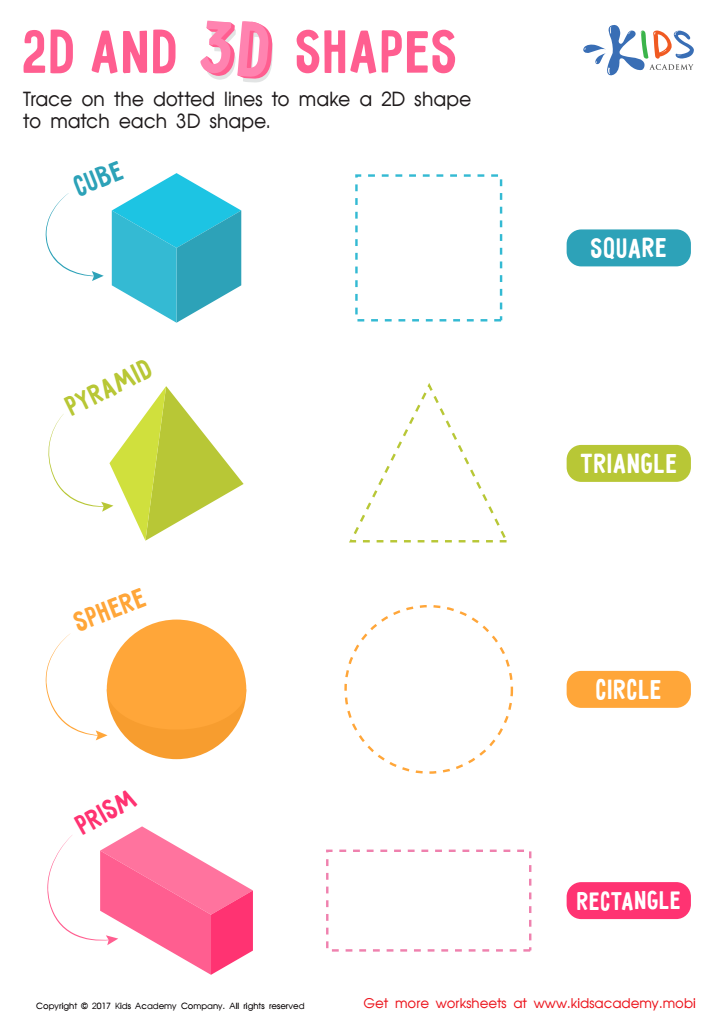
2D and 3D Shapes Worksheet
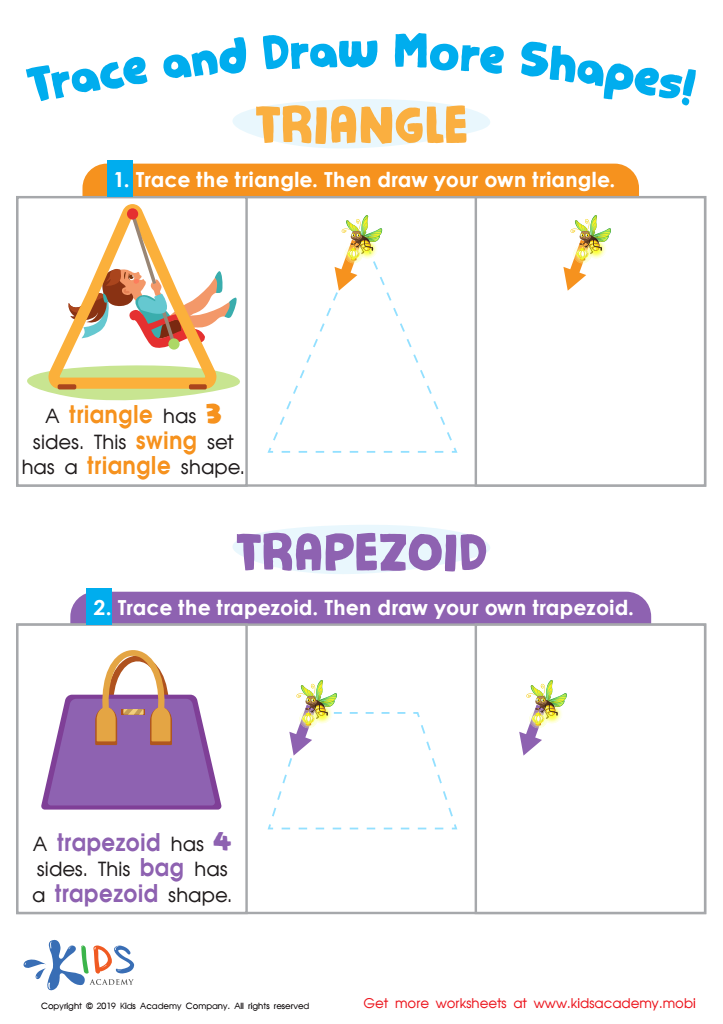
Trace and Draw More Shapes Worksheet
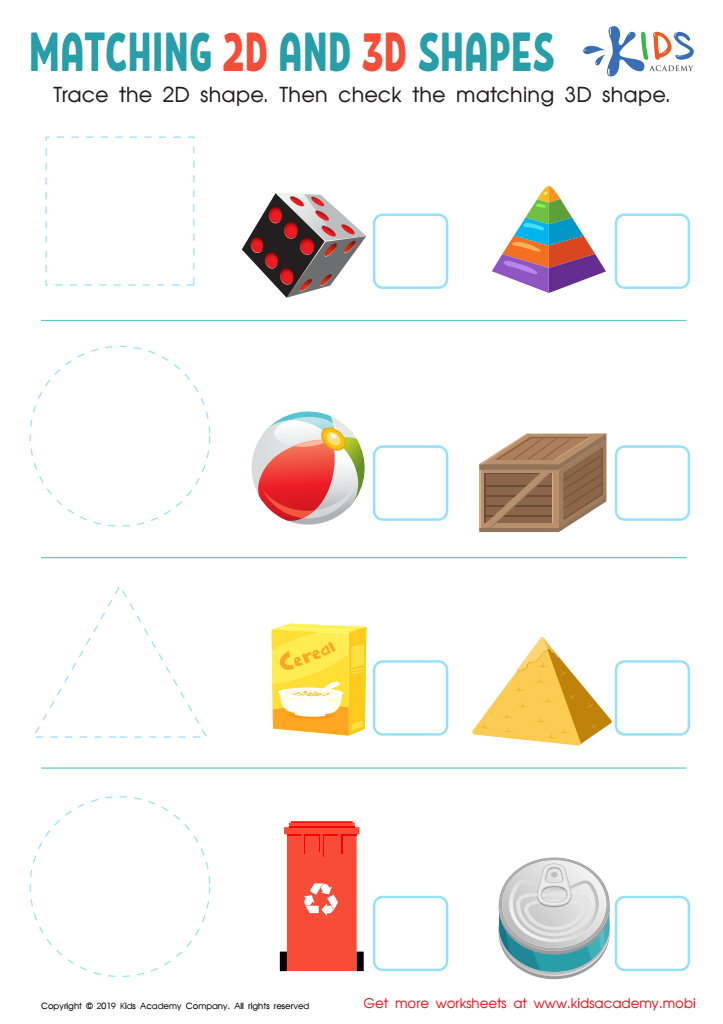
Matching 2D and 3D Shapes Worksheet
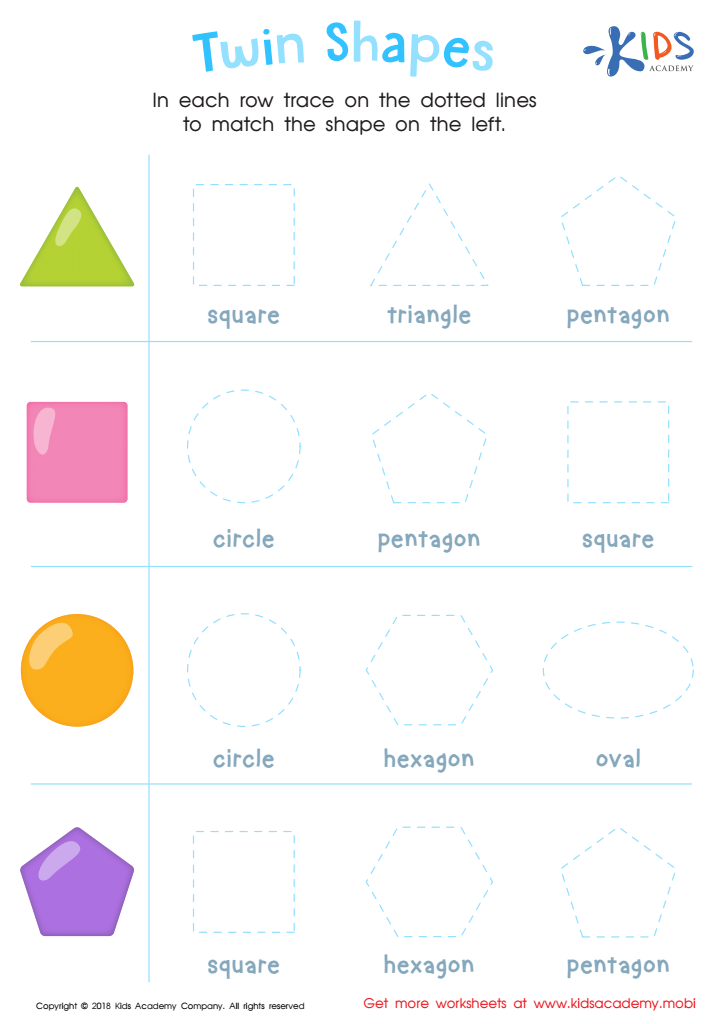
Twin Shapes Dot-to-Dot Worksheet
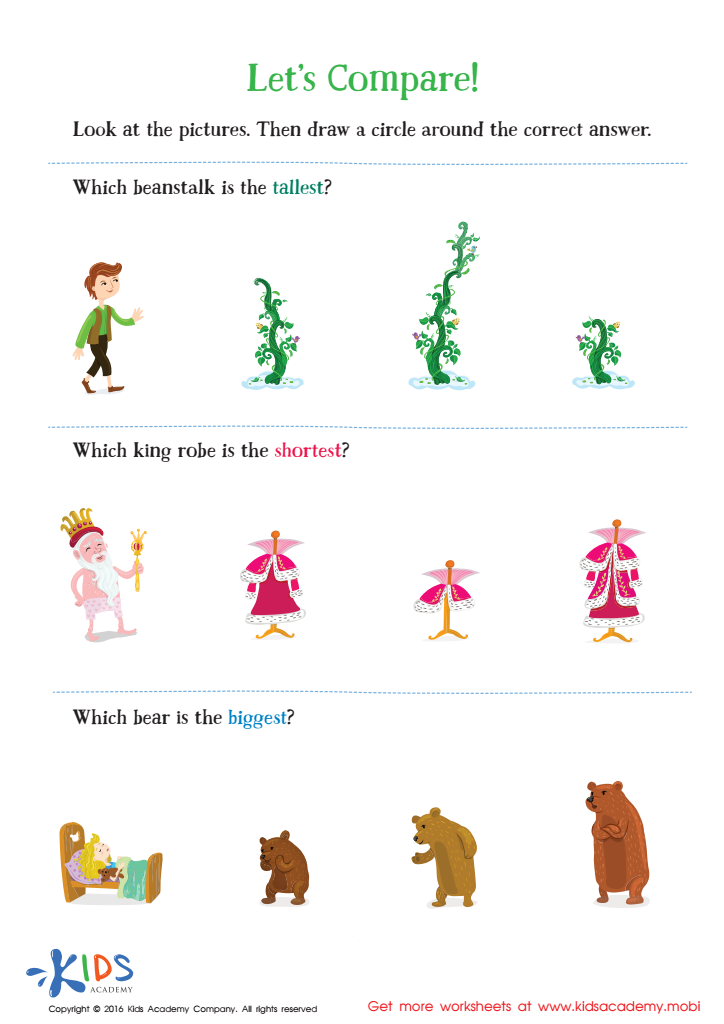
Fairy Tale Worksheet: Let's Compare







Shape recognition is a foundational skill in early mathematics education that lays the groundwork for more complex concepts. For parents and teachers, emphasizing this aspect through challenges and activities in kindergarten is crucial for several reasons.
Firstly, recognizing shapes helps children develop spatial awareness, which is essential for problem-solving and critical thinking in later math topics. By identifying various shapes and their properties, young learners improve their ability to understand geometric concepts and relationships, setting the stage for future success in math.
Secondly, shape recognition contributes to language development. Children learn to articulate differences and similarities among shapes, expanding their vocabulary and enhancing communication skills. Engaging with shapes not only aids in developing mathematical language but also fosters cognitive skills such as classification and sorting.
Furthermore, incorporating extra challenges keeps learning fun and engaging. It encourages curiosity and creativity, allowing children to explore shapes in various contexts, thereby catering to diverse learning styles. This empowerment through challenging activities leads to boosted confidence in their abilities.
Ultimately, prioritizing shape recognition in the classroom and at home equips children with essential skills, ensuring they are better prepared for advanced mathematical thinking as they progress through their educational journey.