Shape Recognition Extra Challenge Kindergarten Tracing Shapes Worksheets
4 filtered results
-
From - To
Enhance your kindergarteners' shape recognition skills with our "Shape Recognition Extra Challenge" tracing worksheets! Designed to engage young learners, these worksheets provide fun and interactive activities that explore various shapes through tracing exercises. As children practice, they develop fine motor skills, hand-eye coordination, and a deeper understanding of geometric concepts. Each worksheet features colorful illustrations and diverse shapes to keep students motivated and excited about learning. Perfect for extra challenges in the classroom or at home, our tracing worksheets foster creativity and early math skills. Download the worksheets today and watch your little ones master shape recognition while having fun!
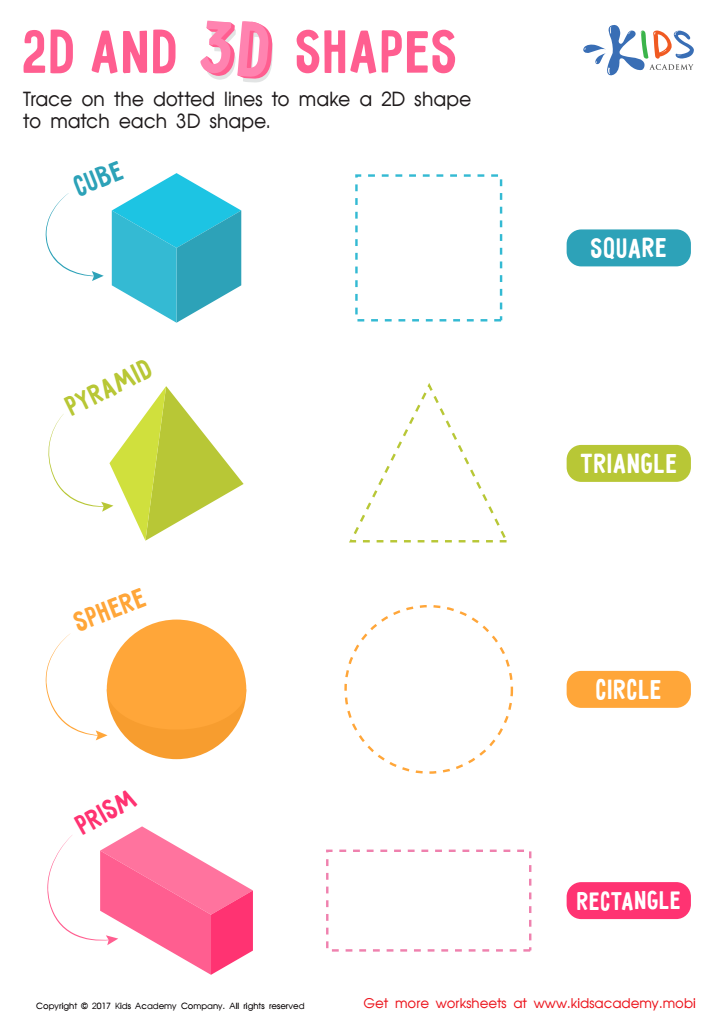
2D and 3D Shapes Worksheet
 Assign to My Students
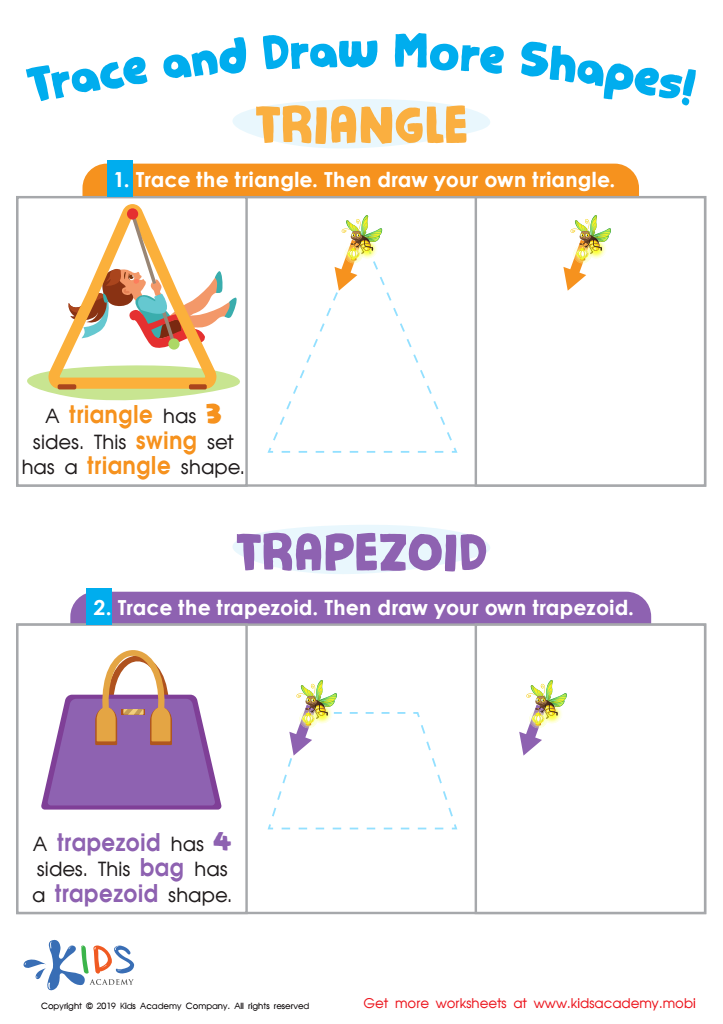
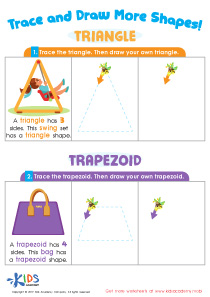
Trace and Draw More Shapes Worksheet
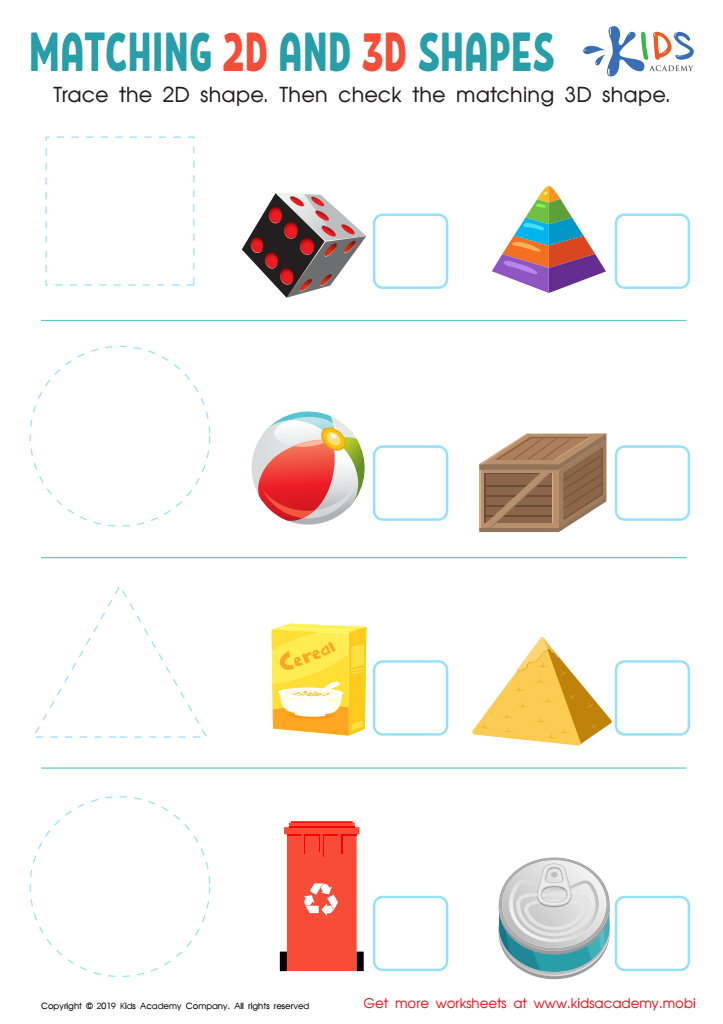
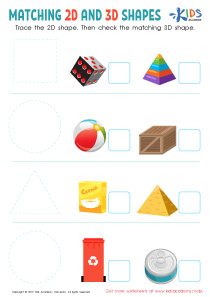
Matching 2D and 3D Shapes Worksheet
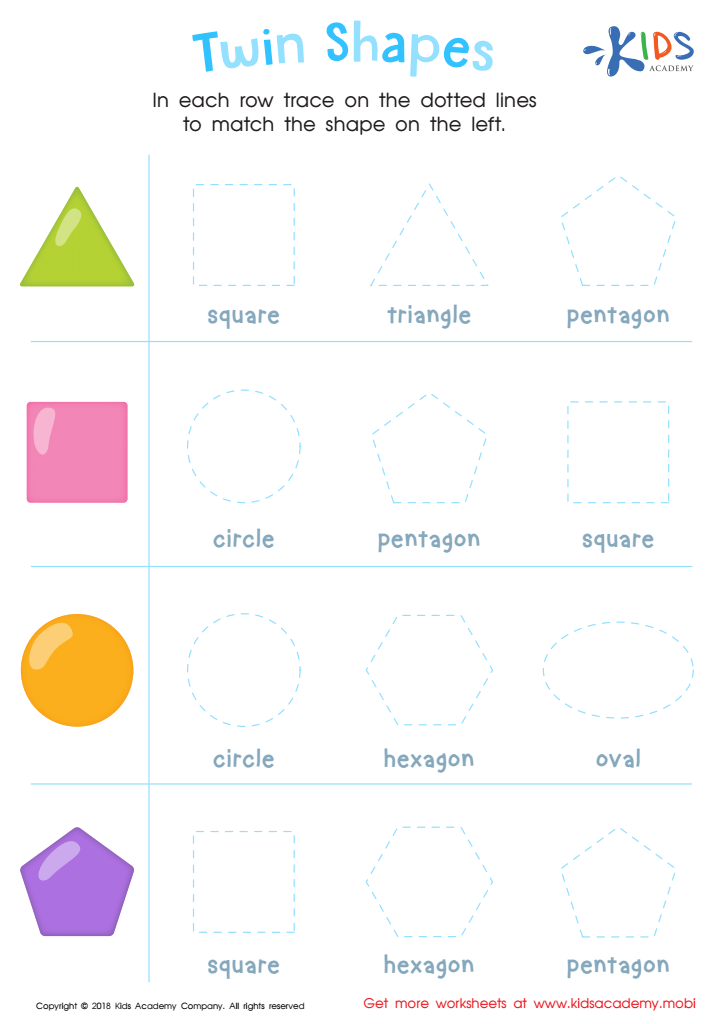
Twin Shapes Dot-to-Dot Worksheet








Shape recognition is a foundational skill in early childhood education that significantly impacts a child's cognitive development and readiness for more complex mathematical concepts. Parents and teachers should prioritize the "Shape Recognition Extra Challenge Kindergarten Tracing Shapes" activity because it fosters both motor skills and spatial awareness.
Tracing shapes helps children develop fine motor skills through hand-eye coordination, essential for writing, drawing, and overall dexterity. Additionally, engaging in shape recognition activities enhances children's ability to identify, name, and differentiate between various geometric forms, which is crucial for future learning in mathematics and geometry.
Beyond the academic benefits, tracing shapes can also spark creativity. Children can experiment with color and design, fostering artistic expression while solidifying their understanding of shapes in their environment. Furthermore, activities centered around shape recognition promote analytical thinking, as children begin to compare and categorize shapes based on size, angles, and attributes.
Moreover, early exposure to shapes can assist in developing problem-solving skills, setting a solid foundation for future learning in science, technology, engineering, and mathematics (STEM). In summary, this fun and engaging activity richens children’s educational experiences and creates pathways for critical thinking and creativity, making it a vital component of early childhood education.