Identification skills Extra Challenge Worksheets
3 filtered results
-
From - To
Enhance your child's observational prowess with Identification Skills Extra Challenge Worksheets! Specifically designed for young learners, these worksheets offer a captivating way to hone critical identification abilities. Kids will dive into boundless exploration, discerning details, patterns, and differences across a variety of engaging themes. Perfect for introducing advanced learners to more complex activities, our expertly crafted sheets challenge and excite, making learning both productive and fun. Whether it's matching, differentiating, or spotting the odd one out, these skill-developing exercises are sure to keep inquisitive minds meticulous and motivated. Discover the joy of learning with Identification Skills Extra Challenge Worksheets today!
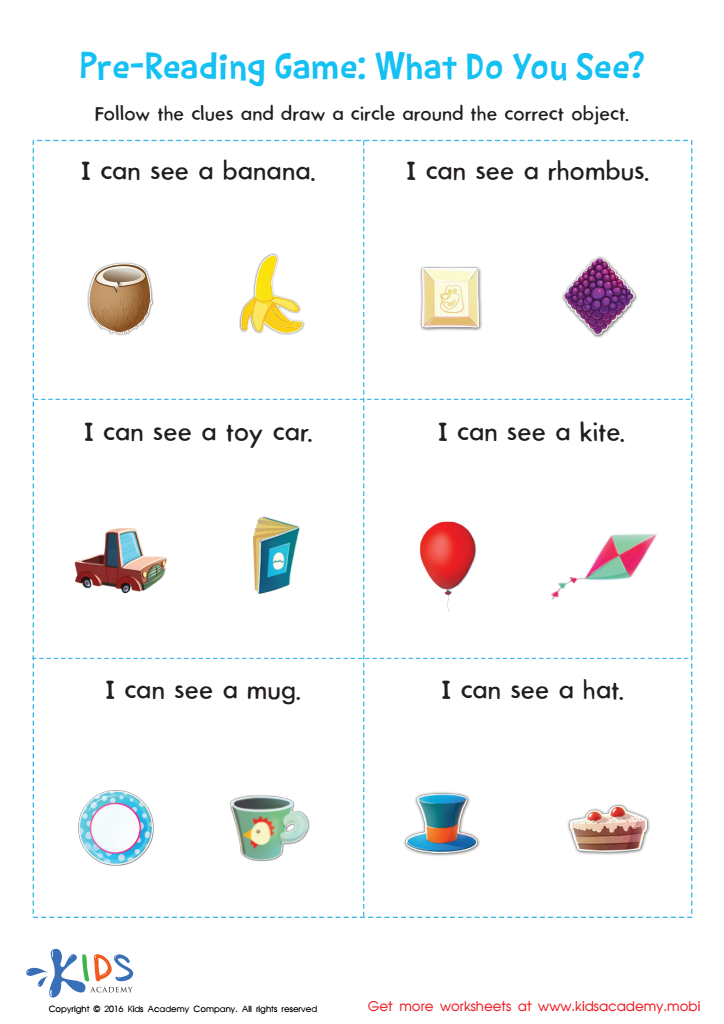
Pre–reading Worksheet: What Do You See?
 Assign to My Students
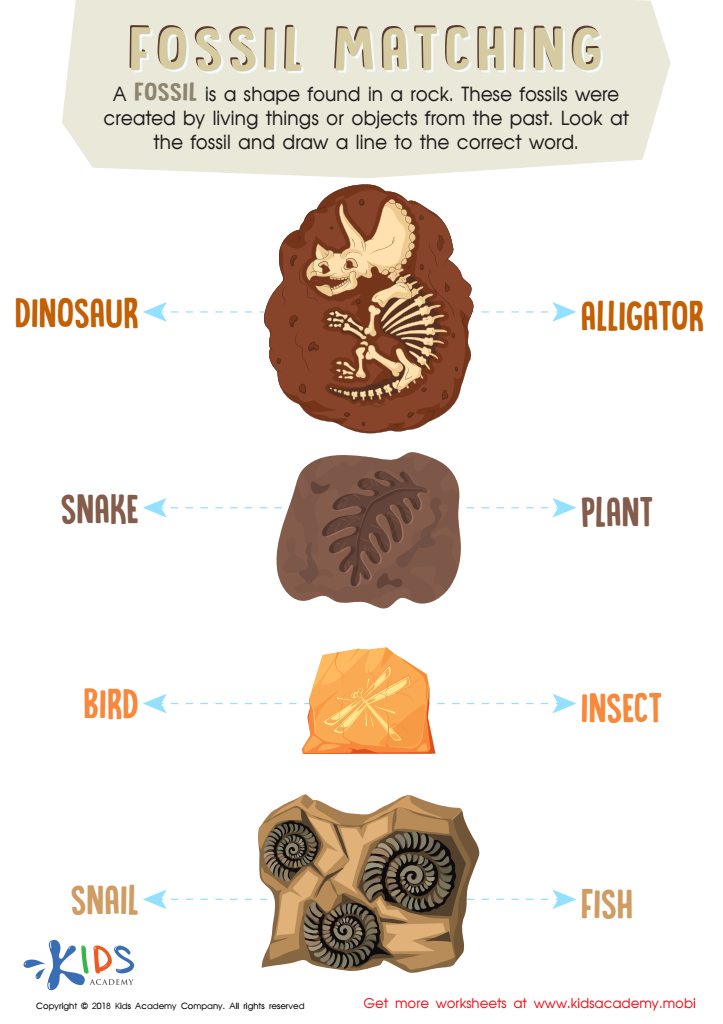
Fossil Matching Worksheet
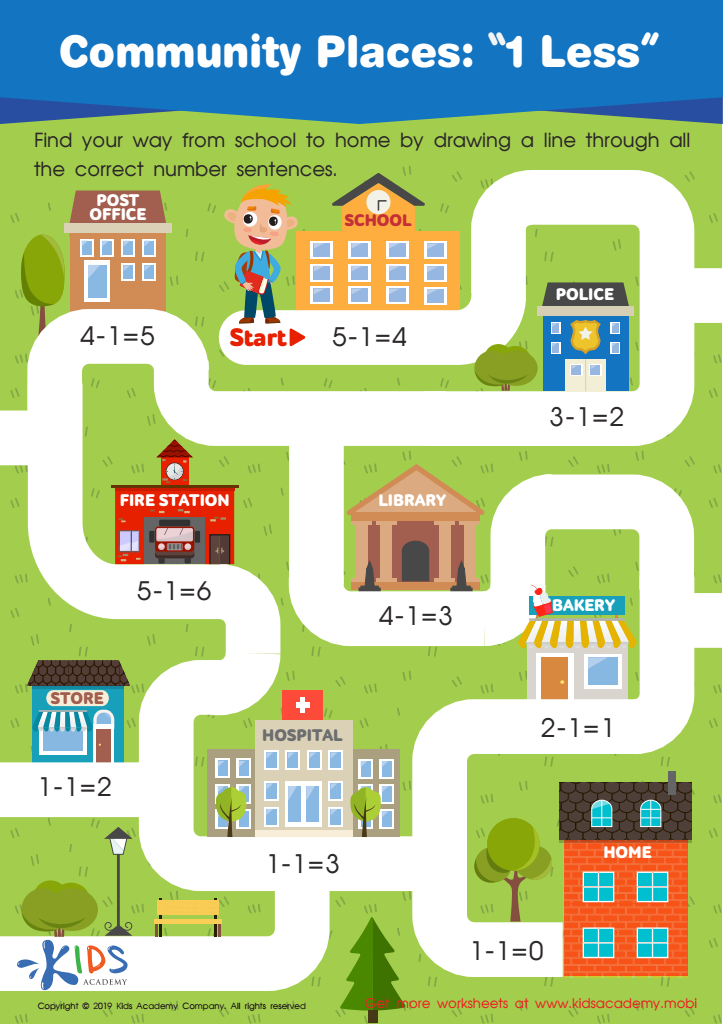
Community Places: 1 Less Worksheet







Identification skills are foundational to a child's cognitive development and directly impact their ability to learn and function effectively in various environments. When parents or teachers prioritize these skills, they are fostering a child's ability to recognize, categorize, and understand the world around them. Here’s why this is crucial:
Firstly, strong identification skills improve academic performance. Children who can quickly identify letters, numbers, shapes, and colors tend to pick up reading and math more efficiently, giving them a head start in school. For example, recognizing letter forms, differentiating between similar shapes, or quickly counting objects can make learning new concepts easier.
Secondly, these skills enhance a child's problem-solving capabilities. Identifying patterns, differences, and similarities around them helps in logical reasoning and critical thinking. This not only aids in academic subjects but also in everyday tasks, fostering independent thinking.
Additionally, identification skills boost social and emotional development. Recognizing facial expressions, understanding body language, and identifying social cues are all critical aspects of social interaction. Children with strong identification skills can better navigate social situations, improving their empathy and relationship-building abilities.
Overall, an extra challenge in identification skills equips children with the tools they need for lifelong learning and interaction, making them well-prepared for future academic, social, and personal successes.








