Story sequencing Extra Challenge Worksheets
5 filtered results
-
From - To
Enhance your students' comprehension skills with our "Story Sequencing Extra Challenge Worksheets." Designed for early grades, these engaging worksheets present a fun and interactive way for children to practice the essential skill of organizing events in a logical sequence. Perfect for reinforcing reading understanding, these activities encourage critical thinking and creativity. Students will love piecing together stories while improving their narrative skills. Use these extra challenges to motivate advanced learners or differentiate instruction in your classroom. Accessible and easy to use, our worksheets are a fantastic resource for teachers looking to enrich their students' learning experiences. Explore the fun of story sequencing today!
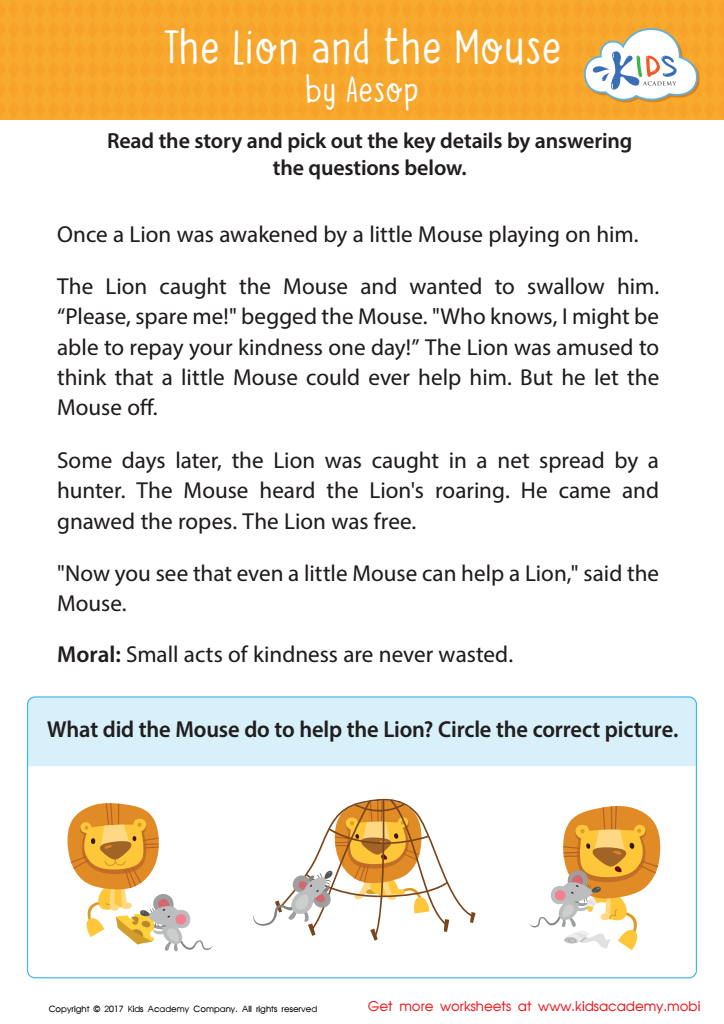
The Lion and The Mouse Sequencing Worksheet
 Assign to My Students
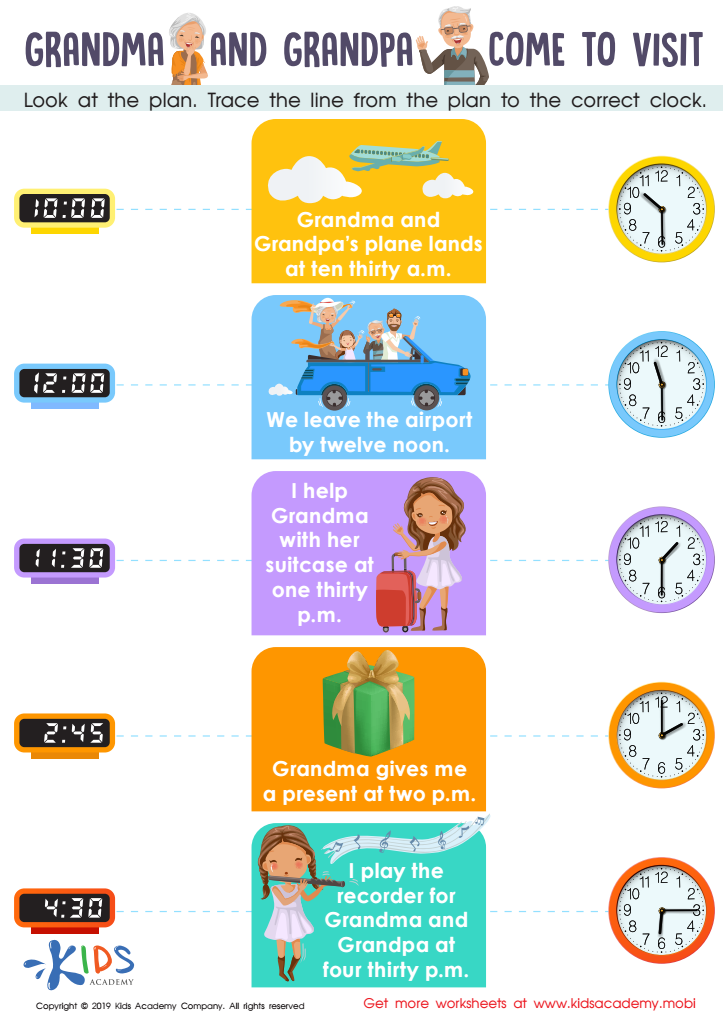
Grandpa and Grandma Come to Visit Worksheet
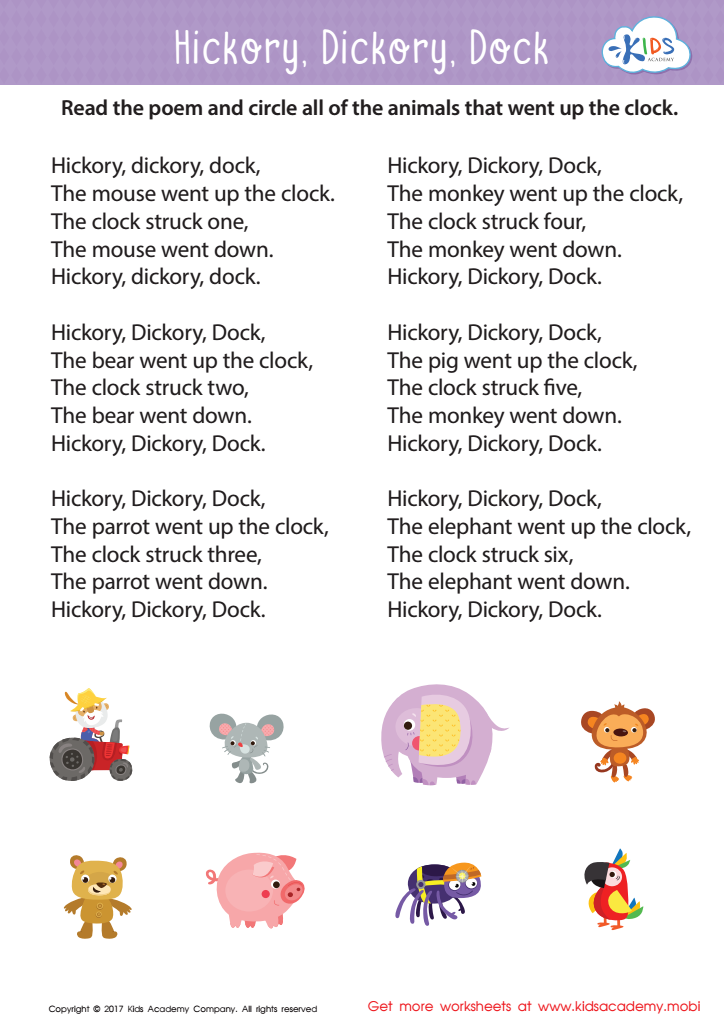
Hickory Dickory Dock Sequencing Worksheet
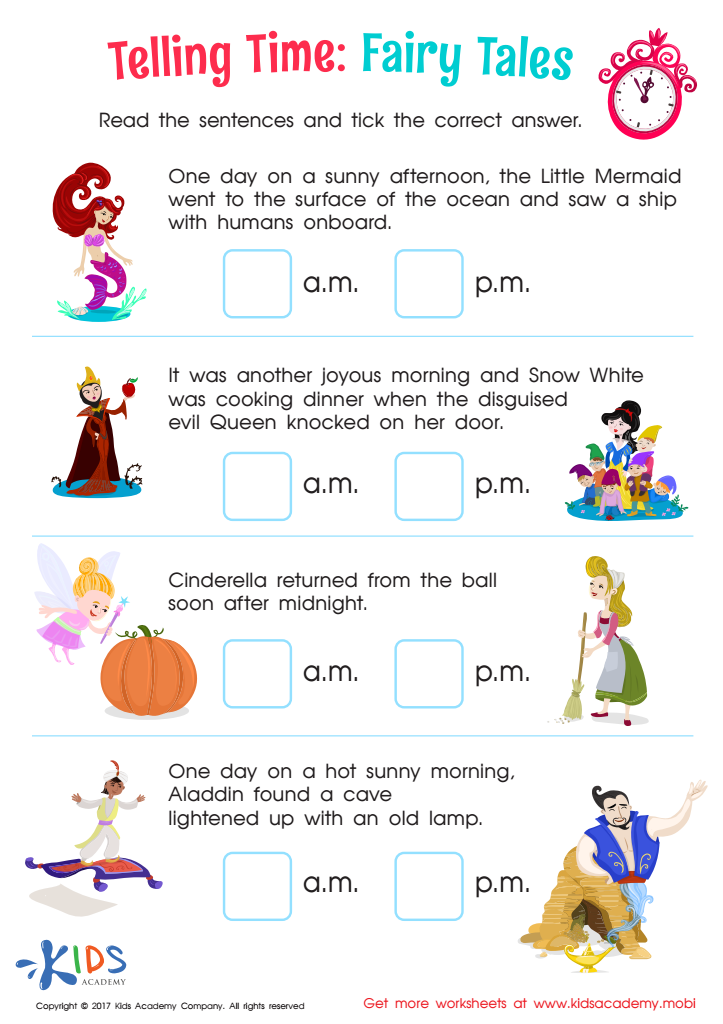
Telling Time: Fairy Tales Worksheet
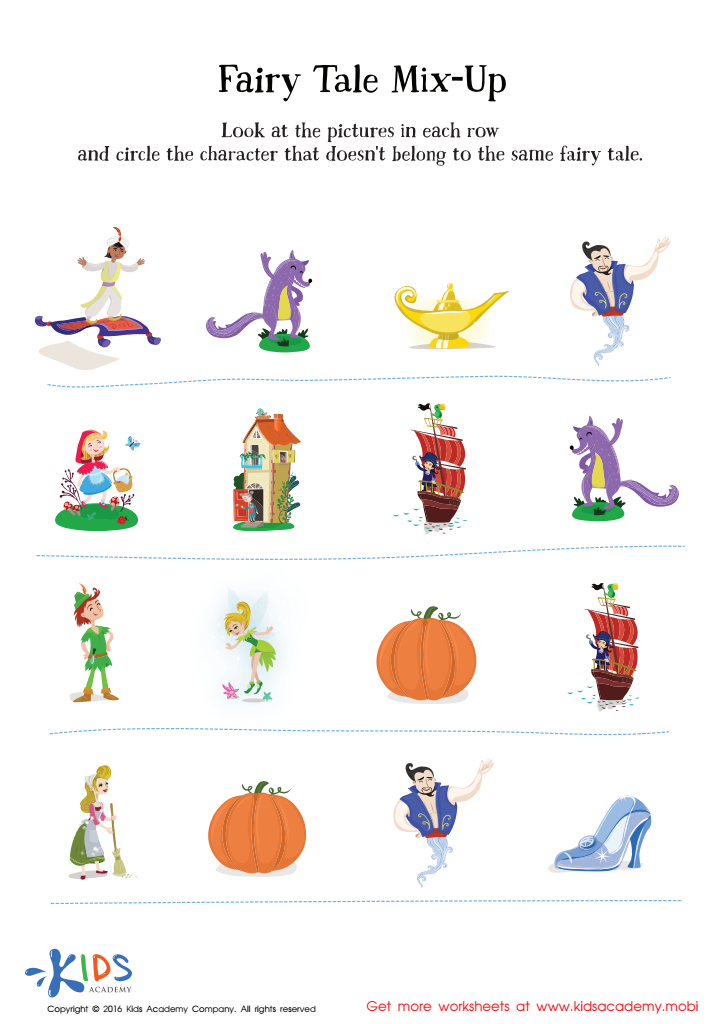
Fairy Tale Worksheet: Story Mix Up





Story sequencing is a critical skill that supports children’s comprehension, narrative structure understanding, and overall literacy development. When parents and teachers engage children in story sequencing activities, they foster critical thinking and language skills, as children learn to identify key events and arrange them logically. This skill is essential for effective communication; children who can sequence stories are better equipped to articulate their thoughts clearly.
Additionally, story sequencing helps in developing memory and retention. By working on these tasks, children practice recalling details and understanding how events are interconnected, enhancing their ability to remember and recount stories. Furthermore, this support is vital for emotional intelligence as children learn to empathize with characters’ experiences and motivations.
Extra challenges in story sequencing, such as rearranging mixed-up stories or creating their narratives, instill confidence and problem-solving skills. These activities encourage creativity and innovation, allowing children to express their ideas uniquely.
Parents and teachers who prioritize story sequencing not only contribute to foundational reading and writing skills but also create opportunities for bonding and shared learning experiences. By investing time in these exercises, they help nurture lifelong learners who can navigate diverse forms of communication in an increasingly complex world.








