Shape Recognition Extra Challenge Geometry Worksheets
13 filtered results
-
From - To
Elevate your child’s geometry skills with our "Shape Recognition Extra Challenge Geometry Worksheets." Specially designed for advanced young learners, these worksheets offer a stimulating array of exercises that go beyond basic shapes. Perfect for honing critical thinking, each sheet includes intricate patterns, 3D shapes, and complex shape combinations. Engage your child with challenges that will boost their spatial awareness and problem-solving skills. Ideal for both classroom and homeschool environments, our expertly crafted worksheets ensure that learning geometry is a fun and rewarding experience. Discover a new level of shape recognition that will keep your child intrigued and excited about geometry!
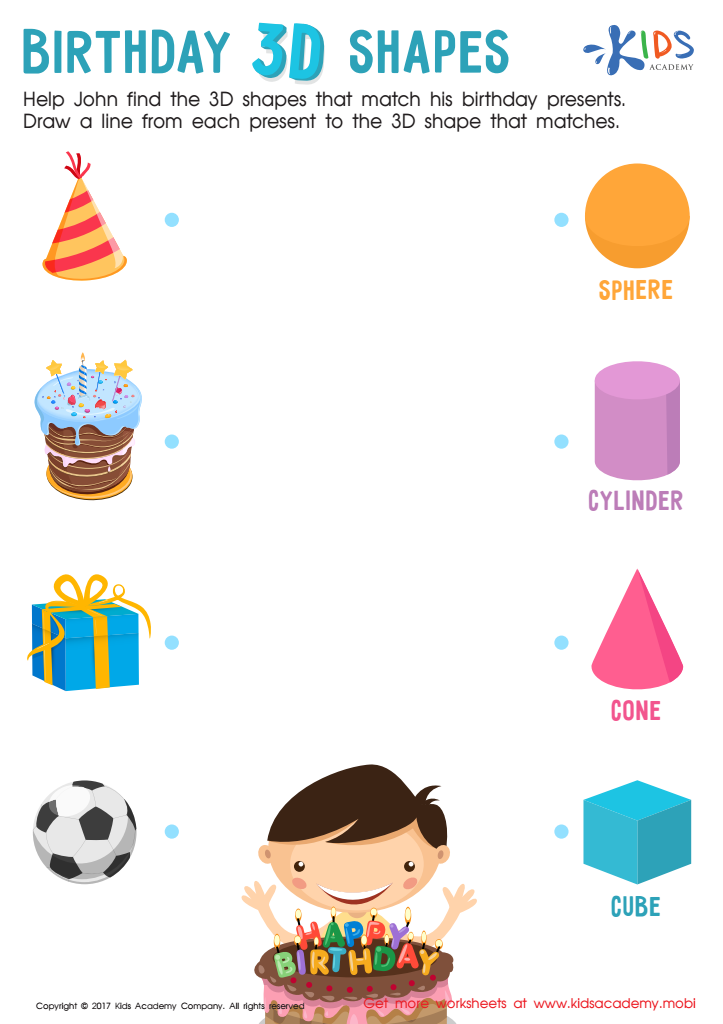
Birthday 3D Shapes Worksheet
 Assign to My Students











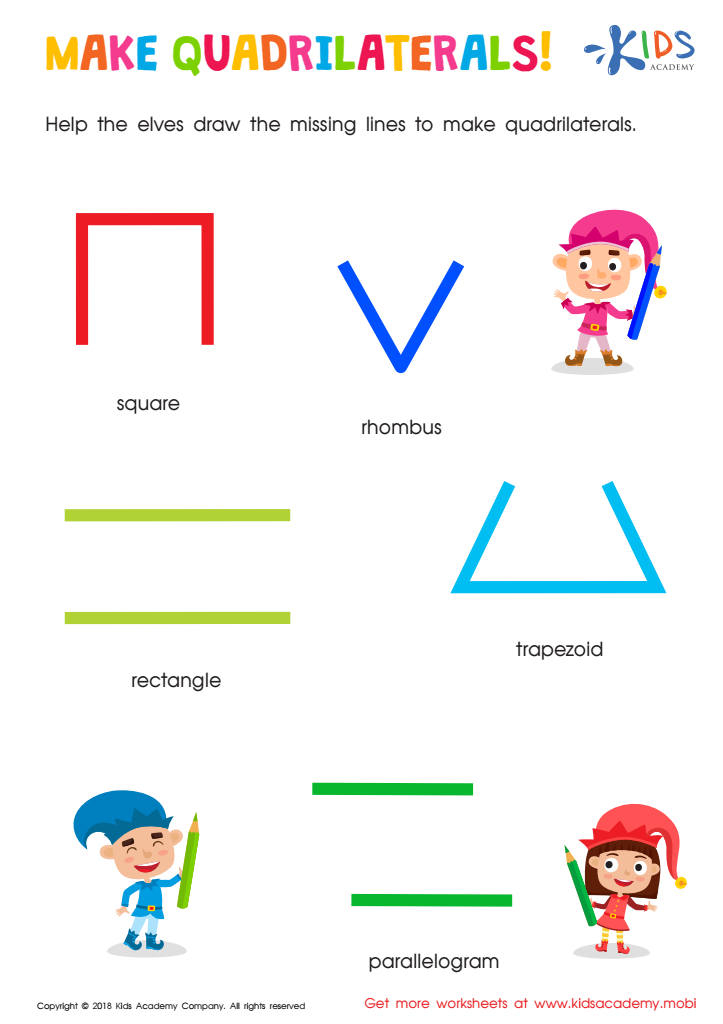
Make Quadrilaterals Worksheet
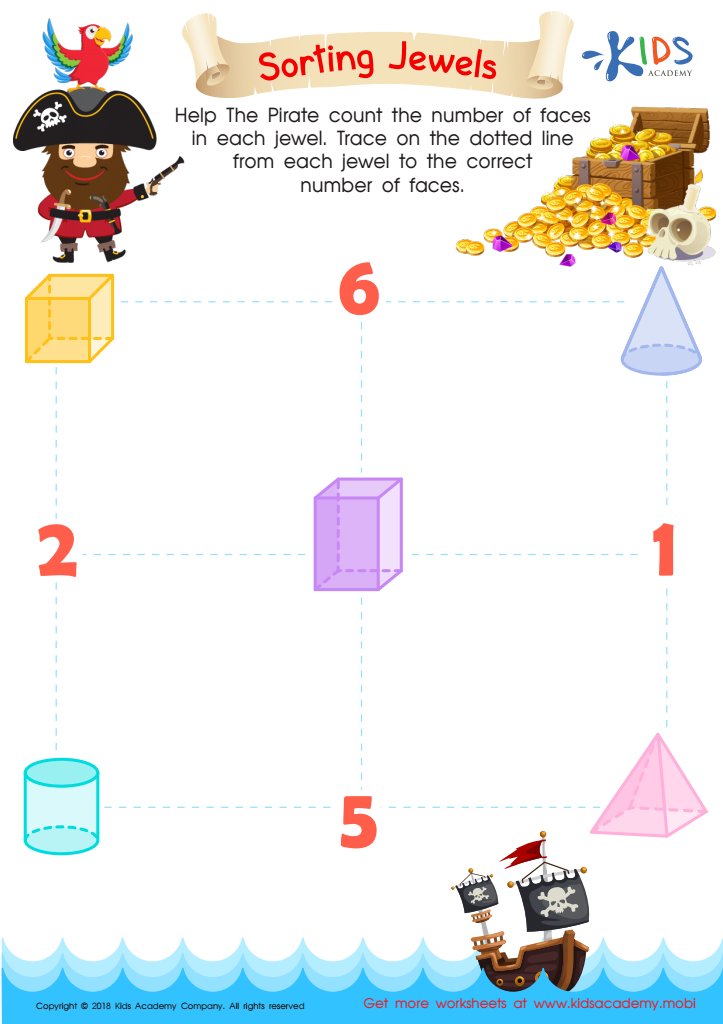
Sorting Jewels Worksheet
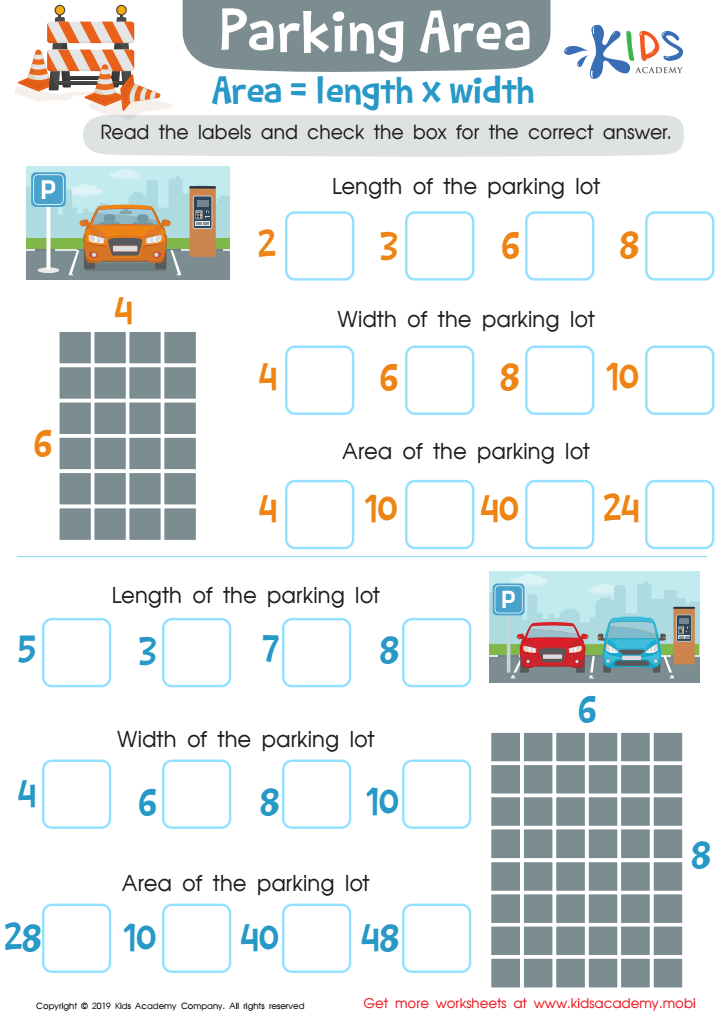
Parking Area Worksheet
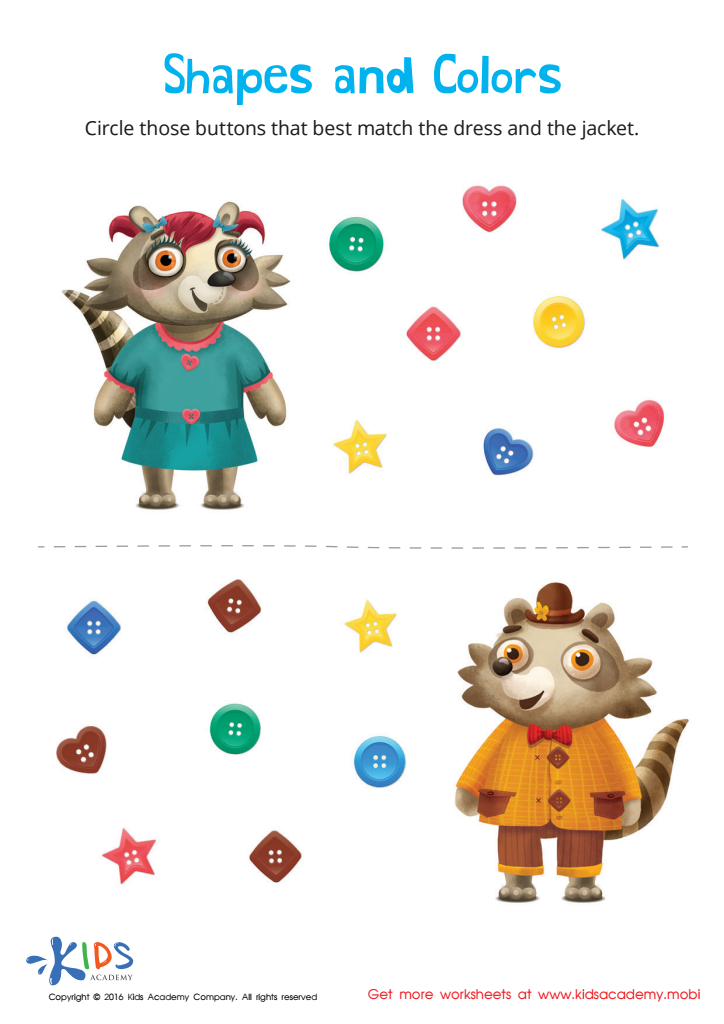
Matching: Shapes and Colors Worksheet
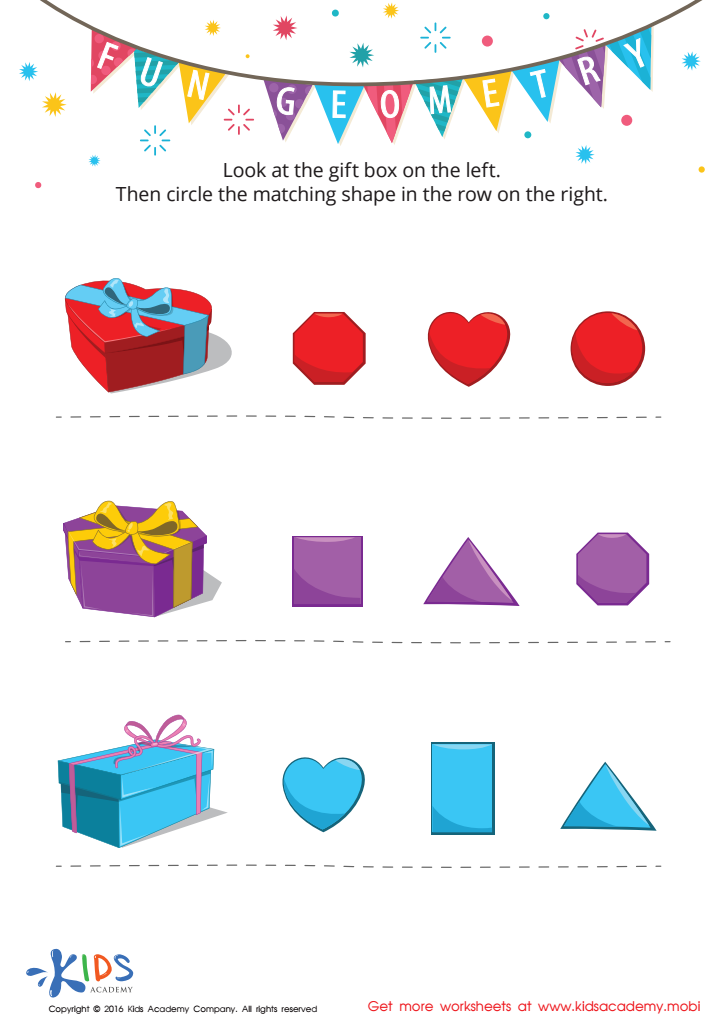
Fun Geometry Worksheet
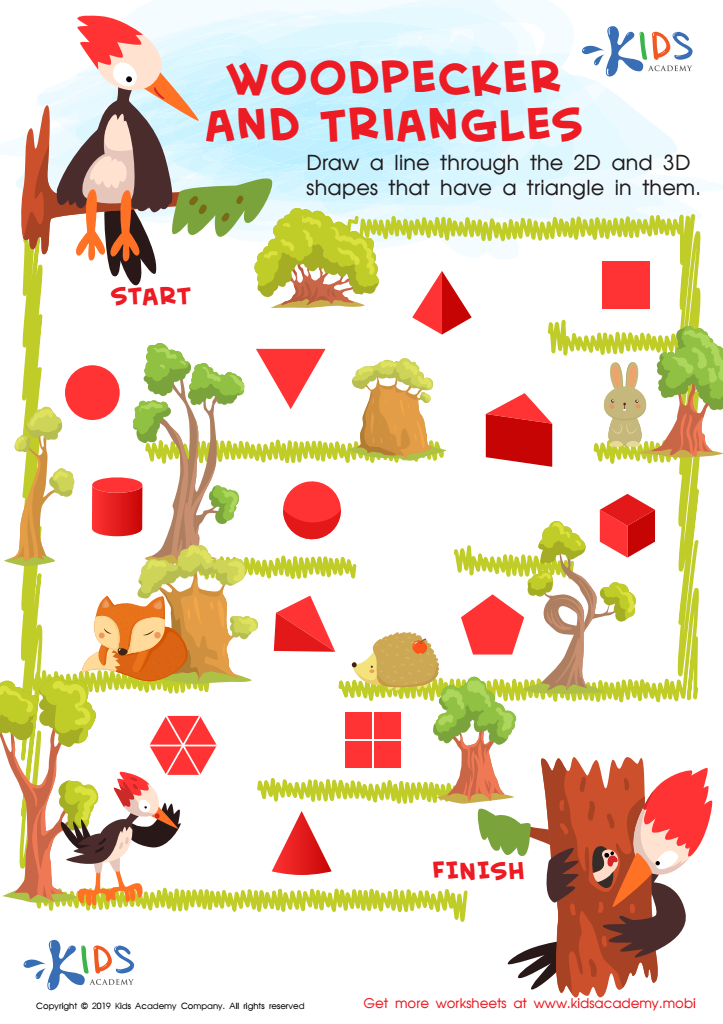
Woodpecker and Triangles Worksheet
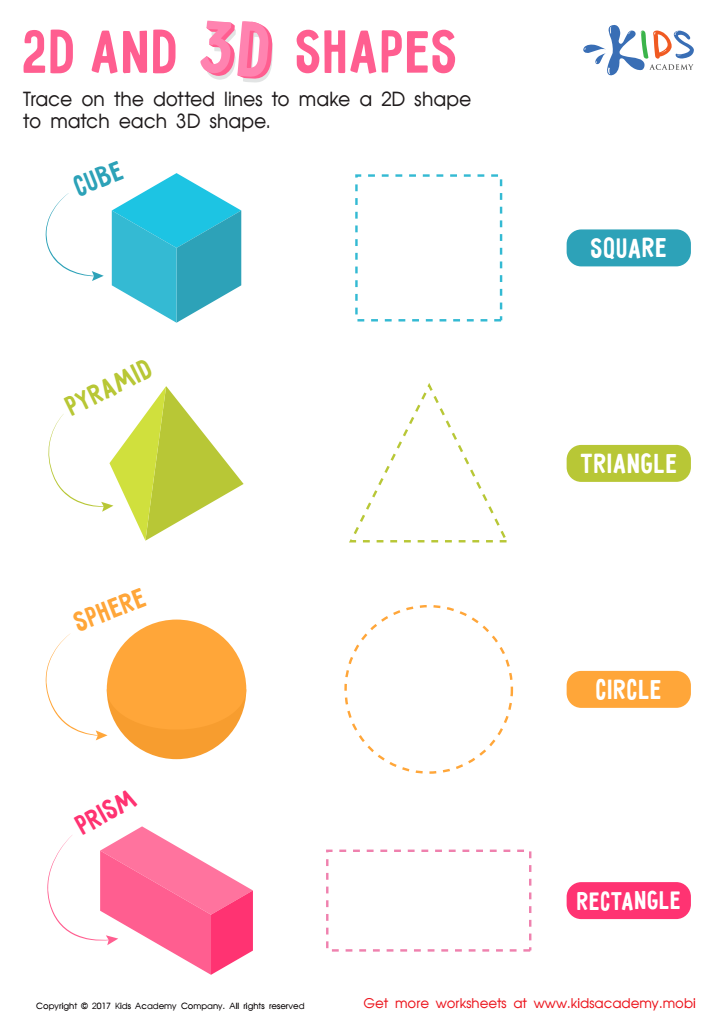
2D and 3D Shapes Worksheet
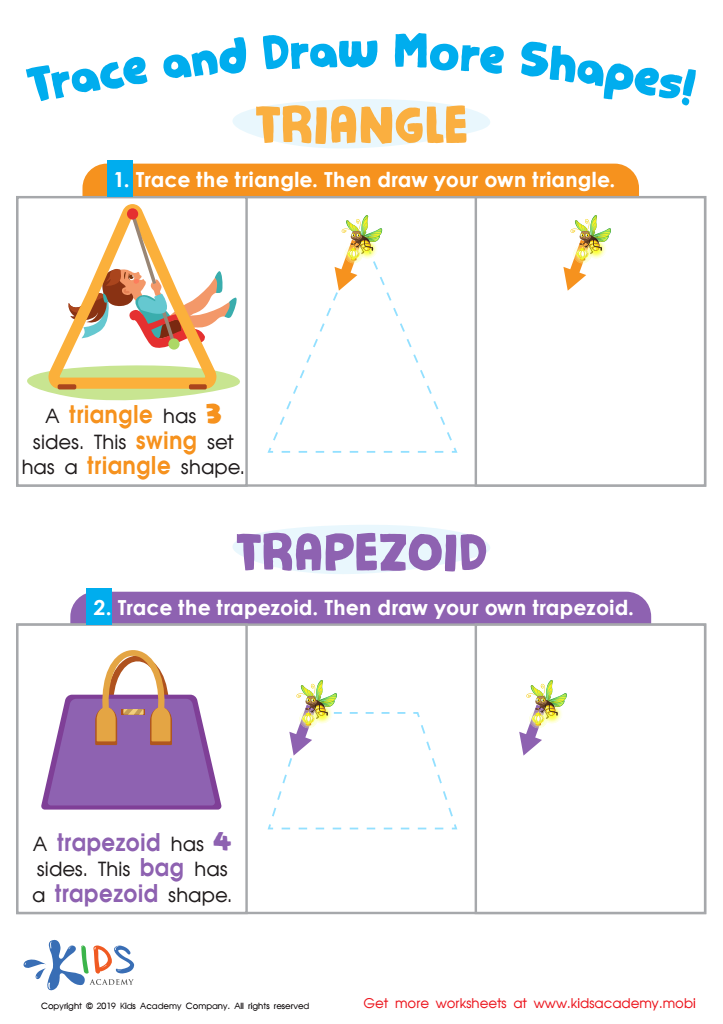
Trace and Draw More Shapes Worksheet
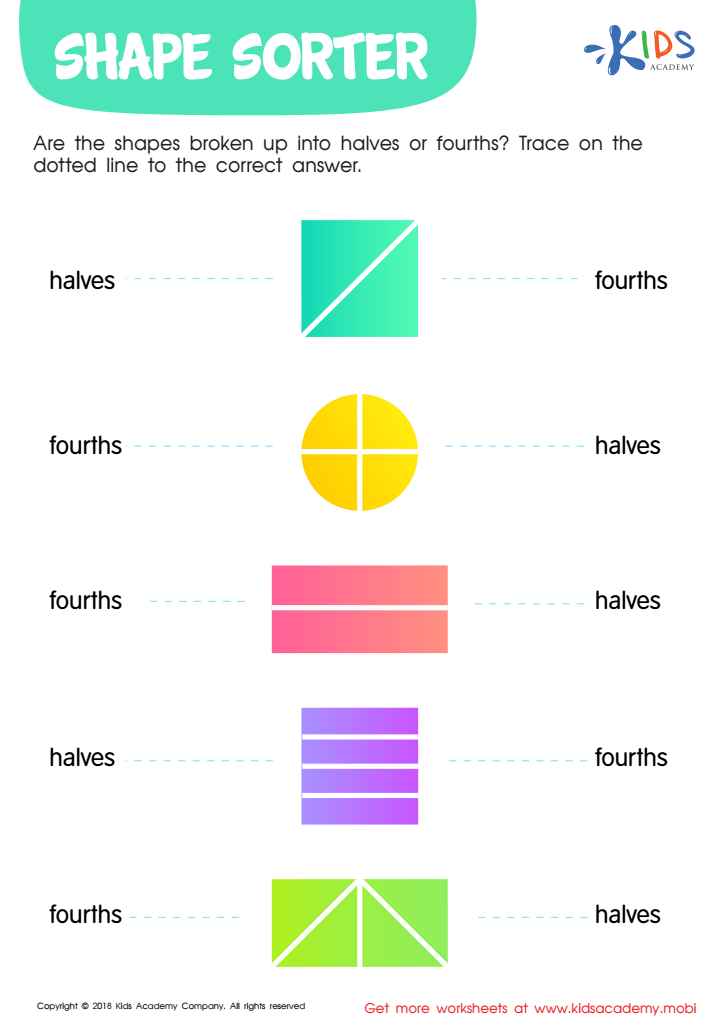
Shape Sorter Worksheet
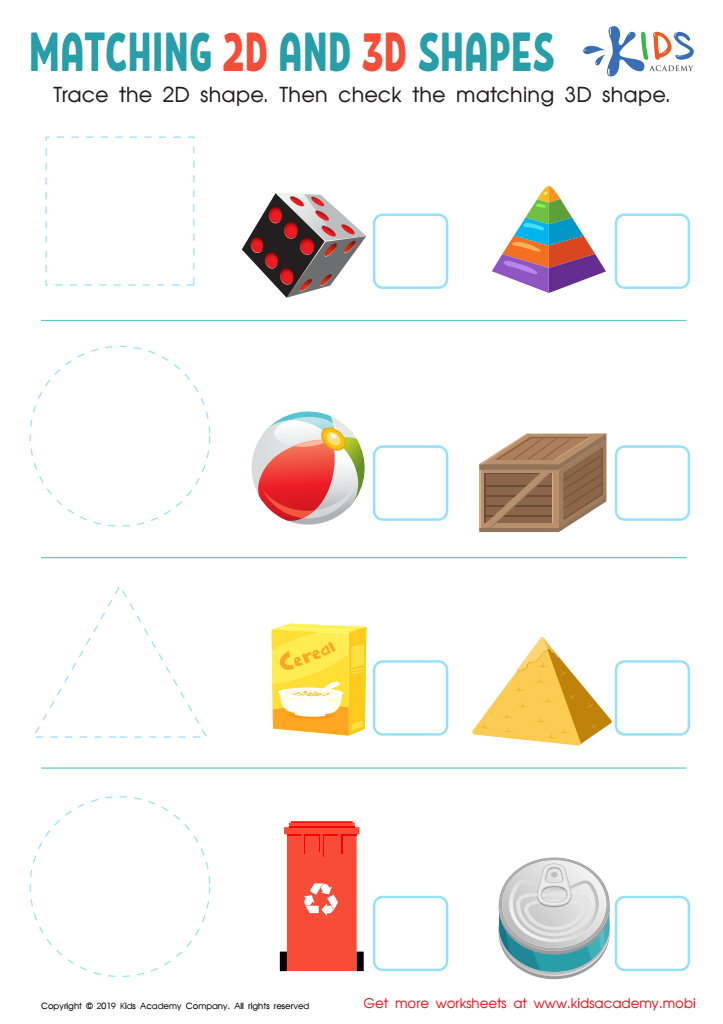
Matching 2D and 3D Shapes Worksheet
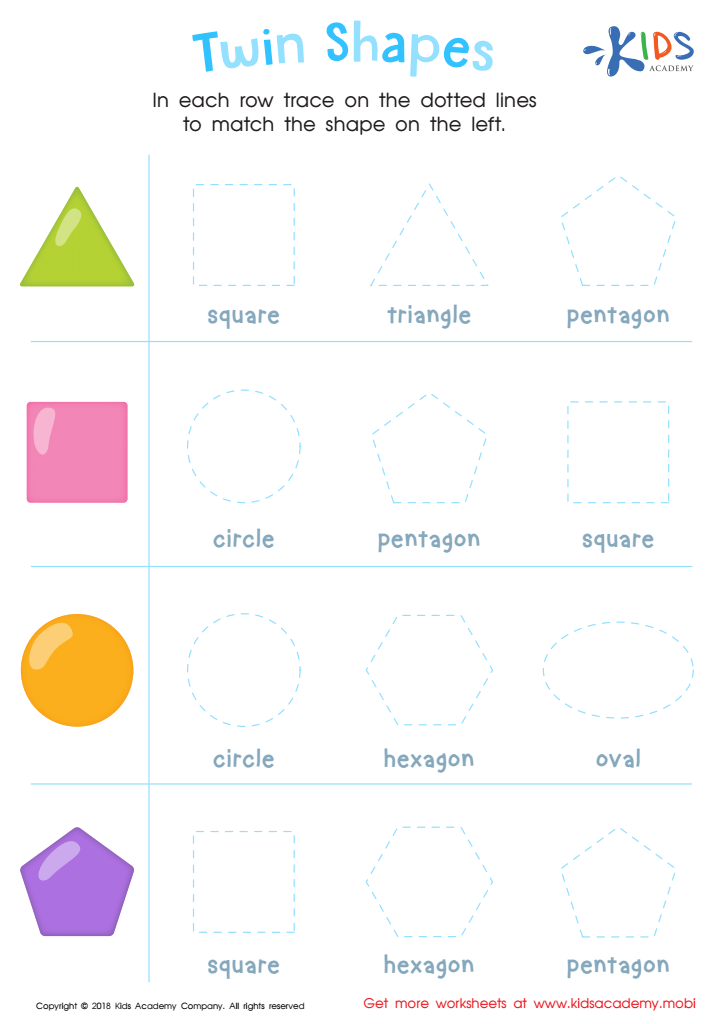
Twin Shapes Dot-to-Dot Worksheet
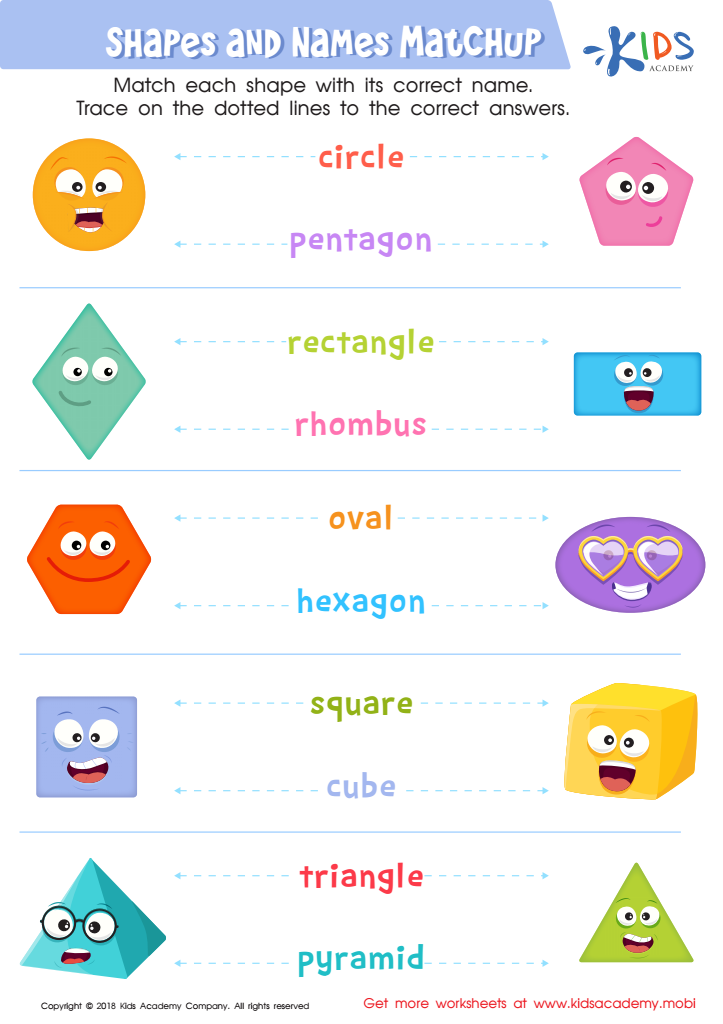
Shapes and Names Matchup Worksheet








Shape recognition is a fundamental aspect of early childhood education that lays the groundwork for more advanced mathematical and cognitive development. When we introduce children to shapes through extra challenge geometry activities, we provide them with crucial skills that transcend mere academic learning.
Firstly, engaging with different shapes helps children to improve their observational skills and attention to detail. Noticing the distinct attributes of various shapes sharpens their ability to differentiate and categorize information, which is pivotal in problem-solving and critical thinking. Additionally, recognizing shapes contributes to a child's spatial awareness—a vital skill that aids in understanding and navigating the environment around them. This spatial awareness also fortifies their ability to grasp more abstract geometric concepts later on.
Incorporating shape recognition activities into the curriculum also facilitates early arithmetic and literacy skills. For instance, understanding that shapes can combine to form other shapes helps children make connections to addition and multiplication. Moreover, discussing shapes and their properties enhance vocabulary and language development.
Furthermore, these activities cater to diverse learning styles: hands-on sorting, building, and drawing appeal to kinesthetic learners, while visual learners benefit immensely from the colorful and distinct patterns that geometric figures provide.
In summary, prioritizing shape recognition through extra challenge geometry activities equips children with essential cognitive abilities, fostering not only academic proficiency but also enhancing their overall intellectual growth and creativity.