Spatial awareness Extra Challenge Geometry Worksheets
5 filtered results
-
From - To
Unlock your child's potential with our "Spatial Awareness Extra Challenge Geometry Worksheets"! Tailored for young learners, these worksheets offer engaging activities designed to enhance spatial reasoning skills and geometry understanding. They feature puzzles that encourage children to identify shapes, solve problems, and visualize relationships among objects. Perfect for students ready to tackle more advanced concepts, these challenges promote critical thinking while making learning fun. Whether used in the classroom or at home, our worksheets provide an excellent resource for reinforcing essential spatial skills. Encourage your child's growth and confidence in geometry with this exciting collection of challenges!
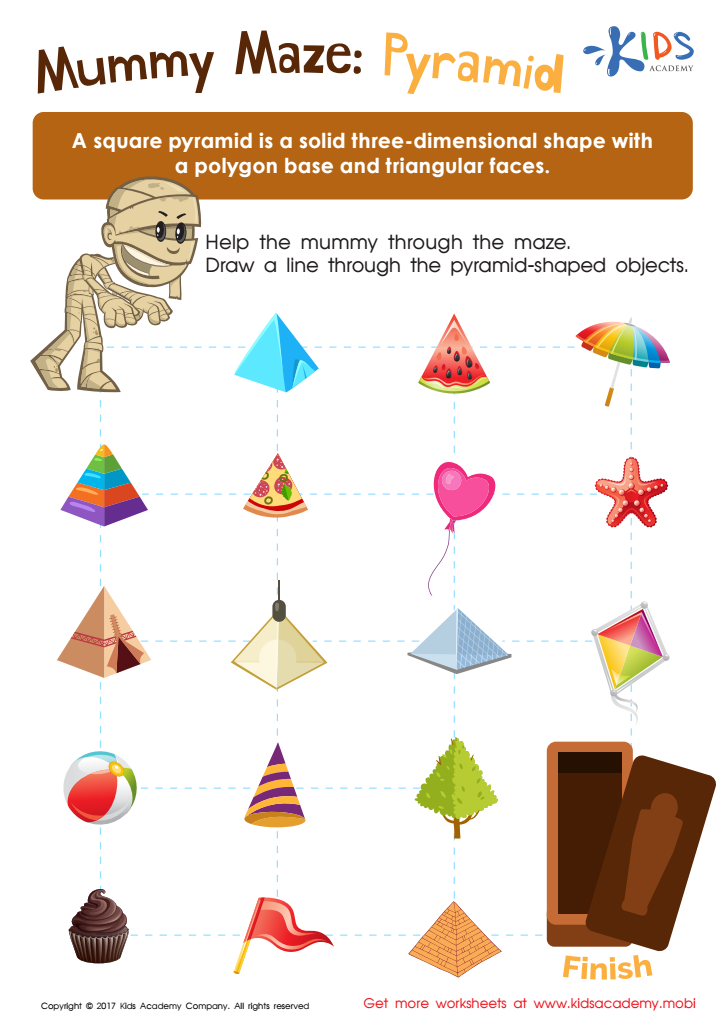
Mummy Maze: Pyramid Printable
 Assign to My Students











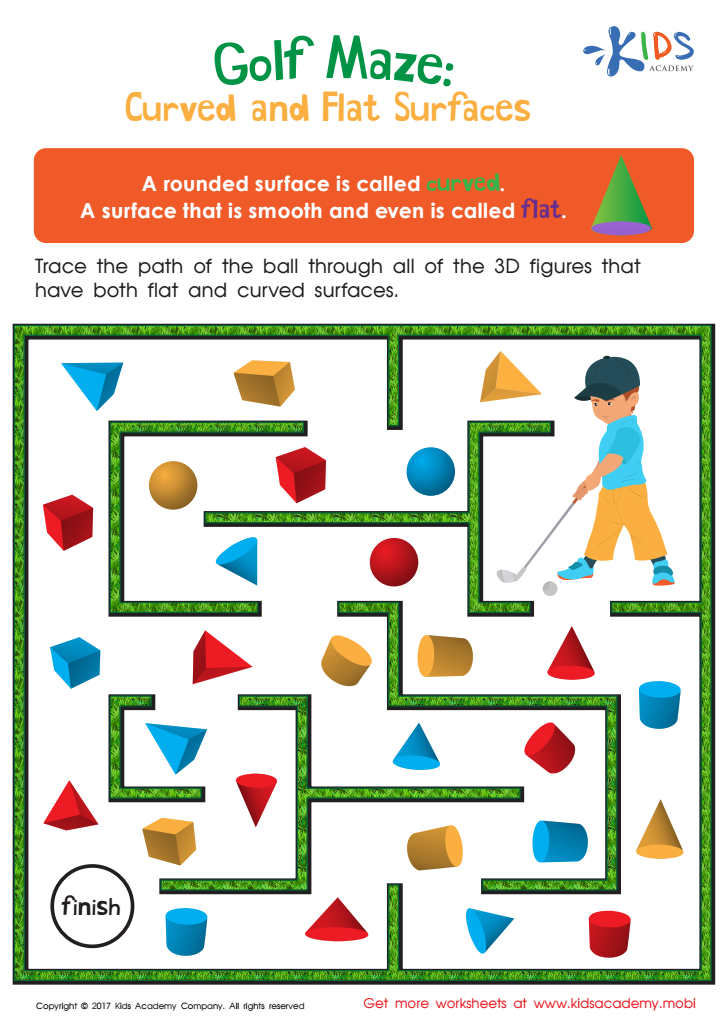
Golf Maze: Curved and Flat Surfaces Worksheet
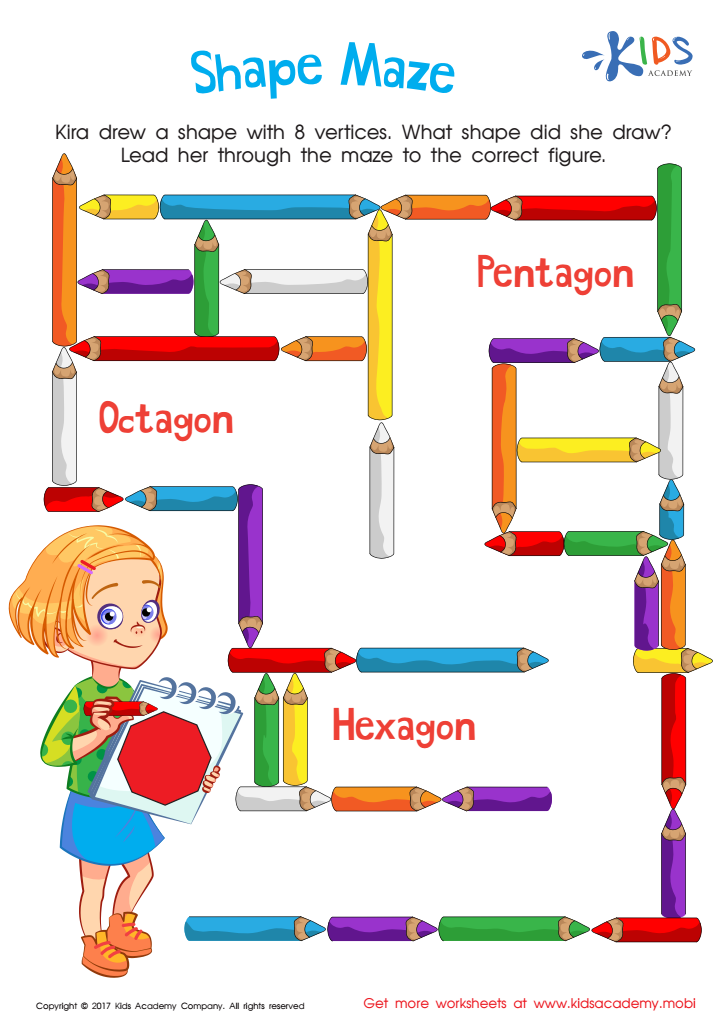
Shape Maze Worksheet
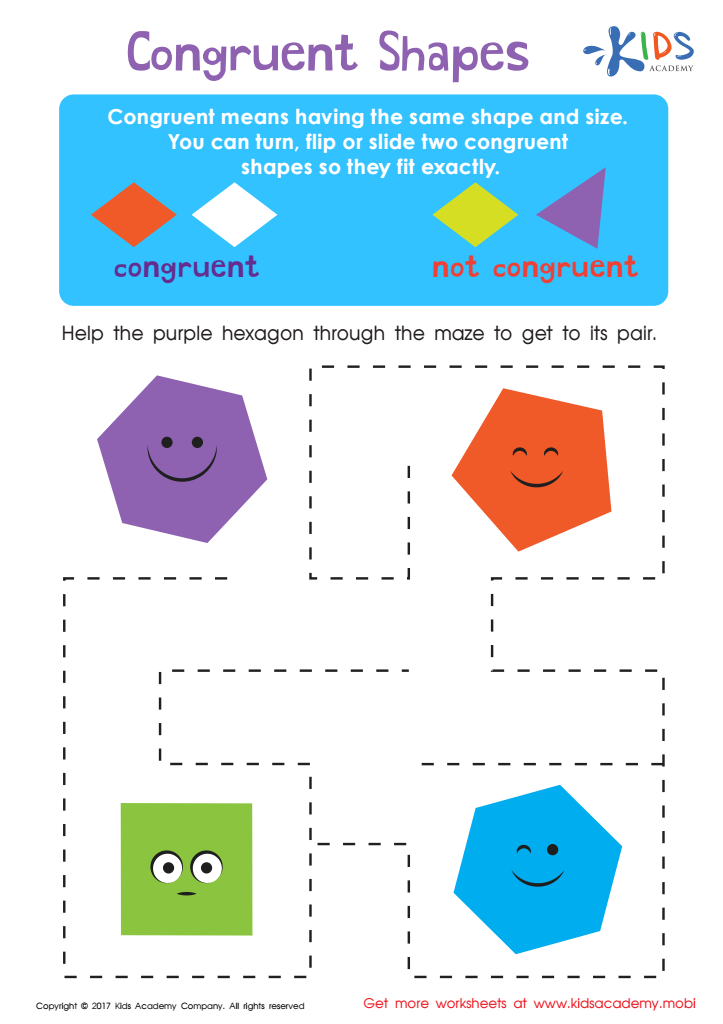
Congruent Shapes Worksheet
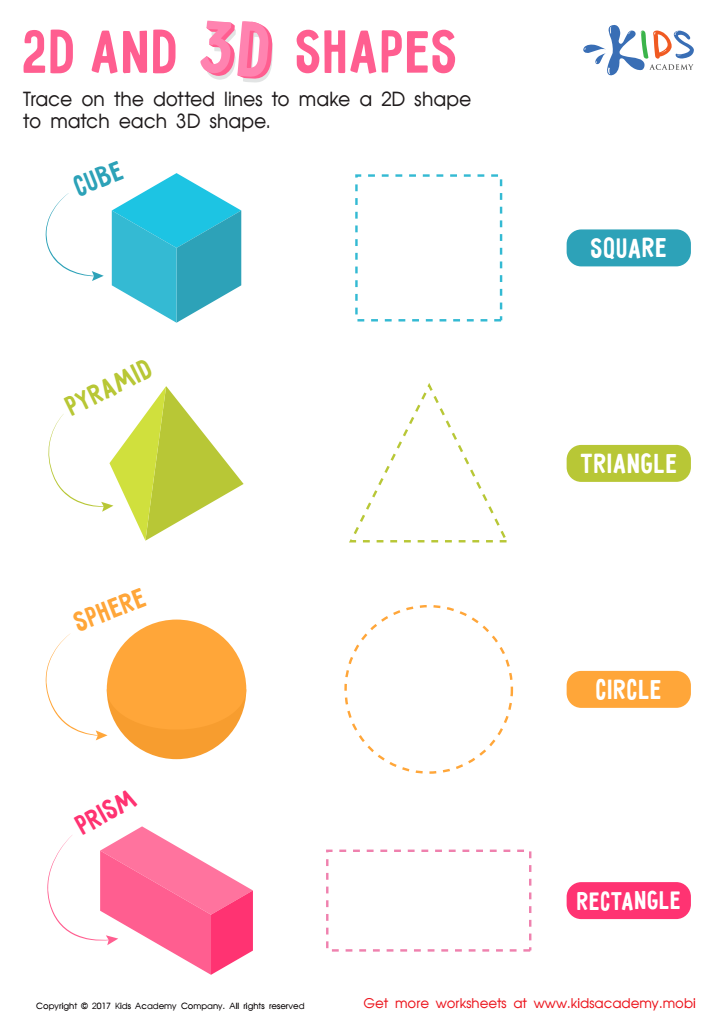
2D and 3D Shapes Worksheet








Spatial awareness is a crucial skill for children that lays the foundation for various academic and life skills, especially in geometry. Parents and teachers should prioritize developing spatial awareness as it enhances problem-solving abilities, critical thinking, and creativity.
Children with strong spatial awareness can visualize shapes, manipulate and rotate objects mentally, and understand the relationships between these shapes. This skill is instrumental in subjects like mathematics and science, where geometric concepts are integral. By engaging in activities that promote spatial reasoning, such as puzzles, building blocks, and drawings, children improve their ability to think abstractly and work with coordinates, angles, and shapes.
Furthermore, spatial awareness is linked to everyday life skills. It helps children navigate their environment, understand directions, and make sense of diagrams and maps. In professions ranging from architecture to medicine, spatial reasoning is vital.
Incorporating Extra Challenge Geometry into the curriculum not only makes learning enjoyable but also prepares children for real-world applications. Ultimately, nurturing spatial awareness benefits children's cognitive development in multifaceted ways, equipping them with tools that foster academic excellence and practical skills. As such, both parents and teachers play a pivotal role in cultivating this essential competency.








