Understanding patterns Extra Challenge Grade 3 Worksheets
3 filtered results
-
From - To
Discover the ultimate "Understanding Patterns Extra Challenge Grade 3 Worksheets" from Kids Academy, designed to stretch third graders' thinking skills! These engaging worksheets offer an advanced approach to recognizing patterns and sequences, promoting critical thinking and problem-solving skills. Each task encourages students to identify, describe, extend, and create complex patterns, enhancing their mathematical reasoning. Perfect for students seeking a stimulating challenge, these worksheets provide ample opportunities for practice and master pattern recognition. Tailored with colorful and interactive designs, these extra challenge sheets make learning fun and effective. Elevate your child's learning experience today with Kids Academy!
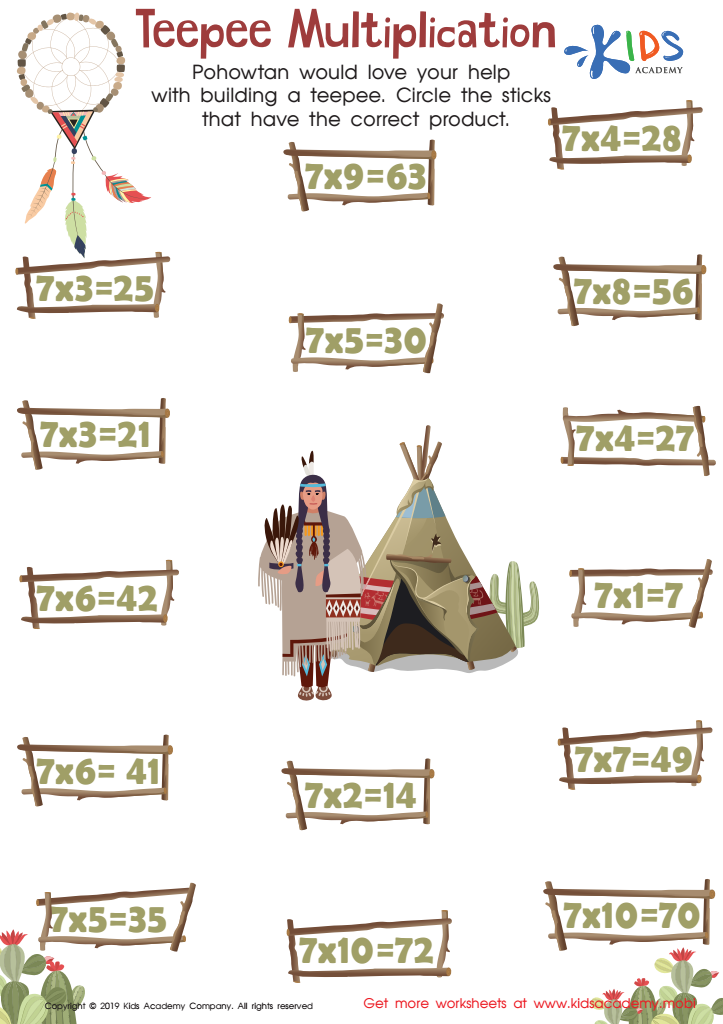
Teepee Multiplication Worksheet
 Assign to My Students
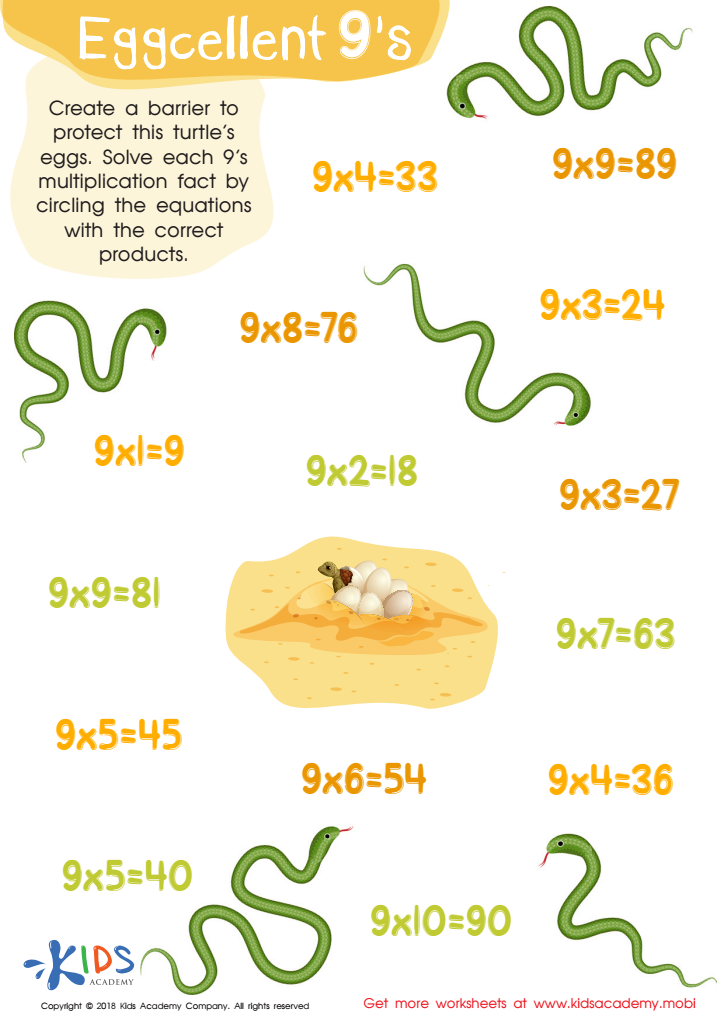
Eggcellent 9’s Worksheet
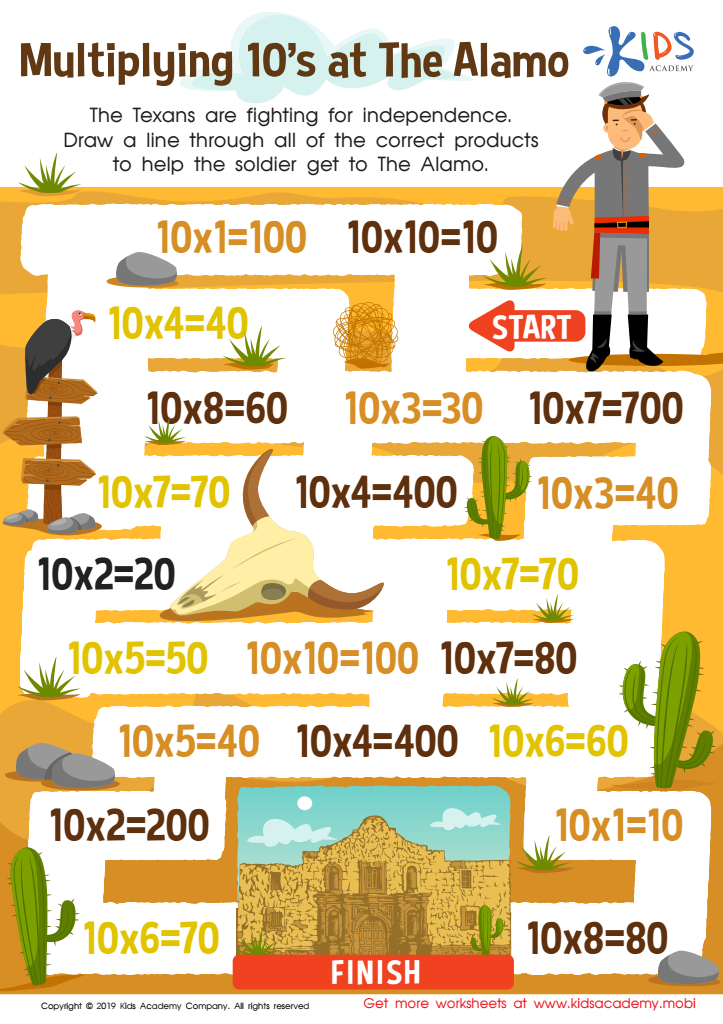
Multiplying 10’s at The Alamo Worksheet








Understanding patterns is critical for young learners in Grade 3 as it lays the foundation for advanced mathematical and cognitive skills. Patterns help children predict and understand the logical sequence of numbers, objects, or symbols, enhancing their problem-solving abilities. When parents and teachers focus on learning patterns, they cultivate a child's ability to recognize order and make connections, which are essential for math concepts such as multiplication, division, and even algebra.
Moreover, patterns extend beyond math. They play a significant role in reading comprehension, helping children recognize word patterns and improve spelling and grammar. Identifying patterns also promotes critical thinking and analytical skills. For instance, discerning patterns in stories aids children in anticipating events and understanding story structure, which enhances both their enjoyment and grasp of reading material.
An Extra Challenge in understanding patterns is particularly beneficial in Grade 3, a pivotal time when children transition from basic arithmetic to more complex mathematical concepts. Challenges bolster confidence and foster a growth mindset, reinforcing that effort leads to improvement. As children master challenging patterns, they develop resilience and persistence—key traits for lifelong learning.
Therefore, engaging with pattern challenges not only boosts academic performance but also equips children with essential life skills, preparing them for future academic and real-world scenarios.