Cognitive Development Extra Challenge Grade 3 Math Worksheets
5 filtered results
Difficulty Level
Grade
Age
-
From - To
Subject
Activity
Standards
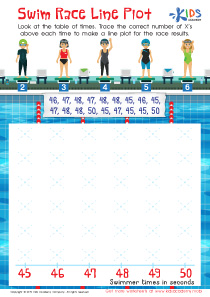
Boost your child's thinking skills with "Cognitive Development Extra Challenge Grade 3 Math Worksheets." Specially curated to enhance problem-solving abilities, these engaging worksheets push young minds beyond basic math. Designed for third graders, they incorporate advanced concepts to foster critical thinking and a deeper understanding of mathematical principles. Perfect for classroom use or homework assignments, our challenging exercises keep kids excited about learning. Turn math into a fun adventure while nurturing cognitive development. Help your student master complex equations, boost their confidence, and cultivate a love for math with these effective, educational worksheets.
Favorites
With answer key
Interactive
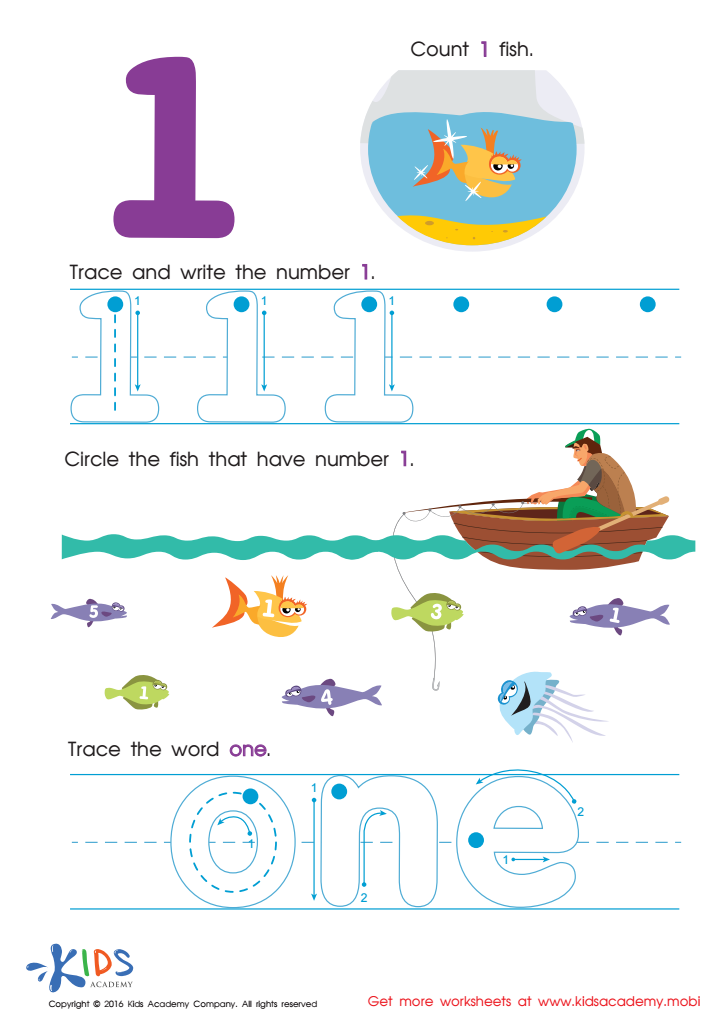
Learning to Write 1 Worksheet
Learning to write numbers can be easy and fun! Get this new number worksheet to help your child excel. Practice counting, tracing and writing the number “one”, then circle the fish with “1” on them. Revise spelling and have fun! Get more tracing numbers worksheets at Kids Academy and enjoy the learning process.
 Assign to My Students
Learning to Write 1 Worksheet
Worksheet
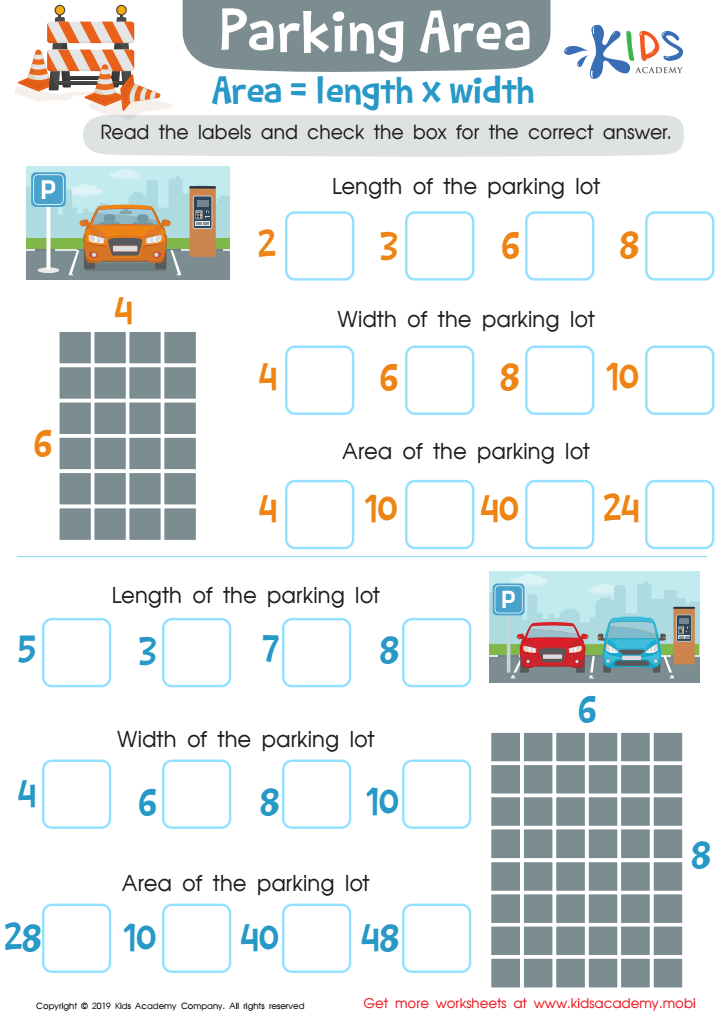
Parking Area Worksheet
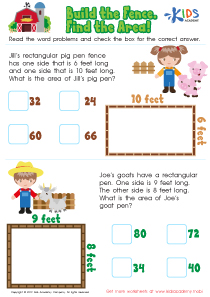
Math may not be your child's favorite, but that doesn't mean they can't excel. Math can seem intimidating, but with practice, they can learn it's not so hard. In this worksheet, your kids will calculate the area of a parking lot, by adding length and width. Help them read the labels and select the correct answer.
Parking Area Worksheet
Worksheet
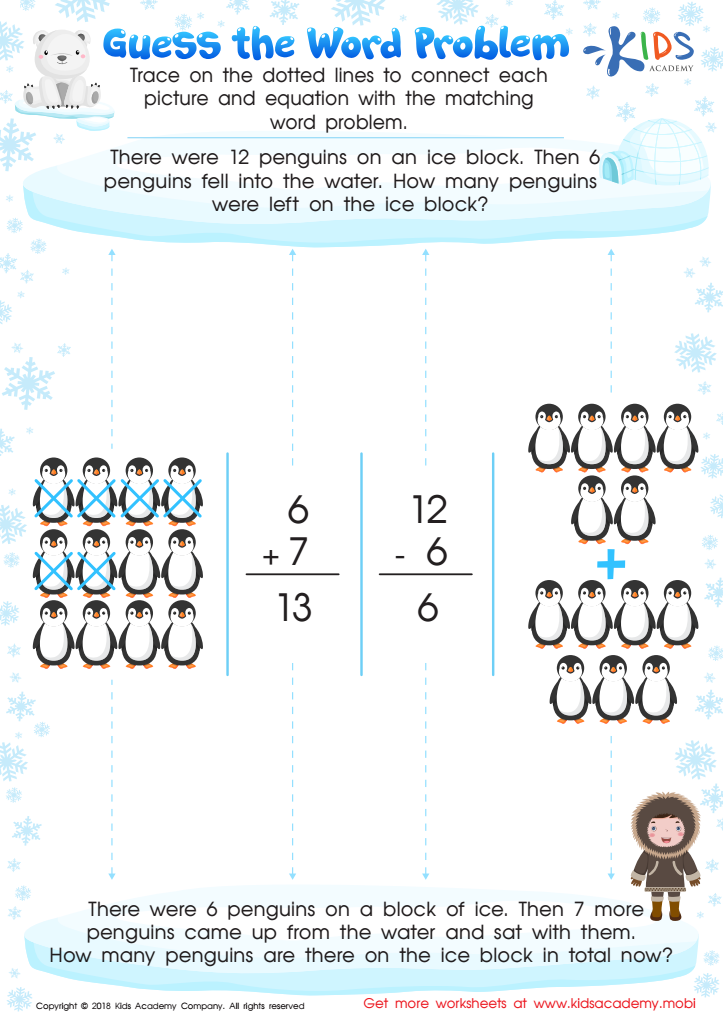
Guess the Word Problem Worksheet
Head to the Arctic Circle for math word problems with penguins, bears, and eskimos! This winter printable worksheet helps kids enjoy math with cute images. Guide kids through addition and subtraction in standard form with the penguins. Compare word problems to its written and pictorial forms for an enjoyable lesson!
Guess the Word Problem Worksheet
Worksheet
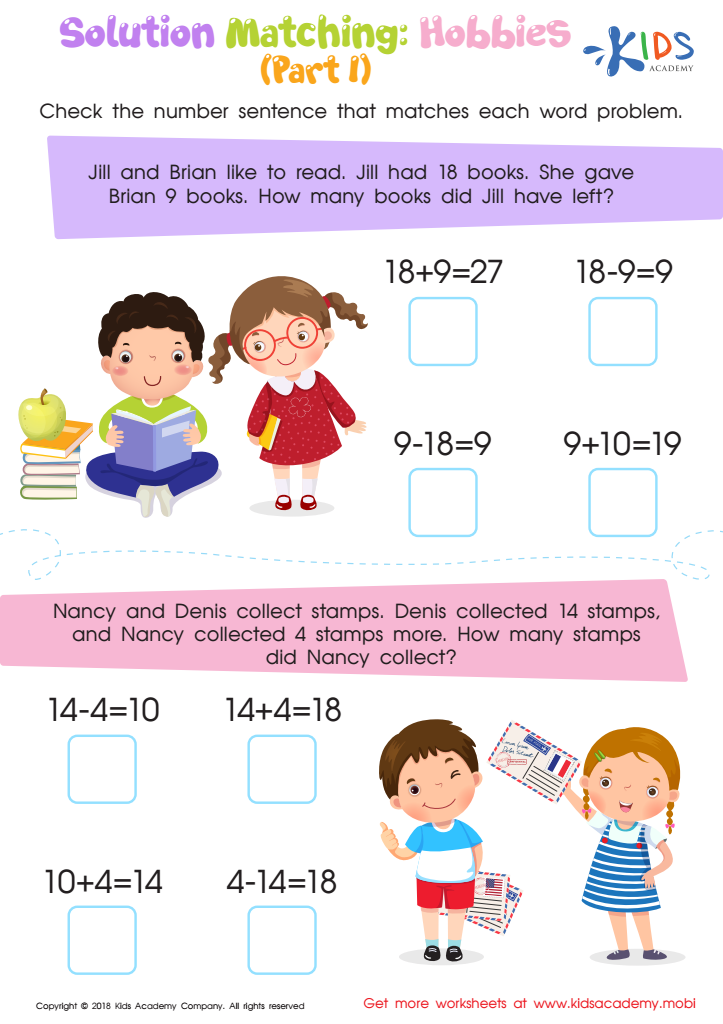
Solution Matching: Hobbies. Part 1 Worksheet
Math problems can be made more fun and easier to solve by relating them to real-life activities. Kids Academy's free printable worksheet helps your child to do this. Read each problem, paying attention to the numbers and terms, then choose the correct equation from the options given. This will help your child to understand the problem and get the right result!
Solution Matching: Hobbies. Part 1 Worksheet
Worksheet
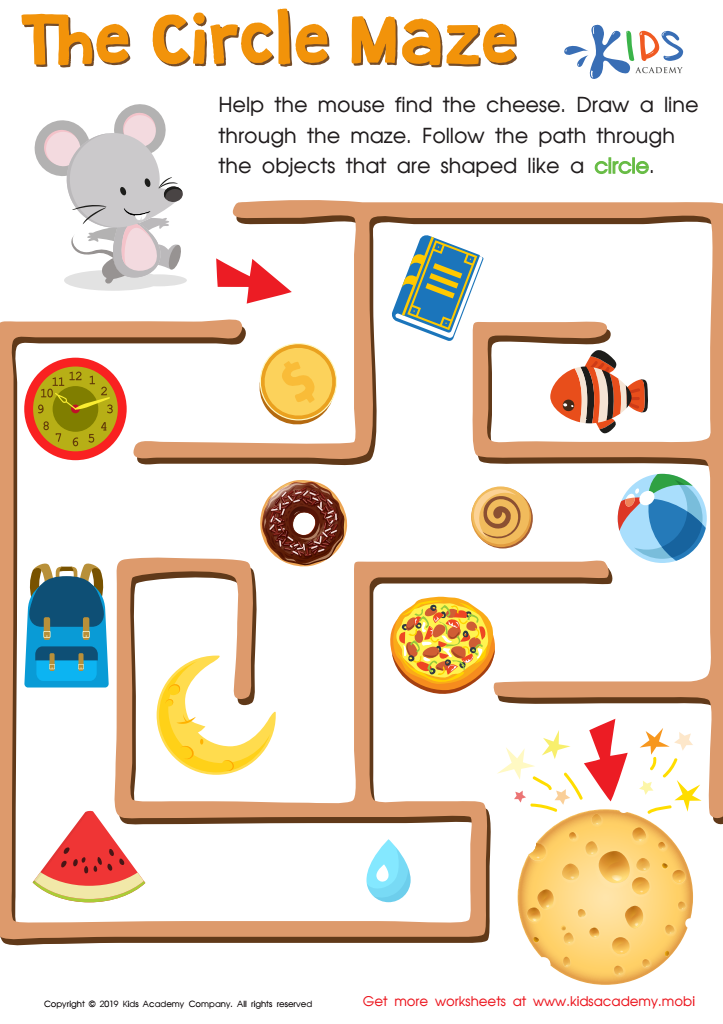
The Circle Maze Worksheet
Kids can have fun learning shapes with this maze worksheet. They can help the mouse find its cheese by tracing the path of a circle through the maze. This printable is great for classroom learning or as an activity at home.
The Circle Maze Worksheet
Worksheet
Join Kids Academy for Free
Who is primarily going to use this learning content?







Parents and teachers should care deeply about Cognitive Development Extra Challenge Grade 3 Math because this is a pivotal stage in a child's educational journey. At this age, children's brains undergo significant growth and restructuring, making it an optimal time for cognitive skill enhancement. By introducing challenging math problems, we encourage more than just number skills; we foster critical thinking, problem-solving abilities, and perseverance.
These enriched math activities lay a strong foundation for future academic success. They move beyond rote memorization and help kids understand underlying mathematical concepts, making connections that are crucial for more advanced subjects. Parents and teachers play a vital role in guiding and motivating children through these challenges, providing the encouragement and support needed to tackle difficulties and develop resilience.
Additionally, Cognitive Development Extra Challenge programs help detect and address individual strengths and weaknesses early on. This allows for differentiated instruction tailored to each child's needs, ensuring they're neither bored due to lack of challenge nor overwhelmed by concepts that are too advanced. Therefore, investing in these extra challenges enhances the overall learning experience, “sparking a love for math," and prepares children for the complex demands of higher education and everyday problem-solving in real life.