Comparing lengths Kindergarten Worksheets
3 filtered results
-
From - To
Unlock your child's potential with our Comparing Lengths Kindergarten Worksheets! Designed to captivate little learners, these engaging activities help children understand and compare the lengths of different objects. Packed with colorful illustrations and fun comparisons, our worksheets make learning an exciting adventure. These exercises aid in building foundational math skills, enhancing cognitive development, and boosting early problem-solving abilities. Perfect for classroom or home use, these printables provide endless opportunities for practice and mastery. Develop your child's ability to identify the longest and shortest objects while fostering a lifelong love for learning. Download now and watch your kindergartener thrive!
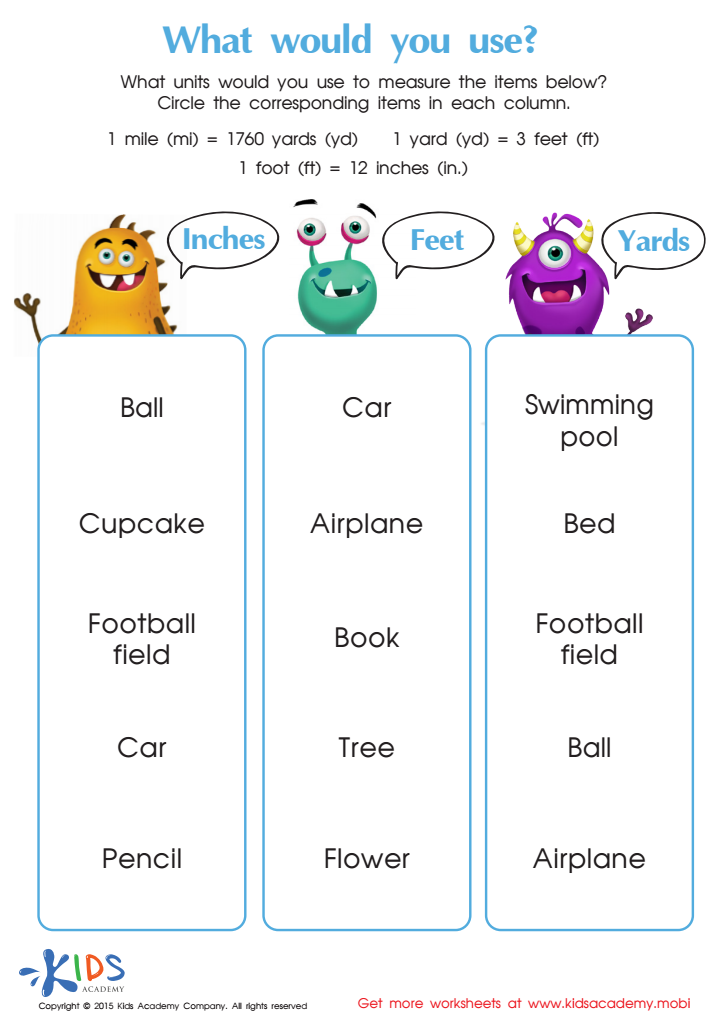
Learning about measuring objects in inches, feet and yards Worksheet
 Assign to My Students
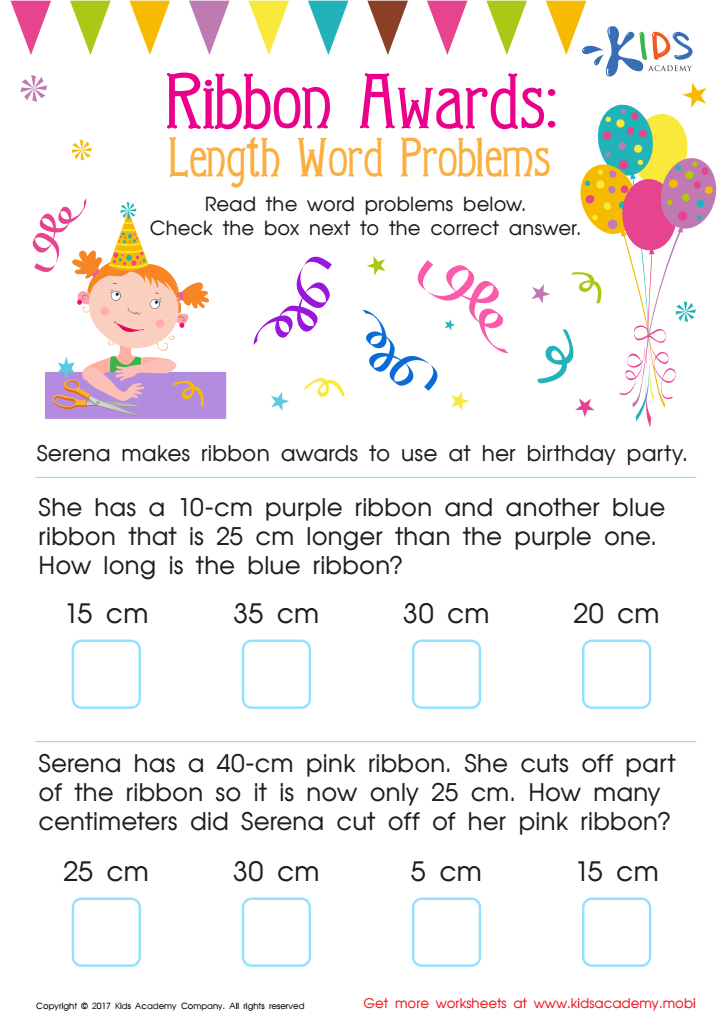
Length Word Problems Worksheet
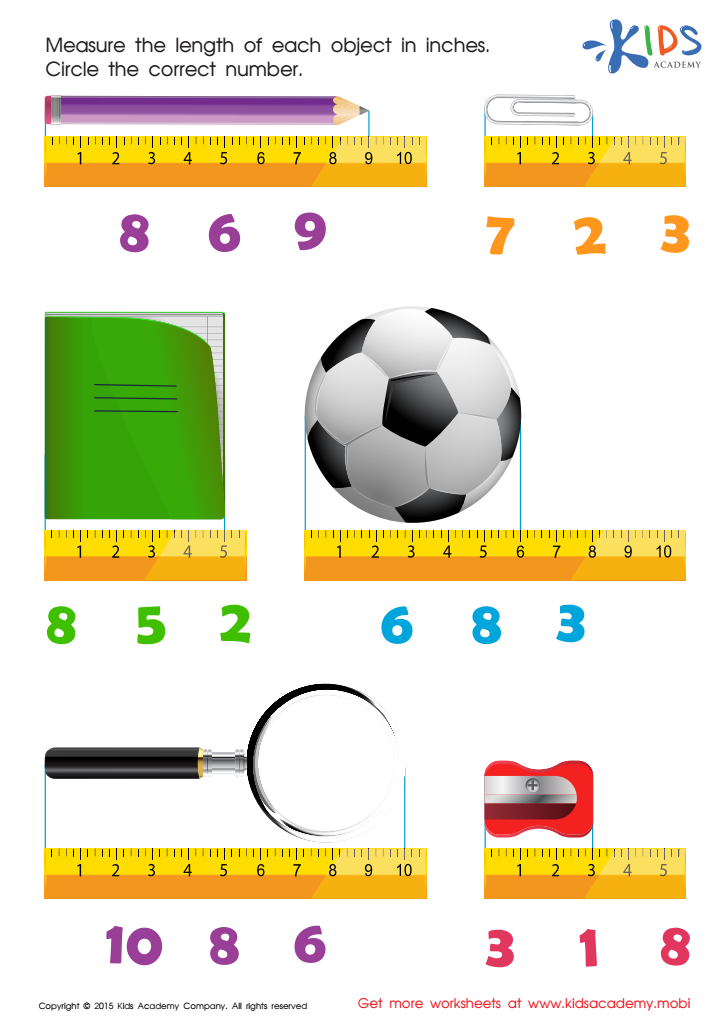
Learning measuring objects in inches Worksheet








Comparing lengths in kindergarten is a fundamental math skill that plays a critical role in early childhood development. Parents and teachers should prioritize this concept because it builds the foundation for later mathematical learning, problem-solving, and logical thinking. When children compare lengths, they develop their ability to observe, analyze, and make decisions based on visual data. These skills are not only essential for future math endeavors but also for everyday problem-solving situations, such as determining if a toy will fit on a shelf or figuring out if they have enough space to complete a drawing.
Moreover, comparing lengths helps children understand spatial relationships and measurement concepts, which are crucial in subjects like science, technology, engineering, and mathematics (STEM). Hands-on activities involving length comparison, such as lining up objects from shortest to longest or using non-standard units like blocks or their own feet, engage students in interactive learning and physical coordination (fine motor skills).
Additionally, discussions about length provide rich language development opportunities. Using terms like "longer," "shorter," "tall," and "small" enhances children's vocabulary and comprehension. The ability to describe and analyze their world through measurement fosters a sense of curiosity and encourages them to ask questions and seek answers, setting the stage for lifelong learning.