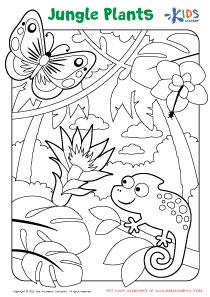
Observation skills Kindergarten Worksheets
5 filtered results
Difficulty Level
Grade
Age
-
From - To
Subject
Activity
Standards
Our Observation Skills Kindergarten Worksheets are expertly designed to inspire young learners to hone their attention to detail. Featuring a variety of engaging activities, these worksheets help children develop crucial observational and analytical skills, laying the foundation for future academic success. Through fun exercises, kids practice identifying patterns, understanding sequences, and recognizing differences, promoting cognitive growth. Each worksheet is crafted to be both educational and enjoyable, ensuring children remain motivated and enthusiastic about learning. By focusing on observation, we empower children to become more attentive, curious, and thoughtful as they explore the world around them.
Favorites
With answer key
Interactive
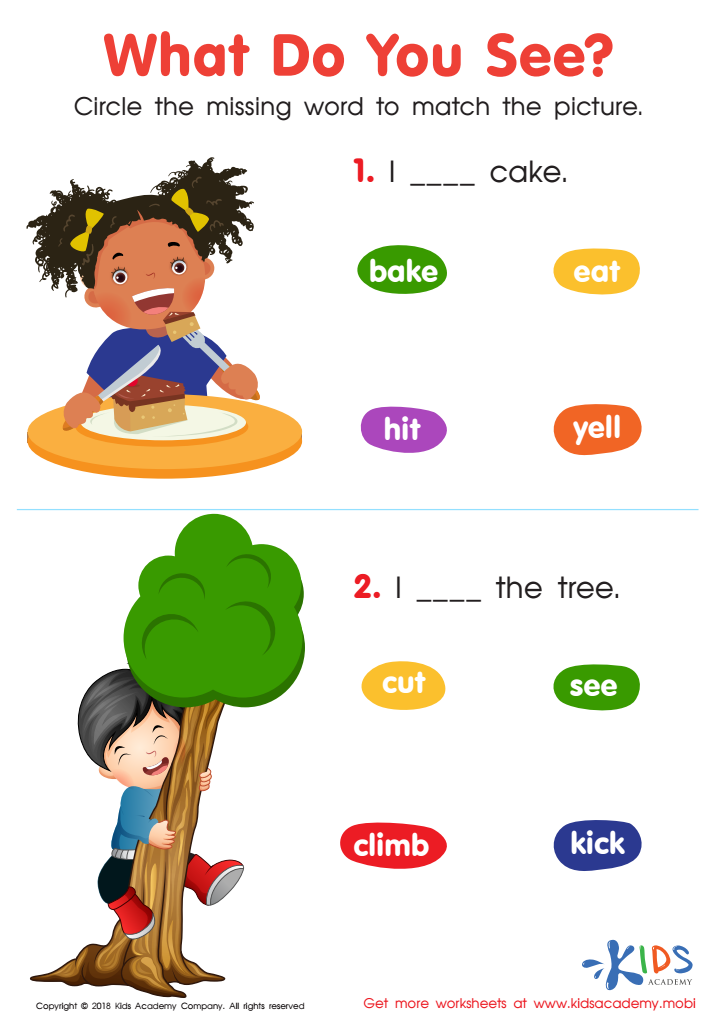
What Do You See? Reading Worksheet
New readers can use the attractive pictures and high-frequency words on this worksheet to practice expressive language skills and decode as they fill in the blanks. As they circle the correct words, they'll feel like reading superstars!
 Assign to My Students
What Do You See? Reading Worksheet
Worksheet
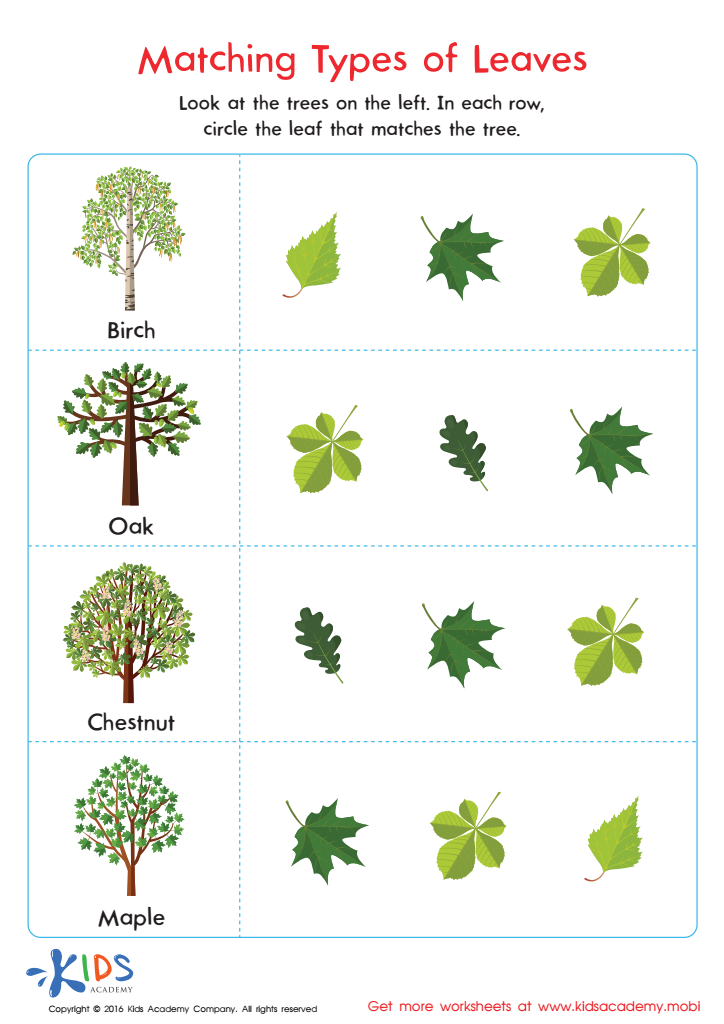
Matching Types of Leaves Printable
Trees are beautiful and essential to life. Show your child the joy of learning about them with this leaf worksheet. It teaches tree identification and encourages observing nature. Expand the learning with additional activities about trees!
Matching Types of Leaves Printable
Worksheet
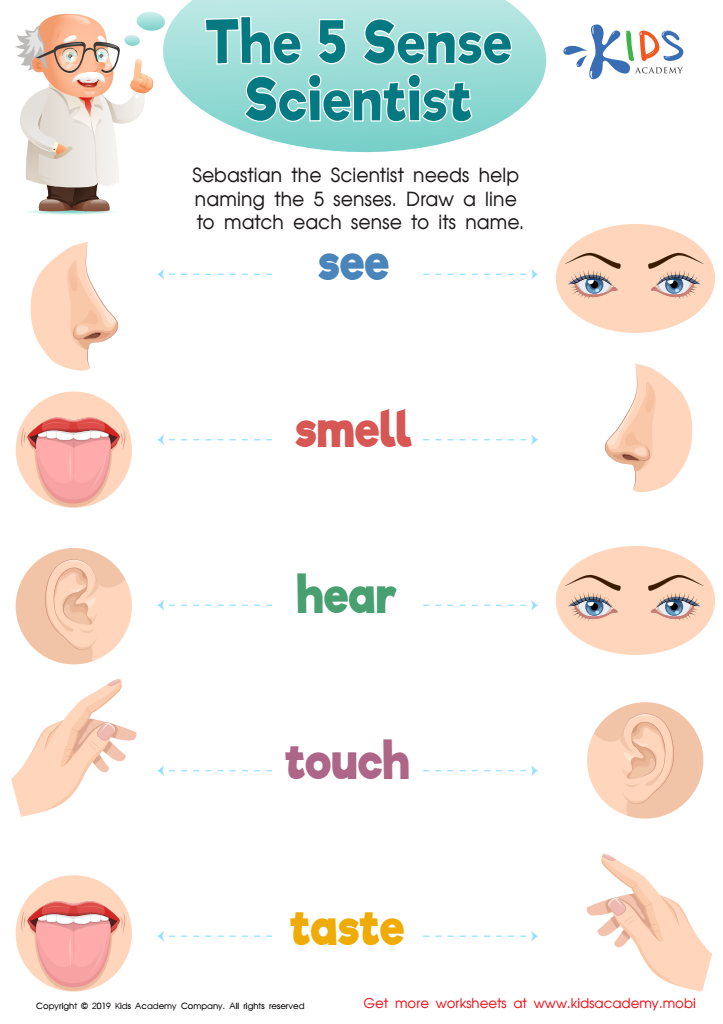
The 5 Sense Scientist Worksheet
Our young children will have fun learning about their five senses with this free Sense Scientist worksheet. Helping Sebastian the Scientist, they'll name the five senses and use traceable lines to connect each picture with its correct sense. Colorful words and pictures will create a memorable picture representation.
The 5 Sense Scientist Worksheet
Worksheet
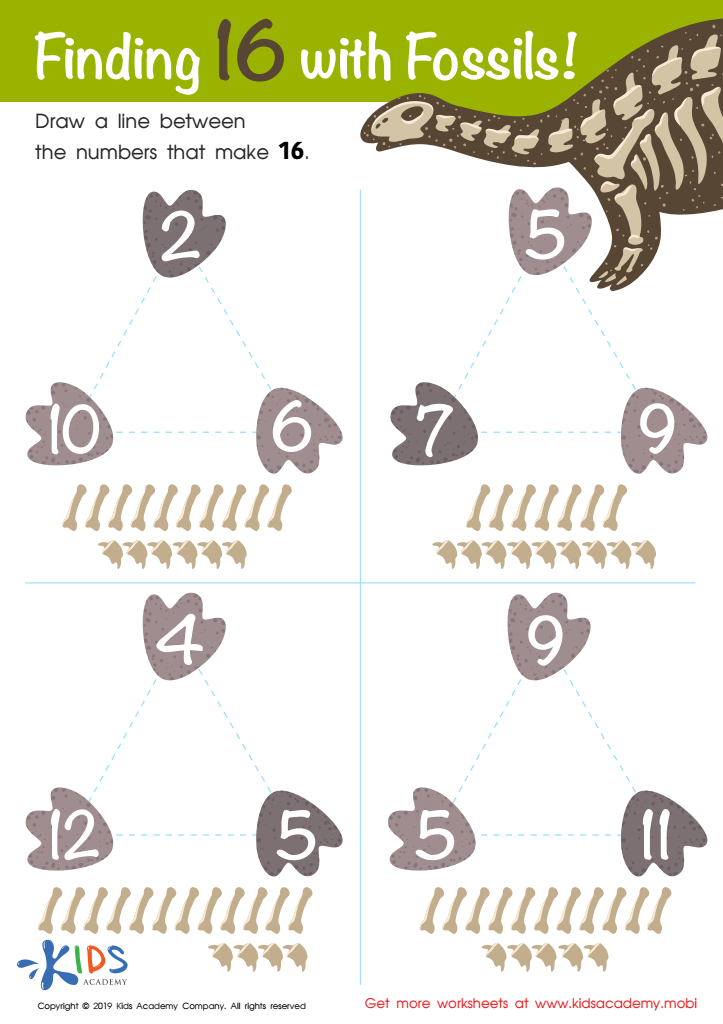
Finding 16 With Fossils Worksheet
Experts hunt for fossils, dig them up, and study them to learn more about past life forms - how they lived, what they looked like, and when they lived. Show kids the picture in this worksheet and point out the fossils. Help them count the bones and draw a line between the numbers that add up to 16 in each triangle.
Finding 16 With Fossils Worksheet
Worksheet
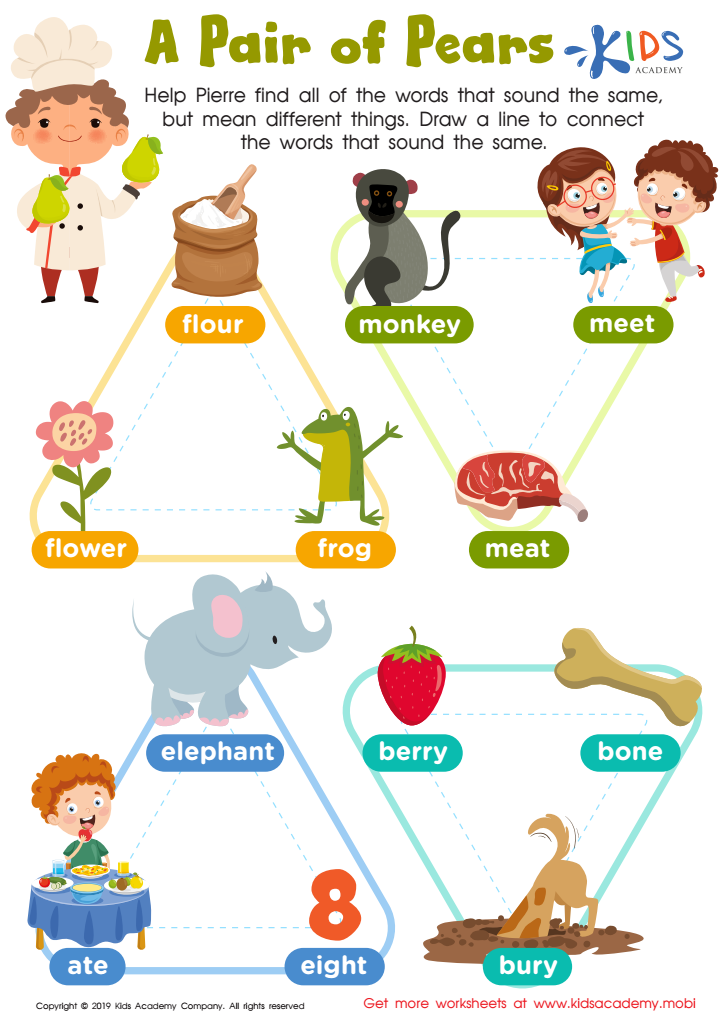
Pair Pears Worksheet
Young readers can have difficulty knowing when to use the right homophone. This free worksheet helps them use familiar imagery to understand better by connecting words that sound similar but are spelled and mean different things. Students will trace the lines to form a picture and have a reference image to differentiate between the different homophones.
Pair Pears Worksheet
Worksheet
Join Kids Academy for Free
Who is primarily going to use this learning content?






Observation skills are crucial for kindergarten children as they lay the foundation for lifelong learning and development. For parents and teachers, fostering these skills early on ensures that children are more attentive and engaged learners. Observation skills enhance cognitive abilities, helping young children understand their environment, develop curiosity, and make connections between different concepts.
When children learn to observe carefully, they improve their attention to detail, which is vital for tasks such as reading, writing, and solving problems. This attentiveness also aids in identifying patterns and understanding cause-and-effect relationships, core components of critical thinking.
Moreover, strong observation skills support language development. As children describe what they see, they expand their vocabulary and improve their communication abilities. Socially, these skills help children become more empathetic and aware of others' feelings and actions, fostering better interpersonal relationships.
For educators, understanding a child’s observational abilities allows for tailored teaching strategies that meet individual needs, promoting more inclusive and effective education. For parents, encouraging keen observation can turn everyday experiences into learning opportunities, thereby bridging home and school learning environments. In essence, nurturing observation skills in kindergarten sets the stage for academic success and holistic personal development.