
Problem-solving practice Kindergarten Worksheets
6 filtered results
Difficulty Level
Grade
Age
-
From - To
Subject
Activity
Standards
Enhance your child's critical thinking skills with our engaging Problem-solving Practice Kindergarten Worksheets! Designed specifically for young learners, these worksheets provide a fun and interactive way to develop essential problem-solving abilities. Each activity encourages children to think creatively and logically, promoting skills such as reasoning, analysis, and decision-making. With colorful illustrations and age-appropriate challenges, kids will enjoy exploring math puzzles, pattern recognition, and more. Perfect for at-home practice or in the classroom, these worksheets foster a love for learning while building cognitive skills. Encourage your child's growth today with our problem-solving resources tailored just for kindergarteners!
Favorites
With answer key
Interactive
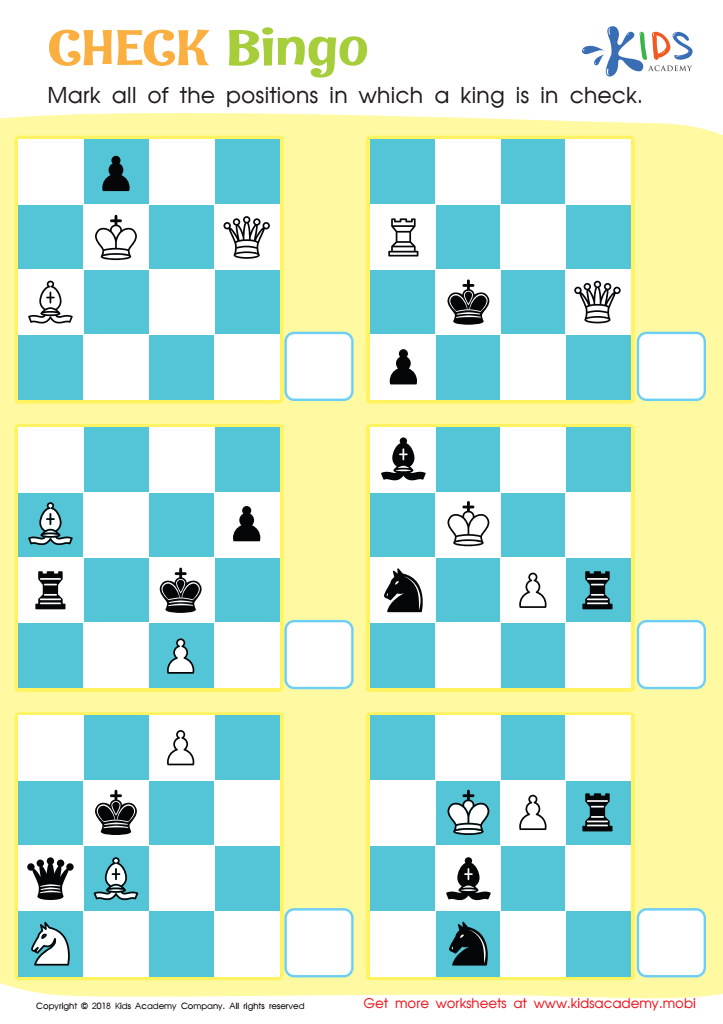
Check Bingo Worksheet
Chess helps young minds build critical thinking, problem-solving and logical reasoning skills. This free PDF worksheet is a fun way to teach these skills. It explains the concept of check and includes gameboards with kings in various positions. Students mark off the boards where a king isn't in check, and they're ready to move onto checkmate!
 Assign to My Students
Check Bingo Worksheet
Worksheet
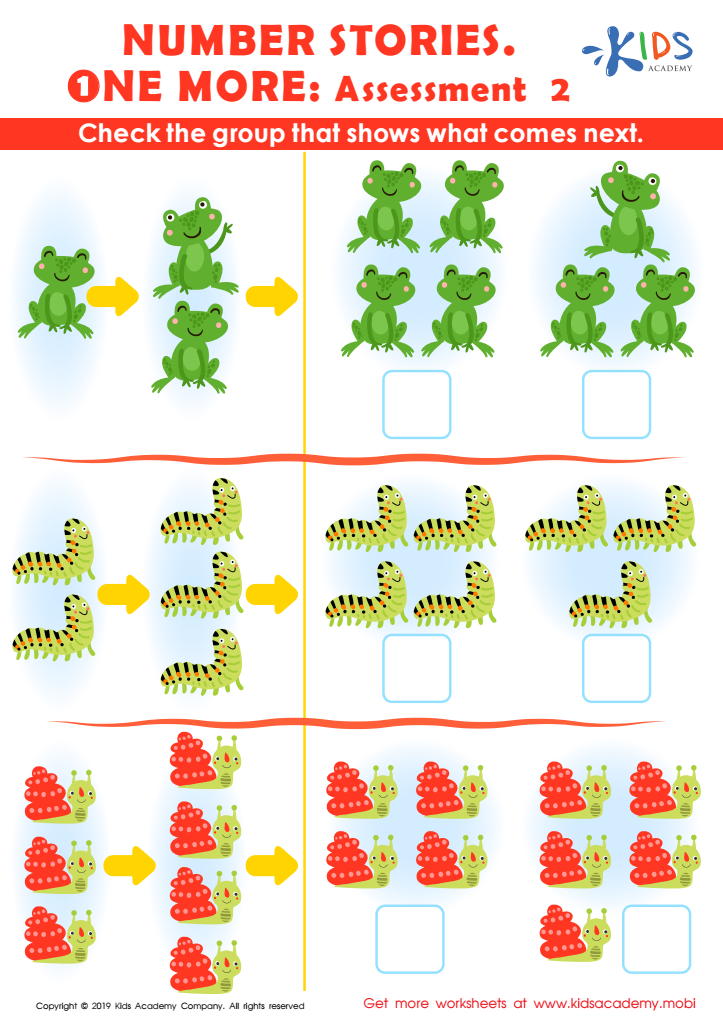
Number Stories One More – Assessment 2 Worksheet
Tracing is a great activity for kids. They can count and trace numbers, recognize animals, and practice drawing on dotted lines. It's entertaining and educational, helping children learn valuable counting skills.
Number Stories One More – Assessment 2 Worksheet
Worksheet
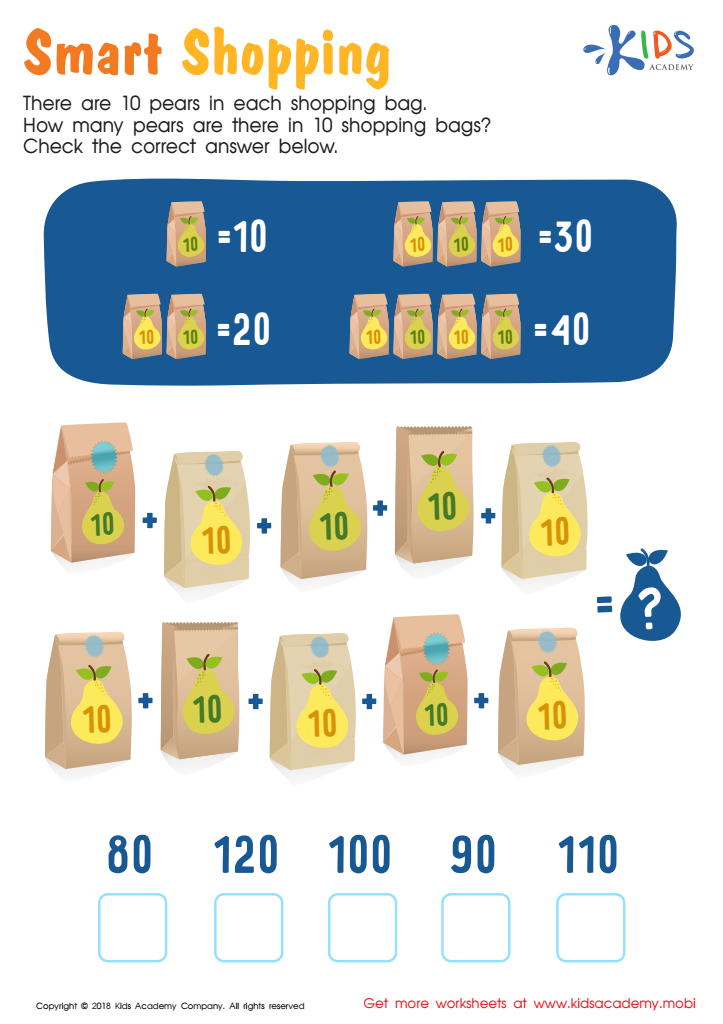
Smart Shopping: Trade Tens for a Hundred Worksheet
Use this worksheet to test counting skills: each bag has 10 pears. Ask your child how many pears are in 10 bags. Guide them as they count through the printout and check the answer below. See if they got it right!
Smart Shopping: Trade Tens for a Hundred Worksheet
Worksheet
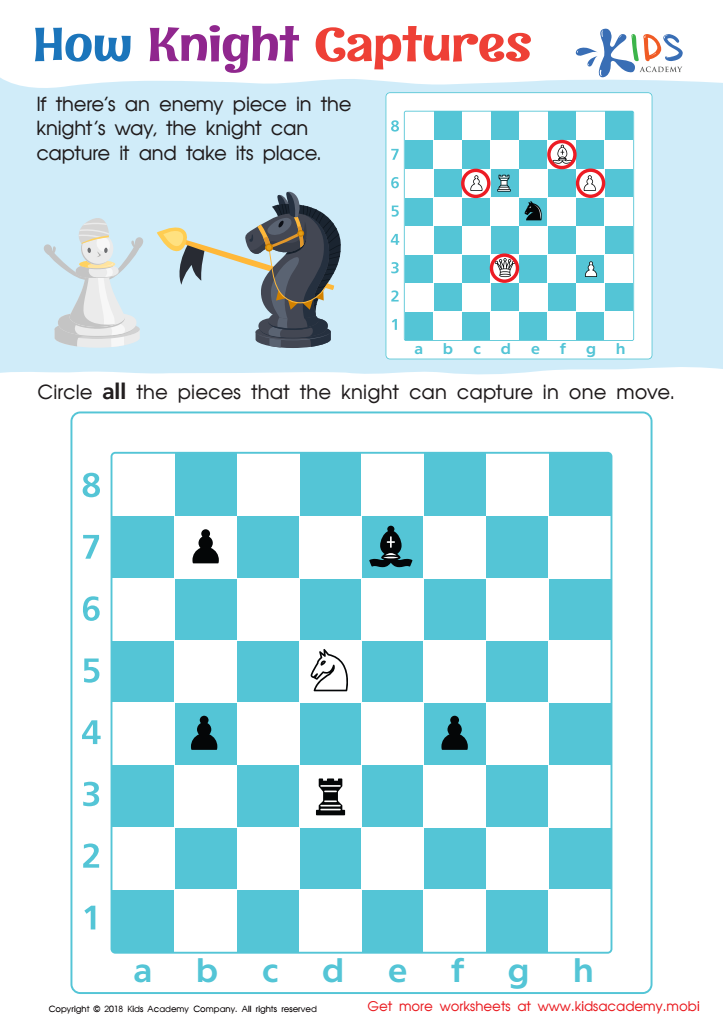
How Knight Captures Worksheet
Test your child's knowledge of chess pieces by asking them to identify the knight. It is shaped like a horse and its goal is to capture the enemy king in order to win the game. The knight has the advantage of being able to jump over other pieces, taking them out and taking their place. See how many pieces the knight can capture in one move with this worksheet.
How Knight Captures Worksheet
Worksheet
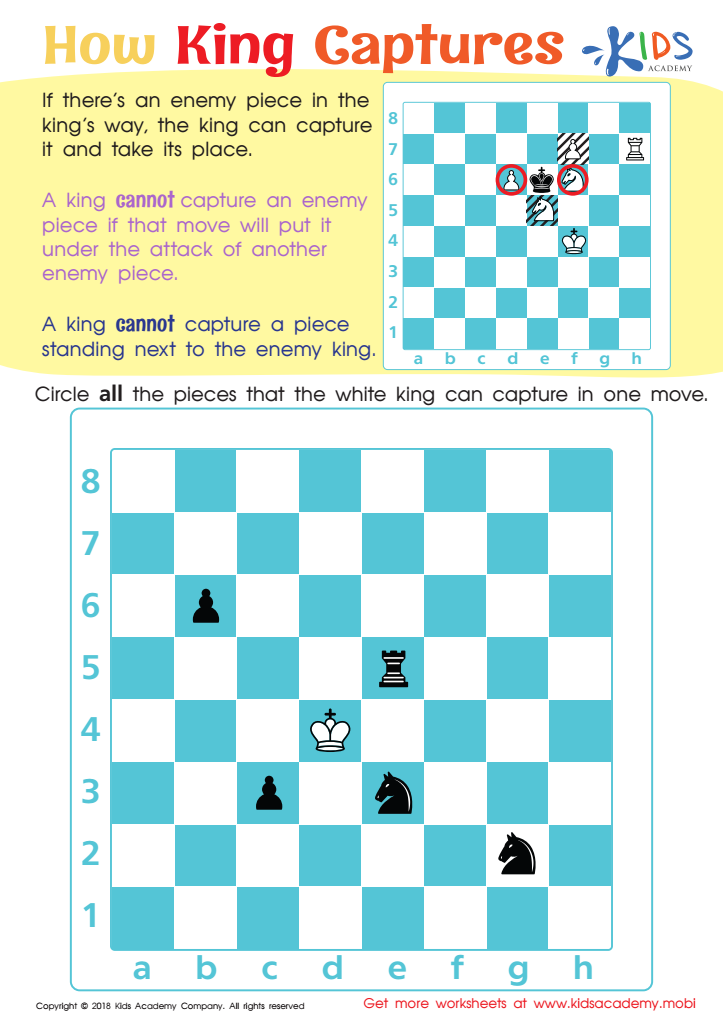
How King Captures Worksheet
The king can capture an enemy piece by taking its place. But it cannot move if the action will put it at risk of attack, or if it's next to the enemy king. On this worksheet, circle the places the white king can capture in one move. (80 words)
How King Captures Worksheet
Worksheet
Join Kids Academy for Free
Who is primarily going to use this learning content?








Problem-solving practice in kindergarten is crucial for the holistic development of young children and deserves the attention of both parents and teachers. At this early stage, children are not just absorbing information; they are developing the cognitive skills they will need throughout their lives. Engaging in problem-solving activities encourages critical thinking, creativity, and independence, allowing children to learn how to analyze their environment and come up with solutions.
Moreover, these skills promote social-emotional learning. When children tackle problems collaboratively, they learn to communicate, negotiate, and work with others. This interaction builds resilience as they encounter challenges and learn to persist in finding solutions. By nurturing these these abilities early on, parents and teachers are setting a strong foundation for future academic success and personal growth.
Furthermore, problem-solving practice can instill a love for learning. When children feel they can solve problems, they’re more likely to explore, ask questions, and seek out new experiences. This curiosity is essential for intellectual development. As key figures in a child’s life, parents and teachers must prioritize problem-solving activities, creating environments that encourage exploration and inquiry, ultimately benefiting the child’s overall development.








