Understanding context Kindergarten Worksheets
5 filtered results
Difficulty Level
Grade
Age
-
From - To
Subject
Activity
Standards
Our "Understanding Context Kindergarten Worksheets" are designed to develop crucial language and comprehension skills in young learners. Through engaging activities, children will practice identifying context clues in verbal and visual texts, enhancing their ability to understand meanings and narratives. These worksheets provide a blend of fun and learning, helping kindergartners grasp the importance of context in everyday communication. Tailored to align with educational standards, our printable resources ensure foundational language skills are built early. Give your child the tools to succeed with our expertly crafted worksheets, sparking curiosity and fostering a love for reading and critical thinking.
Favorites
With answer key
Interactive
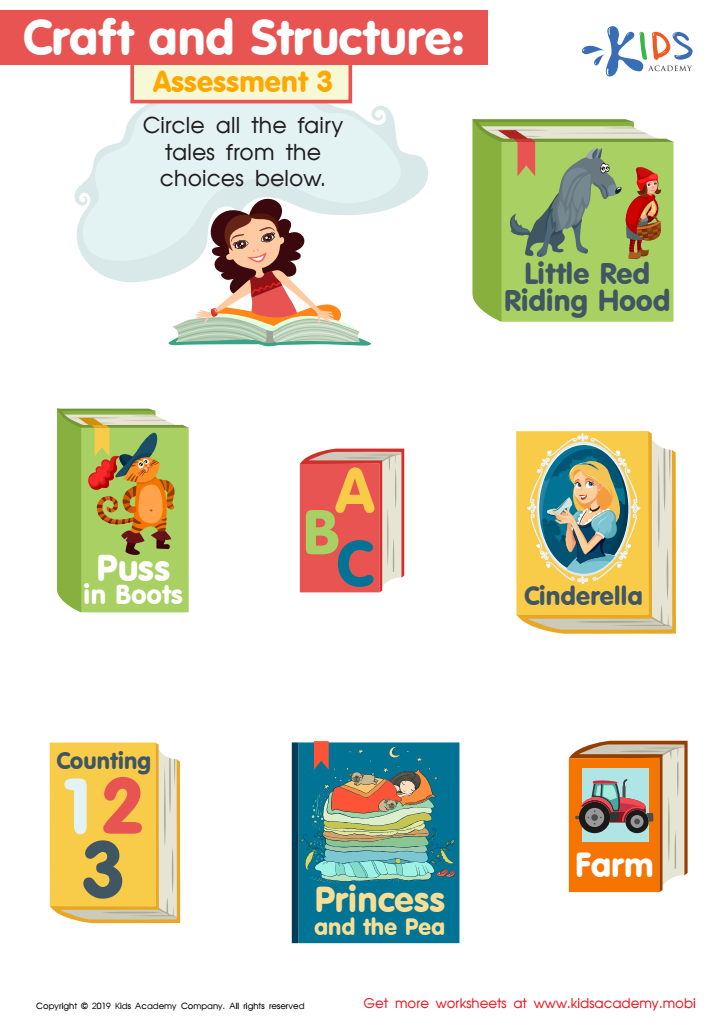
Craft and Structure: Assessment 3 Worksheet
Before starting the worksheet, ask your kids to recall their favorite bedtime stories. What characters and events can they remember? Four popular children's stories are hidden among pictures of other objects - help them search and circle the fairy tales in this PDF.
 Assign to My Students
Craft and Structure: Assessment 3 Worksheet
Worksheet
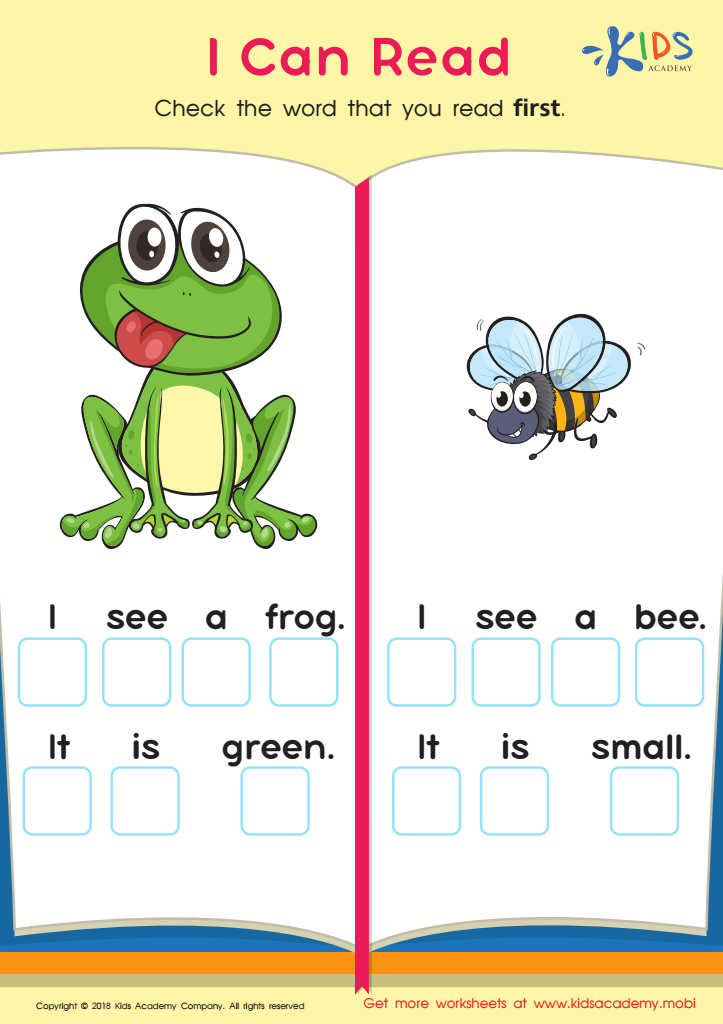
I Can Read Worksheet
Test your child's reading skills with this fun worksheet. See how well they know one-letter, two-letter, and five-letter words. Ask your little one to read the sentences and tick the word they identify first. It's a great way to track their progress and help them become more confident readers.
I Can Read Worksheet
Worksheet
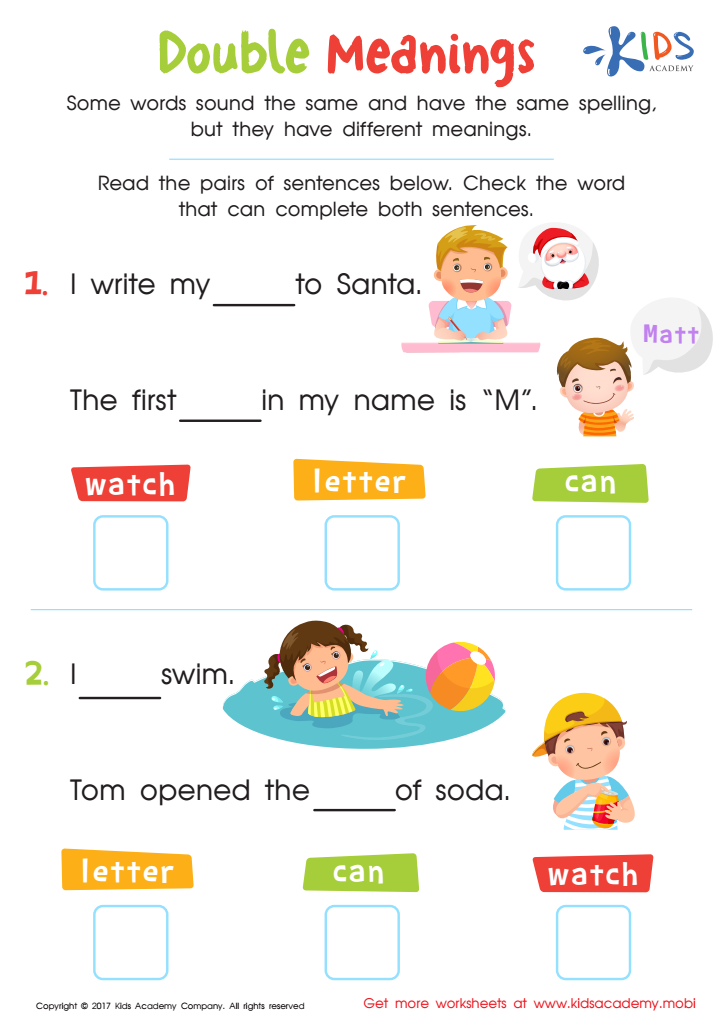
Double Meanings Worksheet
Homographs are words that look and sound the same, but have different meanings. This worksheet uses pictures to help young authors learn to use them correctly. Context and exposure to the words' meanings help them understand the difference.
Total: 80 words
Double Meanings Worksheet
Worksheet
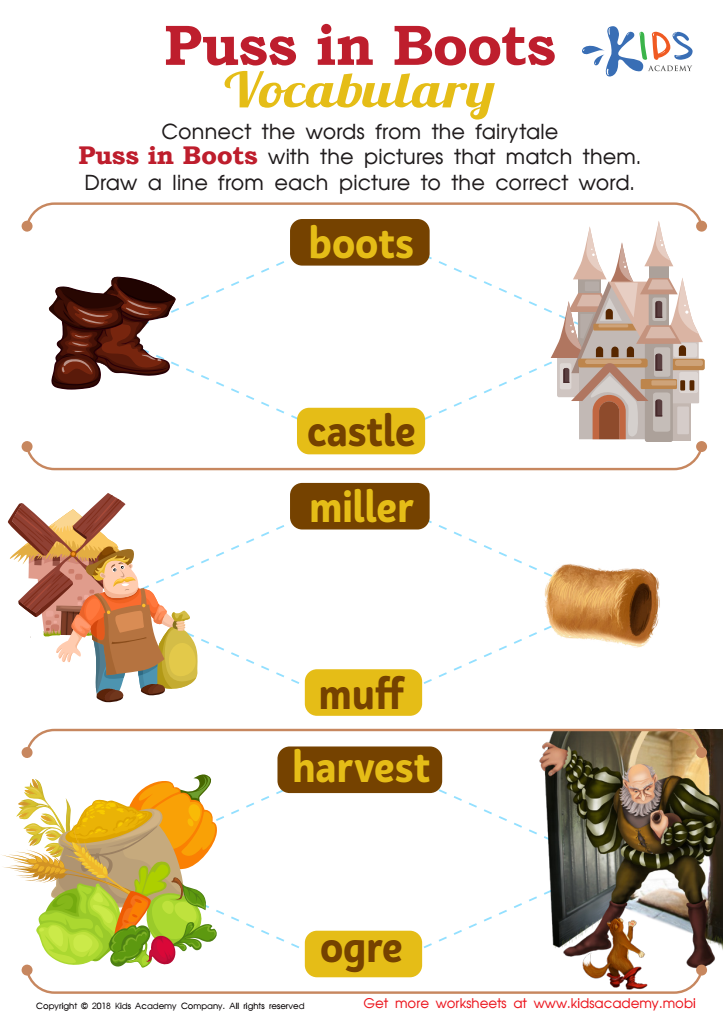
Puss in Boots Vocabulary Worksheet
Let your kids enjoy story-telling while learning at the same time. Help them learn from the fairytale, Puss in Boots, by connecting words from the worksheet with the matching pictures. Ask them to draw a line between each picture and corresponding word to build their vocabulary.
Puss in Boots Vocabulary Worksheet
Worksheet
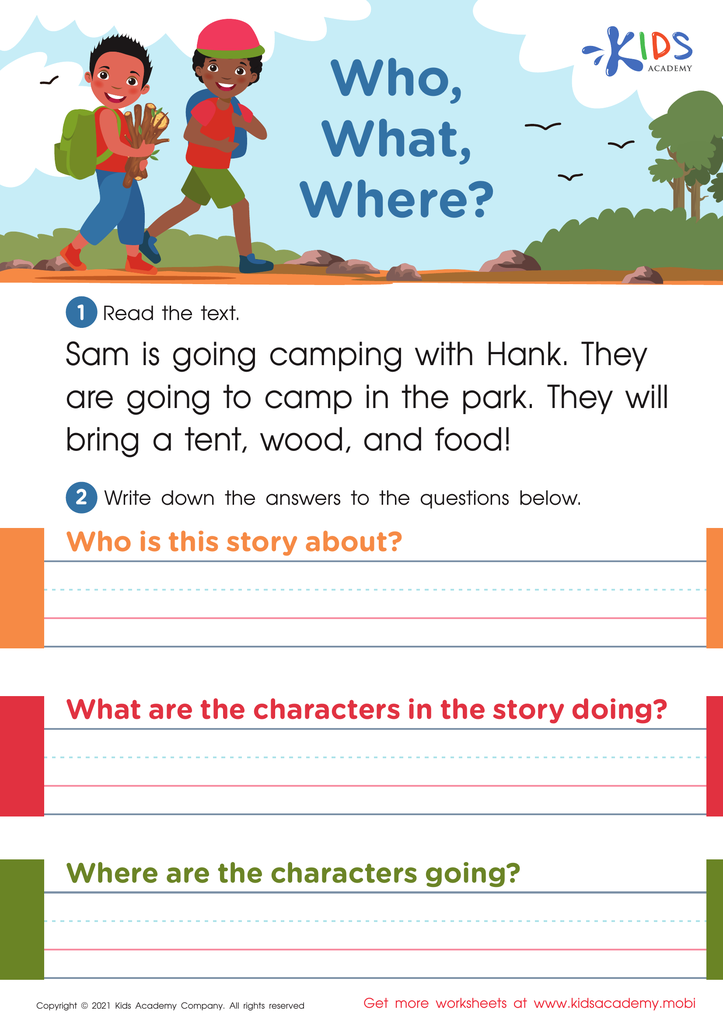
Who, What, Where? Worksheet
The availability of technology has changed the way students learn and interact with their environment in a very meaningful way.
Technology has revolutionized learning and interaction for students. It offers an array of opportunities to engage with their surroundings, leading to a more meaningful educational experience.
Who, What, Where? Worksheet
Worksheet
Join Kids Academy for Free
Who is primarily going to use this learning content?






.jpg)

Understanding context in kindergarten is crucial because it lays the foundation for children’s lifelong learning and social development. Kindergarten is more than just academic learning; it's a formative stage that shapes a child's emotional, social, and cognitive abilities. Parents and teachers who grasp the importance of context in these early years can tailor their approaches to suit the individual needs of each child, thereby fostering an environment where every child can thrive.
For parents, understanding the context includes recognizing how their home environment, routines, and interactions influence their child's development. It means being aware of the learning milestones appropriate for their age and creating a supportive home learning atmosphere. Parents play a vital role by reinforcing what is learned in school, nurturing curiosity, and offering emotional support.
For teachers, being attuned to context involves recognizing that each child enters kindergarten with diverse backgrounds and varying levels of readiness. By understanding these differences, teachers can provide differentiated instruction, employ inclusive practices, and create a welcoming classroom environment.
Ultimately, a deep understanding of context can reduce anxiety for both children and adults, paving the way for smoother transitions, higher engagement, and a more effective learning experience. It equips parents and teachers with the tools to build a solid foundation for children's academic and personal success, instilling a love for learning that can last a lifetime.