Understanding number patterns Kindergarten Worksheets
3 filtered results
-
From - To
Dive into the joyful world of number patterns with our engaging Kindergarten worksheets. Carefully crafted to foster early math skills, these printables offer a perfect blend of fun and learning. Each worksheet encourages young learners to recognize, predict, and extend various number patterns. With colorful designs and simple instructions, our worksheets are perfect for classroom use or homeschooling. As kids connect the dots and spot the sequences, they'll build a strong foundation in number sense. Give your child the head start they need in math by exploring our free, easy-to-print Kindergarten worksheets!
 Assign to My Students
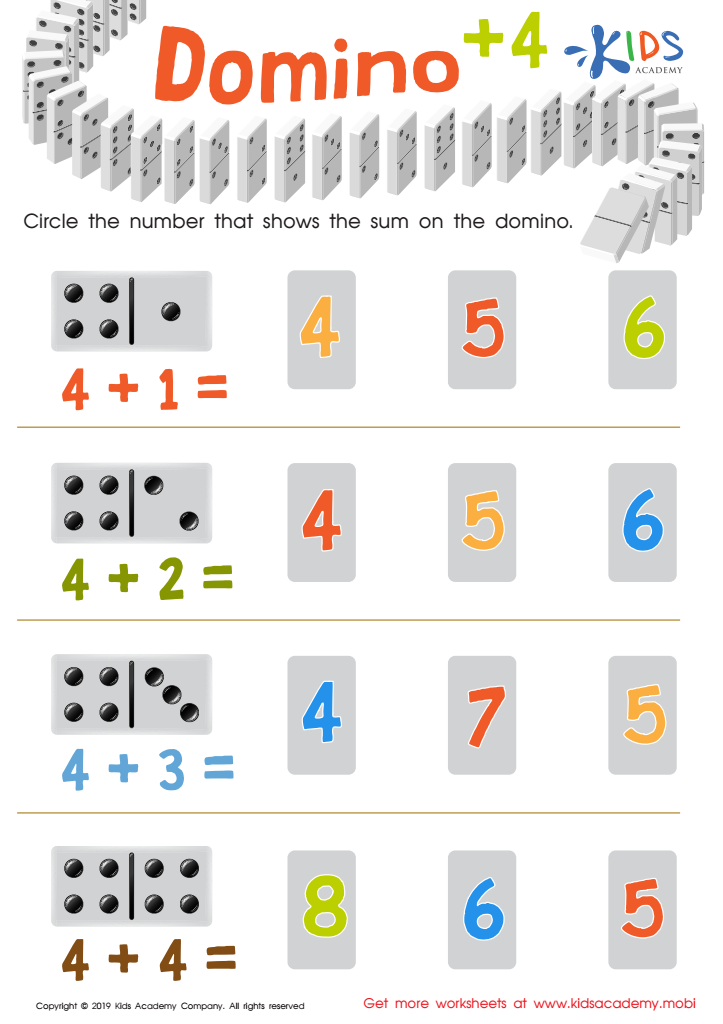
Domino +4 Worksheet
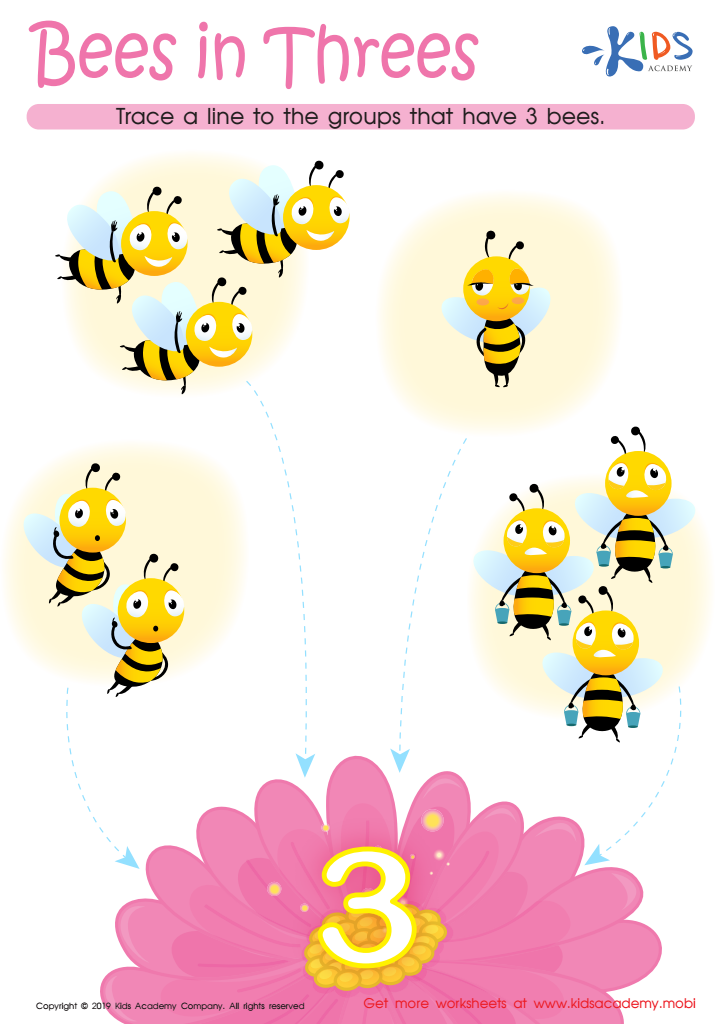
Bees in Threes Worksheet








Understanding number patterns in kindergarten is crucial as it lays the foundation for essential math skills and logical thinking. Introducing children to number patterns early on helps them recognize relationships between numbers, making arithmetic processes more intuitive as they progress through school. Patterns foster skills such as counting, addition, subtraction, and even multiplication.
When children identify and predict patterns, it also enhances their problem-solving abilities and critical thinking. These skills extend beyond mathematics into everyday scenarios where logical sequencing is used, such as following routines or understanding the concepts of time and order.
Parental and teacher involvement in recognizing and reinforcing patterns can make these abstract concepts more tangible. By integrating pattern games, rhythm activities, and everyday examples into learning, adults can make learning interactive and enjoyable, sparking curiosity and engagement.
Moreover, early comprehension of number patterns builds confidence in young learners. A strong mathematical foundation can spur a positive attitude toward learning, reducing math anxiety later in academic life. Hence, nurturing an understanding of number patterns in kindergarten is essential, as it harmoniously blends cognitive development with practical life skills, setting children on a path to academic and personal success.