Understanding sequencing Kindergarten Worksheets
4 filtered results
-
From - To
Support early learners with our "Understanding Sequencing Kindergarten Worksheets." These engaging and effective resources help children grasp the concept of chronological order and narrative flow. By arranging events, visual stories, and everyday sequences, kids enhance their comprehension and logical thinking skills. Our worksheets provide varied activities to keep young minds stimulated and entertained. Perfect for classroom use or home practice, each worksheet incorporates colorful illustrations and simple instructions tailored for Kindergarten learners. Equip your students with essential sequencing abilities to build a strong foundation for future reading and writing success with Kids Academy's thoughtfully designed worksheets.
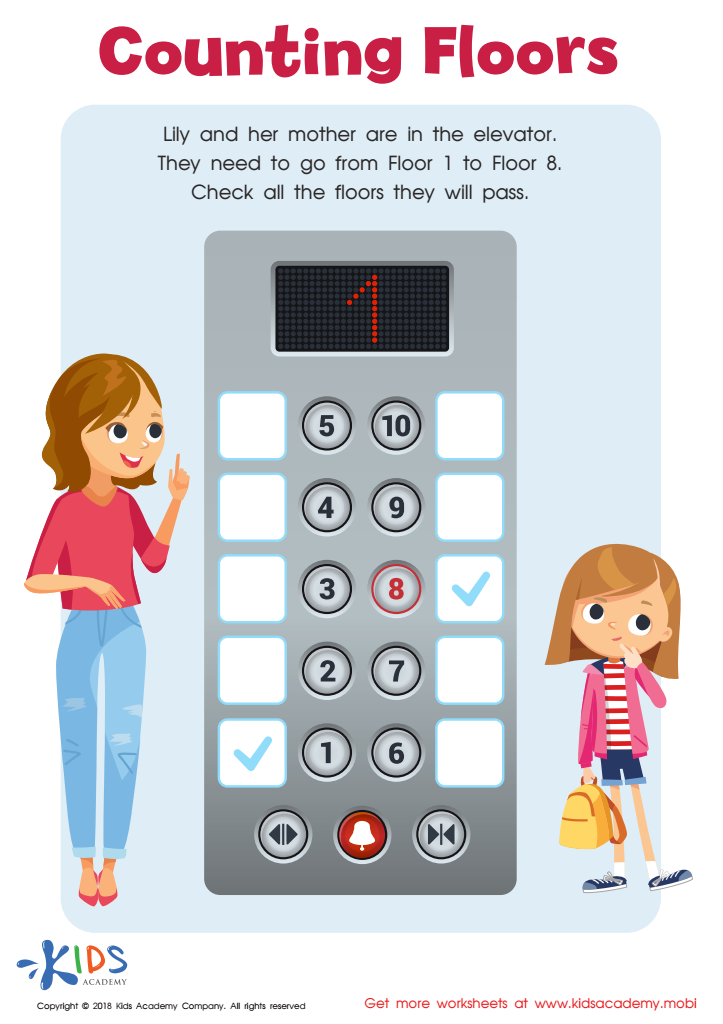
Counting Floors Worksheet
 Assign to My Students
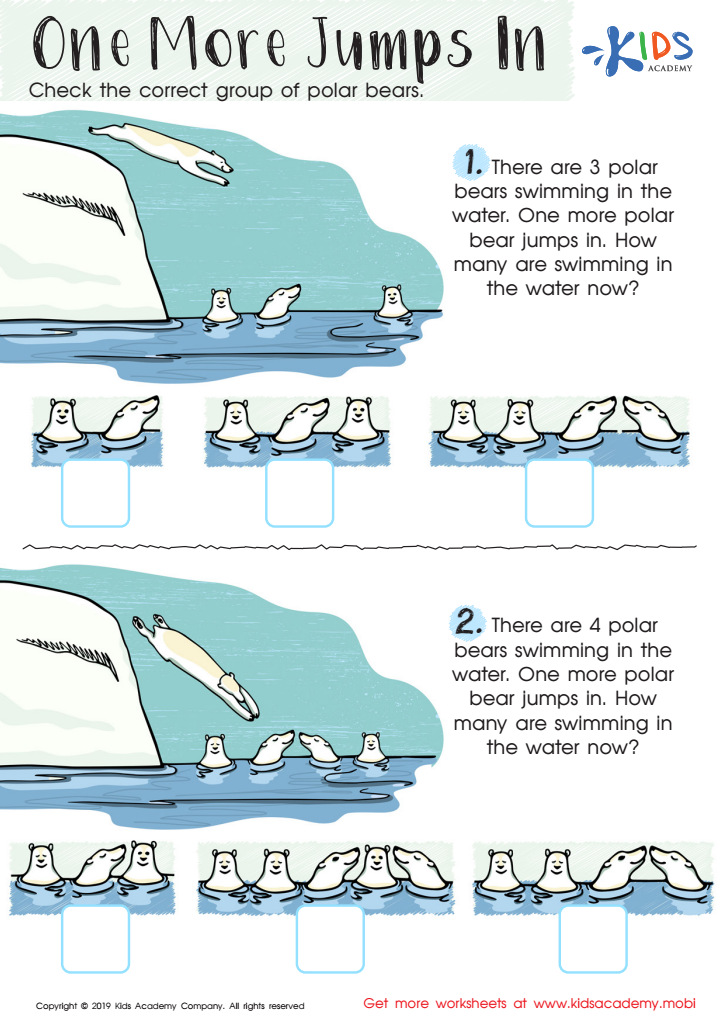
One More Jumps In Worksheet
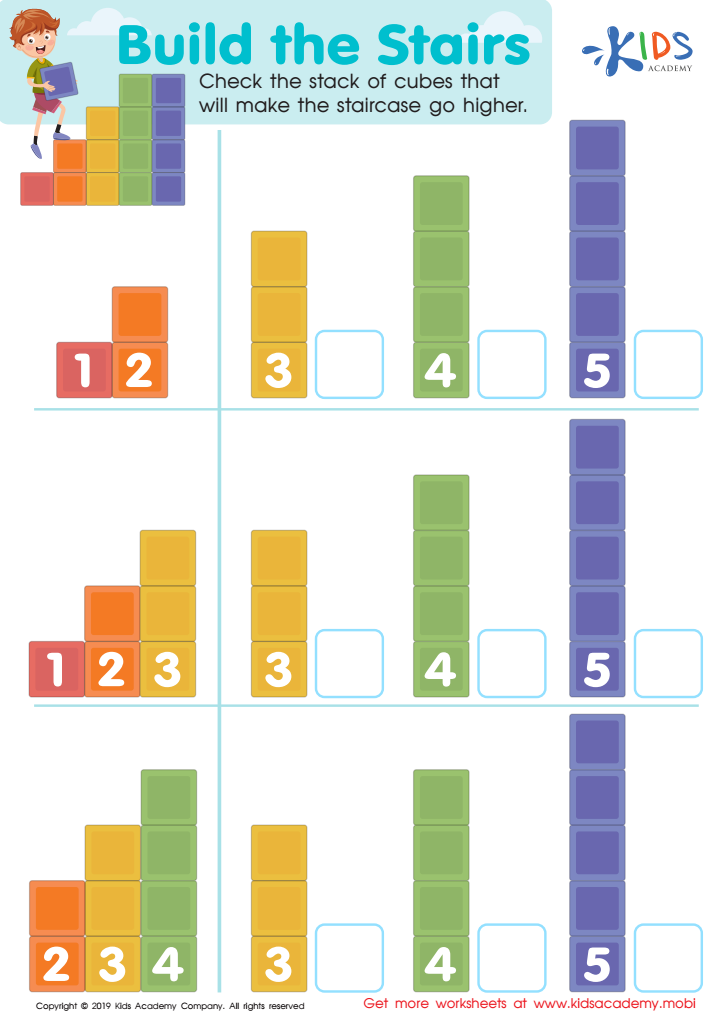
Build the Stairs Worksheet
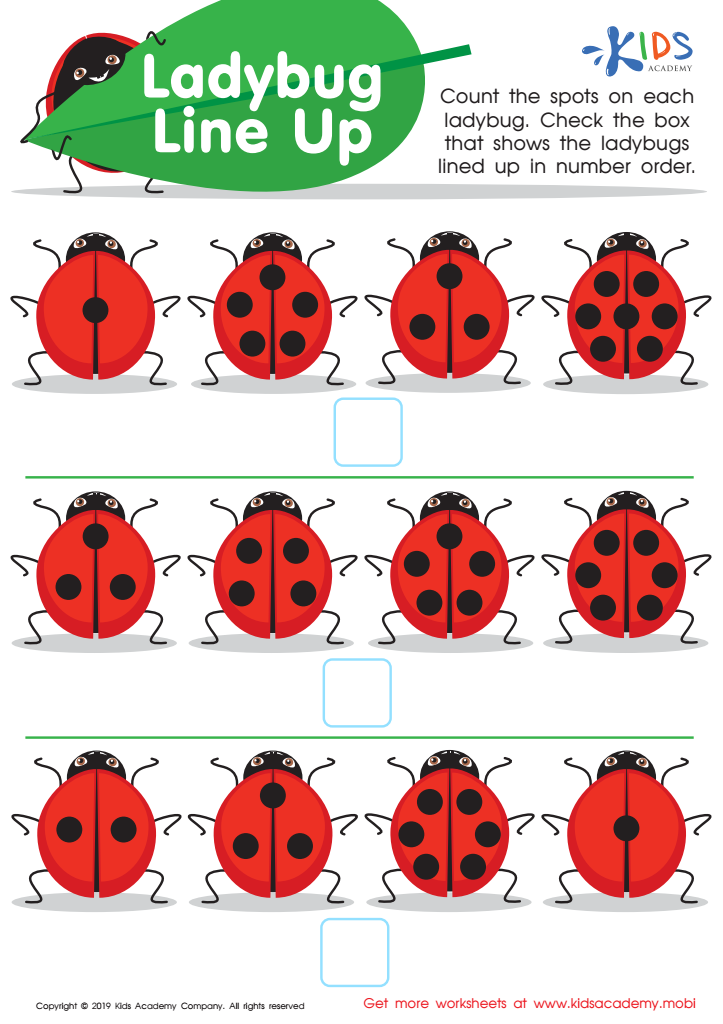
Ladybug Line Up Worksheet








Understanding sequencing is fundamental for young learners in kindergarten as it forms the building block for various cognitive and linguistic skills. For parents and teachers, emphasizing sequencing helps children grasp the concept of order, a key aspect in storytelling, daily routines, and problem-solving.
Sequencing aids in language development by teaching children how to narrate events logically. This skill translates to better reading comprehension, as students can anticipate and predict outcomes, enhancing their ability to follow and enjoy stories. As they progress, this understanding extends to writing, enabling them to organize thoughts coherently in their compositions.
Moreover, sequencing is essential in math and science. It is the bedrock of understanding chronological order, processes, and patterns. For instance, recognizing the sequence in counting leads to stronger number sense, while sequencing steps in experiments fosters scientific thinking.
In everyday life, sequencing helps kids with routines—such as getting dressed, brushing teeth, or following instructions—all crucial for developing independence and time-management skills.
For teachers and parents, focusing on sequencing equips children with a structured approach to thinking and problem-solving, promoting overall cognitive development and academic success. It lays a solid foundation for future learning, ensuring children are better prepared for more complex tasks and ideas as they grow.