Visual Learning Kindergarten Worksheets
6 filtered results
Difficulty Level
Grade
Age
-
From - To
Subject
Activity
Standards
Discover our engaging Visual Learning Kindergarten Worksheets, designed to enhance children's understanding through vibrant imagery and hands-on activities. These worksheets promote essential skills such as pattern recognition, sorting, and visual discrimination. By incorporating colorful visuals, we make learning fun and accessible, ensuring young learners stay motivated and focused. Our comprehensive collection covers various subjects to support early education, from math concepts to language development. Perfect for at-home practice or classroom use, these worksheets help children connect with their curriculum in meaningful ways. Join us in fostering creativity and critical thinking in your little ones with our interactive visual learning resources!
Favorites
With answer key
Interactive
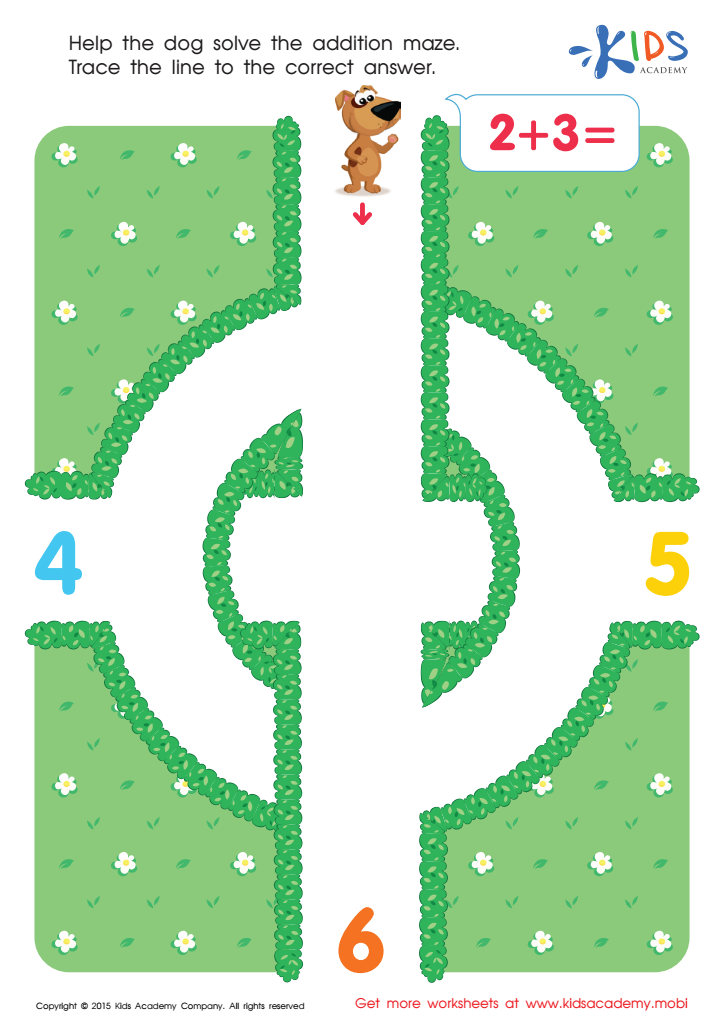
Two And Three Addition Worksheet
Give your children the task and let them find the path to the right answer while they make their way through the maze, and don't forget to let them trace the path.
 Assign to My Students
Two And Three Addition Worksheet
Worksheet
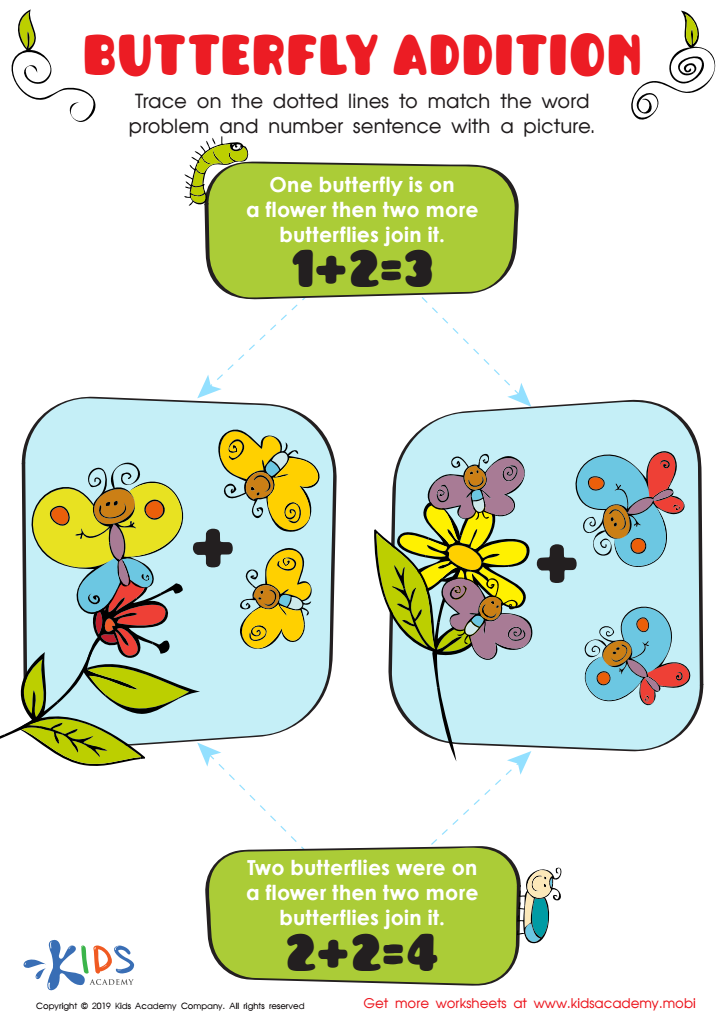
Butterfly Addition Worksheet
This tracing sheet is great for kids to work on math skills and have fun too. Read the word problems to them, then help them trace the dotted lines to match the problem and number sentence to a picture. Not only is it educational, it's beautiful too - your kids will love learning about butterflies!
Butterfly Addition Worksheet
Worksheet
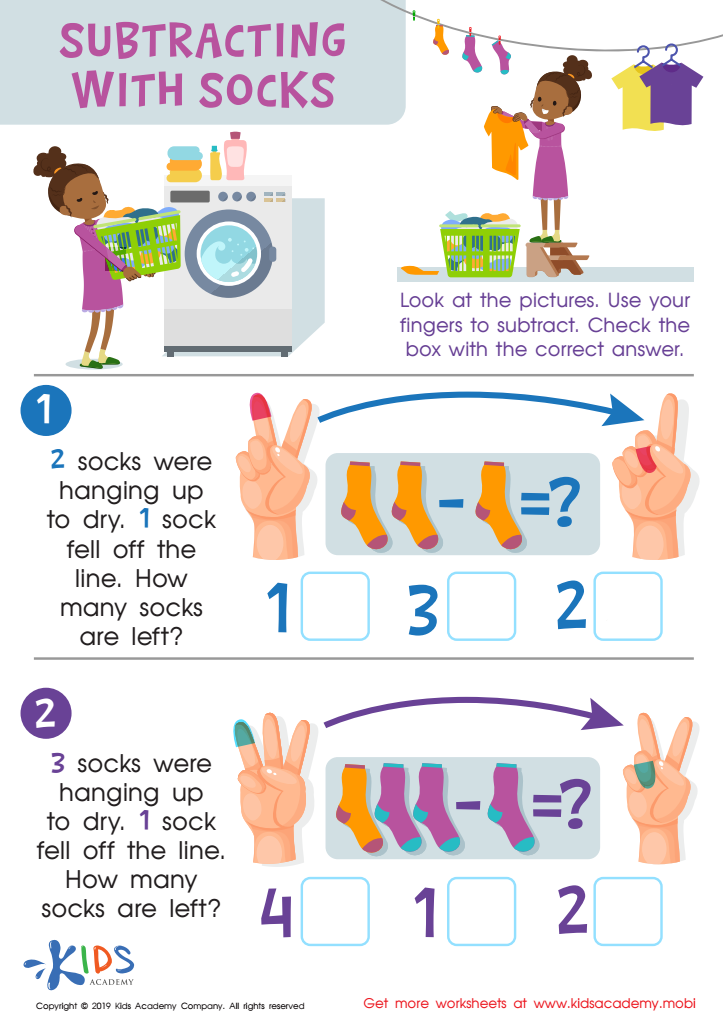
Subtracting Socks Worksheet
Before beginning this exercise with your children, warm them up with a counting game. If math is not their favorite subject, use this worksheet. Help them read the two word problems, then use their fingers to count and subtract. Ask them to select the correct answer and check the box.
Subtracting Socks Worksheet
Worksheet
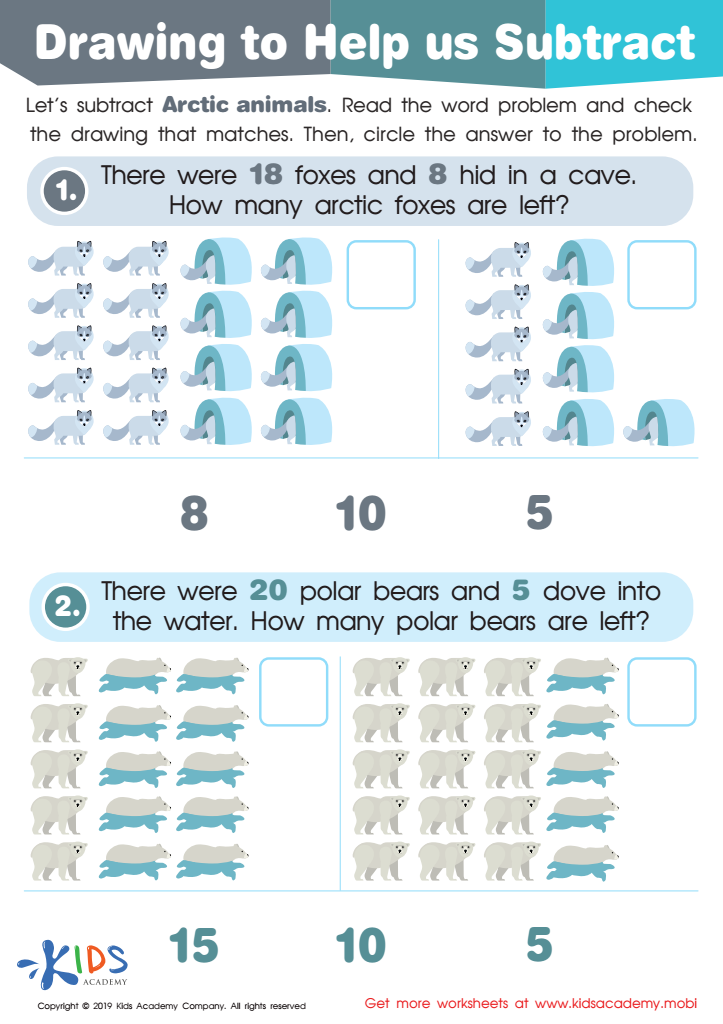
Drawing to Help Us Subtract Worksheet
Math is made fun with this free worksheet featuring Arctic animal pictures to solve basic subtraction word problems. Kids read the problem and choose the correct drawing of the animals to represent the solution. They'll have a blast with their cool animal friends while learning math!
Drawing to Help Us Subtract Worksheet
Worksheet
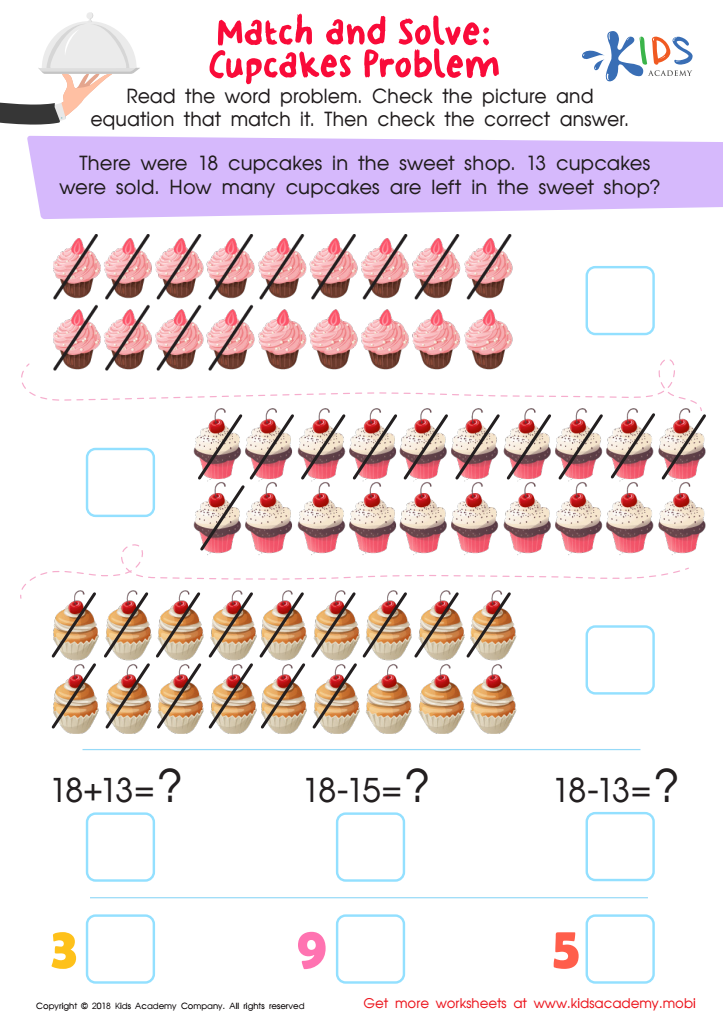
Match and Solve: Cupcakes Problem Worksheet
This math worksheet will excite your kid! Read the word problem and look at the cupcakes; the slashes mean some are being taken away. Select the picture that matches the text, then complete the equation to find the solution!
Match and Solve: Cupcakes Problem Worksheet
Worksheet
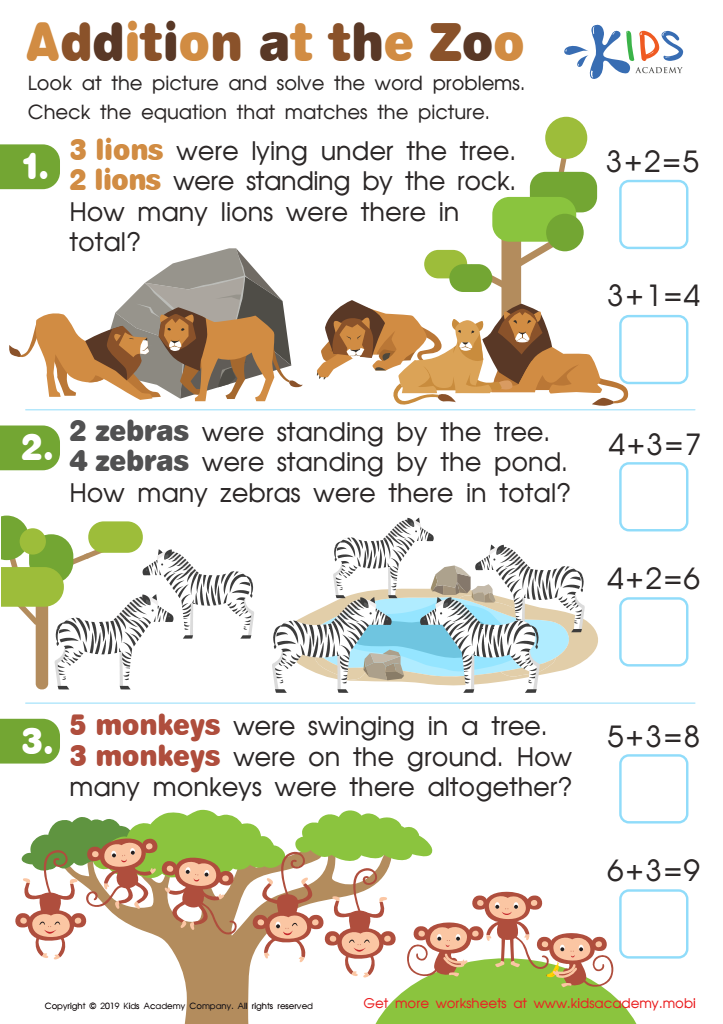
Addition at the Zoo Worksheet
Visit the zoo with your kids and point out all the different animals. Ask them to name their favorites and identify animals on a worksheet. Challenge them to solve word problems related to the pictures. Ask them for the equation that fits the picture and check the answer.
Addition at the Zoo Worksheet
Worksheet
Join Kids Academy for Free
Who is primarily going to use this learning content?



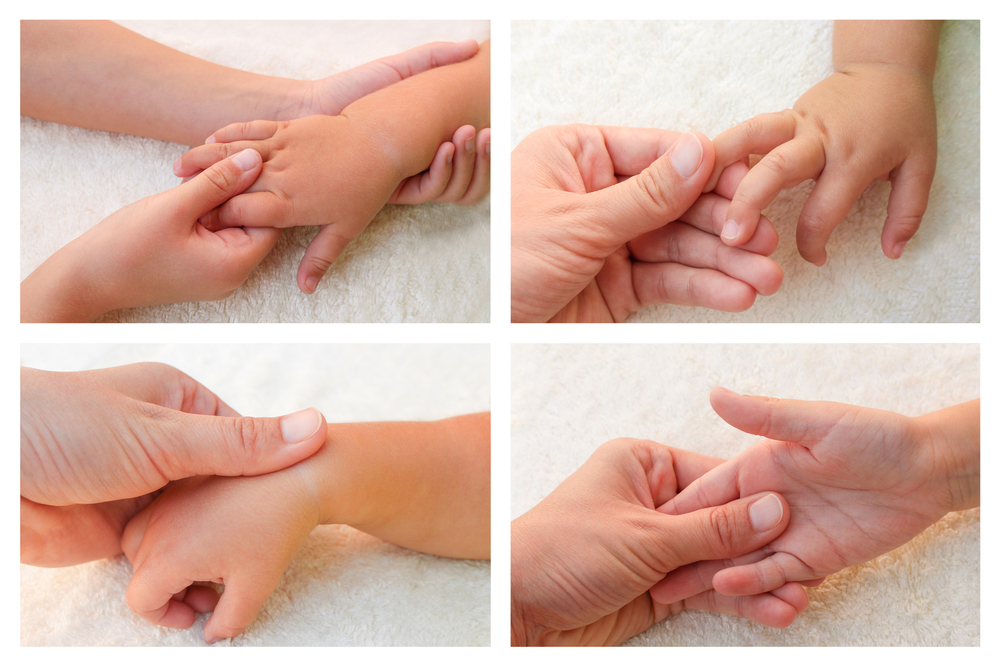



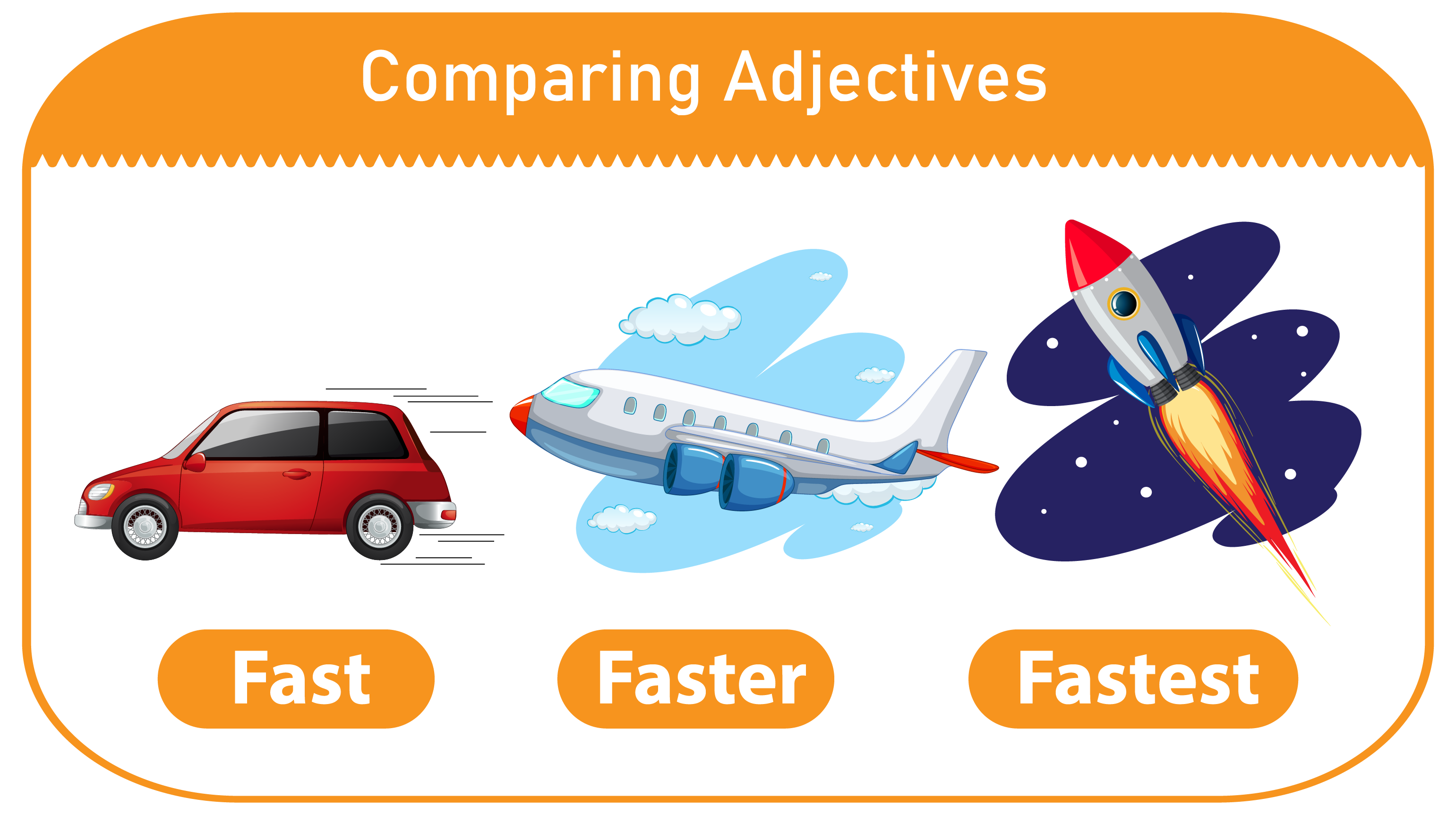
Visual learning in kindergarten is a crucial approach that can significantly enhance a child's educational experience. Young children are naturally curious and learn best through engaging, multi-sensory experiences—something visual learning excels at. In this stage, children develop foundational skills across various subjects, and incorporating visual elements, such as charts, images, videos, and interactive activities, supports their cognitive development by catering to different learning styles.
Utilizing visual learning methods helps reinforce concepts, making them more understandable and memorable. For instance, using pictorial representations can simplify complex ideas, aiding comprehension in subjects like math, science, and literacy. Moreover, visual aids can also encourage creativity and critical thinking, as children express themselves and explore new ideas through art, diagrams, or visual storytelling.
Parents and teachers who prioritize visual learning methodologies recognize the importance of catering to diverse learning preferences within a classroom setting, directly promoting inclusivity and engagement. This nurturing environment fosters motivation and confidence in children, as they feel empowered to engage actively in their learning journey. Ultimately, investing in visual learning not only enriches early education but sets the stage for lifelong learning, equipping children with essential skills needed for future academic success.