
Weather Vocabulary Kindergarten Worksheets
3 filtered results
Difficulty Level
Grade
Age
-
From - To
Subject
Activity
Standards
Explore our engaging Weather Vocabulary Kindergarten Worksheets, designed to introduce young learners to essential weather terms in a fun and interactive way. These worksheets feature engaging activities that help reinforce vocabulary, enhance reading skills, and stimulate children's curiosity about the weather. With colorful images and easy-to-follow exercises, students will learn words such as “sunny,” “rainy,” “cloudy,” and “stormy.” Perfect for both in-class learning and at-home practice, our worksheets encourage kids to recognize weather patterns and express themselves. Encourage a love for learning about nature and its elements with our beautifully crafted, educational resources tailored for kindergarten students!
Favorites
With answer key
Interactive
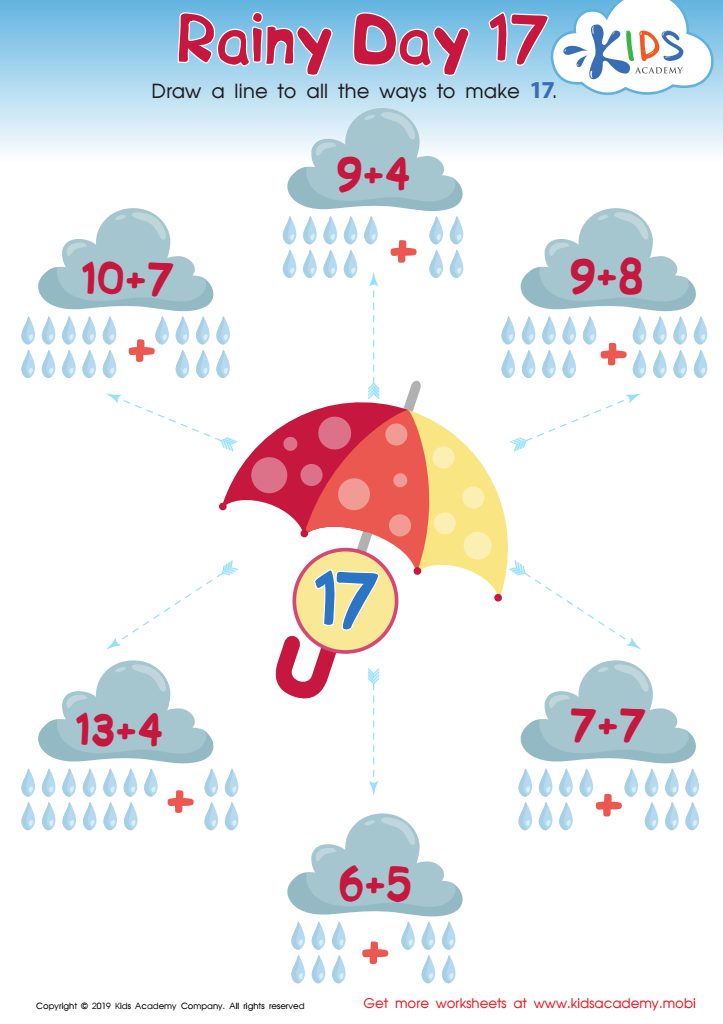
Rainy Day 17 Worksheet
Assist your kids with the 6 equations given. Each cloud displays the sum of two numbers, some of which make 17. Guide them to figure out the total of both numbers when added and draw a line to the umbrella in the center to illustrate the different ways to make 17. This activity will sharpen their addition skills.
Rainy Day 17 Worksheet
Worksheet
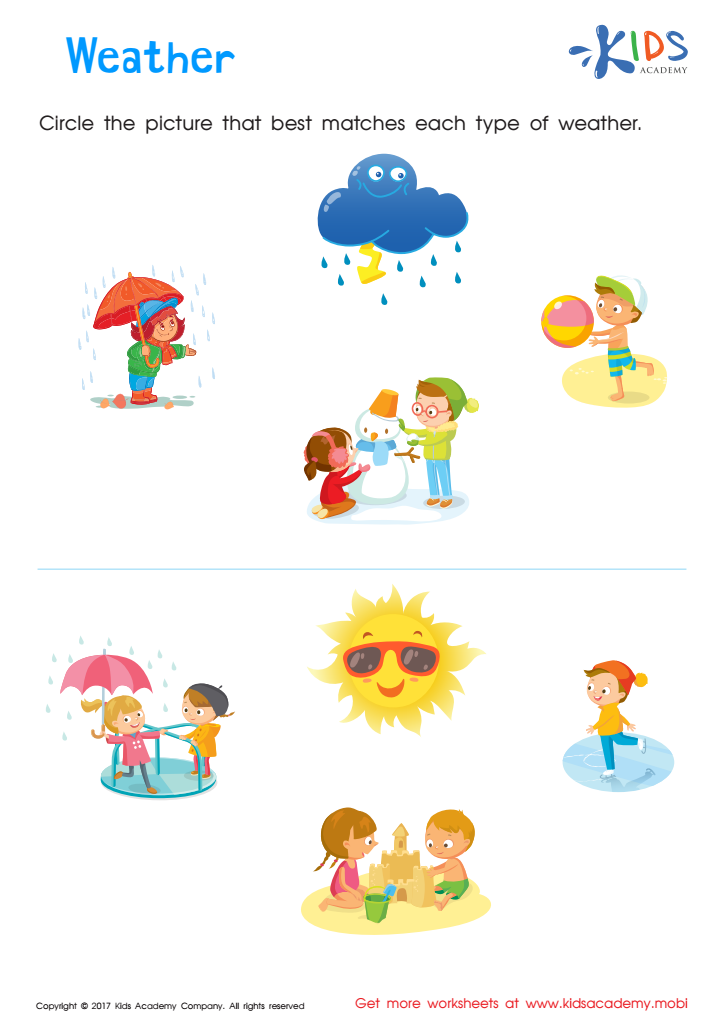
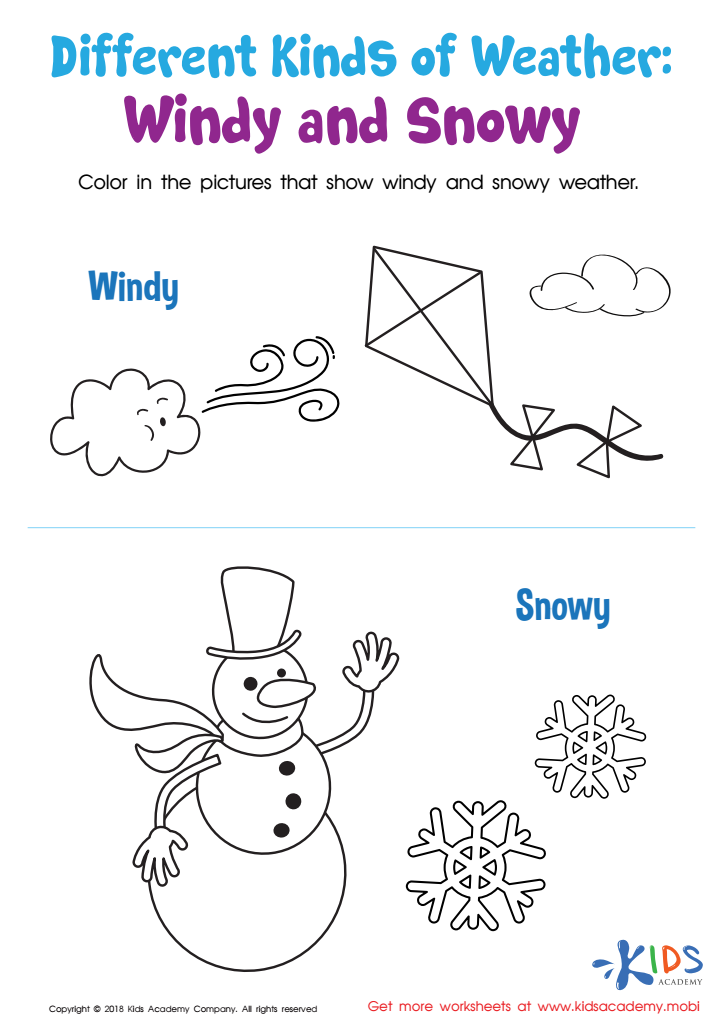
Different Kinds of Weather: Windy and Snowy Worksheet
Invite your little learner to practice their fine motor skills and learn about nature with this fun and charming PDF worksheet! Reinforce weather patterns and examine their environment as they color, giving them a foundation for understanding how weather affects them. No matter the weather, your learner will have a blast!
Download (PDF)
 Assign to My Students
Assign to My Students
Different Kinds of Weather: Windy and Snowy Worksheet
Worksheet
Join Kids Academy for Free
Who is primarily going to use this learning content?








Parents and teachers should prioritize weather vocabulary in kindergarten because it lays the groundwork for vital communication and observational skills. Understanding weather-related terms helps children articulate their thoughts and experiences about daily meteorological changes, fostering effective expression.
Moreover, familiarity with weather vocabulary enhances children’s observational skills. By learning words like "sunny," "cloudy," "rainy," or "windy," children begin to connect spoken language with real-world phenomena, encouraging them to observe their surroundings more closely. This connection not only supports language development but also sparks curiosity about the world around them.
Integrating weather vocabulary into early education fosters science literacy, encouraging children to make predictions about atmospherical changes and grasp the concepts of seasons. This foundational knowledge is instrumental in cultivating critical thinking skills as they grow.
Additionally, weather vocabulary often connects to broader lessons in a child's life—planning for appropriate clothing or activities, engaging in storytelling, and even discussing emotions related to different kinds of weather. When parents and teachers emphasize the importance of weather vocabulary, they contribute to a child's overall cognitive and social development, nurturing inquisitive minds that are prepared to explore their environment.








