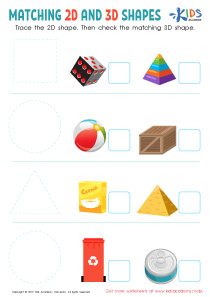
Reading comprehension Kindergarten 2D Shapes Worksheets
3 filtered results
-
From - To
Elevate your kindergartner's reading comprehension and shape recognition with our 2D Shapes Worksheets. These expertly crafted worksheets combine engaging stories about familiar objects with vibrant illustrations, helping young minds grasp essential 2-dimensional shapes such as circles, squares, triangles, and rectangles. Through interactive reading passages and fun activities, kids enhance their vocabulary and understanding of geometrical concepts. Perfect for both classroom and at-home learning, our worksheets offer a balanced approach to develop early reading skills and shape recognition, ensuring a strong educational foundation. Browse our collection today and watch your child’s confidence soar in reading and math.
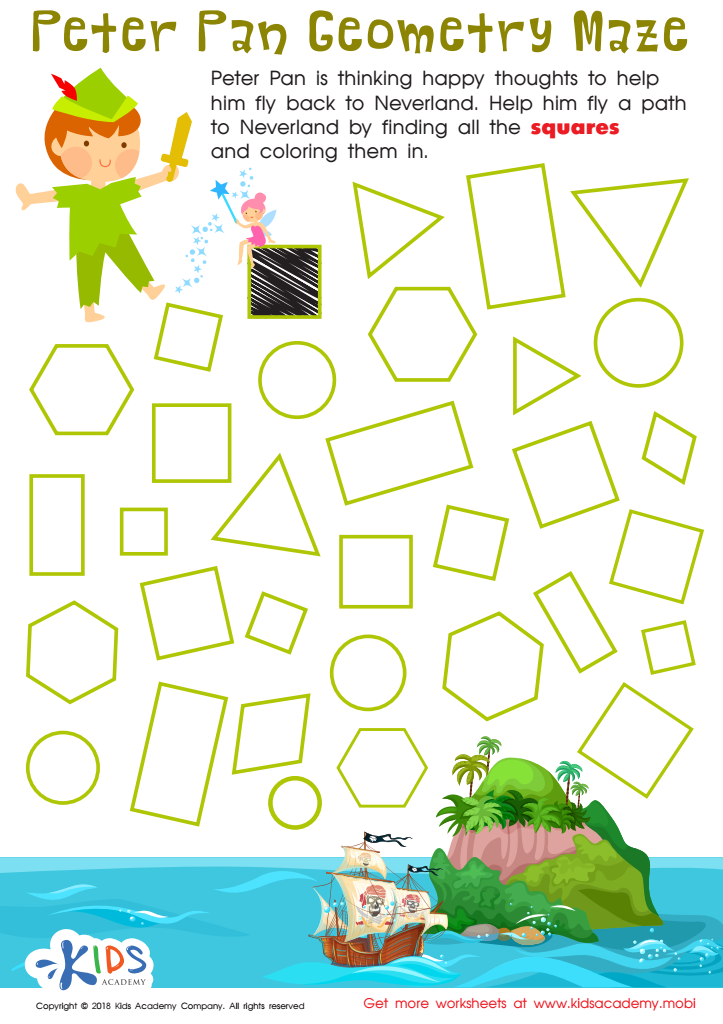
Peter Pan Worksheet
 Assign to My Students
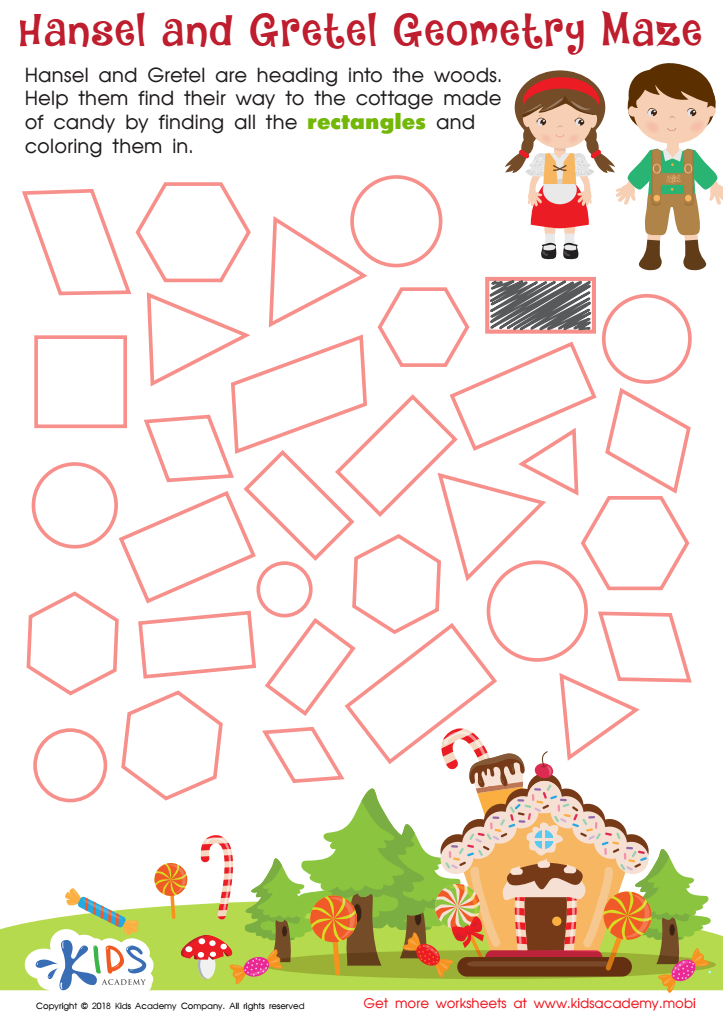
Hansel and Gretel Geometry Maze Worksheet
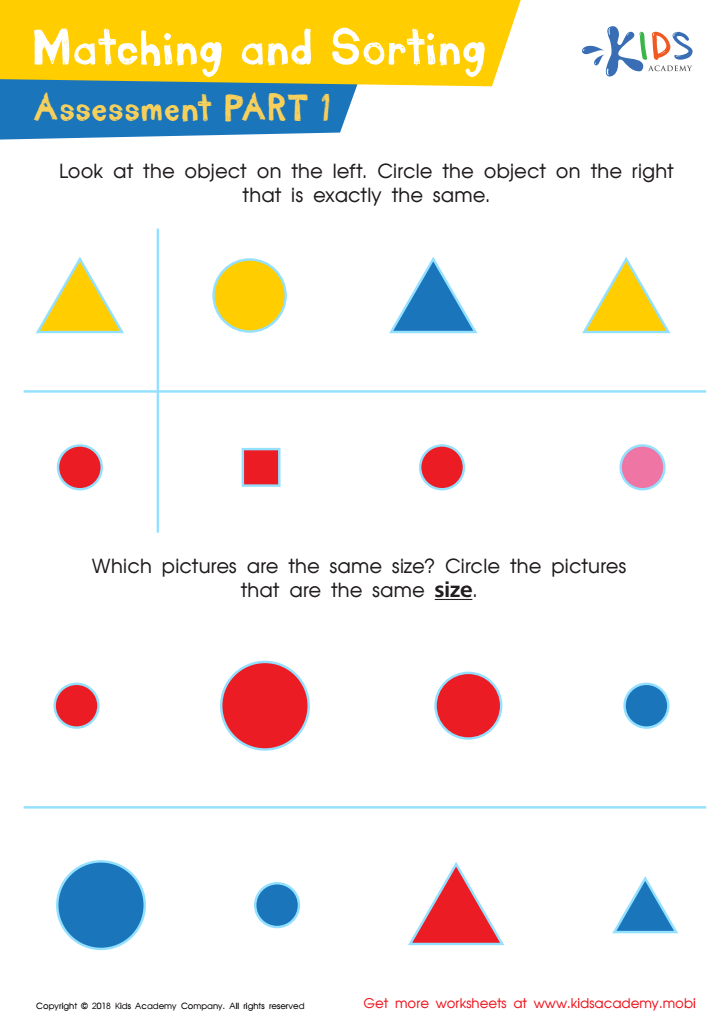
Matching and Sorting for Kindergarten: Assessment 1 Worksheet






Reading comprehension and understanding 2D shapes are foundational skills for young learners that form the bedrock for future academic success. For parents and teachers, prioritizing these skills in kindergarten is imperative for several compelling reasons.
Firstly, reading comprehension is crucial because it goes beyond mere word recognition. It involves understanding and interpreting text, which lays the groundwork for children to become fluent readers. It enhances their vocabulary, enables them to follow instructions, and fosters critical thinking skills. When children comprehend what they read, they are better positioned to succeed across all academic subjects, as most learning in school is text-based.
Secondly, understanding 2D shapes is vital for early geometry skills and cognitive development. Recognizing and naming shapes like circles, squares, and triangles enable children to classify and compare objects, enhancing their problem-solving and analytical skills. It also supports spatial awareness, which is important for everyday tasks such as navigating environments and understanding proportions and dimensions.
Integrating reading comprehension with lessons on 2D shapes provides a holistic approach to learning. Doing so makes abstract concepts tangible and engaging, offering a way to blend language arts with mathematics seamlessly. Parents and teachers who focus on these areas prepare children for a more complex comprehension of subjects as they advance through their education, fostering well-rounded intellectual growth.