
Counting practice Kindergarten Addition Worksheets
7 filtered results
Difficulty Level
Grade
Age
-
From - To
Subject
Activity
Standards
Welcome to our Counting Practice Kindergarten Addition Worksheets! Tailored for young learners, these engaging worksheets aim to build essential early math skills through fun and interactive activities. As children practice counting, they develop the foundational understanding of addition. Our worksheets incorporate colorful visuals and relatable themes that captivate young minds, making learning enjoyable. Ideal for at-home practice or classroom use, these resources support differentiated learning, allowing educators and parents to meet individual student needs. Help your child gain confidence in their math abilities while fostering a love for learning—explore our Counting Practice worksheets today and watch them thrive in their educational journey!
Favorites
With answer key
Interactive
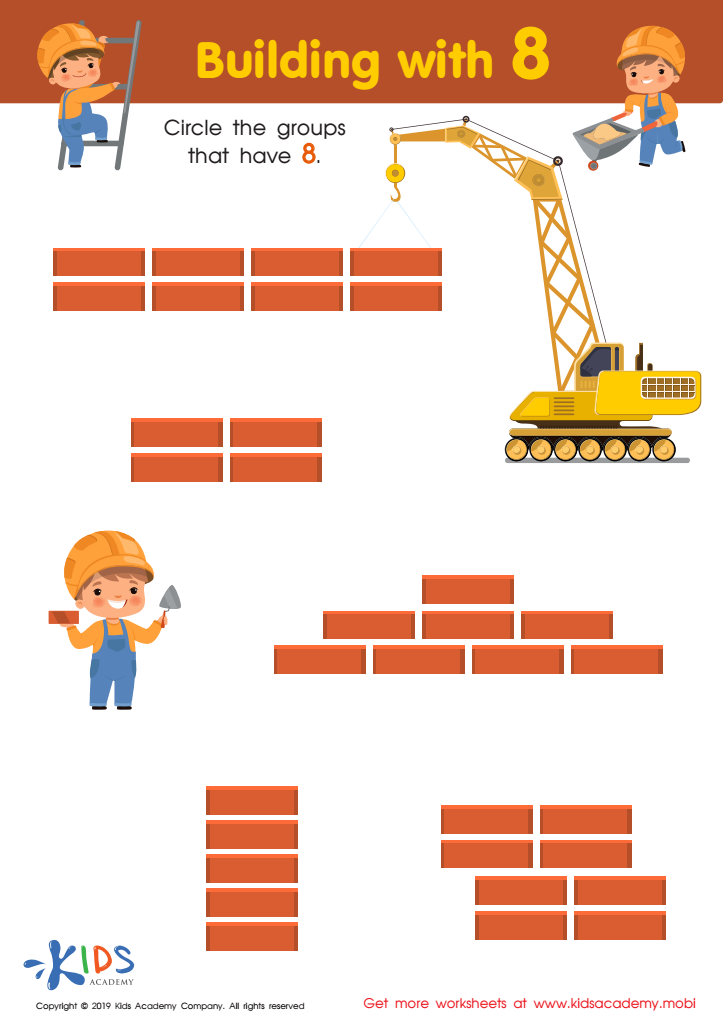
Building with 8 Worksheet
Your child can learn more with this simple exercise! Get them counting and help them circle the groups of 8 bricks. It's a great addition to their post-school lessons, supporting their counting skills. Plus, it's a fun way to learn!
 Assign to My Students
Building with 8 Worksheet
Worksheet
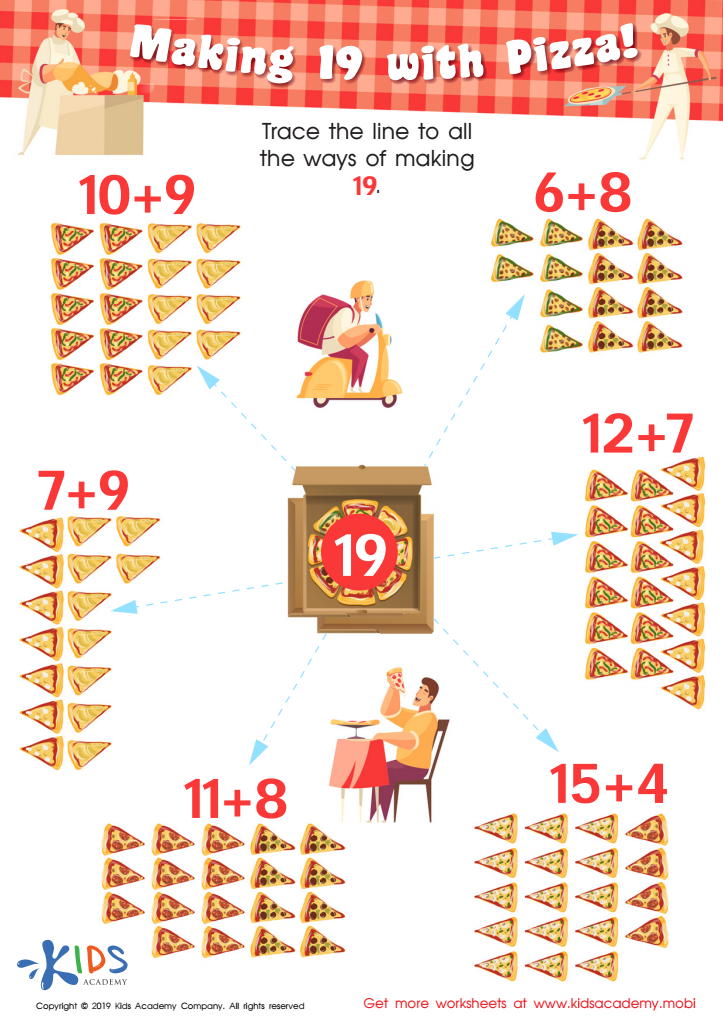
Making 19 with Pizza! Worksheet
Who loves pizza? Your kids do! Next time you need to teach them math, make it fun by combining it with something they enjoy. This worksheet uses a pizza-themed problem to help them practice solving equations. Have them trace the line to figure out how to make 19. It's a great way to make learning math fun!
Making 19 with Pizza! Worksheet
Worksheet
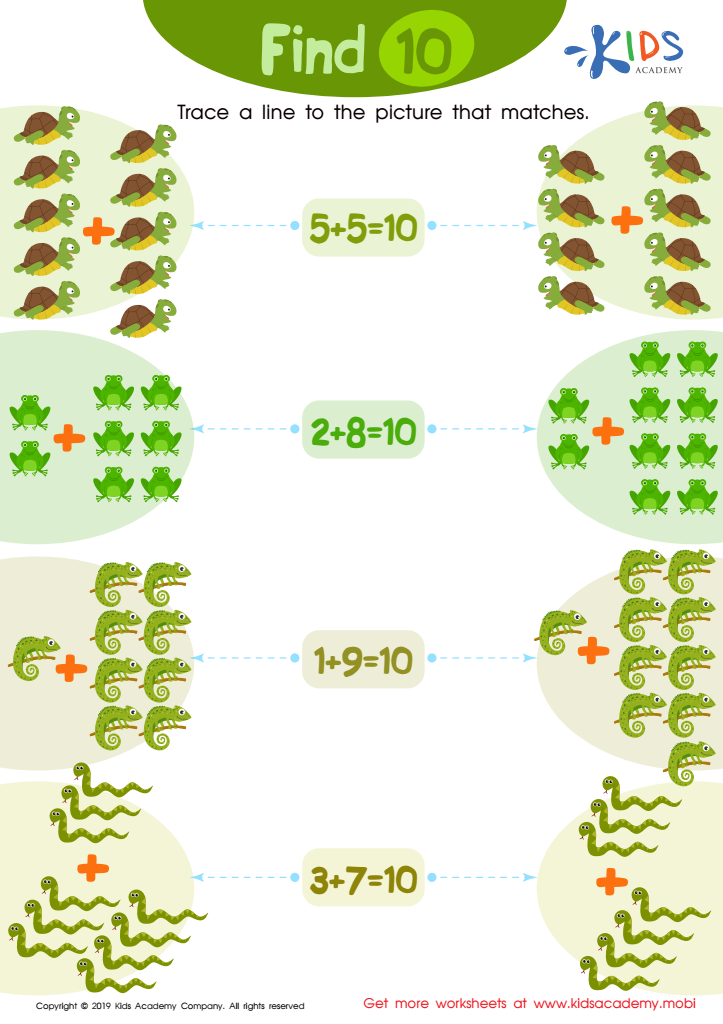
Find 10 Worksheet
Counting can be tricky, but your kids can master it with regular practice. Here's a fun activity to help: count the animals, then trace a line to the pictures that matches. With these tips, math will be an easy walk in the park.
Find 10 Worksheet
Worksheet
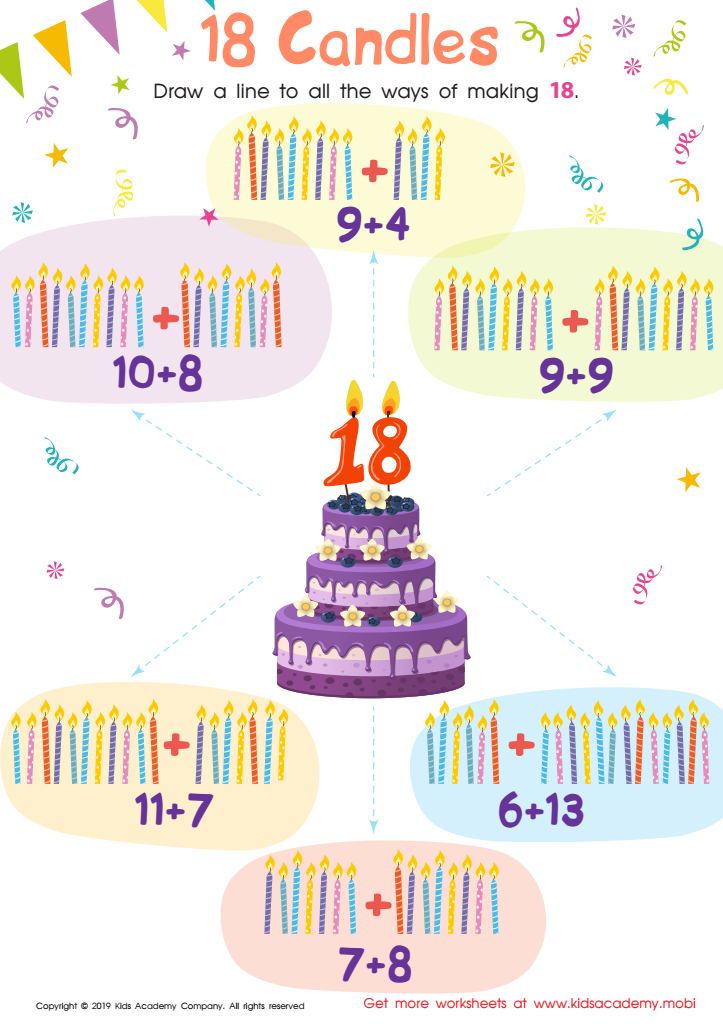
18 Candles Worksheet
This worksheet is great for introducing your students to addition and subtraction. Help your kids solve the simple equations on it and draw a line from the birthday cake with 18 on it to all the solutions. Practice like this will prepare them to tackle more complex math problems.
18 Candles Worksheet
Worksheet
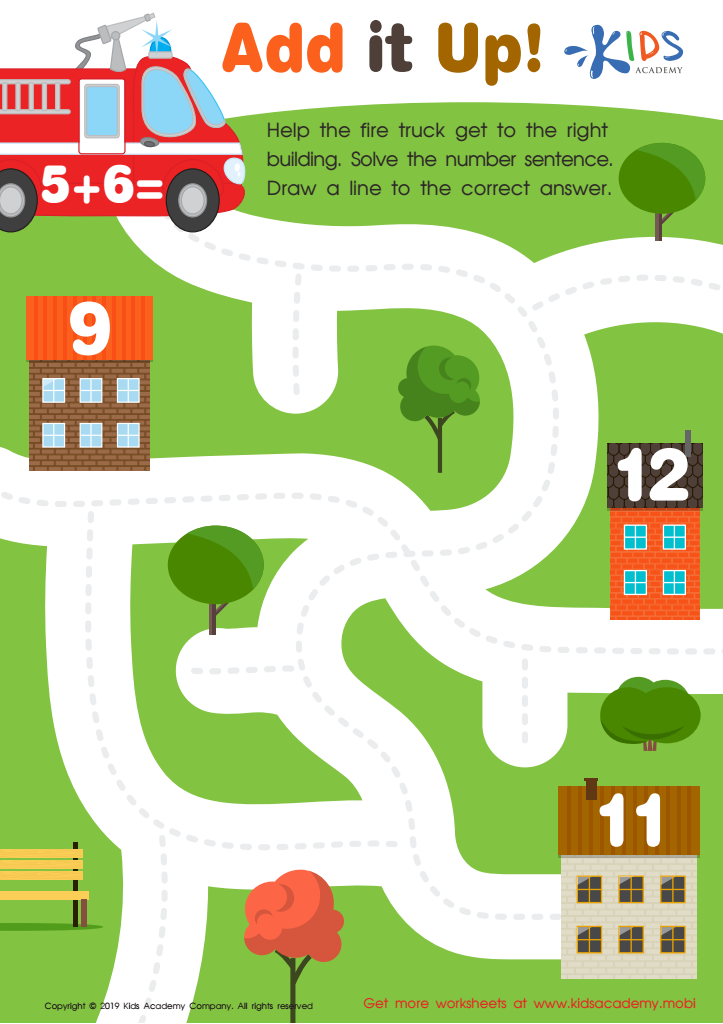
Add it Up Worksheet
The fire service is the right number to call in case of a fire. Test your children's safety knowledge by asking them other emergency numbers. Have them identify the fire truck in the worksheet and solve the number sentences. Guide them in drawing a line to the right answer.
Add it Up Worksheet
Worksheet
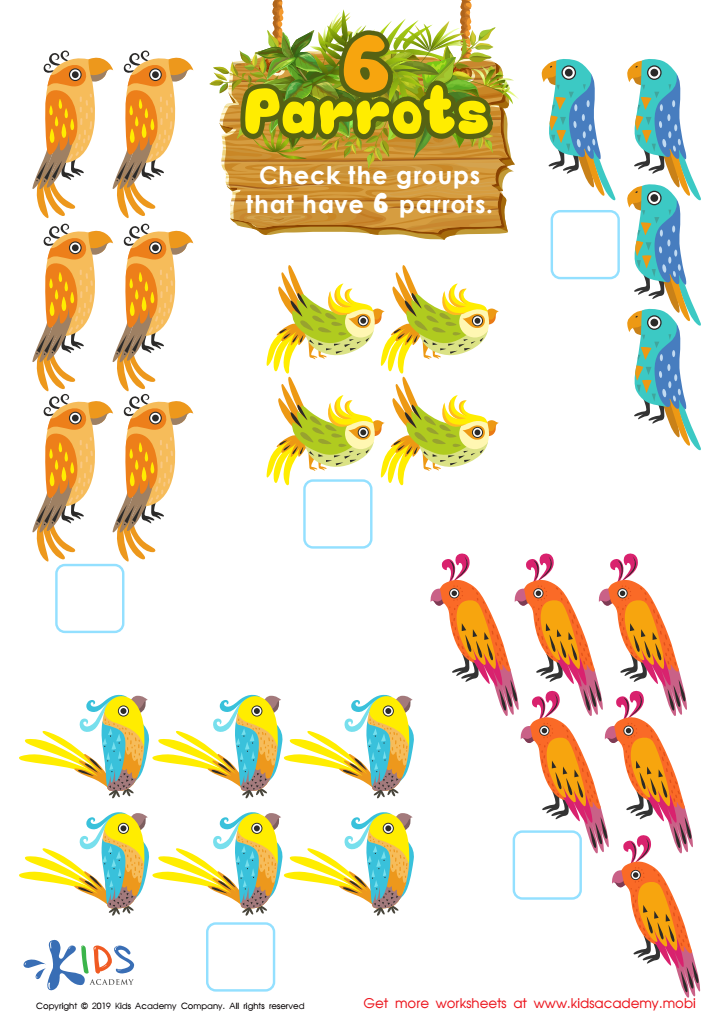
6 Parrots Worksheet
Love parrots? Here's a free worksheet to help your children practice counting to six with colorful parrot representations! Kids will adore counting the parrots and checking off groups of six - and it won't even feel like math! Just a fun way to make some new and exciting friends.
6 Parrots Worksheet
Worksheet
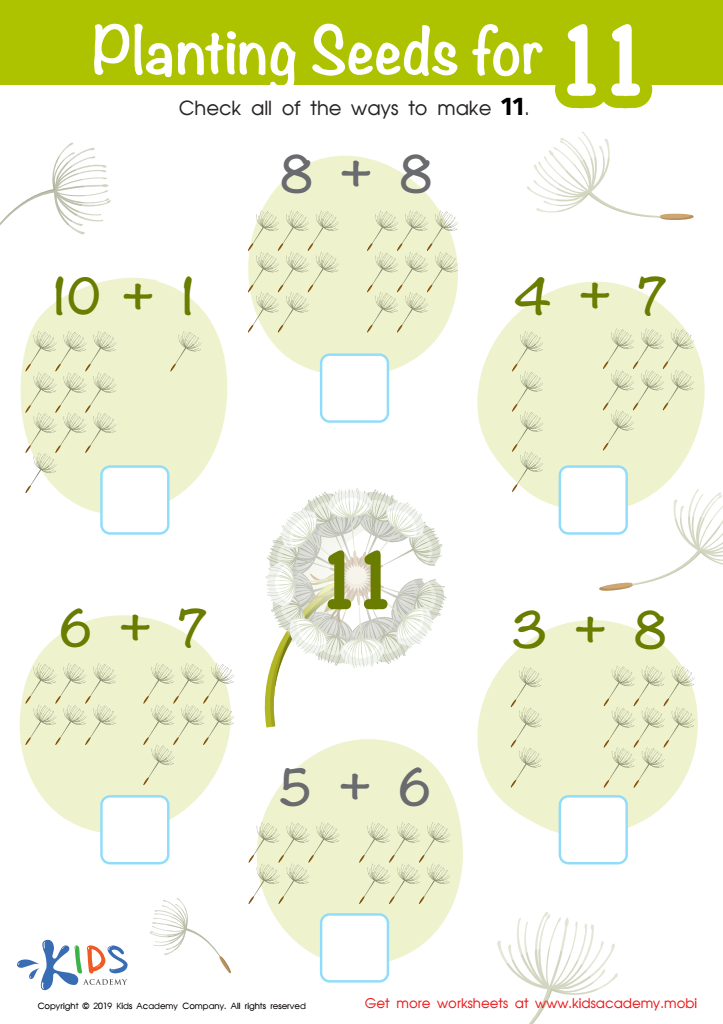
Planting Seeds for 11 Worksheet
Before starting, ask your students to count as high as they can. Explain that different numbers can add up to the same total. Give examples like 2+2 =4 and 3+1 =4. Ask if they can think of other examples. Then have them work through the equations in the printout and circle all that add up to 11.
Planting Seeds for 11 Worksheet
Worksheet
Join Kids Academy for Free
Who is primarily going to use this learning content?




.jpg)

.jpg)

Counting practice and addition skills in kindergarten are foundational elements in a child's educational journey that significantly shape their understanding of mathematics. First, these skills help build number sense, enabling early learners to understand the relationships between numbers and quantities. Mastering counting and addition promotes confidence in young students, making them more willing to engage with math concepts as they progress through school.
Moreover, developing early math skills fosters critical thinking and problem-solving abilities. When children practice counting and simple addition, they learn to recognize patterns and relationships, critical skills applicable beyond mathematics. This cognitive development supports overall academic success as students encounter more complex subjects.
Additionally, early numeracy skills are linked to future educational outcomes. Research indicates that children who have a solid grasp of foundational math concepts tend to perform better in math in later grades. As such, parents and teachers play a pivotal role in facilitating this learning through fun, engaging activities. Encouragement and support in counting and addition practice can nurture a positive attitude toward math, laying the groundwork for lifelong learning. Investing time and resources in these early skills ultimately benefits children in their educational journeys and in real-life problem-solving situations.








