Mental math practice Kindergarten Addition Worksheets
4 filtered results
-
From - To
Discover our engaging Mental Math Practice Kindergarten Addition Worksheets, designed to boost your child's addition skills through fun and interactive activities. These worksheets encourage young learners to tackle addition problems without relying on calculators, fostering confidence and mental agility. With a variety of exercises tailored for kindergarten students, your child will practice fundamental addition concepts while developing critical thinking and problem-solving abilities. Ideal for both classroom use and at-home learning, these printable resources not only make math enjoyable but also lay a strong foundation for future learning. Start your child's math journey today with our colorful and captivating worksheets!
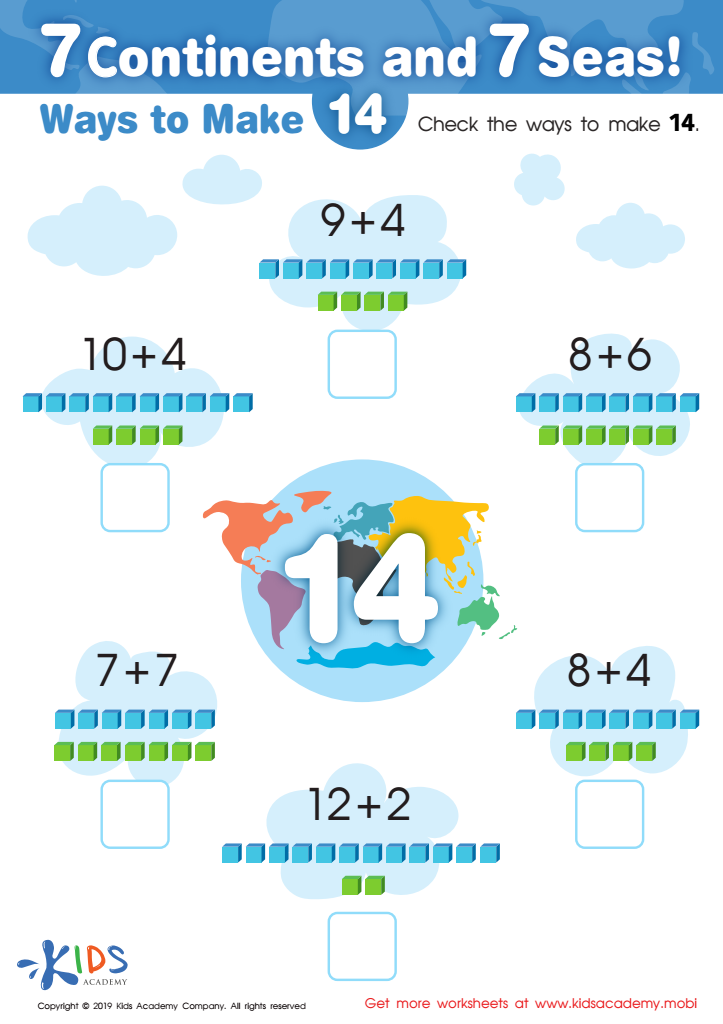
7 Continents and 7 Seas Worksheet
 Assign to My Students
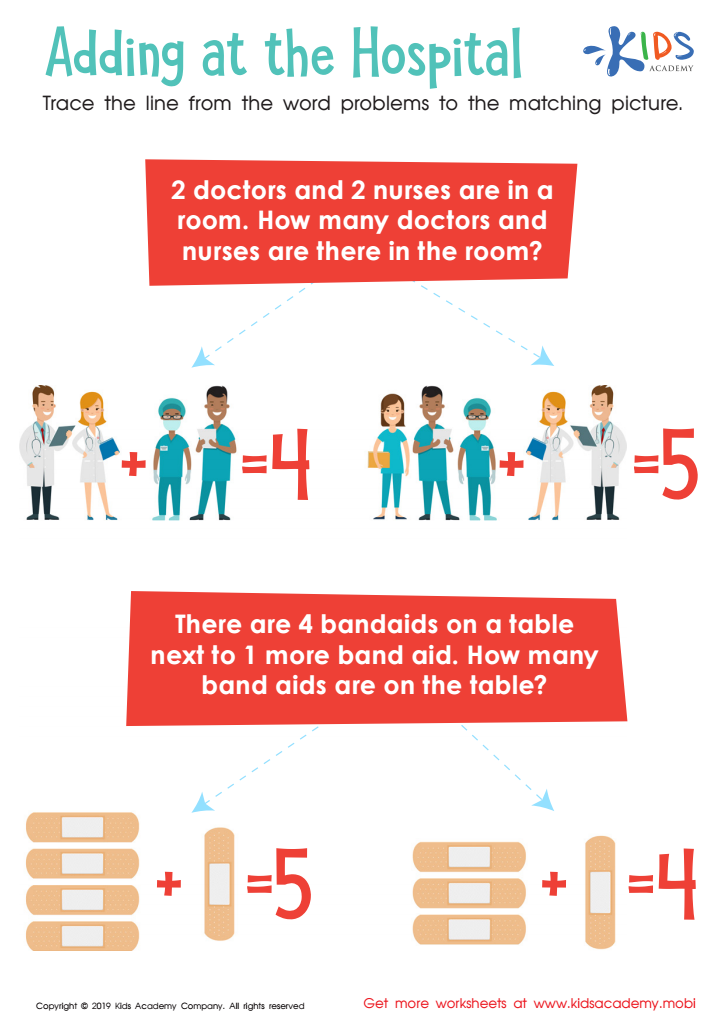
Adding at the Hospital Worksheet
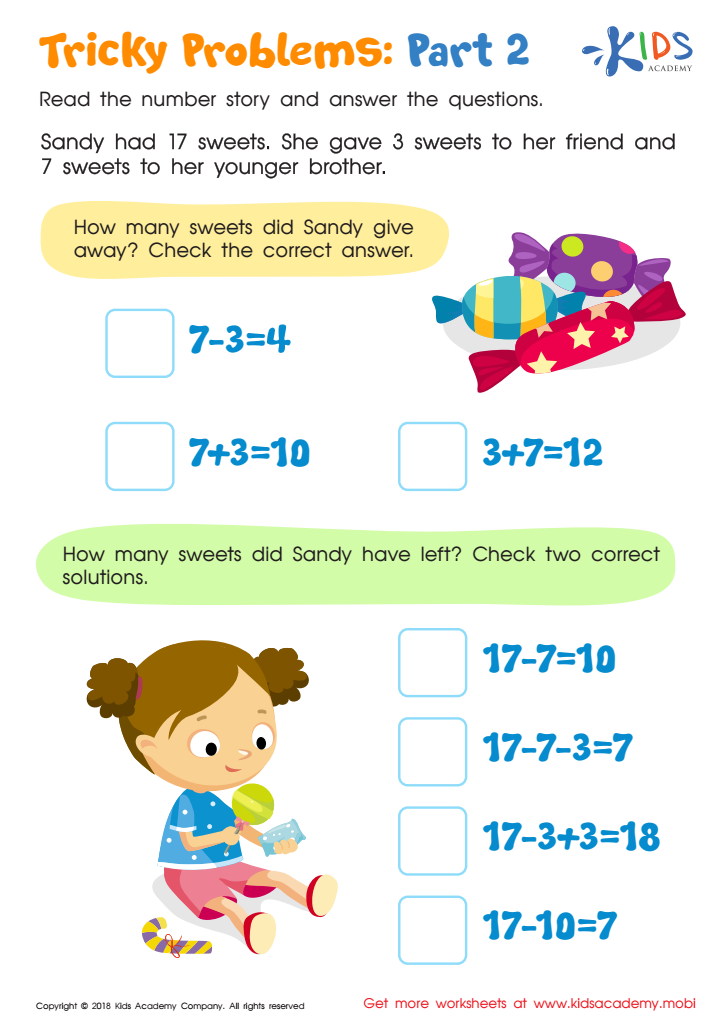
Tricky Problems Worksheet: Part 2
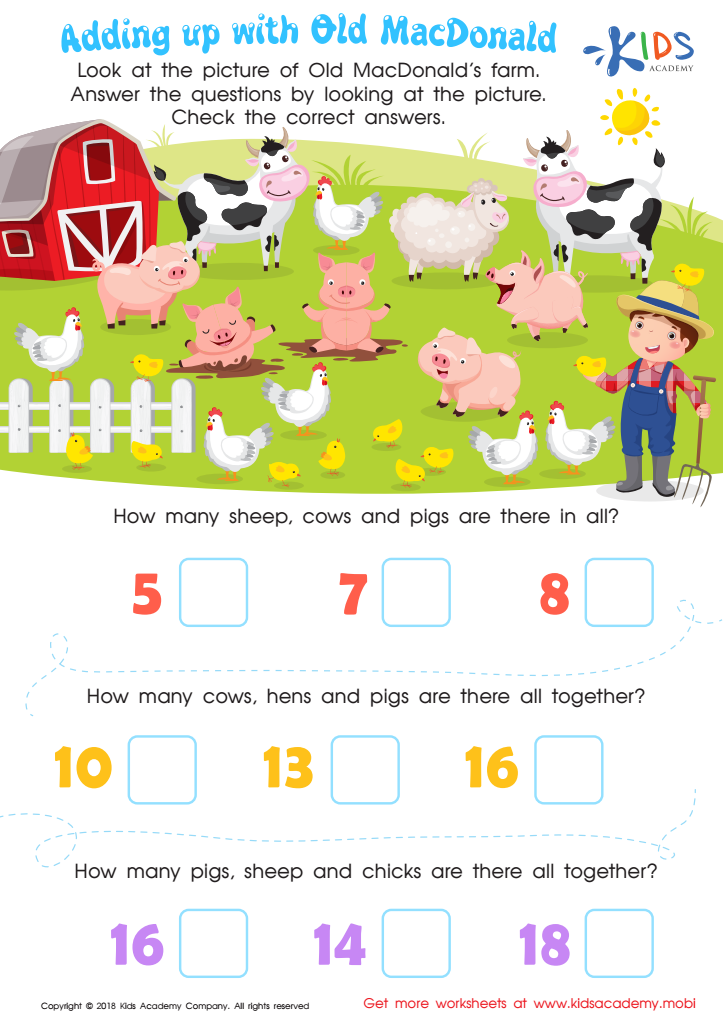
Adding Up with Old MacDonald Worksheet




.jpg)



Mental math practice, especially in the context of kindergarten addition, is crucial for young learners as it lays a strong foundation for their future mathematical understanding. Developing mental math skills at an early age enhances children's number sense, allowing them to recognize patterns, make connections, and visualize relationships between numbers. This mental agility not only boosts confidence in their mathematical abilities but also fosters problem-solving skills that will be beneficial throughout their education.
Moreover, engaging in mental math encourages an attitude of curiosity and exploration. Children become more adept at processing numerical information, enabling them to solve problems more intuitively. For parents and teachers, this practice can be seamlessly integrated into daily activities, making learning enjoyable and interactive.
Additionally, mental math helps to strengthen working memory and attention span, critical competencies for academic success. Young learners who regularly engage in these activities often exhibit improved performance in other subjects as well. By focusing on mental math practice for kindergarten addition, parents and teachers are investing in their children’s cognitive development, preparing them for more complex mathematical concepts in the coming years, and ultimately equipping them with the skills needed for lifelong learning.








