Problem-Solving Skills Kindergarten Geometry Worksheets
7 filtered results
-
From - To
Unlock your child's potential with our engaging Kindergarten Geometry Problem-Solving Skills Worksheets! Designed to inspire young minds, these worksheets introduce essential geometric concepts through fun and interactive activities. Your child will develop critical thinking skills as they learn to identify shapes, understand spatial relationships, and solve problems creatively. Each worksheet is tailored to enhance cognitive abilities while promoting a love for learning in early mathematics. Watch as your little learners build confidence and proficiency in geometry, setting a strong foundation for future academic success. Explore our collection today and watch your child's problem-solving skills flourish!
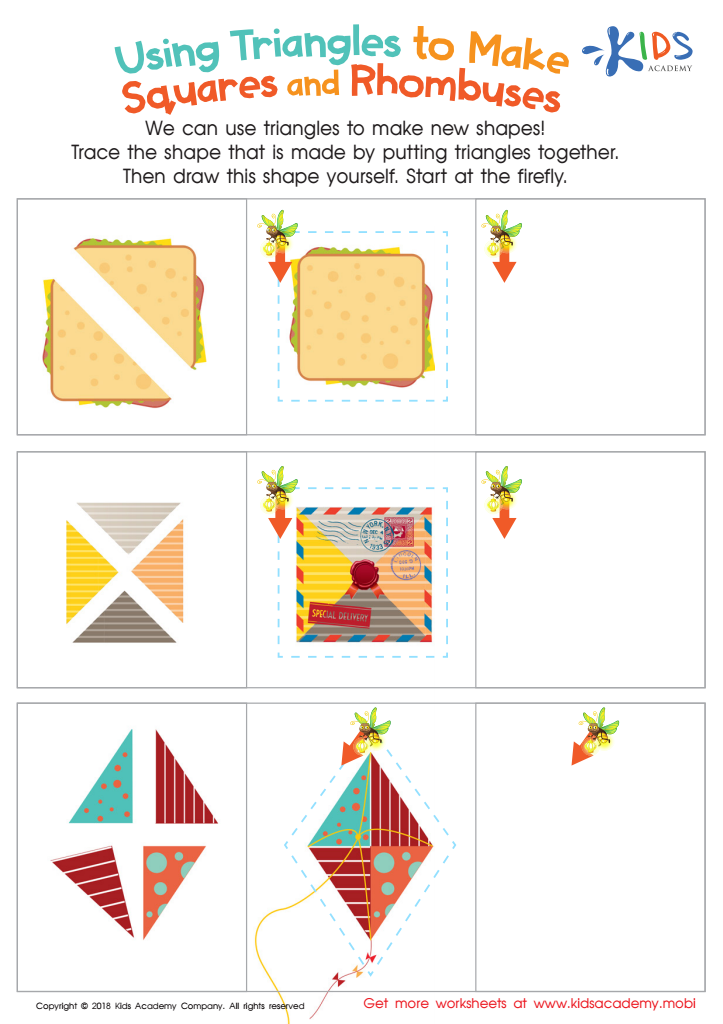
Using Triangles to Make Squares and Rhombuses Worksheet
 Assign to My Students







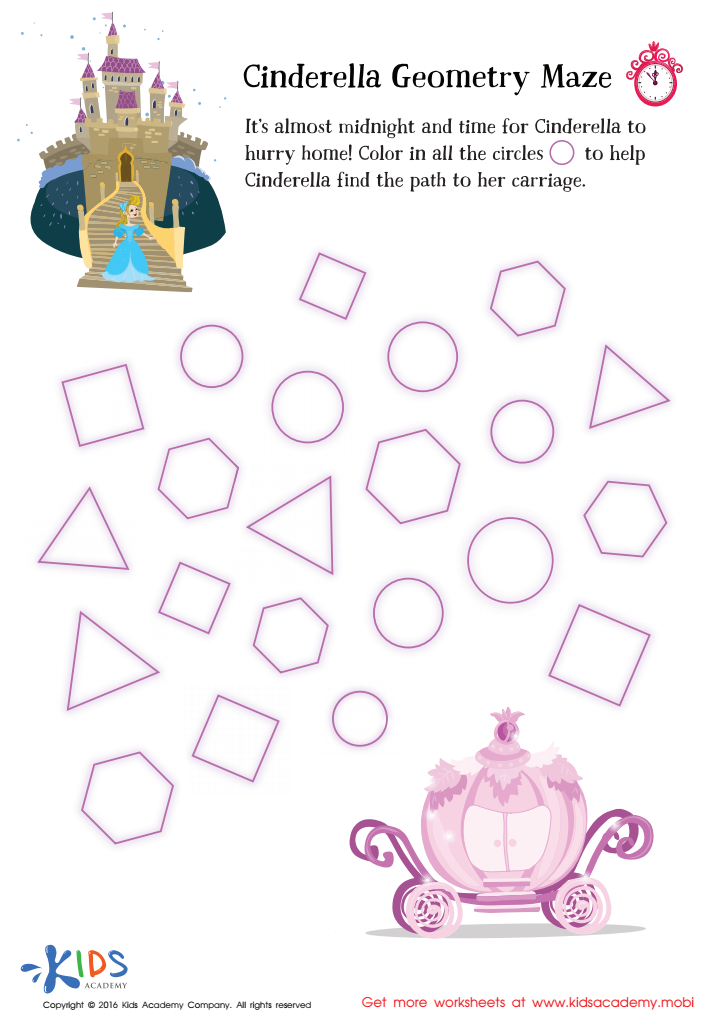
Cinderella Geometry Maze Worksheet
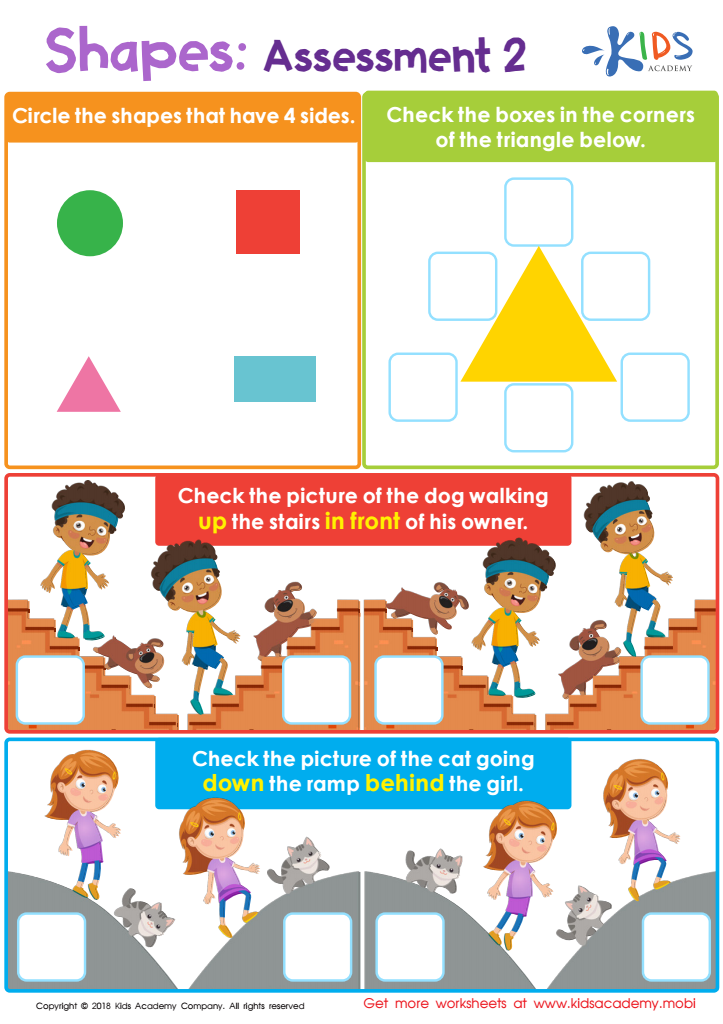
Shapes: Assessment 2 Worksheet
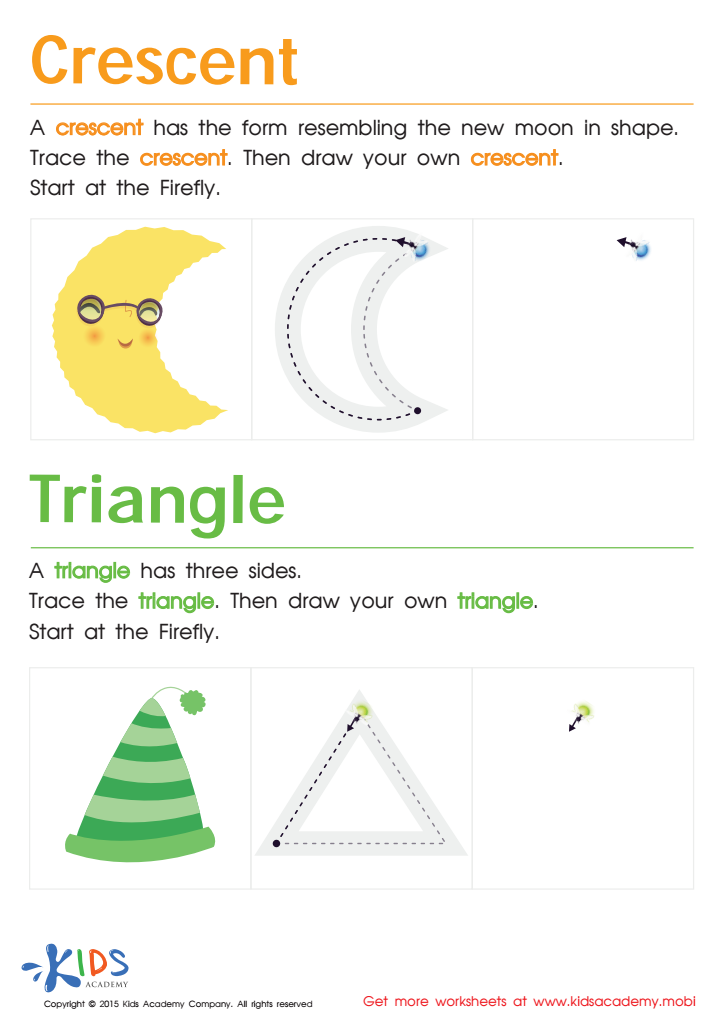
Learning to Draw Crescents And Triangles Worksheet
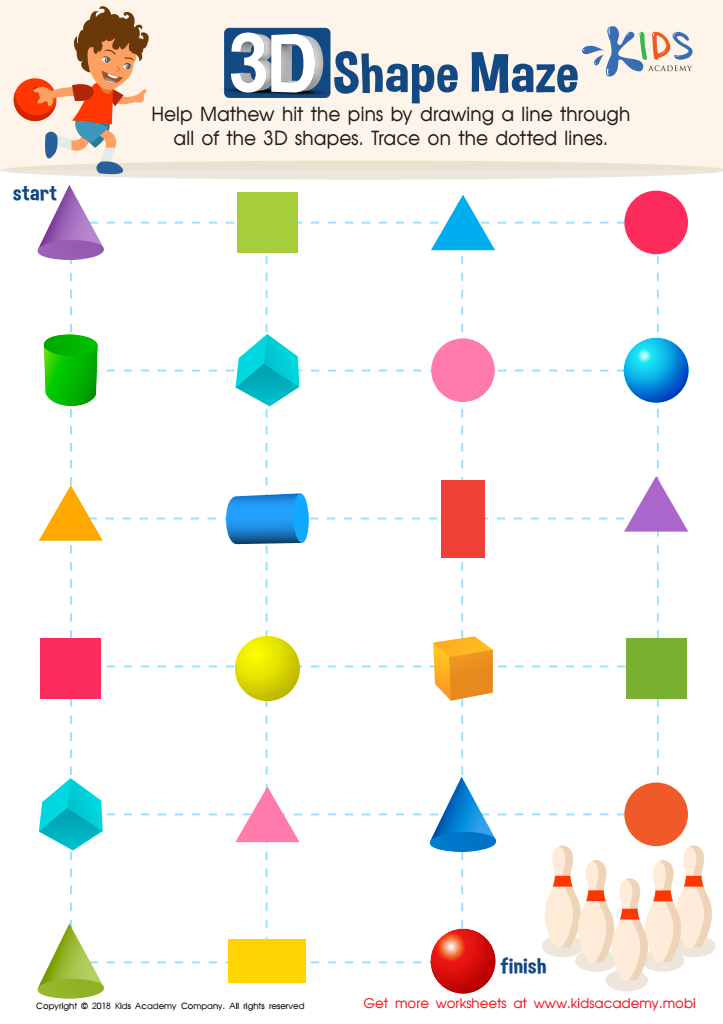
Shapes Maze Geometry Worksheet
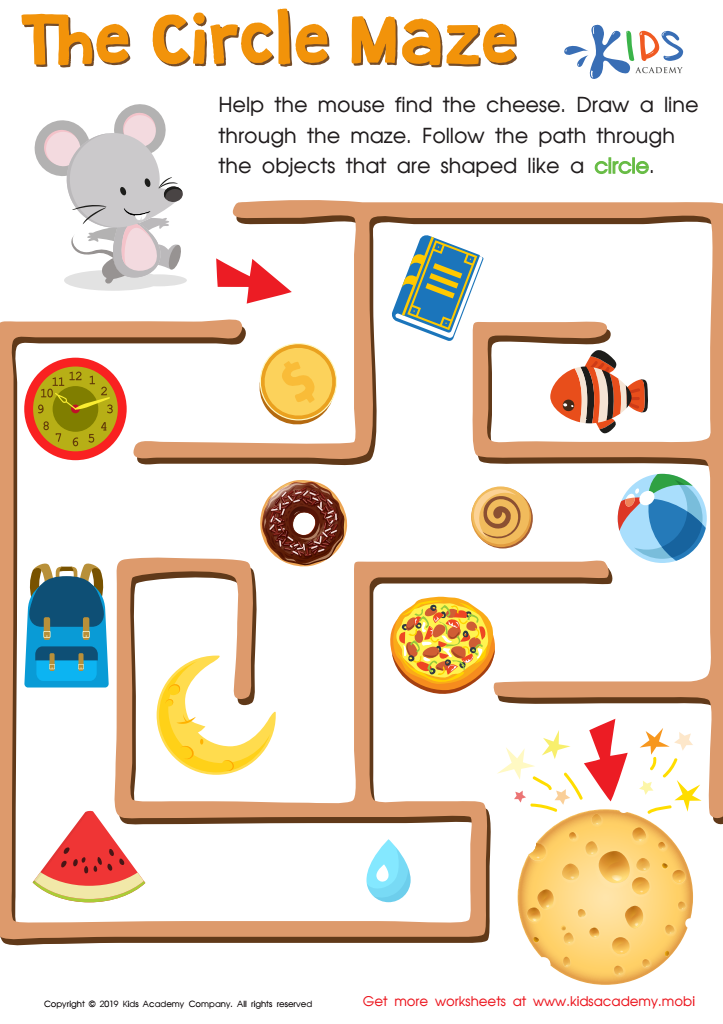
The Circle Maze Worksheet
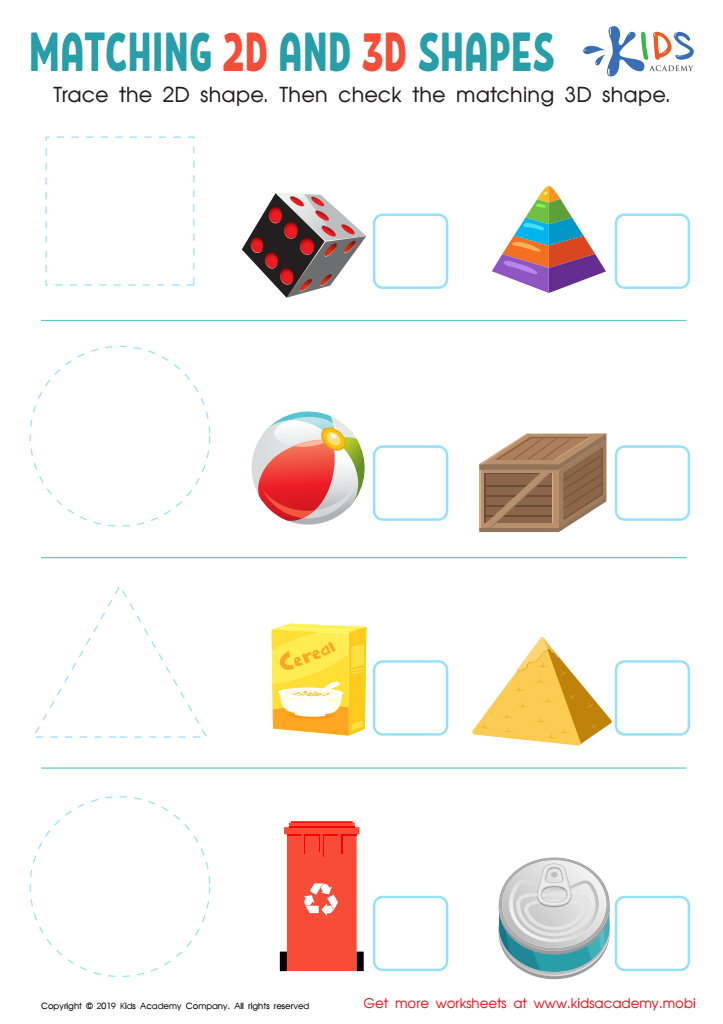
Matching 2D and 3D Shapes Worksheet








Problem-solving skills in kindergarten geometry are crucial for young learners as they lay the foundation for critical thinking and spatial awareness. At this stage, children engage with shapes, sizes, and spatial relationships, fostering their ability to analyze, hypothesize, and reason. These early experiences not only develop cognitive skills but also enhance creativity, as children learn to visualize and manipulate objects in their surroundings.
For parents and teachers, nurturing problem-solving skills in geometry helps prepare children for more complex mathematical concepts in later grades. It encourages them to explore different ways to approach a task, teaches persistence in the face of challenges, and builds confidence in their abilities. Moreover, through collaborative problem-solving activities, children learn essential social skills, such as teamwork and communication.
Additionally, geometry isn't just about numbers and shapes; it's integrated into everyday life. Understanding geometry can help children navigate their environment, aiding in navigation skills and improving their overall comprehension of the world. Ultimately, instilling robust problem-solving skills within the realm of geometry paves the way for lifelong learning and informed decision-making, making it a vital focus for both parents and educators in early childhood development.








