Animal identification Kindergarten Numbers Worksheets
3 filtered results
-
From - To
Introduce little ones to the enchanting world of numbers with our Animal Identification Kindergarten Numbers Worksheets! Perfectly tailored for young learners, these interactive worksheets combine numeracy skills with fun animal identification challenges. Students can practice counting, recognizing numbers, and linking them to adorable animals, fostering both math abilities and cognitive development. With colorful and engaging illustrations, each worksheet captivates children's attention, making learning an enjoyable adventure. Ideal for classroom environments or at-home learning, these worksheets ensure foundational skills in a playful and supportive setting. Bring excitement to early math education—explore our Animal Identification Kindergarten Numbers Worksheets today!
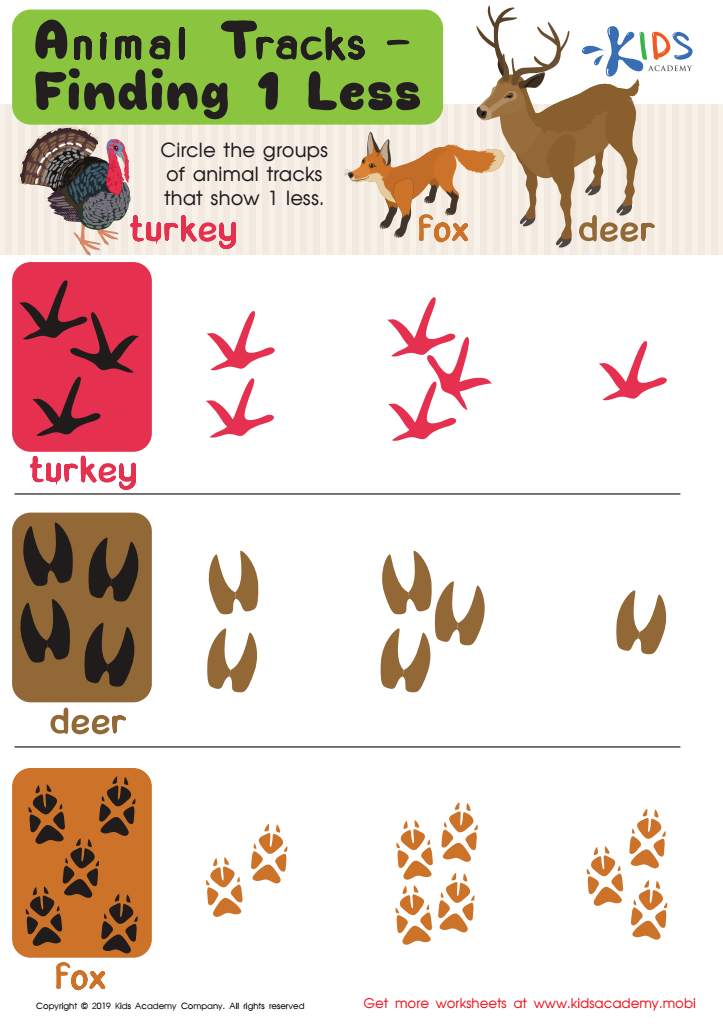
Animal Tracks: Find 1 Less Worksheet
 Assign to My Students
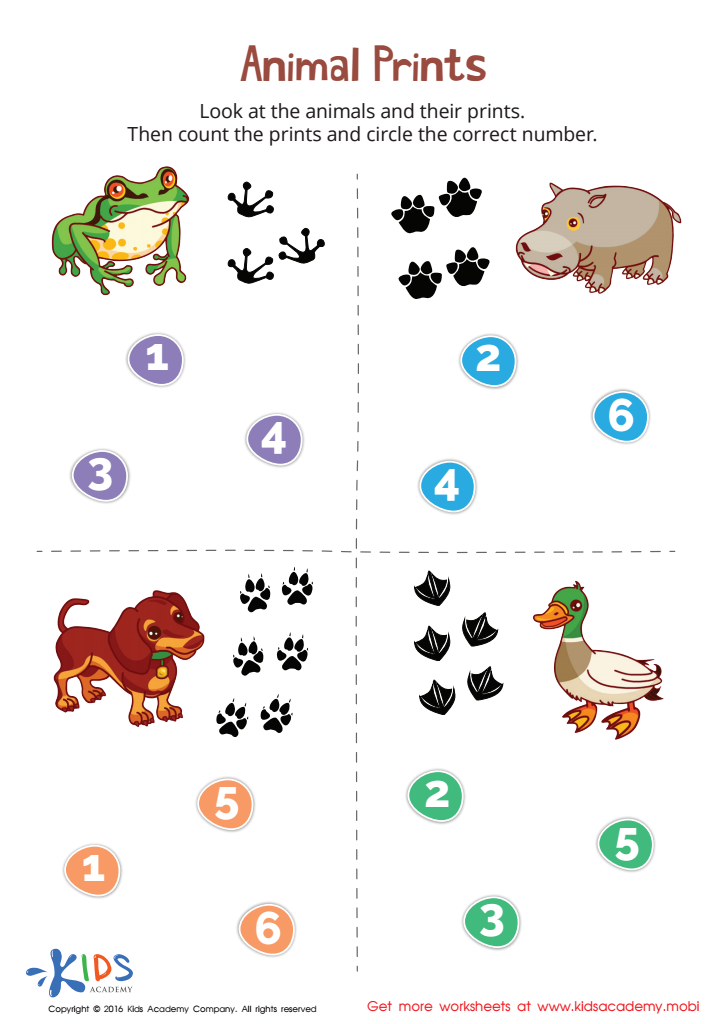
Animal Prints Match-Up Worksheet
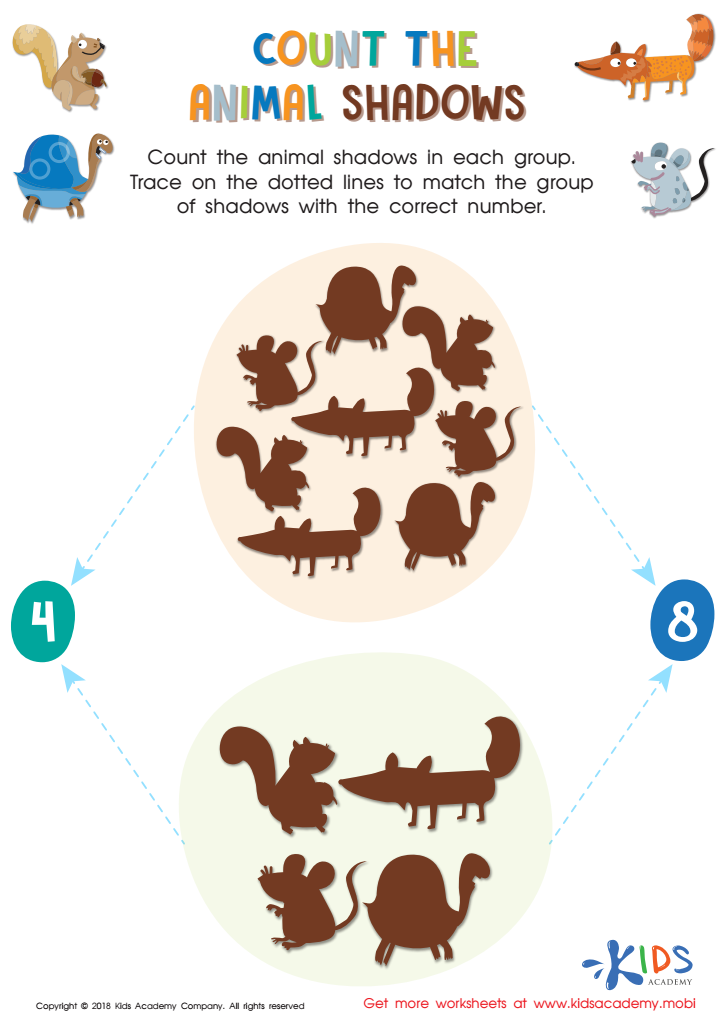
Count the Animal Shadows Worksheet








Animal identification and kindergarten numbers are foundational skills that play a vital role in the cognitive and emotional development of young children. Understanding different animals helps cultivate a child's curiosity, empathy, and respect for living creatures. When children learn to identify animals, they are honing their observation skills, which are essential for scientific thinking and critical problem-solving in later life. Parents and teachers can encourage this by providing a range of engaging activities, fostering a love for learning, and connecting them to nature.
Simultaneously, recognizing and understanding numbers is crucial for future mathematical skills. Numbers represent quantities, order, and allow children to grasp more complex concepts like addition and subtraction. Learning these basics in kindergarten builds a strong foundation for later academic success. Combining animal identification with numbers—for example, counting animals—creates an integrated learning experience that makes both subjects more relatable and fun. This approach can enhance memory, promote strategic thinking, and develop the ability to make connections between different types of information.
Caring about these areas helps parents and teachers provide a balanced, well-rounded education, fostering not only intellectual growth but also emotional and social development. These foundational skills set children on a path toward lifelong learning and an appreciation of the world around them.








