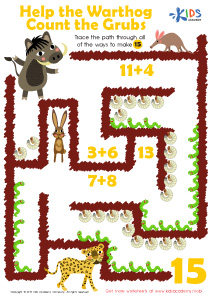
Cognitive Development Kindergarten Subtraction Worksheets
3 filtered results
-
From - To
Explore our Cognitive Development Kindergarten Subtraction Worksheets designed to build foundational math skills in young learners. These engaging activities help children understand subtraction concepts through visually appealing and interactive exercises. By gradually increasing complexity, our worksheets foster problem-solving abilities and boost confidence in early math learners. Each worksheet emphasizes cognitive growth by encouraging logical thinking, enhancing memory, and improving counting skills. Perfect for home or classroom settings, these printable resources are crafted to make learning subtraction enjoyable and effective. Empower your kindergartener's mathematical journey with our expertly designed subtraction worksheets, tailored for holistic cognitive development.
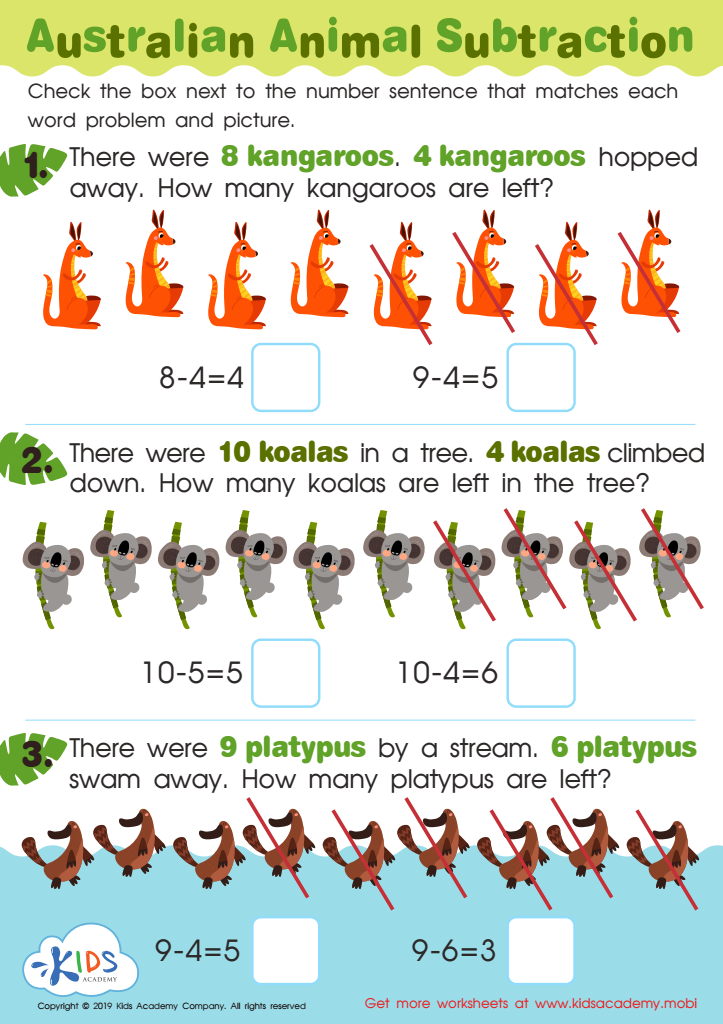
Australian Animal Subtraction Worksheet
 Assign to My Students
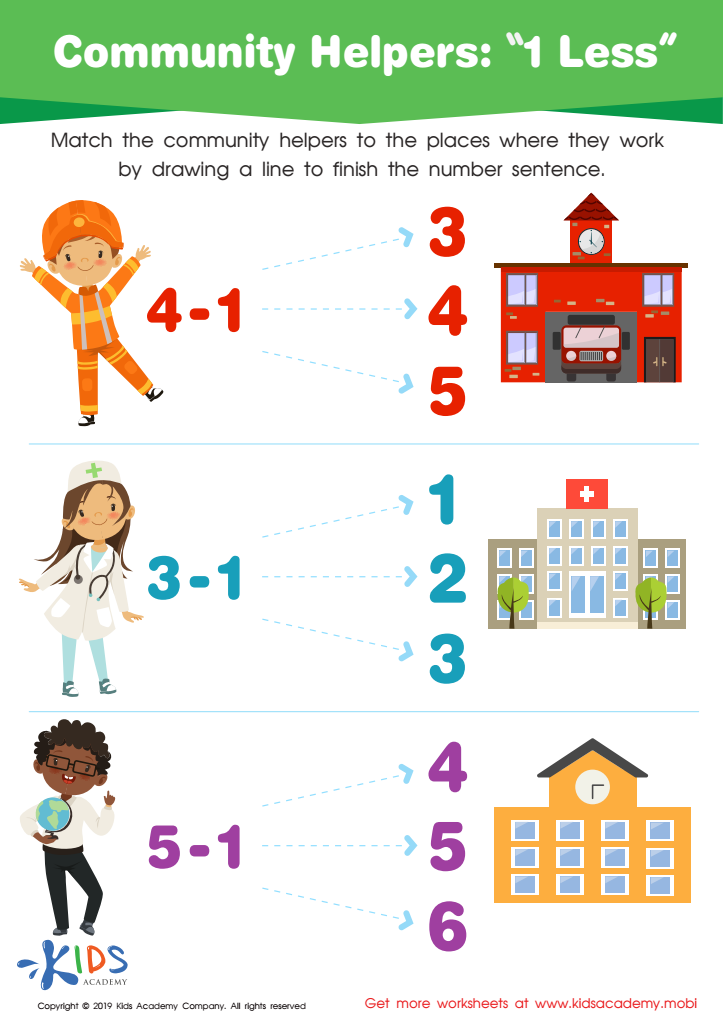
Community Helpers: 1 less Worksheet
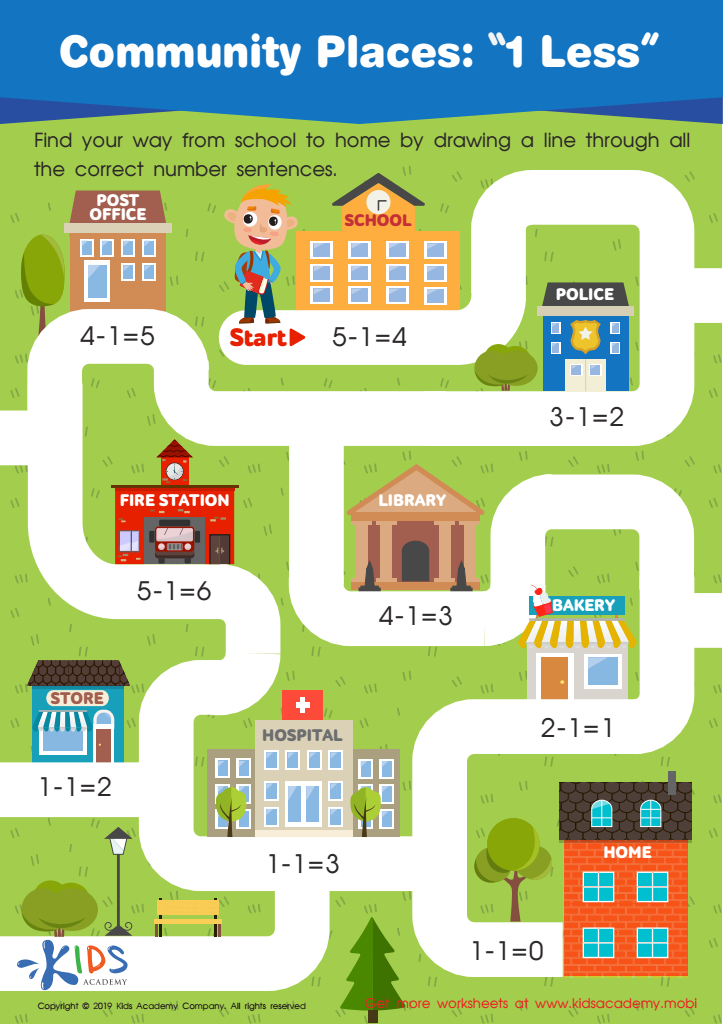
Community Places: 1 Less Worksheet








Cognitive development in kindergarten subtraction is crucial because this is when foundational mathematical concepts are established. Parents and teachers need to care about this area to ensure that children build a strong basis for future learning. During the early years, a child's brain is highly flexible and rapid in developing cognitive skills, including logical reasoning, problem-solving, and numerical understanding.
Understanding subtraction helps children grasp the concept of difference and change. For instance, knowing that taking away 1 from 5 leaves 4 is more than just a mathematical fact – it nurtures critical thinking and the ability to compare and contrast. These skills are transferable to various other academic subjects and everyday problem-solving contexts.
Parents and teachers also play a crucial role in developing positive attitudes towards math. If children struggle early on and don't receive the support they need, they may develop anxieties or aversions to the subject. By showing interest and providing a supportive and engaging environment, adults can help young learners develop confidence and a love for learning math. Engaging activities like counting objects, playing math games, and using visual aids make the learning process enjoyable and effective, setting children up for continued academic success.