Chess strategies learning Worksheets for Kids
1 filtered results
Difficulty Level
Grade
Age
-
From - To
Subject
Activity
Standards
Our Chess Strategies Learning Worksheets are designed to teach and reinforce fundamental chess strategies in a fun and engaging way. Featuring a variety of exercises and puzzles, these worksheets offer both beginners and intermediate players an opportunity to boost their chess skills.
Favorites
With answer key
Interactive
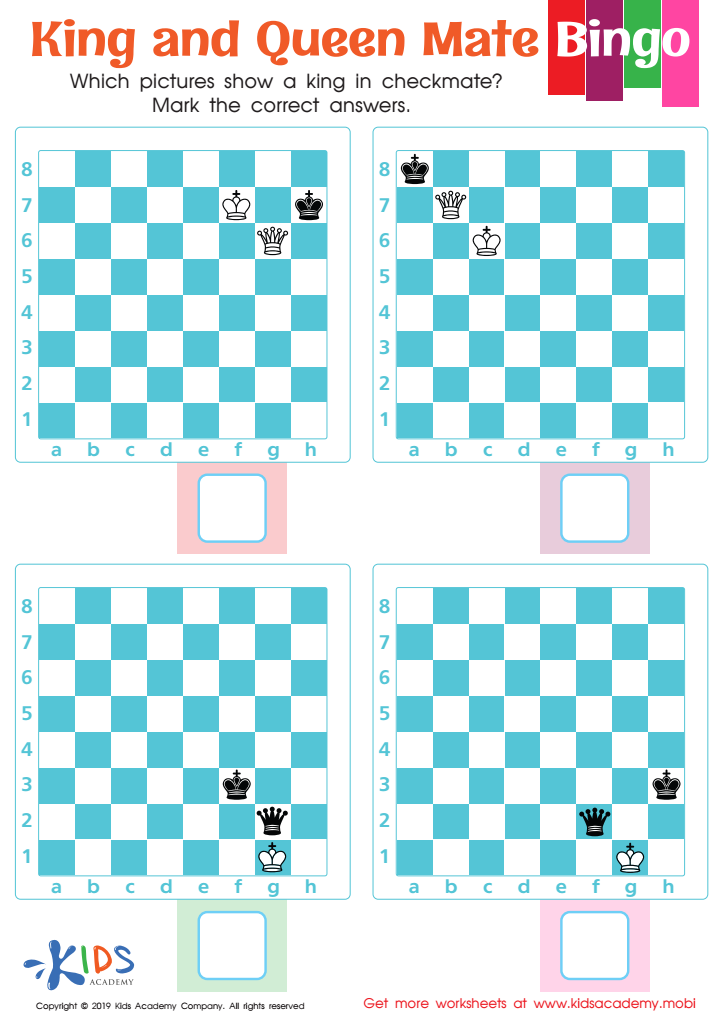
King and Queen Mate: Bingo Worksheet
Let your child strengthen their strategy skills with this free King and Queen Mate Bingo worksheet. They must decide which board uses the King and Queen effectively for checkmate and victory. Check the correct board off in the box, and enjoy sharpening your little one's skills!
 Assign to My Students
King and Queen Mate: Bingo Worksheet
Worksheet
Question/Answer

How to train the Chess strategies learning skill in Grade 1 students learning about Chess?
To train Grade 1 students in chess strategies, start with the basics: teach them the names of the pieces, how each piece moves, and the concept of check and checkmate. Use engaging activities like storytelling or role-playing to make learning fun. Incorporate simple puzzles to develop their problem-solving skills.
What does the Chess strategies learning skill mean when it comes to Grade 1 Chess learning?
The Chess strategies learning skill in Grade 1 focuses on introducing basic tactics and opening principles. It teaches young learners fundamental concepts like controlling the center, developing pieces towards effective squares, and the importance of king safety. This foundational stage aims to equip beginners with the essential strategies needed to understand the game and start playing with purpose.
How to test a Grade 1 student’s Chess strategies learning skills?
To test a Grade 1 student's chess strategies learning skills, set up a series of controlled games focusing on basic principles such as controlling the center, developing pieces, and king safety. Observe and note their decision-making, ability to apply these principles, and adaptability to simple tactical situations. This approach assesses their understanding and application of foundational chess strategies.
Join Kids Academy for Free
Who is primarily going to use this learning content?




.jpg)