Differentiating 'i' sounds Worksheets for Kids
1 filtered results
-
From - To
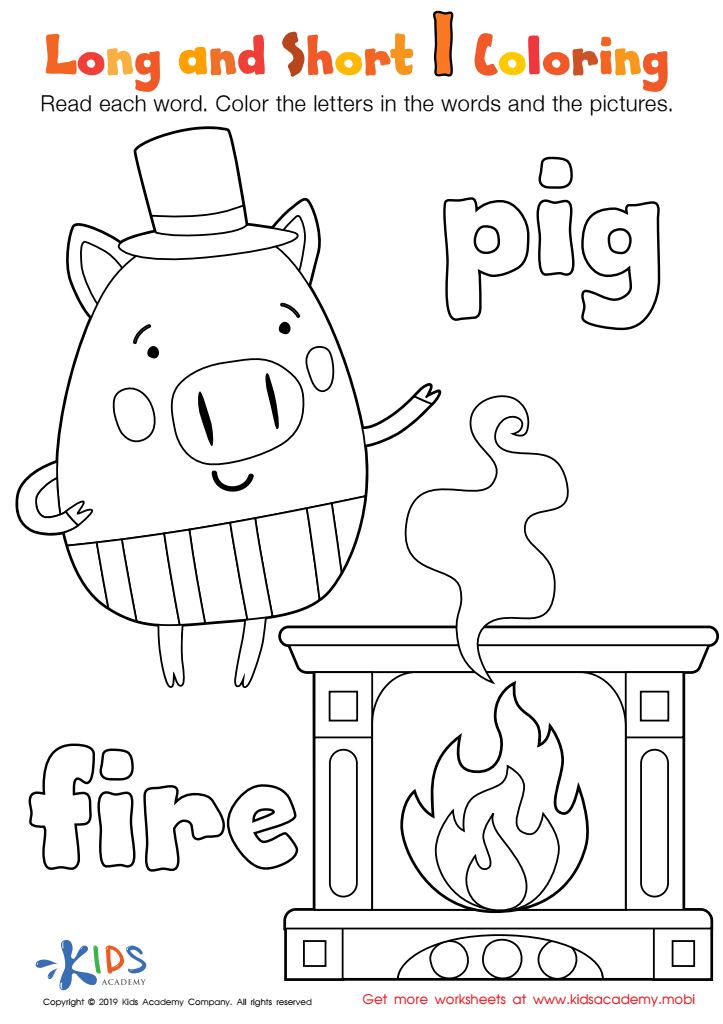
Long and Short I Worksheet
 Assign to My Students
Question/Answer

Why is the Differentiating 'i' sounds skill important for Grade 2 students?
The Differentiating 'i' sounds skill is crucial for Grade 2 students as it aids in developing accurate pronunciation, enhancing their reading abilities, and improving spelling accuracy. Mastering the distinction between short and long 'i' sounds supports vocabulary expansion and comprehension, essential for their overall literacy development and effective communication in both oral and written forms.
How to train the Differentiating 'i' sounds skill in Grade 2 students learning about Short Vowels?
To train Grade 2 students in differentiating 'i' sounds in short vowels, use phonics games, interactive activities, and visual aids. Incorporate listening exercises with words containing short 'i' sounds, pair with images for visual association, and engage students in repetitive pronunciation practice. Blend reading with phonemic awareness activities to reinforce the skill.
How does the mastery of the Differentiating 'i' sounds skill affect a student's performance at an early age?
Mastering the Differentiating 'i' sounds skill at an early age significantly improves a student's reading and pronunciation abilities. This foundational phonetic skill enhances vocabulary development, spelling accuracy, and overall language comprehension. Early mastery leads to more confident and fluent readers, setting a solid foundation for academic success in literacy and beyond.



.jpg)


.jpg)