Enhancing attention to detail Worksheets for Kids
1 filtered results
Difficulty Level
Grade
Age
-
From - To
Subject
Activity
Standards
Enhancing attention to detail worksheets are a valuable tool for developing and refining this essential skill. By engaging in focused activities, learners can sharpen their ability to capture and process information accurately. These worksheets offer a structured approach, allowing students to identify and rectify errors, discern subtle nuances and differences, and pay closer attention to important details.
Favorites
With answer key
Interactive
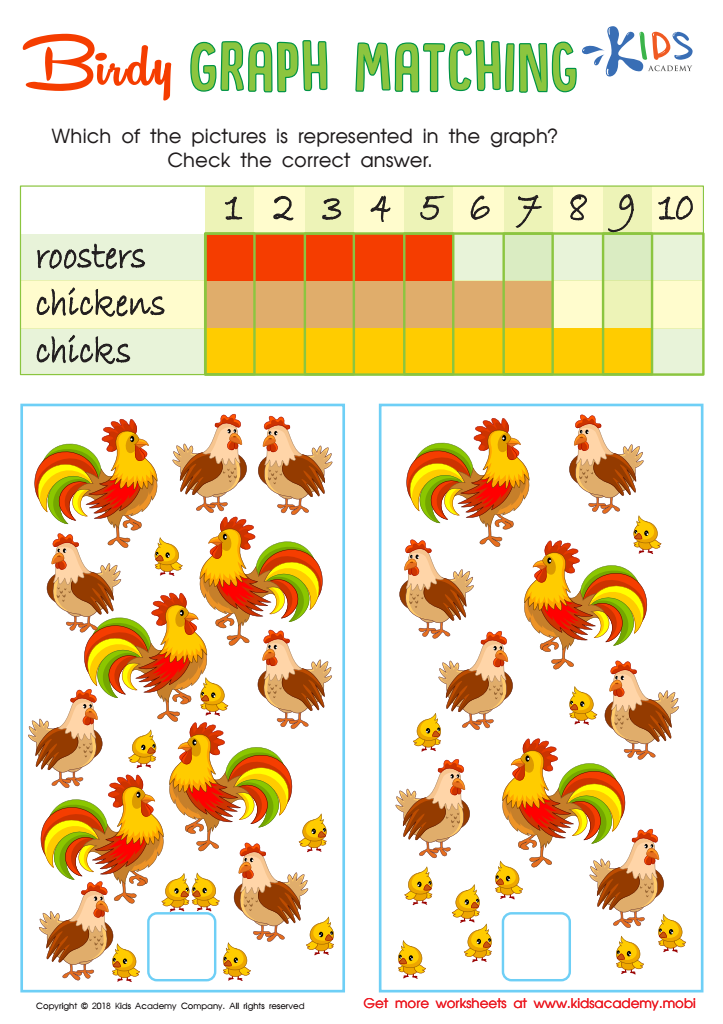
Birdy Graph Matching Worksheet
Treat your little one to a fun worksheet to practice visual discrimination, counting, graphing and tallying! They will sort the birds, count and assign values and use graph reading to answer the questions. They'll be so busy enjoying the counting that they won't even realize they are honing their skills!
 Assign to My Students
Birdy Graph Matching Worksheet
Worksheet
Question/Answer

How to train the Enhancing attention to detail skill in Grade 1 students learning about Numbers?
To train attention to detail in Grade 1 students learning about numbers, employ engaging, hands-on activities like matching games, puzzles, or sorting exercises that require careful observation of number shapes, sequences, or patterns.
How to test a Grade 1 student’s Enhancing attention to detail skills?
To test a Grade 1 student's attention to detail skills, use activities such as spot the difference puzzles, matching games, or simple find-the-hidden-object pictures. These exercises encourage careful observation and comparison, which are key aspects of attention to detail. Adjust the complexity of these activities to suit the child's ability level for an accurate assessment.
How does the mastery of the Enhancing attention to detail skill affect a student's performance at an early age?
Mastery of the enhancing attention to detail skill at an early age significantly boosts a student's performance by improving their ability to notice and remember information, leading to better understanding and retention of subjects. It fosters academic excellence, enhances problem-solving skills, and contributes to higher quality work by minimizing errors, thus setting a strong foundation for future learning and success.
Join Kids Academy for Free
Who is primarily going to use this learning content?